

According to the Vietnam Association of Seafood Processing and Export (VASEP), Vietnam's shrimp export turnover in November 2025 reached over 385 million USD, an increase of 11.7% compared to the same period last year, with whiteleg shrimp and lobster both experiencing double-digit growth.
Overall, in the first 11 months of 2025, the export value of this product reached 4.3 billion USD, an increase of 21% compared to the same period last year.
Forecasts indicate that Vietnam's shrimp export value will surpass US$4.6 billion in 2025, setting a new record for the industry. However, the outlook for the shrimp industry in 2026 is considered to depend on many variables, especially market structure.
China and Hong Kong remain the leading markets for Vietnamese shrimp. According to VASEP, as of November 15, 2025, Vietnam's shrimp exports to China and Hong Kong continued to surge, reaching approximately US$1.16 billion, an increase of over 60% compared to the same period in 2024. This has solidified Vietnam's position as a key shrimp supplier in these markets.
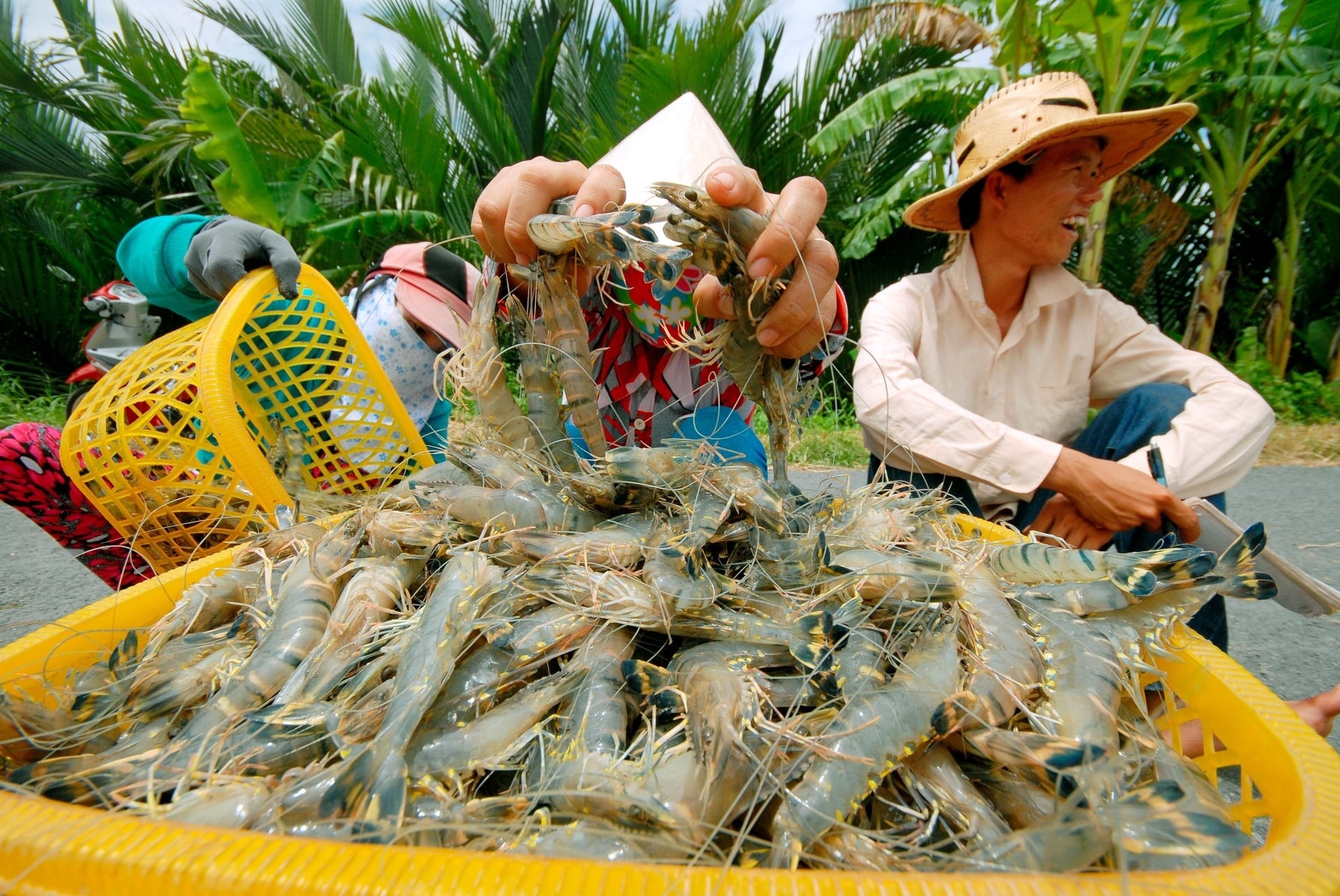
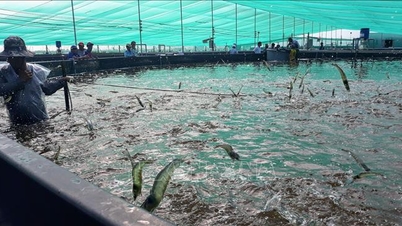
Vietnamese tiger shrimp also continues to maintain a clear advantage in the Chinese and Hong Kong markets. Photo: Thanh Cuong .
The biggest growth driver comes from lobster. In just the first 10 months of 2025, lobster exports to this massive market reached $702 million, a 135% increase compared to the same period in 2024 and accounting for 98.6% of the industry's total export value. This also marks the third consecutive year of booming lobster exports to the Chinese market.
Tariffs are a decisive factor that makes Vietnamese lobster more competitively priced than those from Canada and the United States. In addition, the close geographical proximity offers a significant advantage in transporting live lobsters, reducing losses and costs.
Currently, Chinese consumers are shifting strongly towards green lobsters – a segment where Vietnam has abundant supply. This has contributed to a significant increase in Vietnam's lobster export value.
Besides lobster, according to VASEP, Vietnamese tiger shrimp continues to maintain a clear advantage in China and Hong Kong – the number one market for Vietnamese tiger shrimp. This is a high-end shrimp segment, typically serving restaurants, hotels, catering services, and consumer segments that demand consistent quality and size.
According to Chinese customs data, as of the end of October 2025, the total value of shrimp imports reached approximately US$4.3 billion, a 10% increase compared to the same period last year, while production only increased slightly by 1%. The upward trend in import value, coupled with only a slight increase in production, indicates that Chinese consumers are willing to spend on higher-end, more conveniently processed products. This opens up opportunities for high-quality tiger shrimp products, processed shrimp, and packaged shrimp under Vietnamese brands.
To take full advantage of opportunities in the increasingly competitive Chinese market, VASEP recommends that businesses prioritize promoting high-quality frozen tiger shrimp products, proactively planning production, procurement, and inventory management to ensure a stable supply for this market.
In addition, it is necessary to regularly update new regulations and standards; build a quality management system, and maintain complete records of farming areas and processing plants to ensure smooth customs clearance and reduce the risk of increased costs and order delays.
In the context of China's increasing preference for high-value products and stable supply, accurately understanding demand, raising quality standards, and proactively developing market strategies will help Vietnam's shrimp industry not only maintain its growth momentum but also solidify its position in this billion-person market and on the global shrimp map.
Source: https://nongnghiepmoitruong.vn/tom-hum-tom-su-viet-nam-ghi-nhan-trien-vong-tich-cuc-tai-trung-quoc-d788866.html

![[Photo] Closing Ceremony of the 10th Session of the 15th National Assembly](/_next/image?url=https%3A%2F%2Fvphoto.vietnam.vn%2Fthumb%2F1200x675%2Fvietnam%2Fresource%2FIMAGE%2F2025%2F12%2F11%2F1765448959967_image-1437-jpg.webp&w=3840&q=75)

![[Photo] Prime Minister Pham Minh Chinh holds a phone call with the CEO of Russia's Rosatom Corporation.](/_next/image?url=https%3A%2F%2Fvphoto.vietnam.vn%2Fthumb%2F1200x675%2Fvietnam%2Fresource%2FIMAGE%2F2025%2F12%2F11%2F1765464552365_dsc-5295-jpg.webp&w=3840&q=75)








































![[OFFICIAL] MISA GROUP ANNOUNCES ITS PIONEERING BRAND POSITIONING IN BUILDING AGENTIC AI FOR BUSINESSES, HOUSEHOLDS, AND THE GOVERNMENT](https://vphoto.vietnam.vn/thumb/402x226/vietnam/resource/IMAGE/2025/12/11/1765444754256_agentic-ai_postfb-scaled.png)


































Comment (0)