

There is ample room to create sustainable livelihoods.
During the period 2021-2024, the area of managed and protected forests in Son La province increased from over 654,600 hectares to over 671,500 hectares; forest cover is expected to reach 48.5% by 2025. With its large forest size, high carbon absorption capacity, and stable recovery rate year after year, Son La is considered a locality with strong potential to participate in the forest carbon credit market. Initial statistics show that the province could generate more than 1 million carbon credits, opening up new development opportunities and enhancing the economic value of its forests.
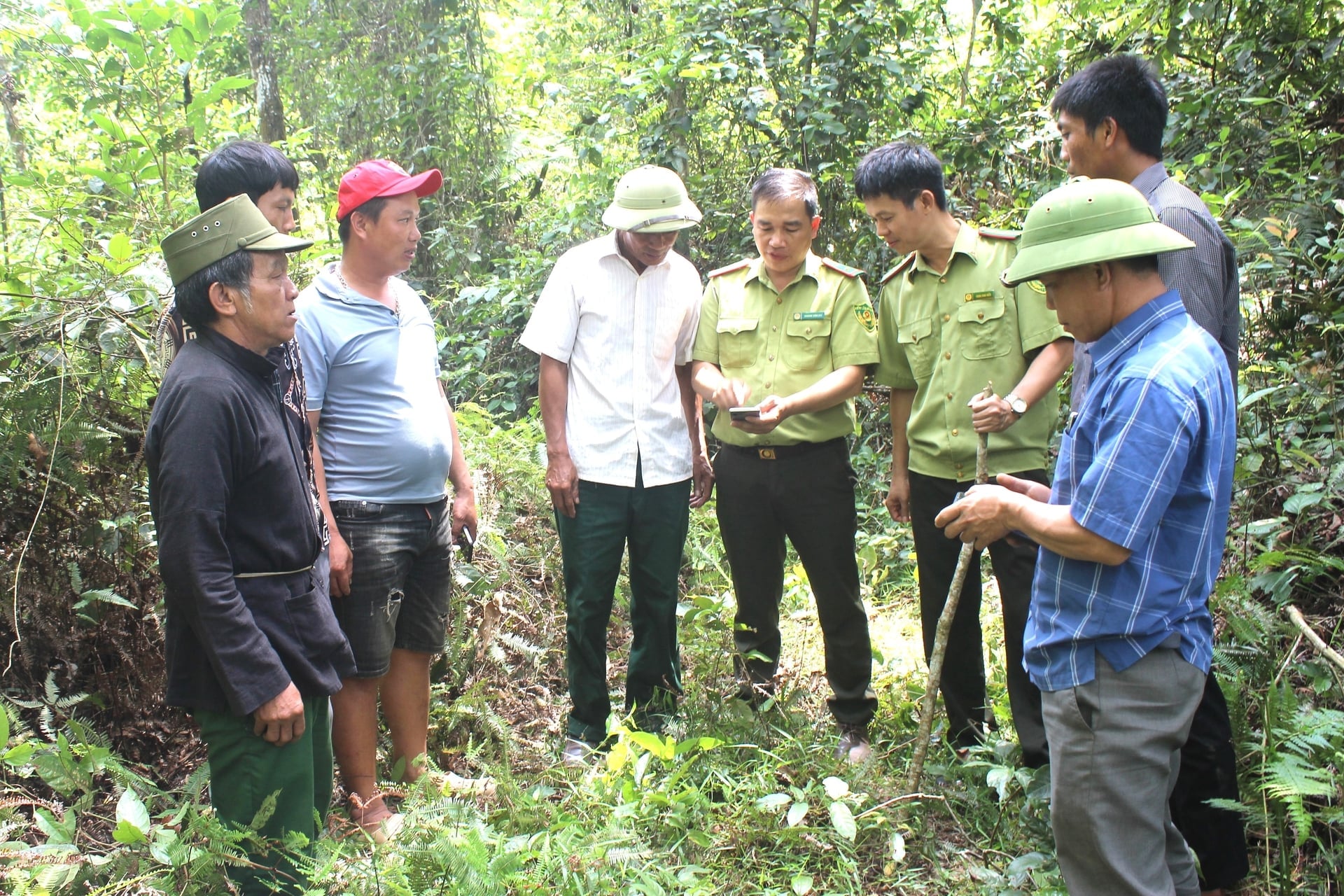
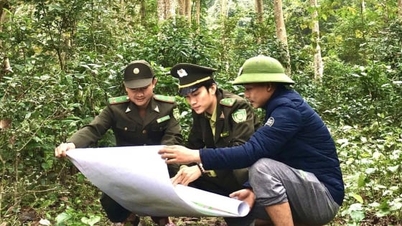
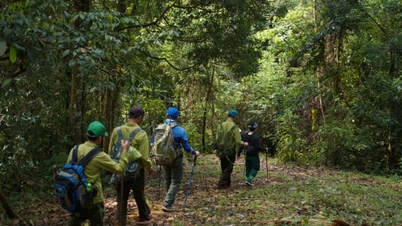
Officers from the Forest Protection Unit Region VI, Son La Forest Protection Sub-Department, along with local residents, inspect the current state of the forest. Photo: Nguyen Nga.
Based on this potential, the Provincial Forest Protection Department, in coordination with the Forest Protection and Development Fund, has advised on the development of a pilot project for trading forest carbon credits. According to the plan, the province will organize a pilot voluntary carbon market in the initial phase; simultaneously, it will finalize the technical documentation so that forest carbon credits can meet standards and eventually participate in the international carbon market within the framework of the United Nations Framework Convention on Climate Change (UNFCCC). Both the voluntary carbon market and the domestic carbon market are expected to be operational from 2028.
The province's overarching principle is to establish a fair payment relationship between carbon emitters and carbon absorbers, ensuring that revenue from service users is directly allocated to communities and forest owners – those who actually provide carbon absorption and storage services. The overall goal of the Project is to protect existing natural forest areas, restore ecosystems, and expand the area of protection forests and special-use forests with native species, in order to increase carbon absorption capacity and contribute to achieving the goal of net emissions of "zero" by 2050.
According to Mr. Nguyen Huy Tuan, Head of the Son La Forest Protection Department, effectively exploiting forest carbon credits not only opens up new resources for the forestry sector but also creates momentum for sustainable development and supports livelihoods for local people.
During the pilot phase, the province aims to establish a standardized forest carbon credit system, creating a stable financial source for forest management, protection, and development, and increasing income for those working in forestry.
Forest surveys, the foundation for carbon calculations.
To establish forest carbon credits, the most important requirement is a complete and accurate set of data on forest area, volume, and carbon absorption. Currently, Son La province is focusing on implementing the provincial forest survey, a crucial step in quantifying forest carbon for market development.
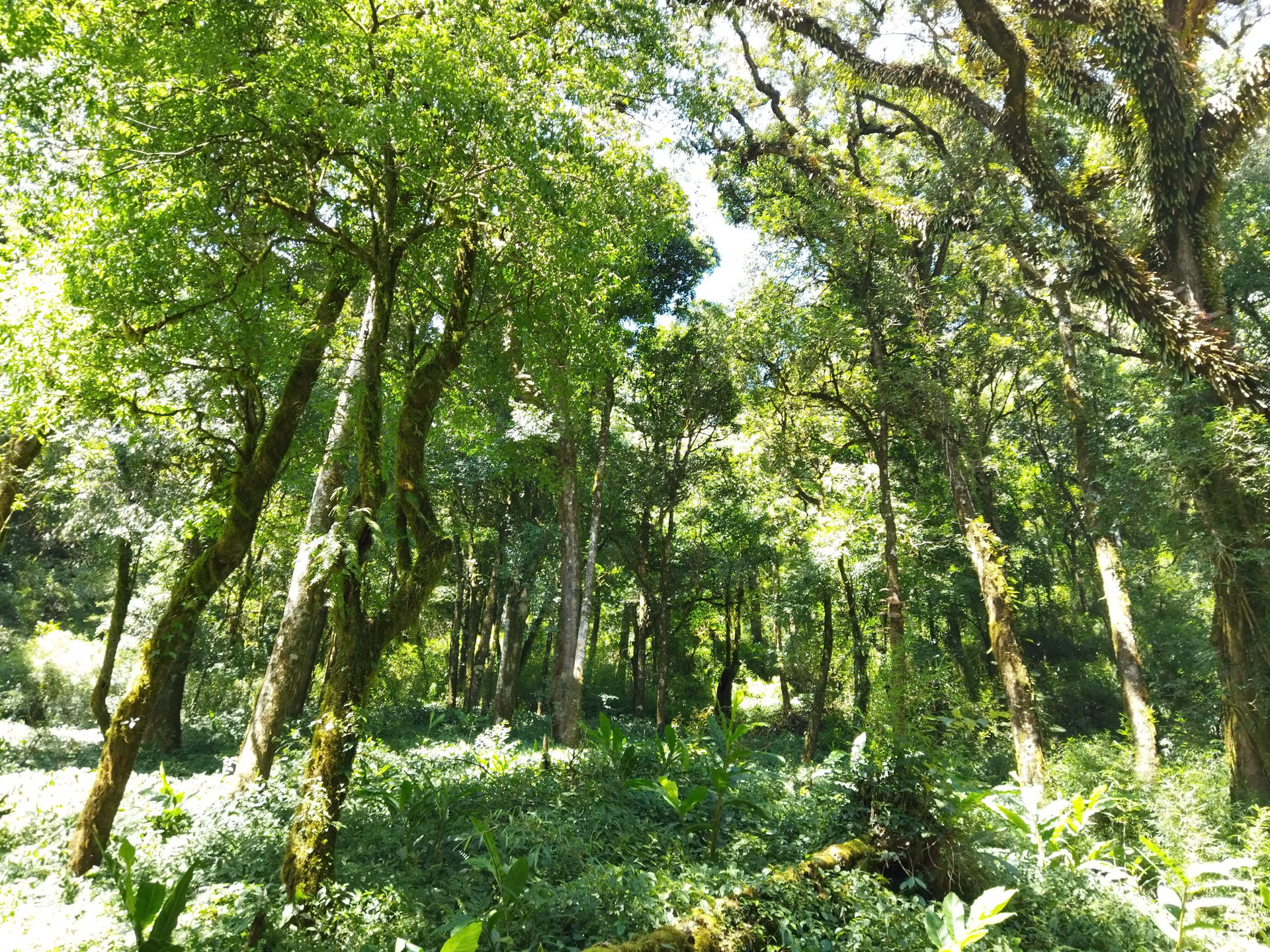
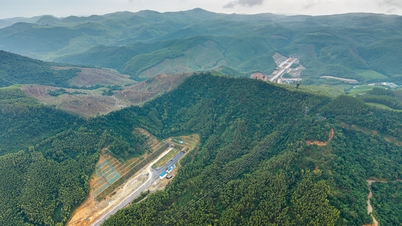
The area of natural forest is well protected, creating a foundation for the development of forest carbon credits in Son La. Photo: Duc Binh.
The task focuses on determining the current status of forest area, reserves, and carbon stocks for all natural forests, planted forests, and non-forested land planned for forestry purposes in 75 communes and wards; categorized by forest use purpose, type of forest owner, and administrative unit. The implementation period is two years, 2025-2026, covering a total forest land area of over 696,872 hectares. This will serve as the basis for calculating biomass and converting it into carbon content of the forest.
The calculations were performed according to the guidelines of the Intergovernmental Panel on Climate Change (IPCC) 2006 – an international standard currently applied by the Ministry of Agriculture and Rural Development (now the Ministry of Agriculture and Environment ) in REDD+ programs. According to this method, carbon is not measured directly but is determined based on standardized technical parameters such as the average annual growth rate of each forest type, wood density, biomass conversion factor, root-to-top biomass ratio, carbon factor, and carbon-to -CO2 conversion factor. This approach ensures the consistency, transparency, and reliability of the calculation results.
Along with its forest survey duties, the Forest Protection Department continues to advise the Department of Agriculture and Environment and the Provincial People's Committee to coordinate with ministries and agencies to build and perfect the legal framework for the exchange of greenhouse gas emission quotas, carbon credits, and the mechanism for exchanging and offsetting carbon credits; and at the same time, build the legal basis for the pilot implementation of a carbon exchange as prescribed.
The province also leveraged funding from domestic and international organizations such as CARE, the German International Cooperation Organization GIZ, and the Green Climate Fund GCF… to implement capacity-building activities for organizations and individuals involved in the implementation of forest carbon credits, including training in techniques for measuring, calculating, documenting carbon stocks, and assessing the potential for generating forest carbon credits throughout the province.
Source: https://nongnghiepmoitruong.vn/tin-chi-cac-bon-rung--huong-di-moi-cho-kinh-te-xanh-d787505.html



![[Photo] Closing Ceremony of the 10th Session of the 15th National Assembly](/_next/image?url=https%3A%2F%2Fvphoto.vietnam.vn%2Fthumb%2F1200x675%2Fvietnam%2Fresource%2FIMAGE%2F2025%2F12%2F11%2F1765448959967_image-1437-jpg.webp&w=3840&q=75)



































![[OFFICIAL] MISA GROUP ANNOUNCES ITS PIONEERING BRAND POSITIONING IN BUILDING AGENTIC AI FOR BUSINESSES, HOUSEHOLDS, AND THE GOVERNMENT](https://vphoto.vietnam.vn/thumb/402x226/vietnam/resource/IMAGE/2025/12/11/1765444754256_agentic-ai_postfb-scaled.png)





































Comment (0)