

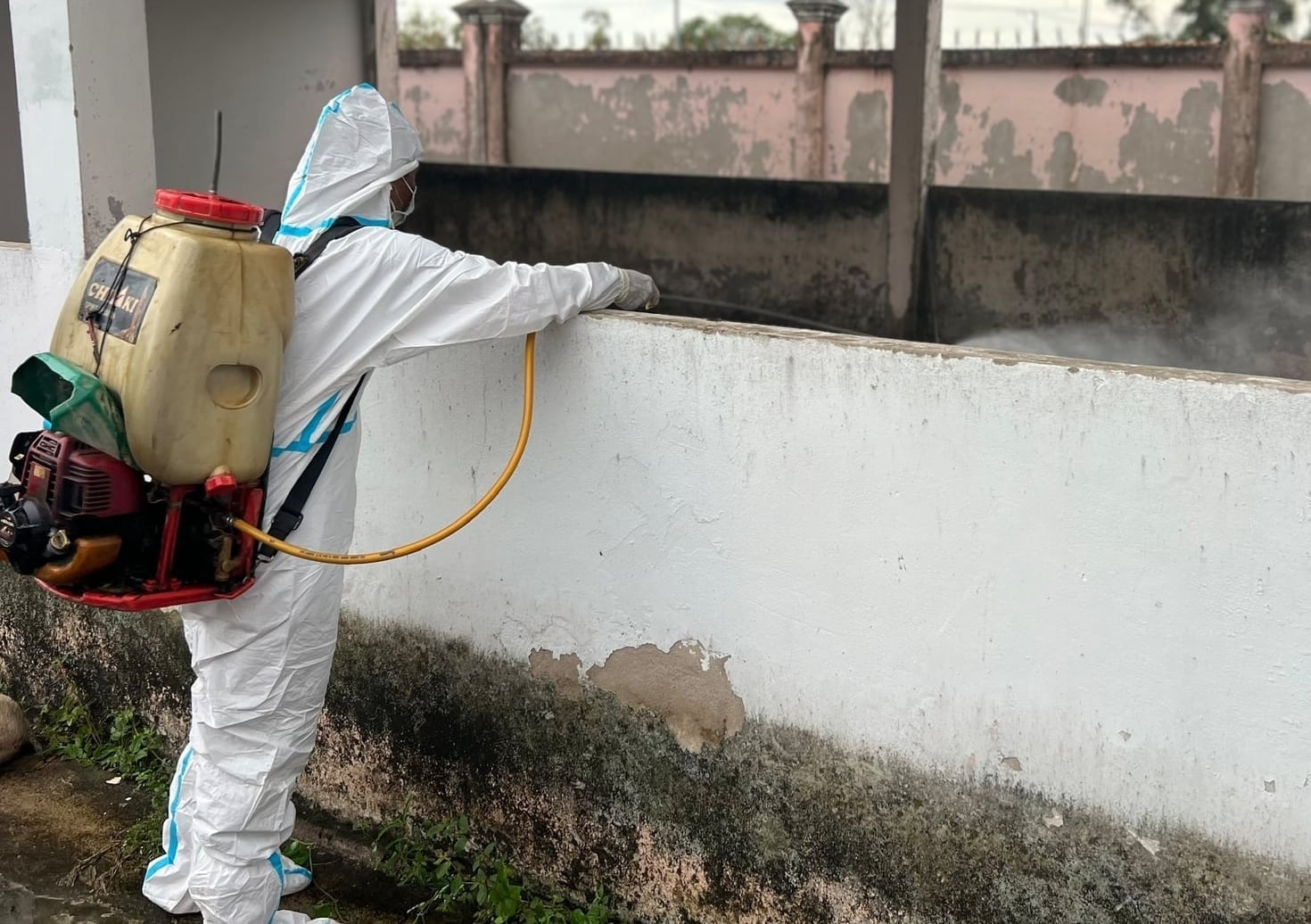
The Ca Mau Department of Agriculture and Environment has just issued Plan No. 99/KH-SNNMT dated December 5, 2025, on the allocation of vaccines and organization of vaccination for livestock in the second phase of 2025. Photo: Trong Linh .
On December 11th, the Ca Mau Department of Agriculture and Environment announced that it had issued Plan No. 99/KH-SNNMT dated December 5th, 2025, on the allocation of vaccines and organization of the second phase of vaccination for livestock in 2025.
This vaccination campaign is of significant importance in proactively preventing and controlling diseases in livestock, especially given the volatile weather at the end of the year and the increased risk of disease outbreaks.
According to the Ca Mau Department of Agriculture and Environment, the end of the year often presents many unfavorable conditions: erratic rain and sunshine, high humidity, and rapid temperature changes. These factors make it easier for pathogens to survive and spread in the environment and among livestock.
In reality, pathogens are still circulating quite widely, while small-scale farming accounts for a large proportion, and biosecurity conditions are not high. In particular, vaccination rates in many localities remain low, creating a worrying immunity gap.
Given this situation, this vaccination campaign is considered a crucial solution to boost the immunity of livestock and minimize losses caused by diseases during the peak season at the end of the year.
The plan aims to create active immunity in livestock against dangerous diseases that frequently threaten herds, such as lumpy skin disease, foot-and-mouth disease (FMD), and porcine reproductive and respiratory syndrome (PRRS). These are all highly contagious infectious diseases that can spread rapidly and cause significant economic losses if not properly controlled.
Therefore, the requirements for the vaccination campaign are to ensure the correct type of vaccine, the correct technique, the correct target group, and to fully implement it for all eligible livestock to achieve the highest protection rate.
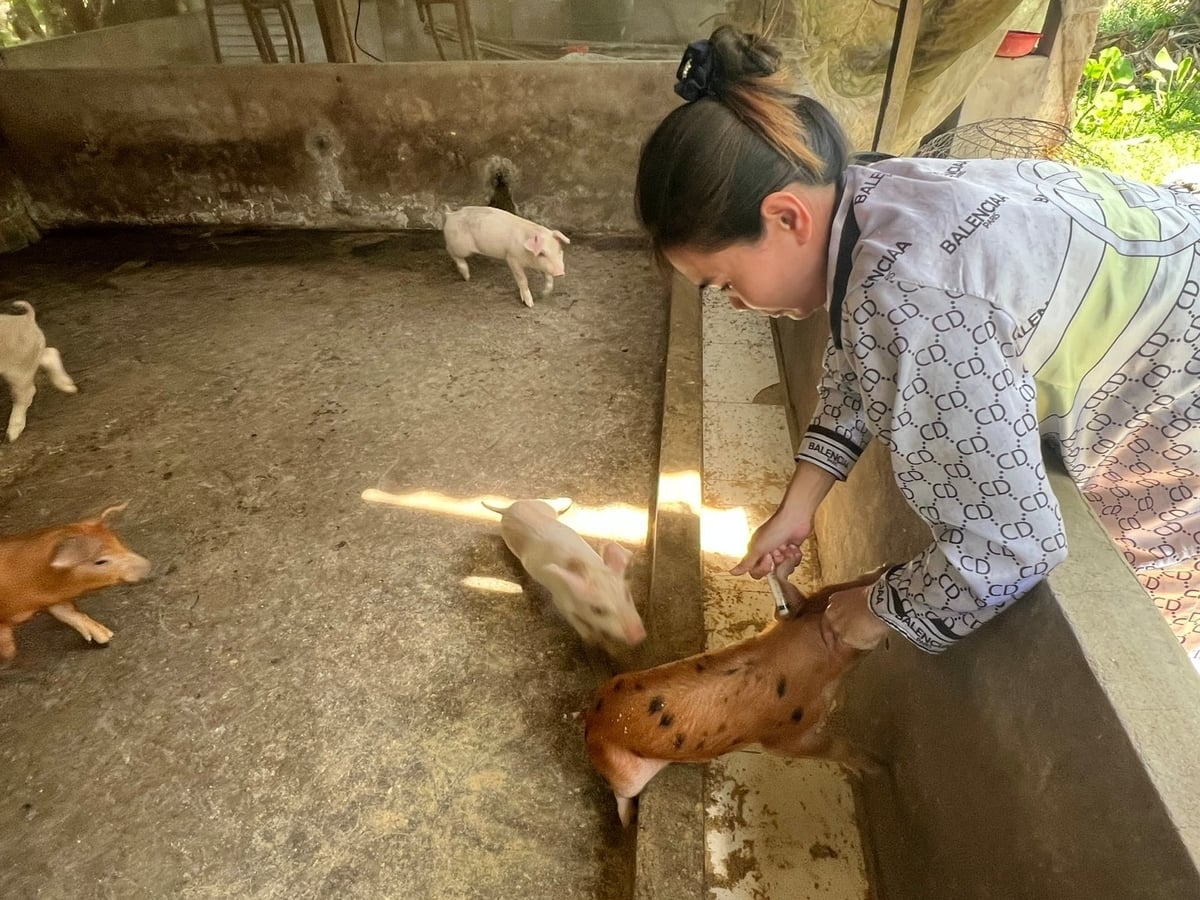
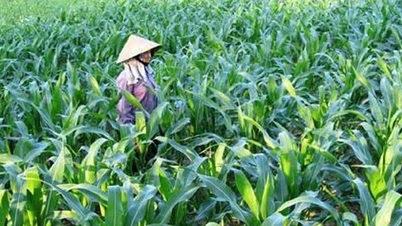
Farmers proactively take preventive measures for their family's pig herd. Photo: Trong Linh.
The Department of Agriculture and Environment requires localities to strictly implement regulations on the preservation, use, and management of vaccines, paying particular attention to transportation and storage to ensure the quality of vaccines reaches those receiving vaccinations.
Vaccination must be carried out in accordance with professional guidelines; information on the number and types of livestock vaccinated must be fully and accurately recorded for monitoring, compilation, and reporting purposes. Specialized agencies are also tasked with closely monitoring before, during, and after vaccination, promptly addressing any adverse reactions and emerging situations to ensure the absolute safety of the livestock.
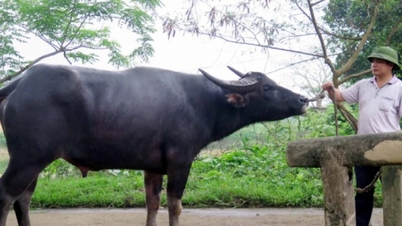
The animals eligible for vaccination include buffaloes, cattle, goats, and pigs. Vaccination is being implemented in all communes, wards, and towns throughout the province; prioritizing areas with high livestock density, areas where outbreaks have occurred, or areas bordering high-risk zones. This approach aligns with the principles of disease prevention and control, focusing on key areas to create a protective buffer zone for the entire herd.
The vaccination program is scheduled to take place in December 2025. According to experts, this period is particularly important because the changing weather often creates favorable conditions for disease outbreaks. Therefore, early and coordinated implementation will help reduce disease pressure on livestock throughout the dry season and the upcoming Lunar New Year.
The plan emphasizes the need for close coordination between local authorities, specialized agencies, and livestock farmers. The role of livestock farmers is extremely important: proactively registering for vaccination, preparing barns, maintaining environmental hygiene, and monitoring the health of livestock after vaccination. Raising farmers' awareness of disease prevention is key to the effectiveness of the entire vaccination campaign.
In the context of increasingly complex animal disease outbreaks, vaccination not only helps minimize losses for livestock farmers but also contributes to ensuring disease safety for the livestock industry in Ca Mau province, maintaining stability in the food production and consumption value chain, and protecting public health. This is an important proactive step for the province to effectively respond to potential disease outbreaks in the final months of the year.
Source: https://nongnghiepmoitruong.vn/ca-mau-phan-bo-vaccine-va-tiem-phong-cho-dan-gia-suc-dot-2-d788824.html




![[Photo] Closing Ceremony of the 10th Session of the 15th National Assembly](/_next/image?url=https%3A%2F%2Fvphoto.vietnam.vn%2Fthumb%2F1200x675%2Fvietnam%2Fresource%2FIMAGE%2F2025%2F12%2F11%2F1765448959967_image-1437-jpg.webp&w=3840&q=75)


































![[OFFICIAL] MISA GROUP ANNOUNCES ITS PIONEERING BRAND POSITIONING IN BUILDING AGENTIC AI FOR BUSINESSES, HOUSEHOLDS, AND THE GOVERNMENT](https://vphoto.vietnam.vn/thumb/402x226/vietnam/resource/IMAGE/2025/12/11/1765444754256_agentic-ai_postfb-scaled.png)










































Comment (0)