The Pu Luong Nature Reserve ( Thanh Hoa province ) has nearly 17,000 hectares of special-use forest, spread across 8 communes in the former Ba Thuoc and Quan Hoa districts. This is one of the areas with high biodiversity, home to many rare and endangered plant and animal species.
This rich ecosystem also provides an important foundation for developing sustainable livelihood models, in which community-based tourism is opening up many opportunities for economic development linked to nature conservation.
Using the forest for community tourism
Once, a daring Western tourist attempted to conquer a treacherous forest slope but unexpectedly slipped, broke his leg, and rolled down the hillside. His cries for help startled the villagers. Ha Van Tim and his friends (from Don village, Pu Luong commune, Thanh Hoa province), who were guiding tourists nearby, rushed to the scene to rescue him.
Upon arriving, they found a foreign man, twice the weight of a local, lying motionless on the slippery path. Four of the strongest young men in the village tried to lift him but failed. After a few minutes of discussion, the group decided to find a piece of dry bark, place the foreigner on it, and have one person balance him while the others take turns pulling. They climbed several hundred meters of steep, rocky, and muddy terrain, all drenched in sweat. After nearly an hour of struggling up the slope, they finally managed to get the foreigner to the main road and helped him catch a taxi to the hospital.
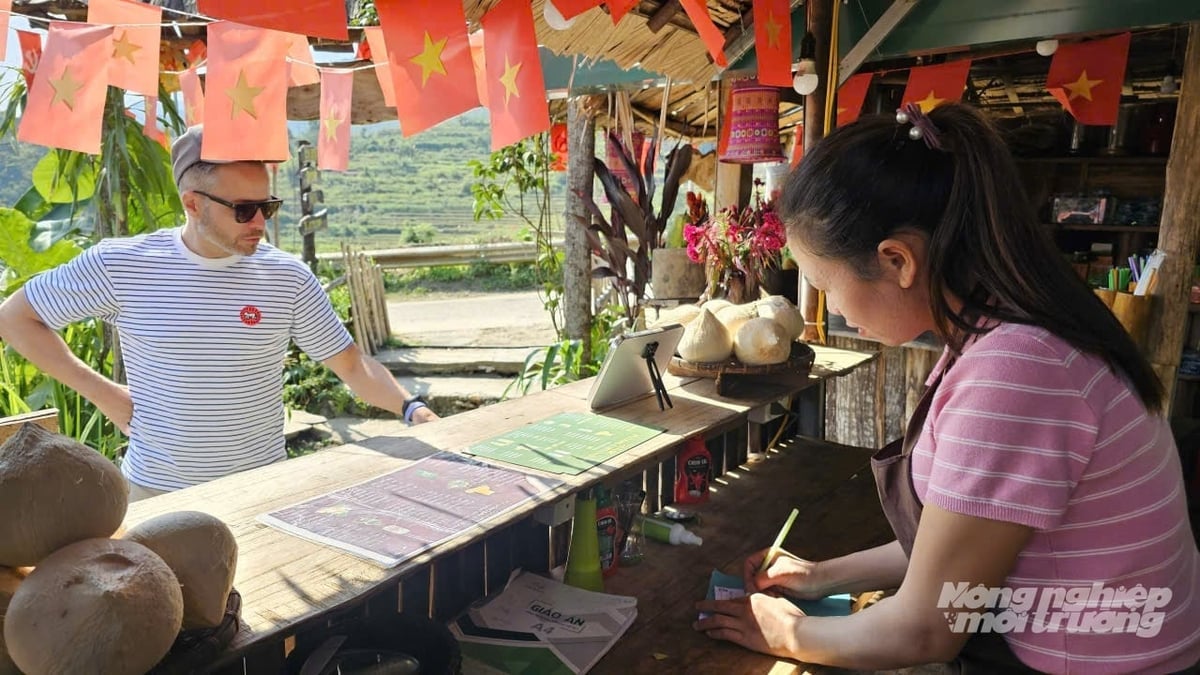
Pu Luong has become a familiar destination for foreign tourists. Photo: Quoc Toan.
After that incident, more and more Western tourists came to Pu Luong. People spread word about the kindness of the Thai people there, about Tim's compassionate actions and those of the young men from Buon Don. Tim's small restaurant also became busier, becoming a familiar stop in the heart of Pu Luong.
Furthermore, while working at a tourist resort in Pù Luông, Tim once found himself in an awkward situation. A foreign tourist complained about losing their wallet and expressed suspicion towards the resort staff. The whole area was in an uproar due to the language barrier; only bits and pieces of conversation could be heard, making the atmosphere even more tense.
Tim and everyone else had to search every corner of the room, from under the bed to the wardrobe. Everyone was worried and upset about being wrongly suspected. Finally, everyone breathed a sigh of relief when they discovered… the wallet was in a “secret compartment” that the guest had hidden there earlier but had completely forgotten about.
Tim said that Thai people in general, and those involved in community tourism in Pu Luong in particular, are like that. The locals are simple and genuine, but also very understanding of life. "What impresses foreign tourists about Pu Luong is not only the natural scenery, but more importantly, the fact that the ethnic minorities here have preserved their essence and the soul of their people, and they don't make money from tourism at all costs," Tim said.
Two years ago, Tim renovated his parents' stilt house into a family homestay, with the upper floor serving as guest accommodation and the lower floor as a reception area and food service. In addition, he co-manages a business and cafe owned by an investor from Hanoi, and also acts as a tour guide, leading visitors to explore Pu Luong.
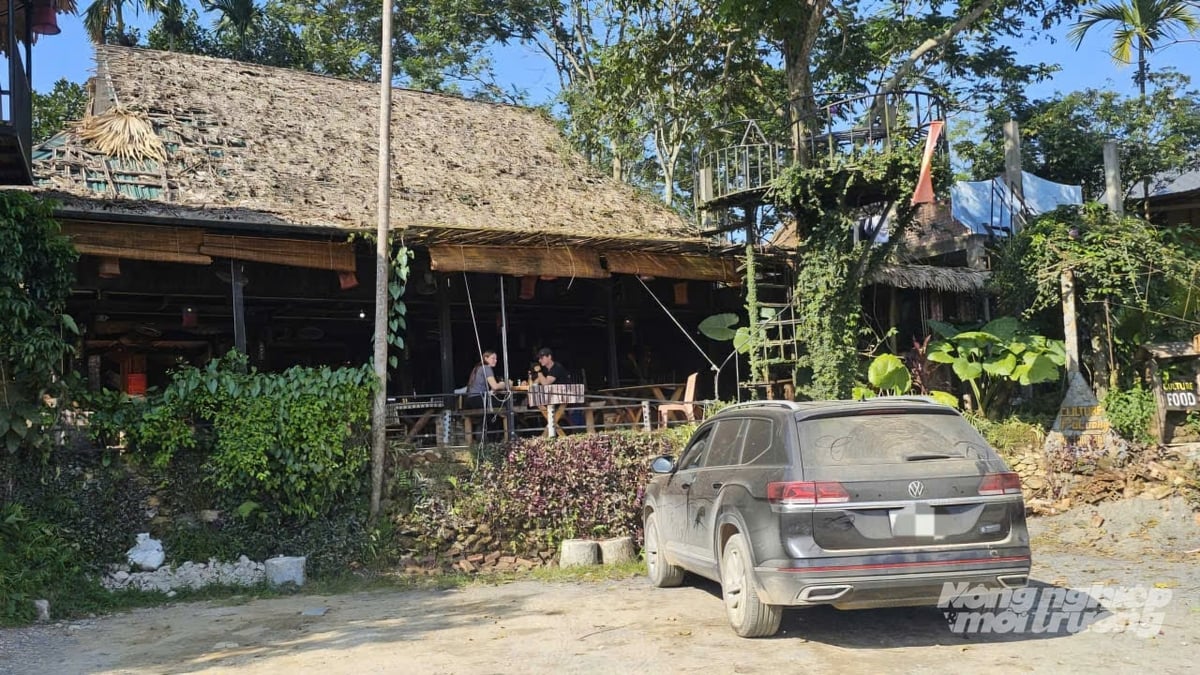
Tim's homestay welcomes dozens of guests every day. Photo: Quoc Toan.
Initially, Tim, like many locals, found it almost impossible to communicate with foreign tourists. He could only understand bits and pieces of what the tourists said, leaving him confused and anxious. But through community tourism classes and practical experiences, Tim gradually gained more confidence in his vocabulary.
Tim said he taught himself through books, reading, experimenting, and immediately applying what he learned to his daily work. Thanks to his phone's translation feature, communicating with tourists has become much easier. Although his pronunciation of foreign languages isn't perfect, what he says is still understandable to tourists, allowing for comfortable interaction.
Tim's experience of running a homestay and working as a tour guide in Pu Luong has given him many practical lessons. He says he is now confident in understanding the preferences and culinary habits of different groups of guests to cater to their tastes. "Jewish guests are often picky; they demand the highest level of cleanliness and tidiness in their rooms. British guests prefer dishes with less oil and grease, mainly salads. And Vietnamese guests like to experience the local produce of the mountains and forests: free-range chicken, Co Lung duck, traditional rice dishes, and fresh vegetables and fruits…"
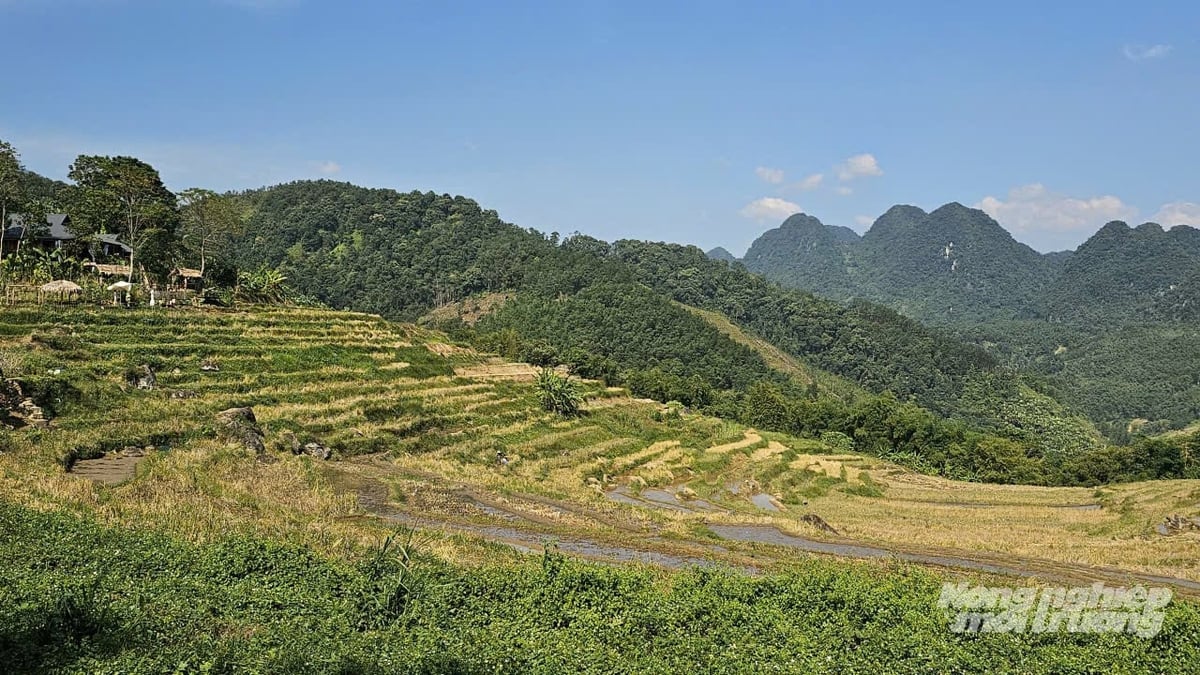
Pu Luong attracts tourists with its pristine natural landscapes and terraced rice fields clinging to the mountain slopes. Photo: Quoc Toan.
Tim recalled that in the past, the villagers mainly relied on foraging for bamboo shoots and vegetables in the forest and growing rice, leading to an unstable life. Since the introduction of community-based tourism and experiential activities, things have begun to change. The forest not only provides food but also becomes a "green asset," giving the people additional livelihoods. Visitors come to Pu Luong to experience the pristine mountain scenery, hike through the passes, forage for vegetables, enjoy the views, and sample local specialties – all of which generate income for the village.
Thanks to community-based tourism, Tim's homestay now provides stable employment for many local workers. Thanks to the Pù Luông forest, Tim and the locals no longer need to travel far for work, maintaining their connection to the land and their village.
Harnessing the tourism potential of forests.
Ms. Ha Thi Thanh's house is located right at the entrance to Lan Ngoai village (Pu Luong commune), on the route that Western tourists often walk through. Ms. Thanh knows a few basic English phrases, so she always warmly welcomes guests with a friendly smile.
Her family has a tradition of weaving brocade, and to this day, she and her daughter-in-law continue the craft of their ancestors. The looms and spinning wheels, which were passed down from her parents-in-law as part of her dowry, are still carefully preserved as precious mementos.
Ms. Thanh said that in the old days, it was very difficult for a village girl to get married if she didn't know how to weave! Therefore, from a young age, children were taught by their parents how to spin yarn, set up the loom, and weave cloth, and the craft became ingrained in them without them even realizing it. According to Ms. Thanh, when a girl goes to her husband's house, she must bring blankets, pillows, and mattresses that she wove herself. This is both a dowry and a way for the groom's family to see the woman's skill.
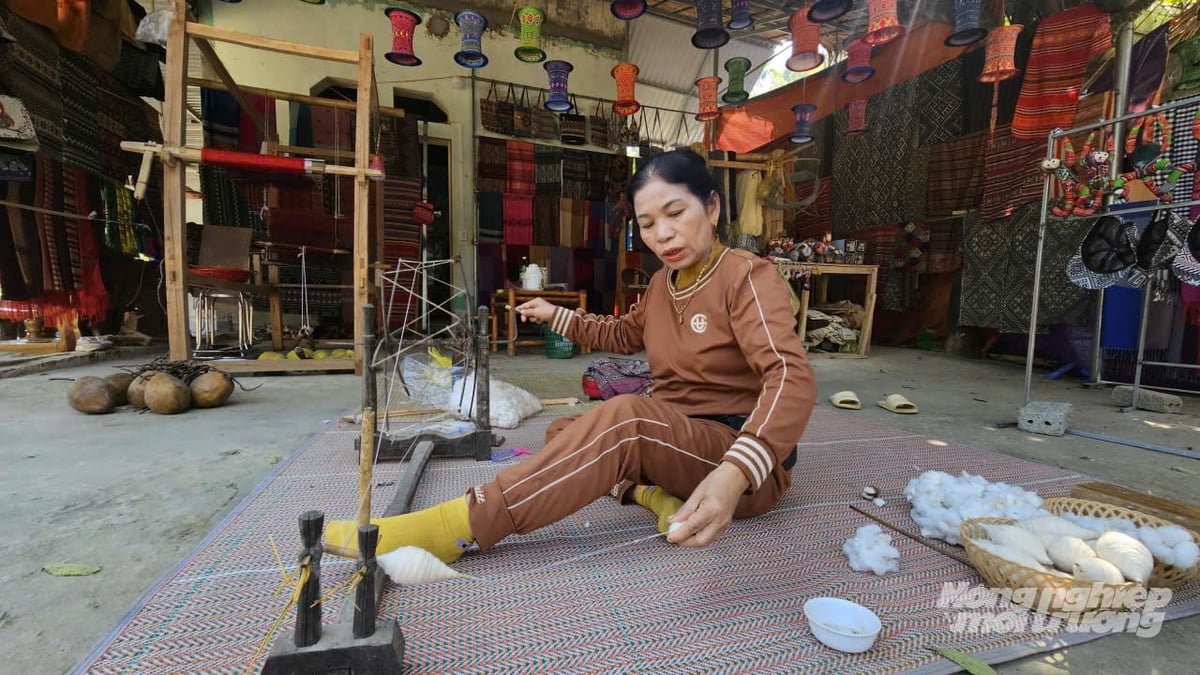
Ms. Thanh preserves and continues the traditional weaving craft of the Thai community in Pu Luong. Photo: Quoc Toan.
In the past, the weaving village mainly focused on self-production and self-consumption, but since the development of community tourism, buying and selling has become more bustling. Products are now made according to the tastes (colors, patterns, designs) of customers while still retaining the original identity of the Thai people. Each everyday garment contains a story of the villagers' culture, helping to maintain the traditional weaving craft and giving it the opportunity to spread to tourists from near and far.


During the tourist season, Mrs. Thanh and her daughter-in-law often work through the night to prepare goods for customers. The work is hard, but it brings in a significant income for the family. On normal days, she earns a few hundred thousand dong, but during the tourist season, the family's income reaches several million dong per day from selling hats, shirts, scarves, and dresses that the family weaves themselves. Although the profit isn't huge, Mrs. Thanh still considers preserving the craft and creating products that reflect the ethnic identity as the most important thing, both preserving culture and contributing to improving her family's life.

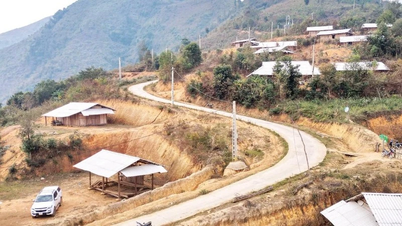
Pu Luong viewed from above. Photo: Provided by the Pu Luong Nature Reserve Management Board.
According to the leaders of Pù Luông commune, Lặn Ngoài village is predominantly inhabited by the Thái ethnic group. To this day, the village has preserved 100% of its traditional stilt houses, and over 80 households maintain the craft of brocade weaving, attracting more than 200 women to participate. Preserving and developing the brocade weaving craft not only contributes to the preservation of the traditional cultural identity of the Thái ethnic group but also plays a significant role in the commune's tourism development strategy and provides a stable income for the people.
Building upon its natural endowments and unique indigenous culture, Pu Luong continues to expand its tourism development in depth, combining traditional life experiences with nature exploration. Therefore, the Pu Luong Nature Reserve Management Board has developed the "Conquering Pu Luong Peak" adventure tourism route. This 11-kilometer trail leads to the summit of the mountain, 1,700 meters above sea level, where visitors can "touch the clouds and feel the mountain winds."
On this journey, visitors can experience trekking, overnight stays, explore unique forest ecosystems, observe rare plant species, chase clouds, and admire the sunrise from the mountaintop.
Source: https://nongnghiepmoitruong.vn/sinh-ke-duoi-chan-dai-ngan-pu-luong-d786851.html







































![The Essence of the Viet Bac Villages: [Part 3] The Precious Fragrance of Nghinh Tuong](https://vphoto.vietnam.vn/thumb/402x226/vietnam/resource/IMAGE/2026/05/29/1780020600366_5237-tinh-tuy-ban-lang-viet-bac-bai-3-chuyen-o-nghinh-tuong-050626_700.jpeg)
![The Quintessence of Northern Vietnam's Villages: [Part 2] The Famous Cassava Noodles of Kunming](https://vphoto.vietnam.vn/thumb/402x226/vietnam/resource/IMAGE/2026/05/28/1779937455892_3929-3144-mien-dong-15-nongnghiep-023138.jpeg)