

The necessity of developing agriculture in megacities.
Urban agriculture, simply understood, is a form of agriculture implemented within urban or suburban areas, utilizing small spaces (rooftops, balconies, vacant land, etc.) for small-scale farming and livestock raising, applying high technology.
The biggest advantage of this model is that it saves land, provides clean food with high value, improves the environment and promotes a green lifestyle. Thanks to the application of hydroponics, aeroponics, IoT, automation or greenhouse farming, urban agriculture can operate effectively even on small land areas or land that is not favorable for urban development.
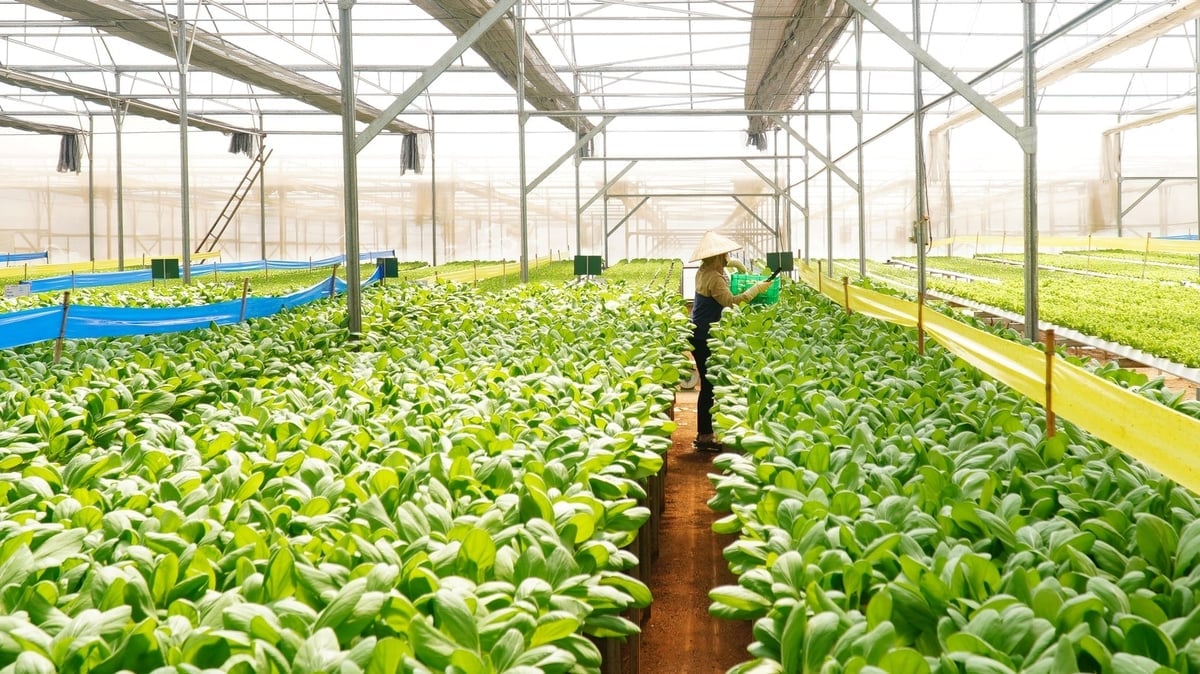
Urban agriculture not only contributes to ensuring local food security for megacities but also aims for multiple objectives related to the environment, people's livelihoods, commerce, and ecotourism . Photo: Le Binh .
MSc. Ngo Anh Vu, Director of the Ho Chi Minh City Institute of Urban Planning, said that nearly one-third of the meat, vegetables, and eggs in cities around the world come from urban agriculture. In particular, in some places in the world, 75% of households participate in the urban agriculture model.
“In Moscow (Russia), 65% of households are urban VAC, while in Dar es Salaam (Tanzania) it is 68%. In Berlin (Germany), there are currently more than 8,000 vegetable gardens, and many New York residents grow vegetables on their rooftops. Large Chinese cities such as Shanghai, Beijing... are self-sufficient in up to 85% of green vegetables and 50% of meat and eggs. All of this shows that urban agriculture is a backup layer, a form of strategic food security insurance,” said Master Ngo Anh Vu.
In addition to its role in providing food, urban agriculture creates jobs for the informal labor force and low-income groups in the suburbs. When combined with experiential tourism and community education, this model can open up new sources of income. Taking advantage of interspersed land also increases the value of urban land use and creates an ecosystem of accompanying services such as agricultural trade and eco-tourism.
Also according to MSc. Ngo Anh Vu, in 2021, the World Bank assessed that circular economic models based on urban agriculture help reduce organic waste by up to 30%, create compost and bioenergy. At the same time, urban agricultural models improve air quality, increase green space and reduce the heat island effect.
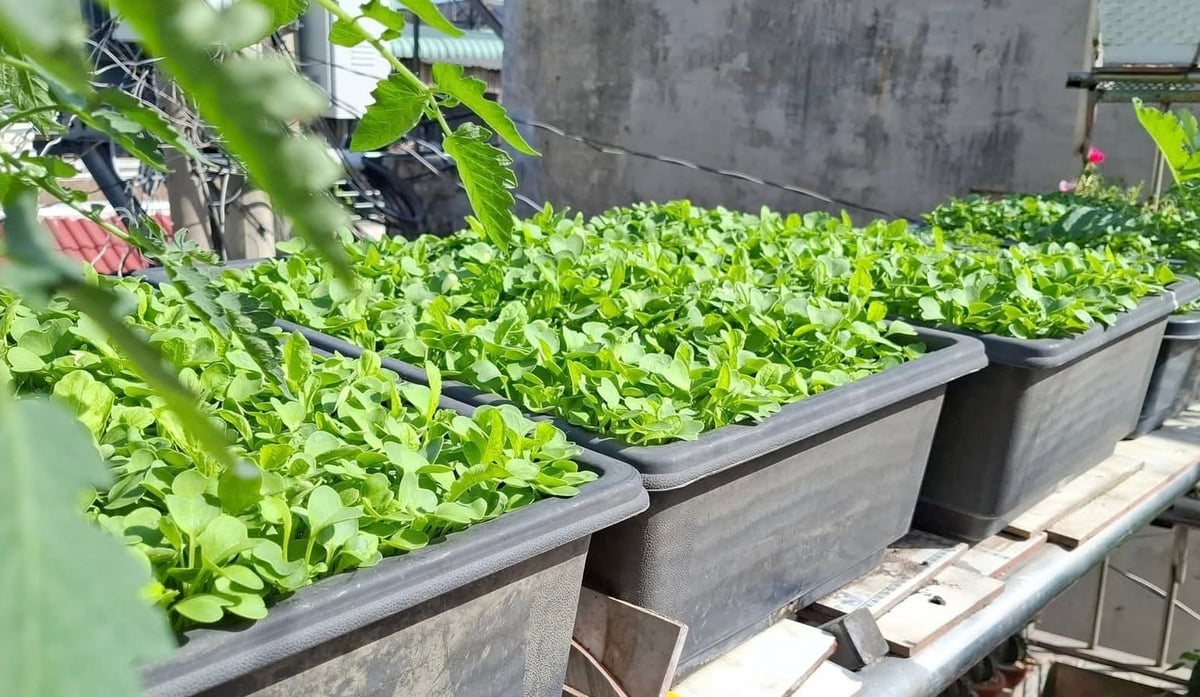
Utilizing the empty spaces on roofs, offices, and balconies to grow vegetables not only optimizes the increasingly narrowing land fund but also solves the problem of food and daily organic waste. Photo: Le Binh .
In Vietnam, Ho Chi Minh City is adjusting its land use planning. The agricultural land group is expected to be about 337,000 hectares by 2030, a decrease of more than 69,000 hectares compared to the old allocation. This requires a strong transition to urban agriculture, high-tech agriculture, biology and clean production to optimize the increasingly narrow land fund.
Meanwhile, according to statistics from the Department of Industry and Trade, the demand for green vegetables in Ho Chi Minh City is up to 10,000 - 12,000 tons/month, but 70 - 80% depends on the supply from neighboring provinces. Long distance transportation also increases the risk of price fluctuations and reduces food quality.
Recently, unusual weather has been occurring in many areas: prolonged rain and storms have caused landslides in Lam Dong, while the Mekong Delta provinces have suffered from high tides and flooding. These factors have disrupted the production, harvesting and transportation of agricultural products, especially vegetables and fruits, thereby putting Ho Chi Minh City at risk of supply shortages and price fluctuations. Urban agriculture is therefore a solution to spread risks and increase self-sufficiency in essential food sources.
Agriculture - the ecological shield of megacities
After the merger, Ho Chi Minh City has a natural area of over 6,722 km², a population of over 14 million people, contributing nearly 25% of GDP and about 30% of the national budget. The Resolution of the Ho Chi Minh City Party Congress for the 2025 - 2030 term identifies agriculture as not only a production sector but also an ecological, environmental and water security pillar in the structure of modern urban development.
In fact, Ho Chi Minh City has been the leading locality in urban agriculture in the country for many years. However, the expanding territory and new situation require Ho Chi Minh City to have a more systematic, specific and innovative strategy for development.
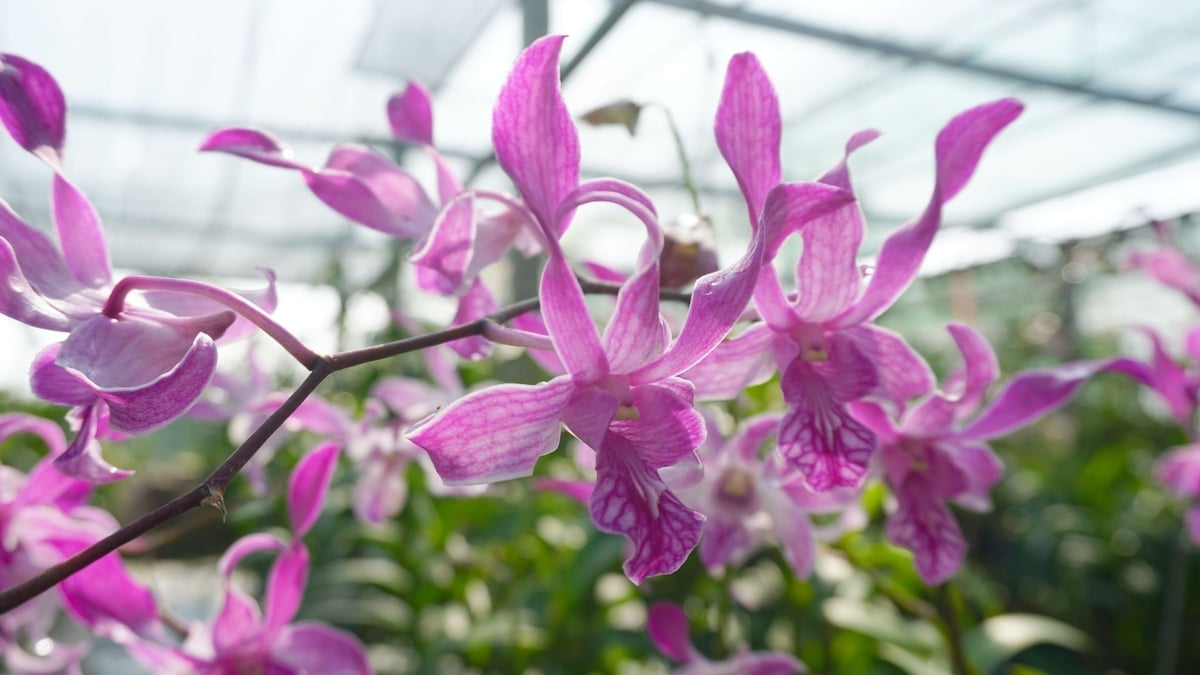
Urban agriculture has become one of the bright spots of Ho Chi Minh City in recent years. However, this orientation needs to be expanded and implemented more systematically, deeply and comprehensively. Photo: Le Binh .
Mr. Bui Minh Thanh, Vice Chairman of the Ho Chi Minh City People's Committee, emphasized: the agricultural land fund of more than 454,000 hectares creates conditions for the formation of large-scale production areas with many different ecosystems. In particular, the old Ho Chi Minh City area plays the role of a seed center, a high-tech agricultural center and an urban agricultural center. The Binh Duong area is oriented to develop industrial crops and large-scale livestock in an organic and safe direction. Meanwhile, the Ba Ria - Vung Tau area is strong in high-tech agriculture, brackish - salty aquaculture, specialty products and agricultural tourism.
“Rapid urbanization is shrinking agricultural land, while the rural workforce is aging and natural ecosystems are facing the risk of decline. Climate change is causing Ho Chi Minh City to suffer more severe flooding due to high tides and extreme rains. At that time, agriculture with its forest systems, rivers, canals, and gardens will become 'green infrastructure', retaining water and slowing down the flow, contributing to reducing flooding pressure for urban areas,” Mr. Thanh said.
At the same time, the market demands for green, clean, organic products and eco-tourism are increasing rapidly, but the scale of concentrated production is still small, not commensurate with the potential. High growth targets and new rural standards force Ho Chi Minh City to shift to value-added agriculture, based on technology, circulation and sustainable development.
According to Vice Chairman Bui Minh Thanh, the planning of Ho Chi Minh City to 2030 - vision 2050 aims to build a multi-value agricultural ecosystem: high-tech goods production and green space to regulate the climate. Ho Chi Minh City's agriculture will be integrated into the smart, green and adaptive urban structure.
Mr. Vo Thanh Giau, Deputy Director of the Department of Agriculture and Environment of Ho Chi Minh City, assessed that in the context of extreme climate, agriculture plays the role of an "ecological shield" through the system of forests, ponds, fields, gardens, lagoons, both regulating water and reducing the risk of natural disasters. Ho Chi Minh City also aims to form economic corridors of agriculture, industry and services along beltway 3, beltway 4, Ho Chi Minh City - Vung Tau expressway... linked to the port system and logistics centers.
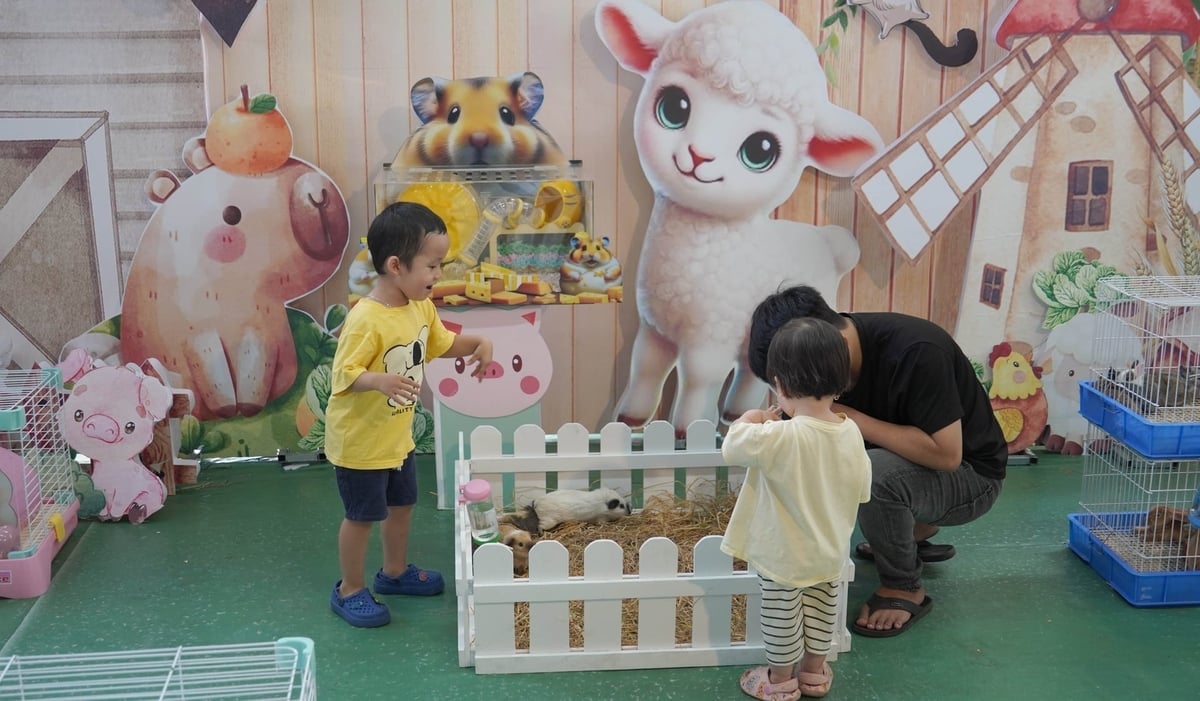
Developing urban agriculture effectively helps Ho Chi Minh City open up many new avenues and connect with markets. Photo: Le Binh .
The future urban agricultural economic model puts farmers in the role of “digital agricultural citizens”, applying AI, IoT, blockchain in production, management, traceability and market connection. This is also the foundation for exporting high-quality agricultural products.
Dr. To Thi Thuy Trang, Ho Chi Minh City Institute for Development Studies, proposed that it is necessary to plan concentrated production areas, prioritizing the protection of strategic agricultural land areas for urban agriculture and high-tech agriculture.
"The Ho Chi Minh City People's Committee should develop a flexible land lease mechanism, allowing businesses to contribute capital with land use rights. At the same time, the city should also simplify preferential loan procedures for technology infrastructure such as greenhouses, IoT systems, AI... and accept assets formed on agricultural land as collateral, helping businesses to invest more boldly," Dr. Trang suggested.
Source: https://nongnghiepmoitruong.vn/nong-nghiep-do-thi--giai-phap-chien-luoc-cho-tphcm-d786823.html


![[Photo] Explore the US Navy's USS Robert Smalls warship](/_next/image?url=https%3A%2F%2Fvphoto.vietnam.vn%2Fthumb%2F1200x675%2Fvietnam%2Fresource%2FIMAGE%2F2025%2F12%2F10%2F1765341533272_11212121-8303-jpg.webp&w=3840&q=75)
![[Photo] The captivating scenery of the fragrant maple forest in Quang Tri](/_next/image?url=https%3A%2F%2Fvphoto.vietnam.vn%2Fthumb%2F1200x675%2Fvietnam%2Fresource%2FIMAGE%2F2025%2F12%2F10%2F1765353233198_lan09046-jpg.webp&w=3840&q=75)






![Green tea pork: [Part 2] A new specialty brand from Thai Nguyen](https://vphoto.vietnam.vn/thumb/402x226/vietnam/resource/IMAGE/2025/12/10/1765338249553_2114-img_6953-nongnghiep-112106.jpeg)







![[Video] The craft of making Dong Ho folk paintings has been inscribed by UNESCO on the List of Crafts in Need of Urgent Safeguarding.](https://vphoto.vietnam.vn/thumb/402x226/vietnam/resource/IMAGE/2025/12/10/1765350246533_tranh-dong-ho-734-jpg.webp)














































Comment (0)