

 |
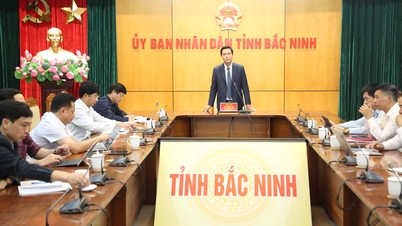
Vice Chairman of the Provincial People's Committee Le Xuan Loi delivered a speech at the conference. |
The Cam Bao pumping station was built in 1970 with an initial design for an oil-powered pumping station. In 1978, it was rebuilt as an electric pumping station with 22 horizontal shaft pumps, with a flow rate of 980 m3/hour. In 2000, the station underwent a complete renovation and upgrade of the entire headworks area, including the plant, suction tank, and discharge tank.
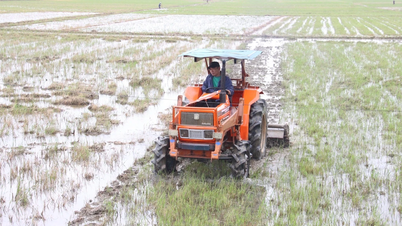
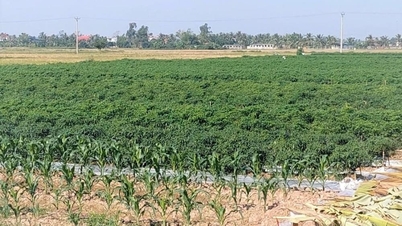
The project is tasked with ensuring drainage for a catchment area of 1,100 hectares, including 330 hectares of industrial zone, 336 hectares of urban area, and 443 hectares of agricultural land , while also providing irrigation for 2,050 hectares of farmland.
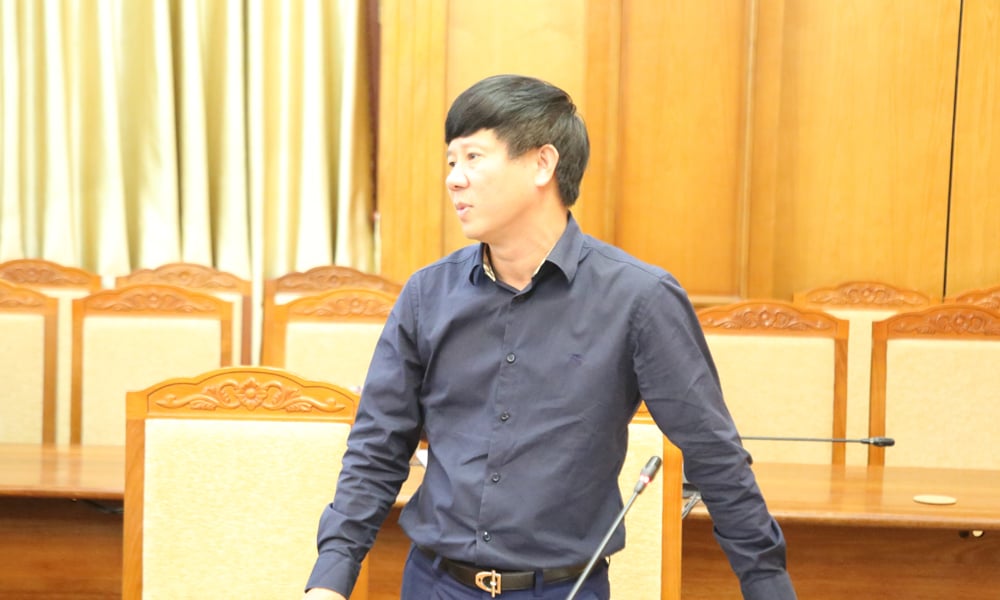 |
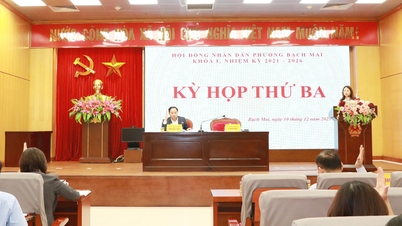
Pham Duc Luan, Director of the Department of Dyke Management and Disaster Prevention, contributed his opinions at the conference. |
Over time, the Cam Bao pumping station has seriously deteriorated. The walls and ceilings of the pumping station are sinking and cracking, with no space for repairs; the old and dilapidated motors and pumps frequently malfunction; many protective devices such as protective covers for the electrical connections to the motors are missing; the motor bearings leak oil and require frequent maintenance; the suction tank roof is unstable and has cracked in many places; the filter wells are clogged; some seepage and bubbling appear at the bottom of the suction tank when the river water level rises; the gate valve system is rusted, the construction is degraded, and it is unsafe for handling large flow rates and flood control; the circuit breaker protection system is old and does not ensure safe operation of the pumps.
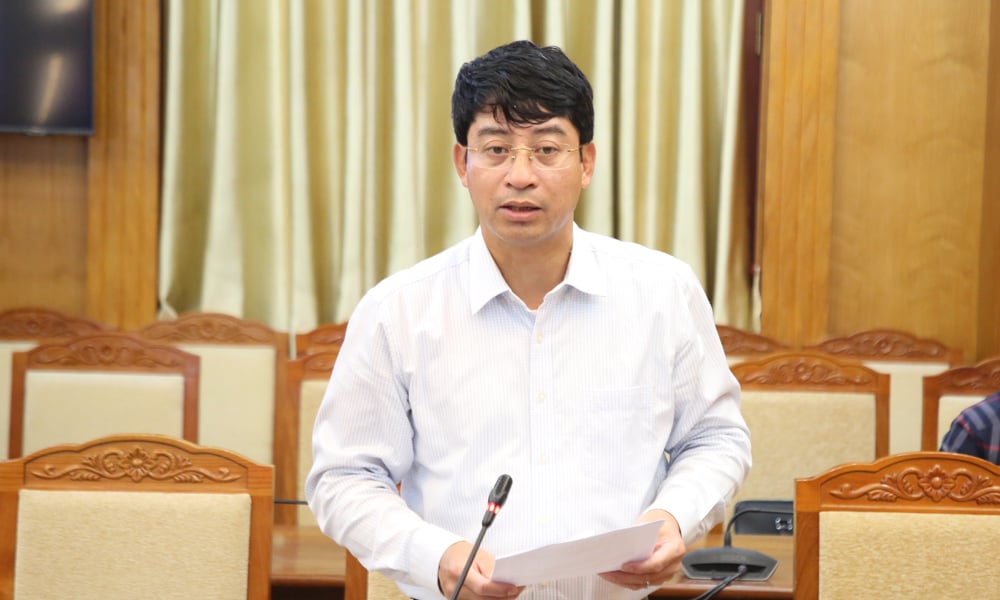 |
Deputy Director of the Bac Ninh Department of Agriculture and Environment, Dang Cong Huong, participated in the discussion at the conference. |
In June 2025, the pumping station area experienced seepage and bubbling at the bottom of the suction tank, requiring urgent remedial action.
In October 2025, due to the influence of the circulation of typhoon No. 11 causing heavy rain in the river basin, the water level of the Cau River in the project area rose close to the dike surface, and seepage occurred at the head of the drainage channel, causing landslides on the downstream dike slope. A filter layer and sandbags were used to temporarily stabilize the dike slope.
To address problems, prevent potential damage to dike and irrigation systems, proactively respond to climate change, create favorable conditions for agricultural production development, stabilize people's lives, and contribute to local socio-economic development, the Department of Agriculture and Environment and consulting units have proposed a plan to build a new pumping station at a location adjacent to the old one, with a total investment of 450 billion VND.
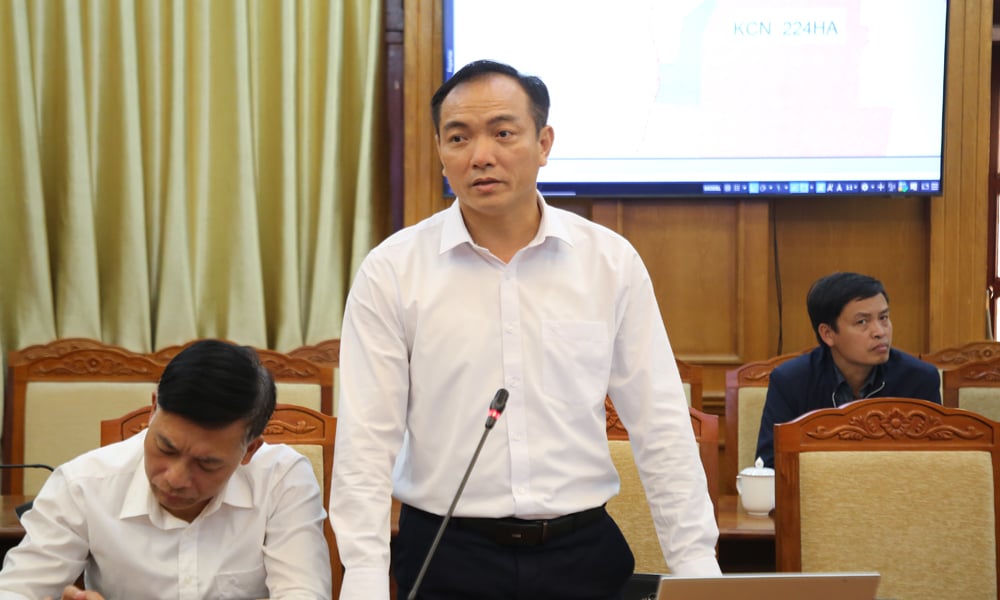 |
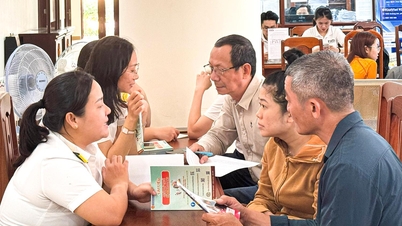
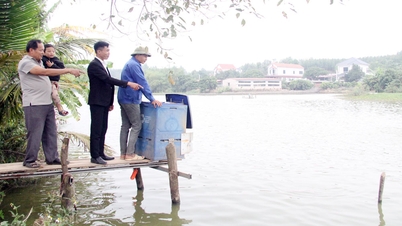
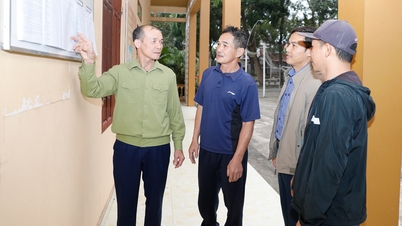
Leaders of Xuan Cam Commune People's Committee gave their opinions on the location for the construction of the Cam Bao Pumping Station. |
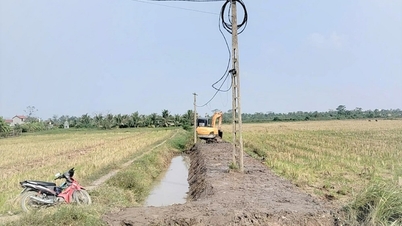
Based on the topographical and geological conditions and the existing structure, the location of the irrigation water intake culvert was chosen near the location of the old water intake culvert, following the direction of the river flow in front of the discharge culvert through the dike, facilitating irrigation water intake into the suction basin; ensuring geological stability and reducing investment costs.
Based on the project's objectives and tasks, the specific scale of the construction items, and the standards and regulations for selecting the construction levels, the project will include: a Level III pumping station with 8 units at a flow rate of 10,000 m3/unit/hour, a Level IV drainage canal, and a Level III irrigation canal. Accordingly, the main structures will be constructed, including: the pumping station building, suction basin, discharge basin, regulating sluice, discharge sluice through the dike, irrigation water intake sluice (combined with gravity drainage), electrical system, and transformer station. The drainage and irrigation canal system and structures along the canals will also be constructed. The dike in the pumping station area will be upgraded, a river-side embankment will be built, and a management building and a temporary pumping station will be erected to serve irrigation during construction.
The opinions expressed at the conference focused on clarifying the current state of the engineering geology and irrigation systems in the project area, the location and construction methods, technical solutions, and the scale of the project.
Speaking at the conference, the leader of the Department of Dike Management and Disaster Prevention and Control requested the Department of Agriculture and Environment and the consulting unit, the Vietnam Institute of Water Resources Science, to continue researching design and construction options for the pumping station, ensuring absolute safety for the dike system, irrigation works, and the lives and property of the people during the rainy and stormy season.
Concluding the conference, Vice Chairman of the Provincial People's Committee Le Xuan Loi affirmed the necessity of investing in the construction of the Cam Bao Pumping Station. He requested the Department of Agriculture and Environment, the consulting unit, and the local authorities to incorporate the contributions of the Department of Dike Management and Disaster Prevention and Control; conduct thorough surveys of the current situation, conduct further exploratory drilling to carefully assess the geology of the area where the pumping station is planned to be built, and take advantage of funding support from the Ministry of Agriculture and Environment to implement the construction of the pumping station in the shortest possible time, contributing to improving disaster prevention and control capabilities during the rainy season in the coming years.
Source: https://baobacninhtv.vn/bac-ninh-cho-y-kien-ve-giai-phap-thiet-design-vi-tri-xay-dung-tram-bom-cam-bao-postid432874.bbg






















![[Video] The craft of making Dong Ho folk paintings has been inscribed by UNESCO on the List of Crafts in Need of Urgent Safeguarding.](https://vphoto.vietnam.vn/thumb/402x226/vietnam/resource/IMAGE/2025/12/10/1765350246533_tranh-dong-ho-734-jpg.webp)

























































Comment (0)