

The Personal Guarantee System (PGS) model is becoming an important direction in the development of safe vegetables in Hanoi . Not only does it create a clear monitoring framework, but the PGS model also builds community responsibility among producers, businesses, consumers, and regulatory agencies, thereby enhancing confidence in clean agricultural products.
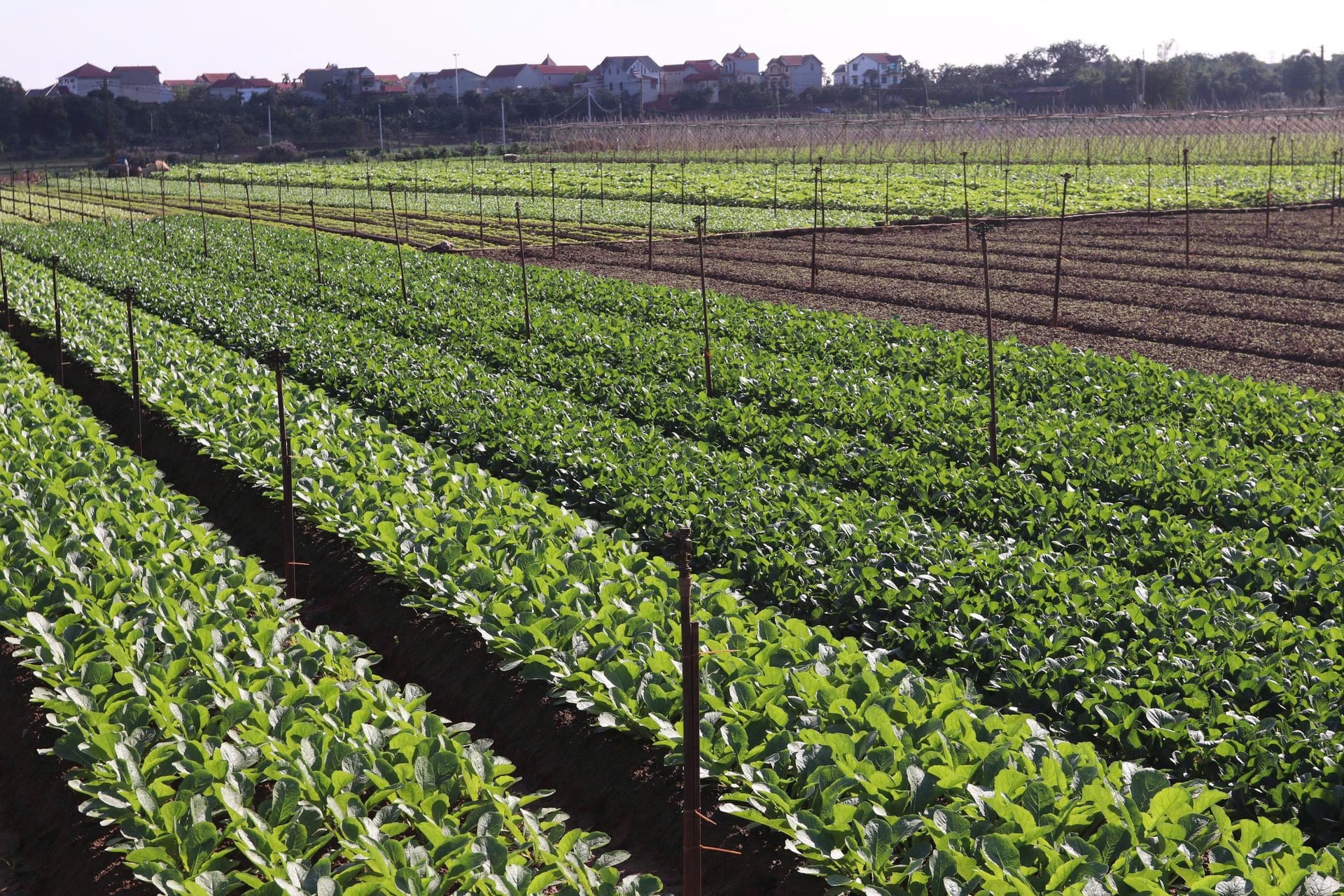
Vegetable garden in Me Linh with strict monitoring process, creating safe and stable production for growers. Photo: Minh Ha.
According to Ms. Luu Thi Hang, Head of the Hanoi Department of Crop Production and Plant Protection, PGS (Participatory Guarantee System) is characterized by cross-monitoring based on the participation of "four parties": growers, distributors, buyers, and local authorities, who jointly inspect, verify, and take responsibility for products entering the market. This approach helps minimize risks and ensure safe processes right from the household level.
She stated that, in the coming period, to maintain the effectiveness of the model, Hanoi will continue to standardize the guidance documents, unify production logbooks, and train core farmers and cooperatives participating in the PGS model. In addition, the formation of PGS groups in key vegetable growing areas will be more strongly implemented.
“When tasks are clearly assigned and groups monitor each other, transparency will increase, and the production process will be safer and more sustainable,” Ms. Hang affirmed.
In Dong Cao (Me Linh), PGS (Participatory Guarantee System) goes beyond production. The Dong Cao General Service Cooperative maintains links with over 100 traders, ensuring stable output and reducing intermediary costs. Vegetables are sold from Hanoi to neighboring provinces and cities, with preliminary processing at the farm to optimize costs. For markets with strict requirements such as supermarkets and institutional kitchens, the cooperative implements a thorough preliminary processing procedure, meeting all hygiene standards.
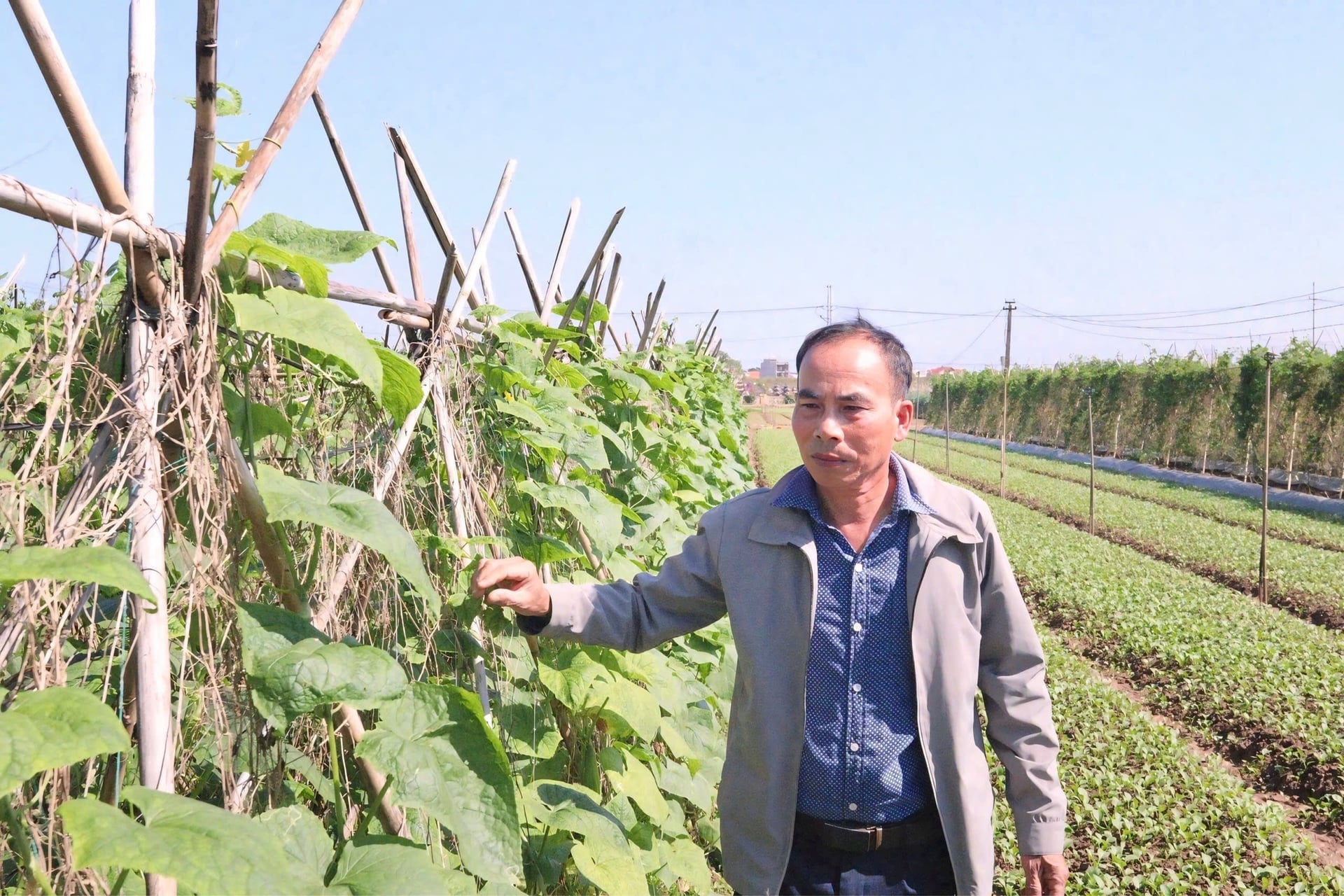
PGS helps farmers change farming habits, increase production transparency and create a foundation for a sustainable safe vegetable chain in Me Linh. Photo: Minh Ha.
However, record-keeping remains a common weakness when implementing PGS (Participatory Guarantee System). Mr. Dam Van Dua, Director of Dong Cao General Service Cooperative, frankly shared: “Farmers are used to working based on experience, so their records are incomplete. This makes inspections difficult and causes delays in tracing the product. We hope to receive support in applying Industry 4.0 technology and attaching planting area codes to update data in real time.” According to him, this is also a necessary step towards digital trade and meeting export standards in the future.
Meanwhile, at Yen Nhan Cooperative (Me Linh district), with 11 years of vegetable production and cultivation, the PGS model has become the foundation for sustainable production. Mr. Tran Van Manh, Director of Lien Nhan Agricultural Service Cooperative, said that initially, farmers faced many difficulties because they were accustomed to traditional methods. But thanks to continuous training on fertilizers, pesticides, biological traps, etc., they have adapted and changed their habits. As a result, the quality of vegetables has become increasingly stable, and the cooperative's reputation has been affirmed in the market thanks to the strict process and the people's compliance.
For farmers, PGS (Participatory Guarantee System) is opening up opportunities to change farming mindsets. Ms. Hoang Thi Nu, a member of Dong Cao Cooperative, shared that she used to overuse pesticides because she didn't fully understand the harmful effects. Applying PGS means increasing the amount of work, especially manual weeding. However, the cultivated land becomes looser, richer in humus, the soil ecosystem recovers, and the quality of vegetables is significantly higher.
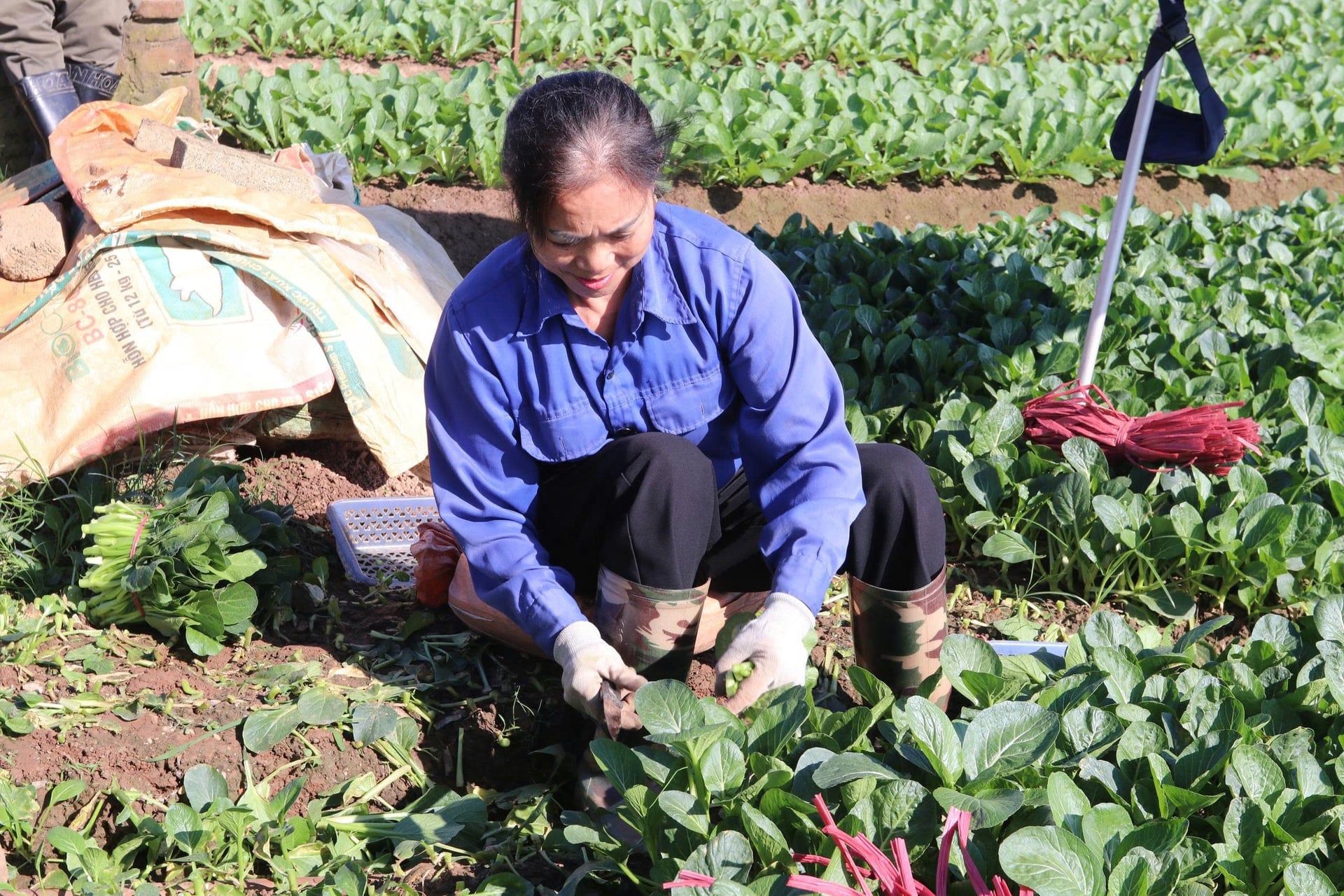
Ms. Hoang Thi Nu, a member of Dong Cao Cooperative, said that although applying PGS is more difficult, it helps loosen the soil, restore the ecosystem and improve the quality of vegetables. Photo: Minh Ha.
“The work is harder, but the products are guaranteed, the price is stable, and my health is better, so I am willing to follow this model,” she shared.
Notably, all members of the cooperative are required to keep production logs. This is an extremely important step that helps trace the origin and monitor the progress of each plot of land, each type of fertilizer, and each pesticide used. The cooperative also keeps samples of sold vegetable batches for comparison when needed, and commits to taking responsibility if any food safety issues arise.
Looking at Dong Cao and Yen Nhan, it's clear that PGS (Particularly Good Agricultural Practices) is not just a collection of technical standards. It's the foundation for organizing production, activating value chains, and opening up a sustainable path for the safe vegetable industry. When farmers adhere to the process, cooperatives effectively coordinate, and management agencies continue to refine the standards, Hanoi's safe vegetable chain will have strong internal strength to develop for many years to come.
Source: https://nongnghiepmoitruong.vn/pgs-nang-chuan-san-xuat-va-chuoi-gia-tri-rau-an-toan-d787841.html


![[Photo] Explore the US Navy's USS Robert Smalls warship](/_next/image?url=https%3A%2F%2Fvphoto.vietnam.vn%2Fthumb%2F1200x675%2Fvietnam%2Fresource%2FIMAGE%2F2025%2F12%2F10%2F1765341533272_11212121-8303-jpg.webp&w=3840&q=75)





![Green tea pork: [Part 2] A new specialty brand from Thai Nguyen](https://vphoto.vietnam.vn/thumb/402x226/vietnam/resource/IMAGE/2025/12/10/1765338249553_2114-img_6953-nongnghiep-112106.jpeg)





![[Video] The craft of making Dong Ho folk paintings has been inscribed by UNESCO on the List of Crafts in Need of Urgent Safeguarding.](https://vphoto.vietnam.vn/thumb/402x226/vietnam/resource/IMAGE/2025/12/10/1765350246533_tranh-dong-ho-734-jpg.webp)




















































Comment (0)