

At the foot of Thuong Xuan mountain forest, Cua Dat Lake is not only a large-scale irrigation project but also a symbol of human will, intelligence and efforts to overcome difficulties. Through many historical ups and downs, from the aspirations of Thanh people to harsh technical challenges, Cua Dat Lake has become the "water heart" regulating life, production and sustainable development for the entire downstream area.
The cherished wishes of Thanh Hoa people
Nature has endowed the upper Chu River with extremely rich and precious water resources. For generations, this river has been the source of water for the people of Thanh Hoa. Realizing this potential, at the beginning of the 20th century, the French chose the Chu River as a research subject, with the intention of building a large-scale irrigation project to serve agricultural production and regulate water resources for the area south of the Chu River.
Thanh Hoa people still remember that in 1920, the Bai Thuong dam project was started and officially put into operation in 1928. This project was an important step forward, but only served to irrigate about 50,000 hectares, unable to meet the increasingly diverse needs of Thanh Hoa province in terms of agricultural development, industry and people's lives.
Recognizing this reality, many generations of Thanh Hoa province leaders have cherished the idea of building a larger, more modern reservoir to serve multi-purpose needs: irrigation, flood control, electricity generation and improving people's lives.
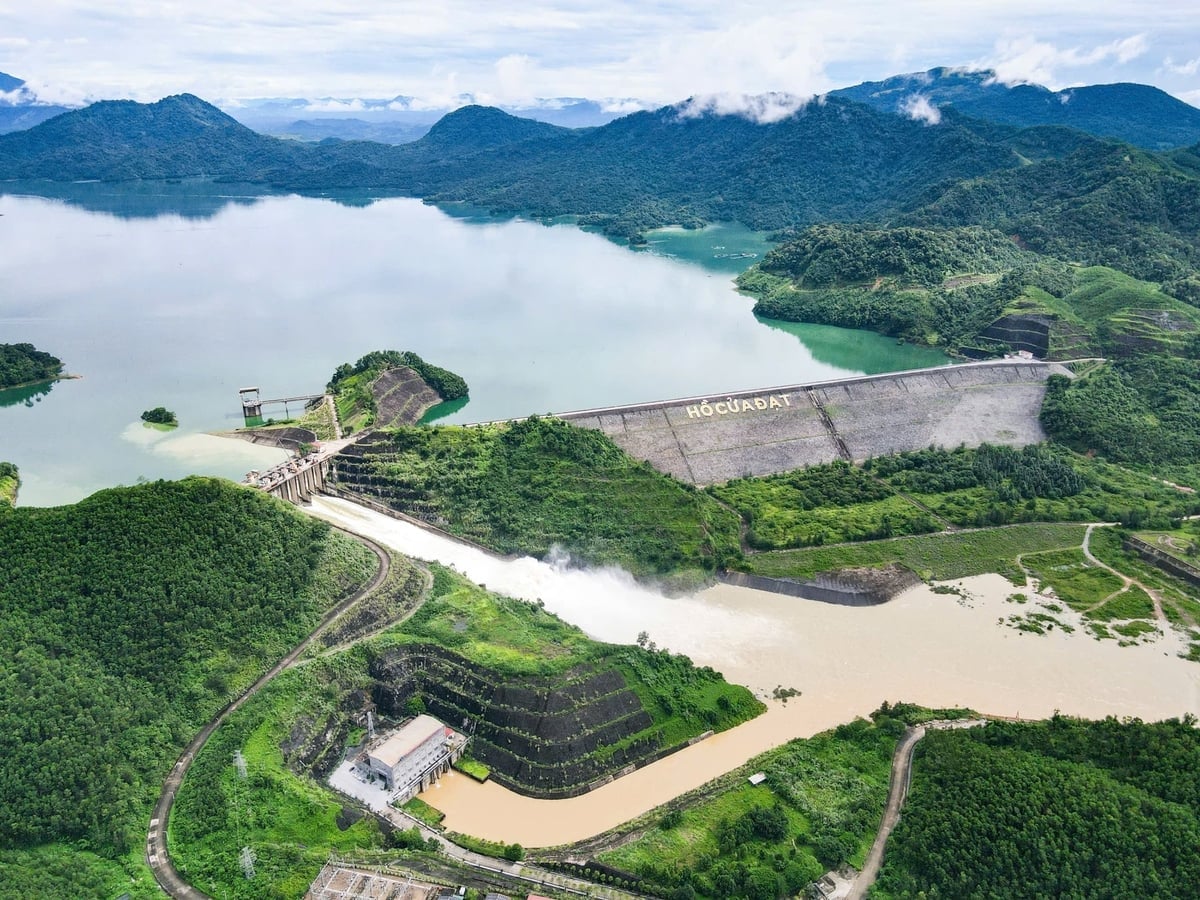
The construction of the Cua Dat reservoir is a long-held dream of the people of Thanh Hoa. Photo: Thanh Tam.
Mr. Phan Dinh Phung, former Director of Thanh Hoa Department of Irrigation, once shared that the desire to build Cua Dat reservoir has been a long-standing wish of Thanh Hoa people. In fact, since the 1970s, the State has surveyed and planned to build the project, but two long resistance wars and an exhausted economy have made it impossible to implement the project.
After the war years, the country entered a period of construction and socialism. In the late 1990s, extreme weather conditions caused continuous droughts, storms, floods and inundations, causing agricultural losses for many years. Mr. Phung recalled the 1998 flood season, when a storm hit Thanh Hoa every month, fields were submerged in water, dikes broke, and many villages were devastated. In the following years, the drought lasted for a long time, causing agricultural crops to fail, creating an urgent need for a large reservoir to regulate water, protect production and prevent natural disasters.
Bai Thuong Dam, the most important project of Thanh Hoa, built from 1920-1928, was severely damaged after the wars. The risk of dam failure became a constant concern, threatening the lives of people downstream. In that context, Cua Dat reservoir is considered a comprehensive solution, ensuring food security, preventing floods, and providing water for industrial - agricultural production and daily life.
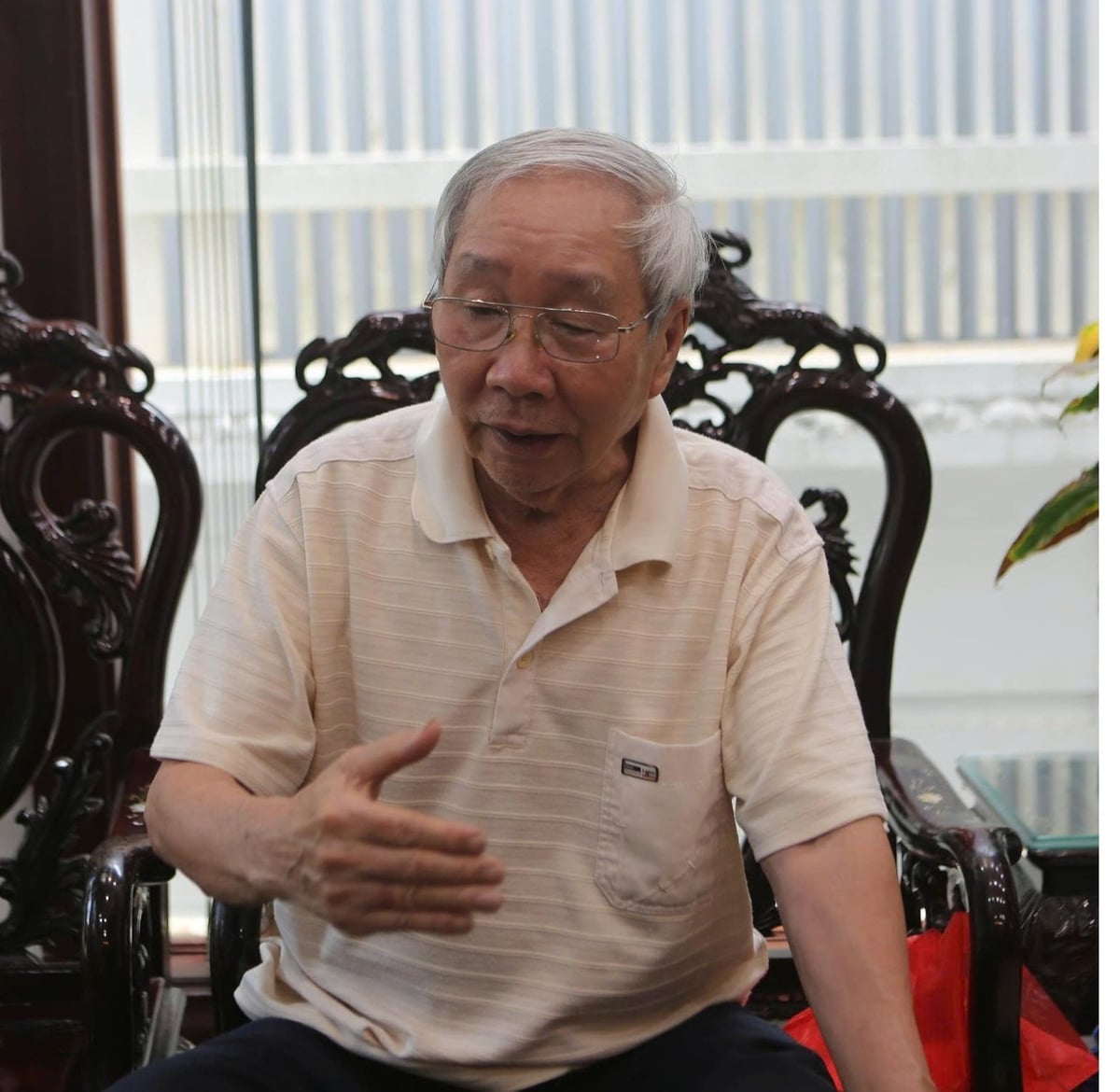
Mr. Phan Dinh Phung - the person who devoted all his efforts to building Cua Dat Lake. Photo: Thanh Tam.
In 1994, when he was the Director of the Department of Irrigation, Mr. Phan Dinh Phung sent a document proposing the construction of Cua Dat Lake to the People's Committee of Thanh Hoa Province. At that time, the province replied that due to limited budget and insufficient technical level, it could not be implemented. In 1995, Mr. Phung continued to work with the Ministry of Irrigation and was proposed to need 500 million VND of the provincial budget to establish a pre-feasibility project, a very large amount at that time.
After many studies and surveys, the People's Committee of Thanh Hoa province decided to provide funding. On January 20, 1998, the pre-feasibility project was reported to the Ministry of Water Resources, receiving high consensus from the leaders of the Ministry and the province, paving the way for the construction of one of the largest irrigation projects in Vietnam at that time.
Choosing a location, weighing the odds, and the great migration
Initially, the project planned to build a dam at Mai Muc rock, about 1 km downstream from the current location. This is an ideal location with good geology, a stone dam foundation, a thin cover layer, and the ability to build a gravity concrete dam with simple construction diversion methods. The river here is narrow, the dam length is less than 400 m, convenient for construction.
However, this plan faces many obstacles, the huge migration volume of up to 20,000 people from 7 communes, the loss of 2,000 hectares of agricultural land, while rice land in mountainous districts is very limited. Moreover, the relics of Cam Ba Thuoc Temple and Ba Chua Thuong Ngan, spiritual addresses associated with the people, will be located in the lake.
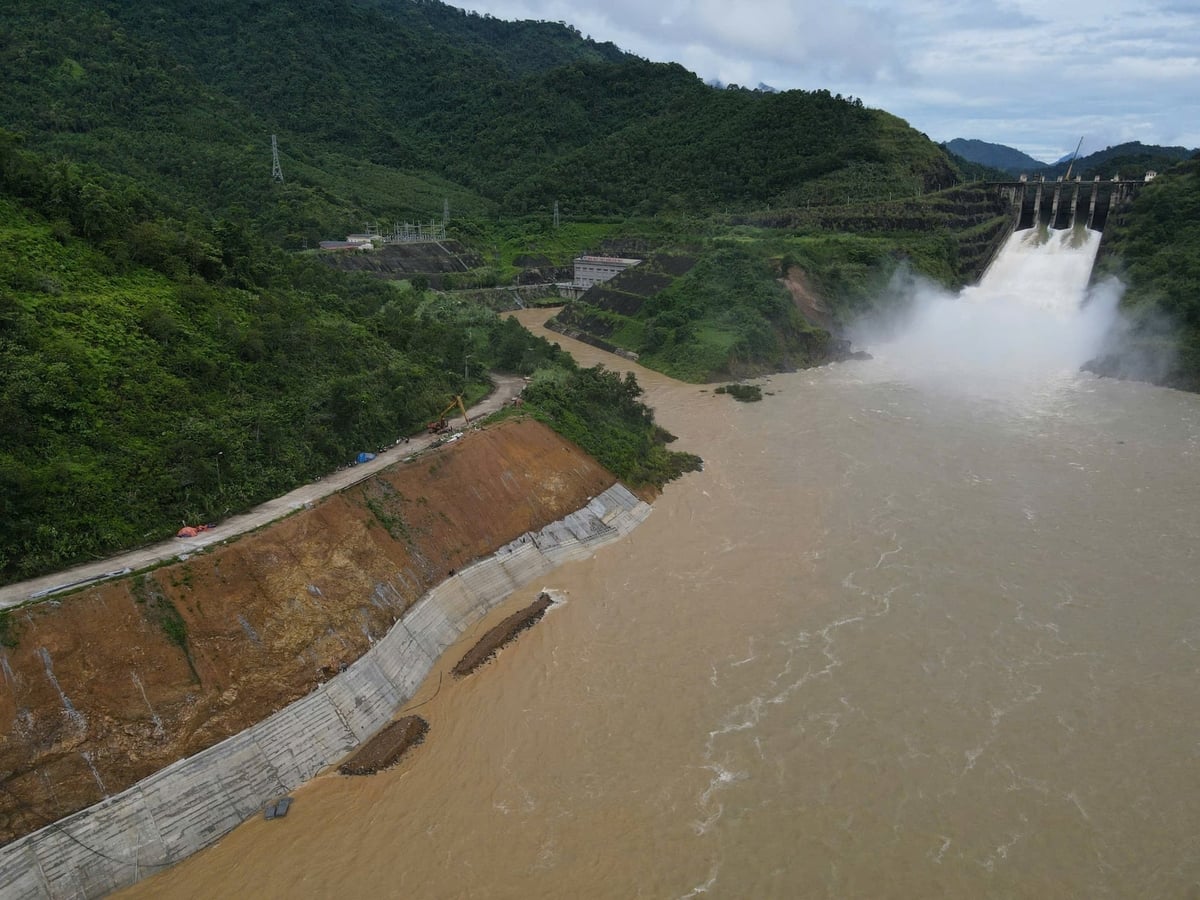
Choosing the location to build Cua Dat Lake was a difficult decision. Photo: Thanh Tam.
After careful consideration, the Government decided to choose route III, the current location of Cua Dat dam, 18 km from Bai Thuong dam. Although the geology is complicated and the cost is higher, this option preserves the rice growing area, ensures food security, and only requires the relocation of about 10,000 people, in line with the long-term interests of the community.
The Cua Dat Lake migration process is considered the largest "mass migration" in Thanh Hoa province with more than 2,000 households and 10,000 people, mainly Thai ethnic people who have lived for a long time in Thuong Xuan district (old). To mobilize, officials from the province to the district and commune had to go to the villages, step by step explain the common benefits, inventory the land, and guide resettlement.
Mr. Pham Van Chanh, 68 years old, a member of the Land Clearance Council, recalled: “Any Vietnamese person has the mentality of not wanting to leave their homeland, far away from their “birthplace”. With 2,000 households having to relocate, 3 communes being “erased”, we had to be patient step by step, explaining so that they understand that the construction of the lake is not only for the locality but also for the entire agricultural and irrigation sectors of the province”.

Mr. Chanh spent years "eating dew and sleeping in the forest" to mobilize people to migrate. Photo: Thanh Tam.
There are particularly difficult cases, such as that of Ms. Le Thi Loc in Cua Dat village, Xuan My commune. Despite receiving compensation in 1999, she secretly returned to erect a temporary shelter on her old land, forcing the authorities to forcibly relocate her to ensure her safety.
Spiritually, the Thai people avoid digging up their ancestors’ graves. Thousands of graves are forced to remain in the lake, making people reluctant to leave. Civil service officers must be both patient and knowledgeable about customs and beliefs to mobilize the people.
For 4 years, Mr. Chanh and his members worked hard, both mobilizing the people and taking inventory of the land. When paying compensation, he had to hire a motorbike taxi to carry each sack of money into the village. The farthest commune was Xuan Lien, isolated, so he had to leave his bicycle in Xuan Khao commune, then climb the Bu Lau cliff for nearly 5 hours to reach the commune center. Mr. Chanh brought food to stay for many days.
Thuong Xuan District People's Committee also sent officials to survey the resettlement area first, then return to propagate and mobilize people.
After many years, Cua Dat Lake was completed, providing a stable water source, helping agriculture develop, reducing floods and droughts. However, the loss of families who had to leave their ancestral land cannot be denied. Many people still talk about their old village, remembering the roads, fields, and ancestral graves that could not be moved. The migration process, despite material support and resettlement, still left scars in the minds of the people, especially the elderly.
In reality, the hardships and sacrifices of the people today have contributed to protecting the safety of tens of thousands of people downstream, maintaining agricultural production and developing the regional economy. Cua Dat Lake is the balance between socio-economic development and human values.
Source: https://nongnghiepmoitruong.vn/quyet-sach-lon-phat-trien-nong-nghiep-thanh-hoa-bai-1-ho-cua-dat--cuoc-dai-di-dan-vi-hanh-phuc-nhan-dan-d787762.html













![Green tea pork: [Part 2] A new specialty brand from Thai Nguyen](https://vphoto.vietnam.vn/thumb/402x226/vietnam/resource/IMAGE/2025/12/10/1765338249553_2114-img_6953-nongnghiep-112106.jpeg)





![[Photo] Urgently help people soon have a place to live and stabilize their lives](/_next/image?url=https%3A%2F%2Fvphoto.vietnam.vn%2Fthumb%2F1200x675%2Fvietnam%2Fresource%2FIMAGE%2F2025%2F12%2F09%2F1765248230297_c-jpg.webp&w=3840&q=75)























































Comment (0)