


Mr. Duy's house is in the suburbs. His wife works as a seamstress in their hometown, while he works as a security guard in the city because his back aches and he can no longer work in the fields under the scorching sun. The couple divides their earnings in half; one half goes towards tuition fees of 40 million VND per year, and the other half covers rice and utility bills. At an age when many people stay home to look after their grandchildren, Mr. Duy still struggles through long nights worrying about making ends meet.
One year younger than Mr. Duy, Associate Professor Dr. Tran Van Hai, former Head of the Faculty of Management Science, University of Social Sciences and Humanities (Hanoi National University), still goes to teach every day even though he has been retired for two years. But Mr. Hai does not go to work because of economic pressure and fear of "aging" too soon. "If I do not go to work, I am afraid that my body will weaken and my mind will gradually fade. Looking at the atmosphere at school, I feel younger," he laughed.
Whether driven by financial needs or a desire to avoid being forgotten, older Vietnamese people are increasingly present in the workforce. More importantly, this presence signals a major storm approaching rapidly: Vietnam's population is aging at a pace that the economy has yet to adapt to.
As of September 27, 2025, Vietnam had 16.5 million people aged 60 and over, accounting for 16% of the population. According to the United Nations Population Fund (UNFPA), Vietnam officially entered the population aging stage in 2011 and is expected to become an "aged society" in 11 years, in 2036 when this rate reaches 20%.
According to UNFPA and the World Bank, Vietnam is among the countries with the fastest aging populations globally. While it took France 115 years and Sweden 85 years for the percentage of people aged 65 and over to increase from 7% to 14%, Vietnam only took about 25 years to complete this transition – comparable to the pace of Japan and Thailand.
Made with Flourish • Create a scatter plot
Against the backdrop of a rapidly aging population, Vietnam has only recently emerged from the lower-middle-income group of countries. By 2025, per capita income is projected to reach only about US$4,900 – the initial stage of upper-middle income and still a considerable distance from the high-income threshold (approximately US$13,845 per year). Meanwhile, Vietnam aims to become a developed, high-income country by 2045, in 20 years' time. The challenge of "aging before becoming rich" thus becomes a central issue for economic growth and social welfare in the coming decades.
According to experts, if Vietnam does not soon develop long-term and strong policies, it will have to pay the price for its delay. And the warning signs are already very clear.
Currently, nearly 99% of elderly people rely on family care, while the nuclear family model (two generations) is becoming increasingly common. Children work, care for young children, and also shoulder the responsibility of caring for their elderly parents – a "pincer" that easily leads to financial exhaustion for the entire family. Meanwhile, a professional care system for the elderly is virtually non-existent, from daycare and inpatient services to long-term care.
Economic pressures are also exposing the biggest loophole in the social security system. Only about a quarter of elderly people in Vietnam have pensions or benefits, meaning that the majority of the remaining three-quarters of the elderly in society are forced to rely on meager savings or financial support from their children. Cases like Mr. Duy's are not uncommon: old age, illness, no pension, and working to make ends meet amidst a difficult economic context with high living costs, work pressure, and daily caregiving responsibilities.
In reality, Vietnam is rapidly approaching the point of "getting old before getting rich." The population is aging rapidly, but the social security system and economy haven't yet grown strong enough to support the elderly. As the burden of care and finances falls on young families, Vietnam faces not only the challenge of social security but also the risk of losing momentum in future development.

Population aging is not only a problem for the elderly but also for young people.
Ms. Han (34 years old, Hanoi ), a dentist, has a daughter. Although she wants a larger family, she has not yet thought about having a second child. Her job requires constant professional updating, while if she gets pregnant, she will have to stop for at least 9 months. Both her parents work in the medical field, so it is difficult to ask for help taking care of the child. Hiring a housekeeper is not easy, because of safety concerns and concerns about not being able to raise children. Children often get sick, and taking long days off work is almost impossible for her.
In another perspective on young urban life, My Anh (29 years old) and her boyfriend have been together for six years but have never considered marriage or having children. It's not because of finances or health issues, but because she believes marriage isn't a "mandatory" path to happiness. Having experienced a broken family in the past, she believes that love can be strengthened by commitment, not necessarily by a wedding.
Young people, especially in urban areas, are increasingly getting married late, or even not wanting to get married and being afraid to have children like Han or My Anh is not uncommon. This is the main reason why the fertility rate of Vietnamese women has decreased rapidly since 2023, slipping below the replacement level (2.1 children/woman).
In 2023, Vietnam's average fertility rate was 1.96 children/woman and this number will continue to decrease to 1.91 children/woman in 2024, lower than the average of Southeast Asian countries (2 children/woman) and only higher than 4 countries in the region: Brunei (1.8 children/woman), Malaysia (1.6 children), Thailand and Singapore (1 child/woman).
As birth rates continue to decline, the proportion of children under 15 will decrease, while the proportion of the elderly will increase, leading to an imbalance in the population structure and a faster end to the demographic dividend. Furthermore, if replacement birth rates are not maintained, the population growth rate is projected to continue declining and reach a "stagnation" state between 2064 and 2069.
Made with Flourish • Create a data story
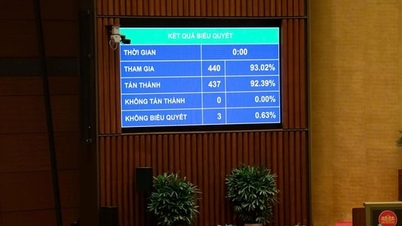
After decades of implementing a birth control policy with the regulation that "each couple should only have 1 to 2 children," it is only in recent years that attention has been paid to maintaining the replacement fertility rate. In the draft Population Law currently being discussed by the National Assembly, the Ministry of Health proposes several policies aimed at maintaining the replacement fertility rate, such as a strategy to combat population aging. Women giving birth to a second child will have their maternity leave extended by one month, while men will receive an additional five days of leave when their wives give birth.
The law also proposes financial support of approximately 2 million VND for ethnic minority women, women who have given birth to two children before the age of 35, and localities with low birth rates. In addition, women who have given birth to two children or men who raise two children in cases of widowhood or widowhood will be given priority to purchase or rent social housing according to current regulations.
Although Minister of Health Dao Hong Lan stated that many aspects, especially resources, had been considered, many National Assembly deputies argued that the proposed policies were not strong enough and lacked feasibility. Professor Nguyen Thien Nhan (National Assembly deputy from Ho Chi Minh City) said that the solutions proposed in the draft law were insufficient to ensure the stable maintenance of Vietnam's replacement fertility rate.
Mr. Nhan calculated that, according to the Ministry of Health's proposal, a woman giving birth would receive support of 9-13 million VND per child. Meanwhile, raising a child from birth to adulthood (18 years old) requires at least 900 million VND. Therefore, the maximum support for women giving birth as stated in the draft is only 1-1.5% of the cost of raising a child.
"The Japanese government subsidized 22% of the cost of raising a child, but they failed to maintain the replacement fertility rate. If we subsidize 1-1.5% and consider it a success, maintaining that fertility rate firmly, in my opinion, it's far removed from reality," Mr. Nhan said at the National Assembly on November 10th during discussions on the draft Population Law.
According to Mr. Nhan, a simple truth, yet often overlooked by governments and unions, is the need to change wage policies. The minimum wage must be sufficient to support workers and provide a proper education for one child until the age of 18, thus allowing for the possibility of having one child, or for both parents working to support two children. If this requirement is not met, the country's fertility rate will never reach and maintain the replacement level.
A minimum wage that is enough to live and raise two children as proposed by Mr. Nguyen Thien Nhan may be a necessary condition, but not sufficient, according to experts.
Dr. Pham Thi Lan (Head of Population Development Department, UNFPA), assessed that policies focusing on financial support to encourage childbirth will not be effective if they do not touch the root cause to comprehensively solve the problem. Although the economy is the main cause, decisions to have children are also influenced by many other factors such as the fear of career interruption, lack of childcare services, living conditions and changes in the concept of marriage and family of the younger generation, such as the cases of Han and My Anh mentioned above.
Made with Flourish • Create a data story
Not to mention, according to Dr. Pham Thi Lan, financial support in areas with low birth rates can increase inequality, because these are mainly economically better areas. Meanwhile, the birth promotion policy for ethnic minorities while the birth rate in this area is already very high, even double the replacement rate, will increase serious health and social problems such as high home birth rates, incestuous marriages, early marriages or high infant mortality rates...
In addition, increasing maternity leave for women giving birth to a second child risks creating inequality as 60% of women working in the informal sector (doing jobs without salary, insurance, or benefits) will not benefit from this policy...
But even a more comprehensive and coordinated approach to the issue does not guarantee that replacement fertility will be maintained. In fact, despite spending billions of dollars on financial support packages to promote fertility, no country has yet brought fertility back to the replacement level, according to UNFPA experts.
South Korea is the clearest example of the limits of birth promotion policies. Since 2018, this country has had a birth rate below 1 for 7 consecutive years - the lowest level in the world. Although the government has spent tens of billions of dollars on support packages for childbirth, housing, financial subsidies and family welfare, the birth rate has not recovered. According to Professor Giang Thanh Long (National Economics University), financial support only partially solves the problem of birth promotion because there are many challenges in terms of employment, stable income as well as the burden of taking care of both young children and elderly parents, especially for women.
Even if governments correctly identify the bottlenecks and expand policies with better support, pro-natalist policies can only help slow down the decline, but cannot restore the previous birth rate. For example, according to Professor Long, Japan, although it has not been able to raise the birth rate back to the previous level, has maintained a stable total fertility rate (TFR) around 1.1 - 1.2 children per woman over the past decade.

Instead of focusing on bringing the birth rate back to the replacement level through birth promotion policies, many experts believe that it is necessary to have a proactive adaptation strategy soon to turn population aging into an opportunity instead of a burden.
The draft Population Law being discussed by the National Assembly has devoted one chapter with three articles to policies to adapt to population aging, including support services, care for the elderly at home and in the community, as well as development of human resources for elderly care. Provincial authorities will also support the cost of purchasing health insurance cards for the elderly who do not have one...
Many National Assembly delegates shared the same opinion that the draft regulations are "too insufficient" and "not a breakthrough" compared to issues of adapting to an aging population.
With 14 million elderly people requiring regular medical care and 99% being cared for at home, the need for support and care services for the elderly is enormous. However, a professional care system for this group is almost non-existent. As of 2024, Vietnam only had over 400 elderly care centers, serving approximately 11,000 people – a very small number compared to Vietnam's current 16.5 million elderly population.
Why are elderly care centers struggling despite the urgent and significant need? Deputy Chair of the National Assembly's Committee on Citizen Petitions and Supervision, Tran Thi Nhi Ha, explains that Vietnam lacks the necessary support in terms of resources, land, and policies for these models to succeed. According to Ms. Ha, this gap needs to be filled by a Population Law. The general regulations on support and care for the elderly, as outlined in the draft, are insufficient.
Dr. Pham Thi Lan argues that, despite regulations, elderly care is currently too focused on medical care and not enough on holistic health care. Similarly, the development of human resources for elderly care only addresses geriatric medical staff while neglecting other care groups.
In reality, the rapid aging of the population poses a great challenge to many countries, but also opens up new economic development space, known as the "silver economy" (also known as the "silver-haired economy") - an economy that serves the increasingly diverse needs of the elderly.
According to Professor Giang Thanh Long, in the "silver economy", the elderly are both consumers and producers and there is no field without a "silver economy". The important thing is to correctly grasp the market needs of the elderly and their ability to pay.

The aged care market in Vietnam is projected to reach US$4.79 billion by 2031, more than double the US$2.21 billion figure from 2023.
It is estimated that in 2020, revenue from goods and services related to the "silver economy" in the global market reached approximately US$15 trillion and is projected to increase to US$30.6 billion in the next five years. If considered independently, the "silver economy" would be the world's third largest economy, after the US and China. In Vietnam, according to research by Data Bridge Market Research (2024), the elderly care market alone is expected to reach US$4.79 billion by 2031, more than double the US$2.21 billion figure from 2023.
Standing Vice President of the Central Committee of the Vietnam Association of the Elderly Truong Xuan Cu said that the "silver gray matter" human resource is also a part of the "silver economy". According to him, along with caring for the elderly, it is necessary to promote the elderly as a human resource and a contributor to the economy.
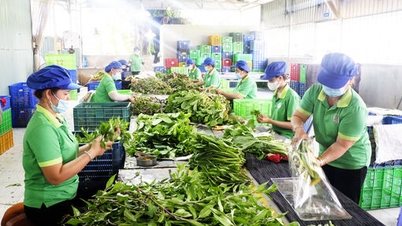
Mr. Cu said that, with 16.5 million elderly people (over 60 years old) today, about 7 million people are still working and participating in production; 400,000 people are still business owners, factory owners, and cooperatives. "Their contribution to the economy is extremely significant," Mr. Cu said, emphasizing that policies to promote the role of the elderly in the aging population are extremely necessary.
Ms. Tran Thi Nhi Ha suggested that the elderly should be considered as a high-quality human resource with skills and work experience. If they are healthy enough to work and have the desire, the elderly can completely continue to participate in the labor market. She suggested adding regulations to the draft law on employment policy for the elderly, which specifically stipulates the conditions for the elderly to extend their working time at the agency when they reach retirement age if they wish.
To create jobs suitable for elderly workers, Professor Giang Thanh Long said that it is necessary to synchronize policies and programs in the labor market for the elderly. He recommended learning from Thailand with a policy of retraining or improving skills so that the elderly can meet market demands, even supporting the elderly to start a business in fields suitable to their experience and skills. There should be job centers that closely connect the elderly who need to work with employment providers (enterprises).
Along with that are specific policies and sanctions against age discrimination in the labor market as well as inspection mechanisms to ensure that businesses recruit older workers in the right positions and working conditions.

Population aging is not a risk, but an “irreversible” law when a society develops. Therefore, according to Professor Giang Thanh Long, the problem now is not the “gloom” of an aging population.
From now until 2036, Vietnam has 11 years left of its demographic dividend. With 20 years of research on population aging, Mr. Long stated that this is a short but crucial "window of opportunity," requiring Vietnam to implement a comprehensive set of solutions to transform its demographic advantage into a driving force for sustainable development before entering a stage of deep aging.
Made with Flourish • Create a chart
Economically, Vietnam needs to redefine its growth model to rely more on productivity and quality of labor instead of cheap labor. Applying technology, digital transformation and training highly skilled human resources must be considered urgent tasks.
“This is the only way to effectively utilize the young workforce, while creating a foundation to improve competitiveness as the population enters the aging stage,” said Professor Long.
Regarding social security, the current system needs to be expanded and strengthened to cover more population groups, especially informal workers - those at very high risk of not having a pension when they get old.
Professor Long also recommended considering piloting, evaluating and implementing a long-term care insurance model like in Japan and South Korea to reduce the financial burden of caring for the elderly when the number and need for care are increasing.
“Finally, an important foundation is to create good job opportunities for young people to be able to accumulate finances,” Mr. Long emphasized. “When workers have a stable income and enough savings, they will be less dependent on state support when they retire, and at the same time reduce pressure on the social security system in the future. This is not only an economic policy - but also a long-term investment in the autonomy of each citizen when Vietnam enters an aging society,” Professor Long analyzed.
Along with taking advantage of the remaining “window of opportunity” of the golden population, according to UNFPA, a proactive strategy to adapt to population aging needs to be designed and implemented today in an integrated and inter-sectoral manner - linking health, social and economic systems - to ensure that Vietnam can adapt effectively and equitably in the demographic transition.
Co-ordinated planning across ministries, sectors and levels of government will play a key role in enhancing resilience and ensuring the well-being of both current and future generations of older people. There is no more powerful policy than changing the whole society’s awareness – when each individual proactively prepares for old age from a young age. A whole-of-society approach to population ageing adaptation is essential to ensure that every Vietnamese person enjoys a healthy, happy and dignified old age.
"To enter the aging population phase, we need to proactively prepare the policy foundation, services, and social security system now to take advantage of the remaining time of the demographic dividend while preparing for an aging population, aiming for the health and dynamism of the entire population. Once we have a healthy, intelligent, and skilled population, Vietnam will have a great impetus for high growth and economic development in the future," said Professor Giang Thanh Long.
*The names of some characters in the story have been changed.
* The article uses data from reports of UNFPA, World Bank, General Statistics Office (Ministry of Finance).
Thanhnien.vn
Source: https://thanhnien.vn/viet-nam-truoc-noi-lo-chua-giau-da-gia-185251207163708518.htm


![[Photo] Explore the US Navy's USS Robert Smalls warship](/_next/image?url=https%3A%2F%2Fvphoto.vietnam.vn%2Fthumb%2F1200x675%2Fvietnam%2Fresource%2FIMAGE%2F2025%2F12%2F10%2F1765341533272_11212121-8303-jpg.webp&w=3840&q=75)

































































































Comment (0)