

From midnight on December 10th, Australia officially banned users under 16 from using social media.
Banning social media use increases concentration.
Numerous studies have identified social media as one of the factors contributing to the decline in mental health among teenagers, disrupting sleep and reducing concentration. Children are spending less and less time playing freely with friends or exploring nature, limiting their opportunities for learning and real-world development.
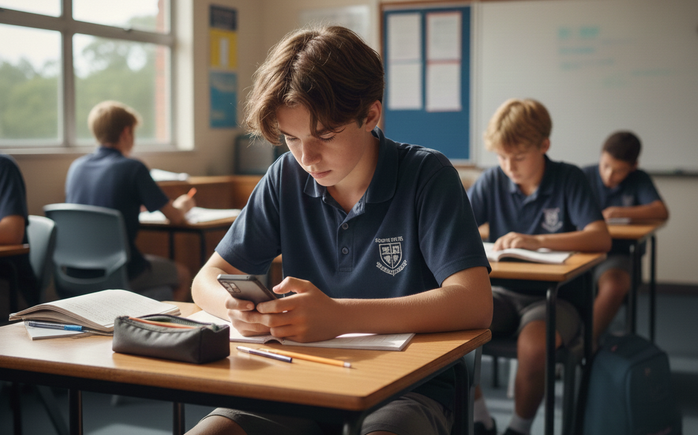
Australia bans people under 16 from using social media. Photo: AI
According to Ms. Vu Bich Phuong, a psychology lecturer at RMIT University Vietnam, this move demonstrates Australia's determination to address sophisticated cybercrimes and risks targeting children. The social media ban also aims to promote shared responsibility between parents and tech giants. However, this does not mean the ban can be applied in other countries.
"In Vietnam, we can look around and see children watching short videos on TikTok or Facebook using their parents' or grandparents' phones. They don't need their own accounts to use social media, yet they can still access it," Ms. Bich Phuong cited as an example.
Owning an account and passively viewing social media content are two completely different things. Many platforms also have public content that doesn't require login to view.
According to Ms. Bich Phuong, another issue that also needs attention is gender equality. Girls often use social media platforms like Instagram and TikTok, while boys spend more time playing team games with friends online.
Appropriate measures are needed.
Dr. Jeff Nijsse, a senior lecturer in software engineering at RMIT University Vietnam, suggests that the ban could also cause teenagers to switch to other messaging and gaming platforms like WhatsApp, Discord, and Roblox, or use VPNs to mask their geographical location.
According to Dr. Jeff Nijsse, VPNs can mask IP addresses but can also bypass geo-segmentation algorithms, isolating users from local groups of friends and providing irrelevant content from foreign regions. Free VPN apps can even pose more risks, such as malware.
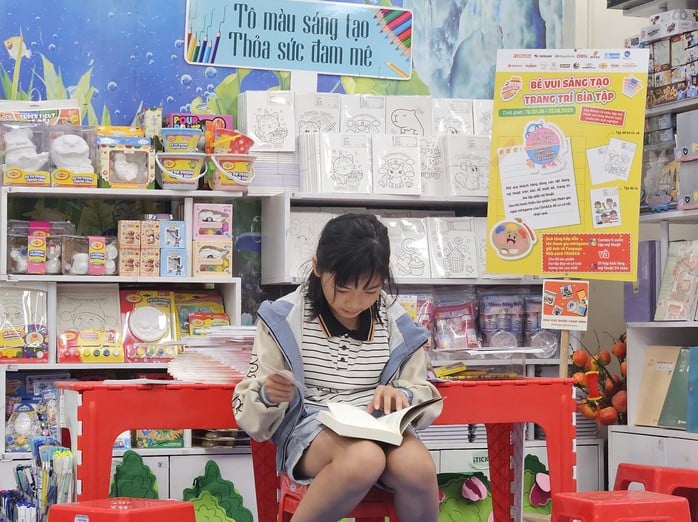
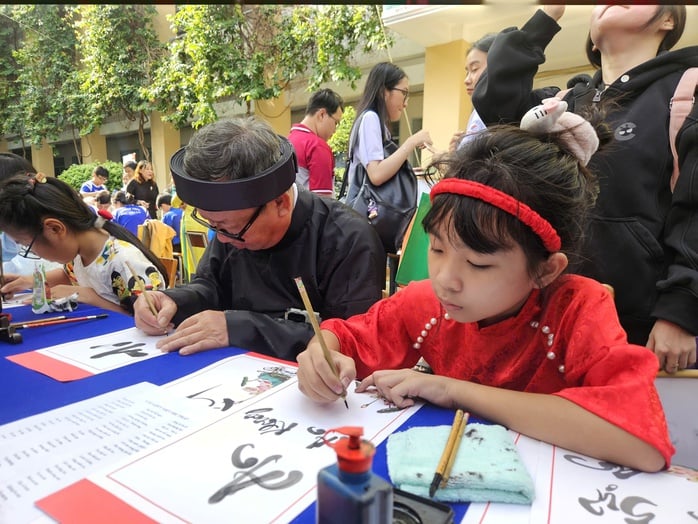
Limiting social media use will give children more time to participate in healthy recreational activities.
According to experts, Vietnamese parents need to be more aware of their children's online activities, have in-depth conversations with their children about their online activities, and learn about available digital safety tools to block harmful content, limit screen time, and prevent contact with strangers online.
Instead of completely banning social media, a more effective solution is to require technology companies to comply with creating a safer online environment for children and teenagers. "This is especially important because children's use of artificial intelligence (AI) tools will explode rapidly in the next few years," emphasized Ms. Bich Phuong.
Opinion poll
Should Vietnam ban users under 16 from using social media, like Australia does?
You can select 1 item. Your vote will be public.
Ho Chi Minh City is piloting a no-phone break time program.
Starting in October 2025, the Ho Chi Minh City Department of Education and Training will pilot a program to create a healthy school environment and limit the use of mobile phones during recess at 16 educational institutions across 16 professional clusters.
From January 2026, units will report initial results, and the Department of Education and Training will compile the data, conduct an overall assessment, and make adjustments and provide additional guidance for the next phase.
Source: https://nld.com.vn/uc-cam-tre-duoi-16-tuoi-dung-mang-xa-hoi-viet-nam-co-nen-ap-dung-196251210114346378.htm
![[Photo] The captivating scenery of the fragrant maple forest in Quang Tri](/_next/image?url=https%3A%2F%2Fvphoto.vietnam.vn%2Fthumb%2F1200x675%2Fvietnam%2Fresource%2FIMAGE%2F2025%2F12%2F10%2F1765353233198_lan09046-jpg.webp&w=3840&q=75)


![[Photo] Explore the US Navy's USS Robert Smalls warship](/_next/image?url=https%3A%2F%2Fvphoto.vietnam.vn%2Fthumb%2F1200x675%2Fvietnam%2Fresource%2FIMAGE%2F2025%2F12%2F10%2F1765341533272_11212121-8303-jpg.webp&w=3840&q=75)
















![[Video] The craft of making Dong Ho folk paintings has been inscribed by UNESCO on the List of Crafts in Need of Urgent Safeguarding.](https://vphoto.vietnam.vn/thumb/402x226/vietnam/resource/IMAGE/2025/12/10/1765350246533_tranh-dong-ho-734-jpg.webp)











































Comment (0)