

On the morning of December 10th, the National Assembly officially voted to approve the amended Personal Income Tax Law. The amended law will come into effect on July 1st, 2026.
Keep the transfer tax at 2%.
One of the issues of greatest public concern is the method of calculating taxes when selling real estate. Article 14 of the Law stipulates that resident individuals transferring real estate will pay a tax of 2% on the transfer price (selling price).
Previously, this issue sparked heated debate when the Ministry of Finance presented two options, including a proposal to tax 20% on profit (selling price minus purchase price and expenses). However, the majority argued that determining what constitutes "profit" and what constitutes "reasonable expenses" is complex, time-consuming to verify, and prone to corruption. Therefore, the National Assembly unanimously agreed on a 2% tax on the selling price. This is the currently applied method, considered the simplest and easiest to implement.
Speaking to the Nguoi Lao Dong newspaper after the law was passed, Dr. Pham Viet Thuan, Director of the Institute of Resource and Environmental Economics in Ho Chi Minh City, commented: "Maintaining the 2% rate is a safe and familiar option. Although the 20% calculation on profits seems fairer (losses are not taxed) and is preferred by professional investors, for the vast majority of people who rarely trade, the 2% calculation helps them avoid the hassle of proving input costs."
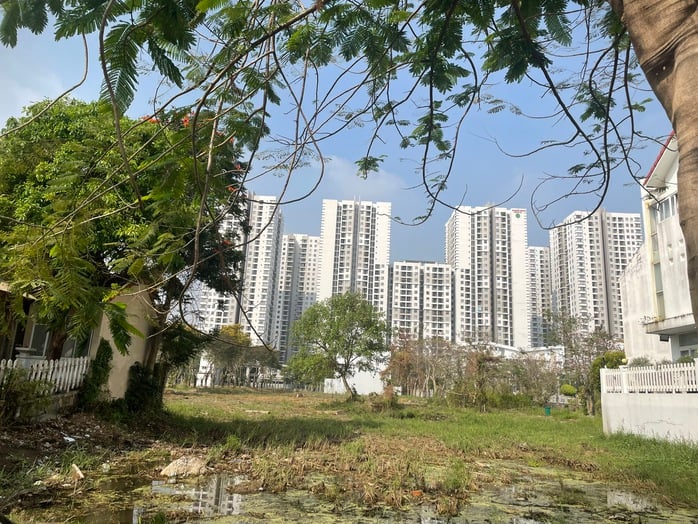
Real estate sales transactions are subject to a 2% tax on the transaction value.
Rental property: Only those with revenue exceeding 500 million VND need to worry about paying taxes.
Another notable new development that brings good news to many homeowners is the raising of the tax threshold for rental property activities.
Specifically, for individuals renting out real estate (excluding accommodation businesses such as hotels and homestays), personal income tax will be calculated at 5% multiplied by the portion of revenue exceeding 500 million VND per year.
This regulation is considered much more open than before. The goal is to simplify administrative procedures as much as possible: people with rental properties generating significant revenue (over 500 million VND) only need to pay a fixed tax on the excess amount, without having to meticulously account for expenses or go through complicated year-end tax settlement procedures.
Source: https://nld.com.vn/tin-vui-cho-nguoi-mua-ban-bat-dong-san-va-cho-thue-nha-19625121012022548.htm
































![[Video] The craft of making Dong Ho folk paintings has been inscribed by UNESCO on the List of Crafts in Need of Urgent Safeguarding.](https://vphoto.vietnam.vn/thumb/402x226/vietnam/resource/IMAGE/2025/12/10/1765350246533_tranh-dong-ho-734-jpg.webp)


















































Comment (0)