


Strategic positioning and new tastes: From geopolitics to green technology
The Vietnamese mergers and acquisitions (M&A) market is undergoing a significant restructuring, where deals are no longer just asset transfers but have become strategic tools helping domestic businesses diversify, enhance competitiveness, and expand globally. A key highlight of the 2025 cycle lies in the clear shift in investor preferences, driven by a stable macroeconomic environment and global changes.
According to economic and financial experts, Vietnam is maximizing its outstanding geopolitical advantages, becoming a preferred destination in the trend of shifting supply chains to stable and friendly countries. Notably, reports from McKinsey & Company and opinions from experts emphasize that Vietnam's deep integration and maintenance of economic stability have led multinational corporations to view M&A as the fastest way to establish or optimize supply chains. This shift is no longer limited to accessing the domestic consumer market, as in deals of previous decades, but has focused on expanding production capacity and optimizing operations (as seen in the Kokuyo-Thien Long and SMA-Bibica deals).
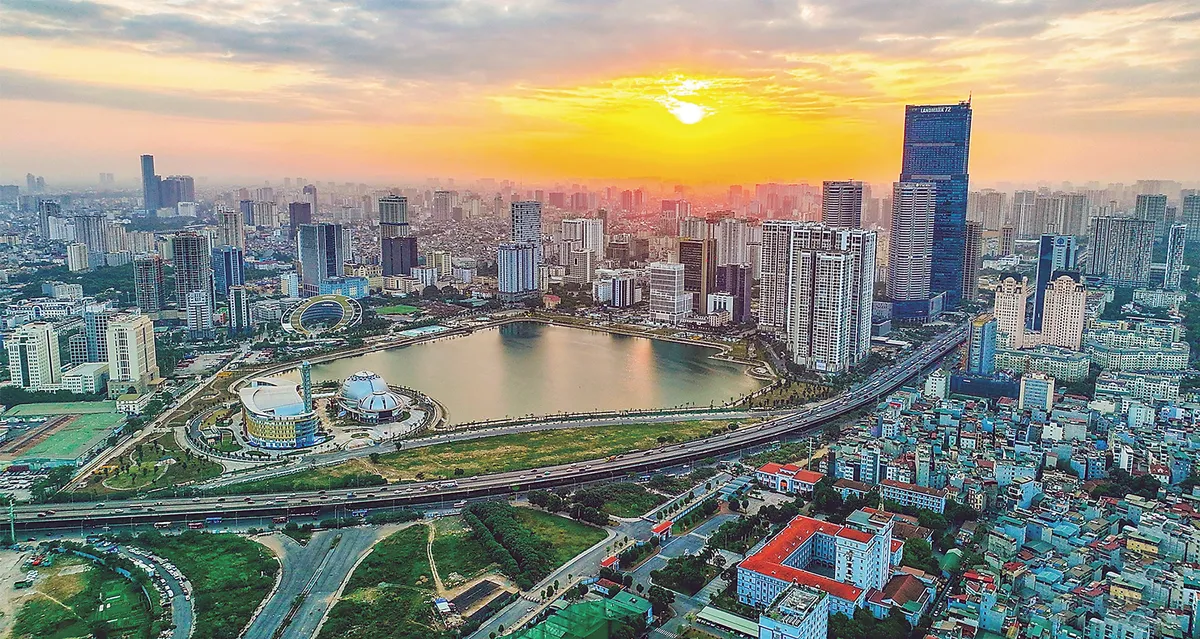
The Vietnamese mergers and acquisitions (M&A) market is undergoing a significant restructuring.
Along with that, the "sharks' appetite" has fundamentally changed. While traditional sectors like real estate, finance, and fast-moving consumer goods (FMCG) previously dominated, capital is now flowing strongly into emerging economic sectors. Technology, renewable energy, and sectors that meet ESG (Environmental, Social, Governance) standards have become the focus. According to Ms. Nguyen Thi Ngoc Dung, Managing Director of PwC Vietnam, major global investors now view ESG as a mandatory standard, rather than just a plus. At the same time, Ms. Dung emphasized that a lack of a clear ESG strategy can lead to undervaluation of target companies' assets. This is driven by global policies such as the European Union's Carbon Border Adjustment Mechanism (CBAM) or the US Inflation Reduction Act (IRA), which compel exporting businesses to transition to green.
In the technology sector, the emergence of deals related to artificial intelligence (AI) and green technology represents a new step forward. Foreign companies are seeking Vietnamese startups or businesses capable of integrating high technology into their value chains. Domestic investors are also demonstrating renewed confidence and capacity in participating in large-scale deals, affirming the position of local businesses in shaping the market.
Untangling legal bottlenecks for billion-dollar deals.
Although the Vietnamese M&A market is facing great opportunities, challenges in terms of the legal framework and transparency remain obstacles that need to be overcome to pave the way for multi-billion dollar deals.
The core issue lies in debt restructuring and asset disposal in struggling sectors, particularly real estate and finance. Delays in this process have created opportunities for financially strong investors to acquire assets at reasonable prices. However, a prerequisite for facilitating these transactions is policy clarity.
The amended Land Law is expected to be a significant "policy boost," helping to enhance transparency and simplify procedures related to land and valuation. Michael Piro, CEO of Indochina Capital, pointed out that creating a transparent land valuation mechanism, along with addressing issues related to changes in land use, is crucial to minimizing legal risks for both buyers and sellers.

Transparency in governance, compliance with ESG regulations, and the ability to meet international standards are decisive factors.
However, many economic experts also warn about "legal gaps." Although the law has been enacted, the delay in issuing detailed guiding documents or the ineffective coordination between administrative levels in the implementation process has slowed down the transaction speed. Dr. Le Minh Phieu, founding lawyer of LMP Lawyers, noted that this lack of coordination leaves investors facing uncertainty, prolonging the due diligence and transaction completion time.
Furthermore, Vietnam's goal of upgrading its stock market (expected to become a Secondary Emerging Market under FTSE Russell by 2026) places higher demands on corporate governance. Ms. Vu Thi Chan Phuong, Chairwoman of the State Securities Commission, emphasized that transparency in governance, compliance with ESG regulations, and the ability to meet international standards are crucial factors not only for the upgrade but also for the attractiveness of businesses to global strategic investors.
M&A in Vietnam in 2025 is not just about capital flows, but about qualitative transformation. The market is demanding that Vietnamese businesses shift from a "follower" position to a "leader" position through restructuring, technology adoption, and building management capabilities according to international standards, especially ESG. The combination of geopolitical advantages and efforts to improve the legal framework will be a dual driving force for the Vietnamese M&A market to create new records in a sustainable growth cycle.
Source: https://vtv.vn/ma-nam-2025-van-hoi-moi-tu-tai-cau-truc-va-tieu-chuan-ben-vung-100251209222357836.htm





























![[Video] The craft of making Dong Ho folk paintings has been inscribed by UNESCO on the List of Crafts in Need of Urgent Safeguarding.](https://vphoto.vietnam.vn/thumb/402x226/vietnam/resource/IMAGE/2025/12/10/1765350246533_tranh-dong-ho-734-jpg.webp)
























































Comment (0)