

The "grey areas" in spontaneous volunteering.
In recent days, social media has been abuzz with discussions surrounding the "Nurture Your Child" project, as hundreds of "foster parents" have complained about duplicate account numbers, mismatched child data, and the management of hundreds of billions of dong in funds through personal accounts without independent audits. Suspicion spread rapidly, leading to pressure to freeze accounts, stop accepting contributions, and review the entire system.
That incident was just one small part of a larger picture of spontaneous charitable activities. On social media, it's not difficult to find urgent calls for help, many touching videos , and stories that spread at lightning speed. And from there, not a few cases have slid into legal ambiguity, eventually ending in litigation.
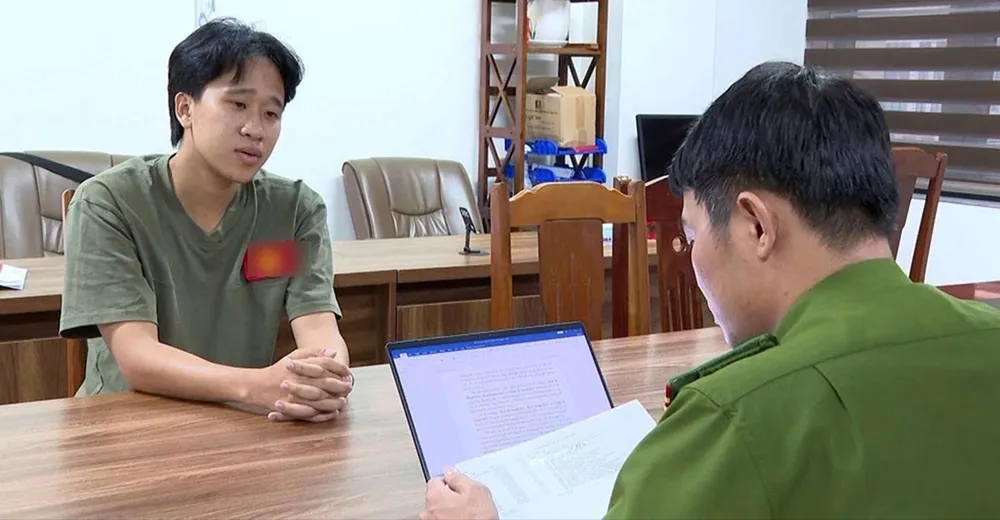
Most recently, the Criminal Police Department of Thanh Hoa Provincial Police expanded its investigation into the case involving Dao Quang Ha (24 years old, residing in Hung Yen), the administrator of the "Ha and Vietnam" fanpage and a member of the Dak Lak Provincial Charity Group. According to the investigation, after a traffic accident between a charity vehicle and a civilian, despite not being present at the scene, Ha reposted the video with offensive comments, attracting a large number of comments. Seeing the rapid increase in attention, Ha publicly shared his personal bank account number to "solicit donations" and misappropriate charity funds.
In Dien Bien, on October 5th, the Provincial Police Investigation Agency arrested and detained Nong Thi Thu Thuy (born in 1994, Dien Bien Phu ward) on charges of abusing trust to misappropriate property. For many years, Thuy cultivated an image of a "compassionate woman," continuously posting heartbreaking stories accompanied by earnest appeals for help. Many philanthropists trusted her and sent money, but according to the investigation, Thuy used a significant portion of that money for personal purposes.
The Ministry of Interior proposes tightening the management of charitable funds.
The Ministry of Interior has proposed a new decree regulating the management of social and charitable funds to tighten control over the mobilization and use of community resources. The draft emphasizes clarifying the funds' operating principles, establishing a unified database, and absolutely prohibiting business-oriented activities such as accepting deposits, lending, or making profitable investments under the guise of charity. Simultaneously, fund operations will be decentralized, enhancing supervision and accountability.
Filling legal gaps
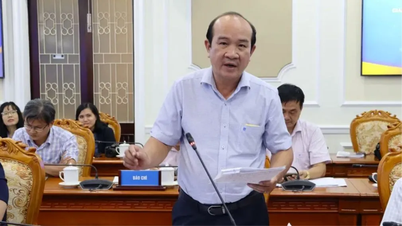
Regarding appeals for charitable donations, lawyer Nguyen Phuoc Long, a member of the Standing Committee of the Ho Chi Minh City Bar Association, suggested that special caution should be exercised with online appeals, and that information should be thoroughly verified before deciding to contribute to charity.
He stated that, according to Decree 93/2021 and Decree 136/2022, individuals soliciting, receiving, and distributing charitable funds must fully meet specific legal requirements. These include publicly disclosing the purpose, scope, and methods of fundraising; clearly announcing the fundraising deadline; using a separate account to receive contributions; keeping complete records of income and expenses; and coordinating with local authorities when distributing money and in-kind donations. These regulations create a clearer legal framework than before, especially regarding the requirement for information transparency.
However, according to lawyer Long, many loopholes still exist. The biggest shortcoming is the lack of specific sanctions for individuals who violate the regulations. Furthermore, the aforementioned decrees only regulate charitable activities related to natural disasters, epidemics, emergencies, or support for patients with serious illnesses. Other common charitable activities such as building bridges, schools, supporting the poor, and assisting those in difficult circumstances not caused by natural disasters are not clearly regulated, creating a legal "grey area" that is easily exploited.
Lawyer Vuong Tuan Kiet (Ho Chi Minh City Bar Association) also analyzed that large-scale, spontaneous charitable models, with cash flows reaching hundreds of billions of dong but operating through personal accounts, are revealing a worrying legal "gap." Regarding recent cases of misappropriation of charitable funds, it can be seen that the crime does not stem from the act of soliciting donations, but from deception or misappropriation of funds contrary to commitments. Many people mistakenly believe that using personal accounts or lacking documentation is only an administrative violation, but if accompanied by concealment or dishonest explanations, it can absolutely lead to criminal prosecution.
According to lawyer Nguyen Phuoc Long, to minimize legal risks and build trust, individuals need to separate charitable funds from personal accounts, separate administrative costs from direct support costs, and keep each campaign distinct. They should also maintain complete VAT invoices, original receipts from recipients, and notification documents sent to local authorities. Furthermore, they should publicly disclose the purpose/duration of the fundraising, all bank statements, and detailed income and expenditure reports.
MSc. Nguyen Tran Phuoc , sociologist:
The embezzlement and exploitation of charitable funds continue despite legal regulations, primarily stemming from "emotional beliefs" and the weakening of current "social norms." These norms not only provide moral guidance but are also mandatory: individuals who violate them face public condemnation, loss of reputation, and even legal penalties.
However, when social oversight mechanisms are insufficient, and "being condemned" no longer serves as a deterrent, norms are easily rendered ineffective. Only when kindness is "institutionalized" through strong social principles and legal barriers can social trust in charitable activities be sustainably rebuilt.
Source: https://www.sggp.org.vn/thien-nguyen-tu-phat-and-the-framework-of-the-law-that-needs-to-be-perfected-post828015.html



























![[Video] The craft of making Dong Ho folk paintings has been inscribed by UNESCO on the List of Crafts in Need of Urgent Safeguarding.](https://vphoto.vietnam.vn/thumb/402x226/vietnam/resource/IMAGE/2025/12/10/1765350246533_tranh-dong-ho-734-jpg.webp)















































Comment (0)