

In the context of Vietnam's startup landscape, which still faces many risks and lacks effective mentoring models for young entrepreneurs, a new innovative model has emerged and is being expanded and has the potential for nationwide franchising.
Unlike traditional innovation centers that lacked mechanisms for creating value from the very beginning of operation, the next-generation Innovation Center 4.0 model - CT Innovation Hub 4.0 - is currently being implemented in Ho Chi Minh City.
This place is designed as a comprehensive creative operating system, where passion is activated, talent is connected, and ideas are transformed into real value.
This idea stems from the reality of young entrepreneurs in Vietnam, where most fledgling projects face risks right from the start and a large proportion fail before even reaching the real market.
The alarming figures of a startup failure rate of up to 70%, leading to consequences such as families losing assets and young people giving up midway, show that the current ecosystem lacks a sufficiently robust model to protect young people from unnecessary losses and guide them towards creating real value.
Mr. Tran Kim Chung, Chairman of CT Group, shared that, from that context, the group recognized the need for an innovative model capable of reducing risks right from the start, while also creating conditions for young people to access the real market in a safer environment.
"This is an interesting problem, and we really enjoy solving it. The model we are developing could help reduce the failure rate of startups," said Kim Chung.
In Finland, private innovation centers provide problem-solving solutions while also directly receiving problems from businesses, incorporating them into entrepreneurship training and research programs, thereby creating highly applicable solutions. This approach is what has enabled Finland to continuously transition to a high-tech economy .
Meanwhile, in Israel – a country dubbed the "cradle of startups" – they have created a mechanism for extremely rapid commercialization through the "Fund of Funds" model, in which the project brief is provided by businesses, guaranteed by the government , and solved by universities.
The CT Innovation Hub 4.0 operates this model with a new mechanism connecting supply and demand through a series of high-tech solutions: solving real problems - creating real value - generating real profits, with the key point being the ability to transform the entire innovation process into a profitable one. The formula for generating profit in this Innovation Hub model is based on three core technologies: Web3, Blockchain, and AI.
In practice, this model offers clear benefits to all three parties: young people can start businesses more safely by directly accessing real-world problems and reducing financial risks through rapid commercialization; businesses gain a powerful source of innovation, where talented teams continuously provide optimal solutions to processes, improve productivity, and develop products with lower R&D costs; and society benefits from a profitable, self-operating, and scalable innovation infrastructure, thereby promoting the knowledge economy, digital transformation, and the formation of an internationally competitive startup ecosystem. This structure has proven effective in many countries and is being adapted to create long-term impact in Vietnam.
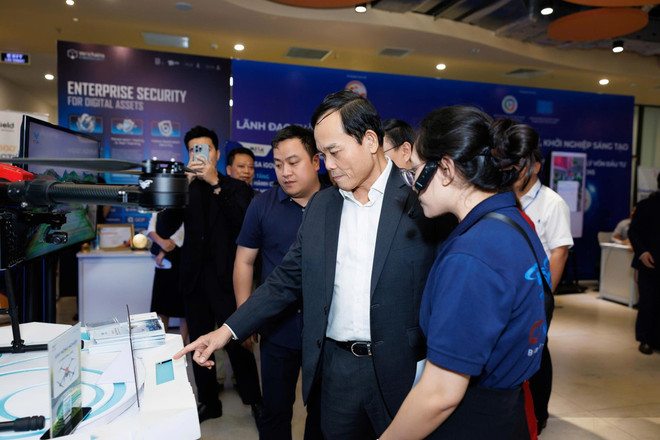
Currently, the model has its first franchisee in Hanoi, and several other domestic and international companies are also interested in implementing and expanding the model in their respective regions.
The proactive choice by regulatory agencies to grant franchises in their areas demonstrates the persuasive power of an innovative, profitable model that operates on core technology and has the potential to generate immediate economic value.
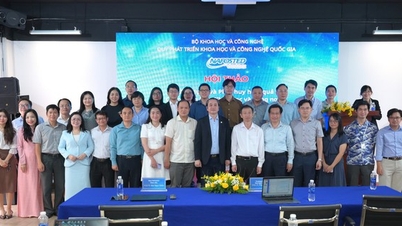
This model was highly appreciated when city leaders and the business community discussed the question posed by Ho Chi Minh City Party Secretary Tran Luu Quang: "What needs to be done to make Ho Chi Minh City a center for startups and innovation?" and "How to start, what are the priorities, and where are the resources?" at the event "City Leaders Meet with the Science, Technology, and Startup Community," which took place on December 9th.
If implemented, this model could become a powerful catalyst for the city's innovation ecosystem. With its large business scale, strong demand for digital transformation, and abundant young workforce, Ho Chi Minh City is an ideal environment for the model to maximize its effectiveness: creating numerous solutions to socio-economic problems, promoting technology commercialization, fostering a generation of internationally competitive startups, and most importantly, transforming innovation into a real economic resource, directly contributing to the city's growth in the coming years.
Source: https://www.vietnamplus.vn/mo-hinh-doi-moi-sang-tao-the-he-moi-se-thay-doi-cuc-dien-khoi-nghiep-o-viet-nam-post1082407.vnp



















































































Comment (0)