

Creating economic value from the tourism value chain.
Within the framework of the 2025 International Scientific Conference on the theme "Gender Equality and the Role of Women in Sustainable Development," authors Bui Thi Trang, Lai Xuan Thuy, and Pham Thi Nhan from the Vietnam Women's Academy shared their insights on sustainable poverty reduction opportunities in rural and mountainous areas through community-based tourism development, in which rural women are the key stakeholders.
According to the research team, when women can directly participate in income-generating activities such as selling brocade, processing agricultural products, working in homestays, or providing tour guidance, they not only escape financial dependence but also make a significant contribution to the household economy. The research results show that economic empowerment has a strong positive impact on women's participation in tourism, thereby enhancing the economic capacity of the entire family.
However, for sustainable poverty reduction, economic empowerment cannot be limited to expanding short-term income opportunities. If tourism development lacks proper direction and management, economic empowerment could actually have the opposite effect on sustainable development goals.
Therefore, for economic empowerment to truly become a sustainable driving force for poverty reduction, it needs to be placed within the framework of controlled and long-term oriented tourism development. This includes guiding communities in developing appropriate business plans, ensuring equitable benefit distribution, protecting local resources and culture, and enhancing skills training for women to participate more deeply in the tourism value chain.
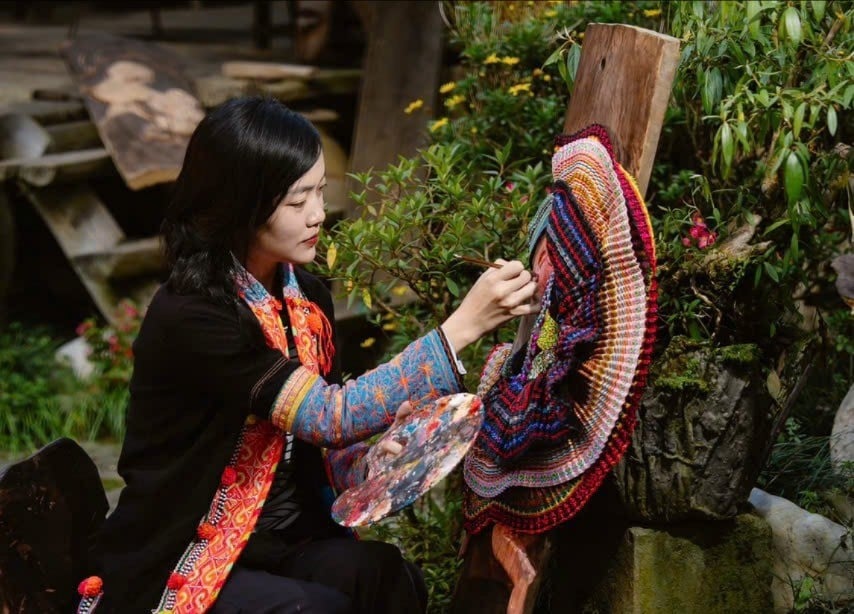
Economic empowerment has a strong positive impact on women's participation in tourism, thereby enhancing the economic capacity of the entire family.
In particular, given that tourism is becoming a crucial driver for poverty reduction and economic restructuring in many mountainous regions, a shift in approach to tourism development is absolutely essential.
Women need to be at the center of all decisions related to livelihood development, cultural preservation, and benefit distribution. In particular, the multifaceted empowerment of ethnic minority women workers needs to be enhanced.
This empowerment includes economic autonomy, the capacity to participate in decision-making, equal access to resources (land, capital, training), and the ability to control factors that directly affect their livelihoods.
When ethnic minority women are equipped with vocational skills, management capabilities, and knowledge of sustainable tourism, they not only improve their immediate income but also enhance their resilience to fluctuations in the tourism market.
When women lack the necessary knowledge and tools, poor households struggle to transition their livelihoods to lower-emission, more environmentally friendly, and higher-value models, leading to missed opportunities for long-term poverty alleviation.
Developing a rural startup ecosystem.
Discussing solutions to empower women in economic development and sustainable poverty reduction, a research group led by Dr. Nguyen Thi Tuyet Minh from the Academy of Journalism and Communication argued that women are a core force in agriculture, water management, and maintaining family livelihoods; they possess a wealth of indigenous knowledge related to cultivation, plant conservation, resource utilization, and disaster adaptation.
However, they are rarely involved in decision-making processes regarding resource management, production planning, or access to economic tools, standards, and eco-labels that are fundamental to sustainable production and consumption models.
When women lack the necessary knowledge and tools, poor households struggle to transition their livelihoods to lower-emission, more environmentally friendly, and higher-value models, leading to missed opportunities for long-term poverty alleviation.
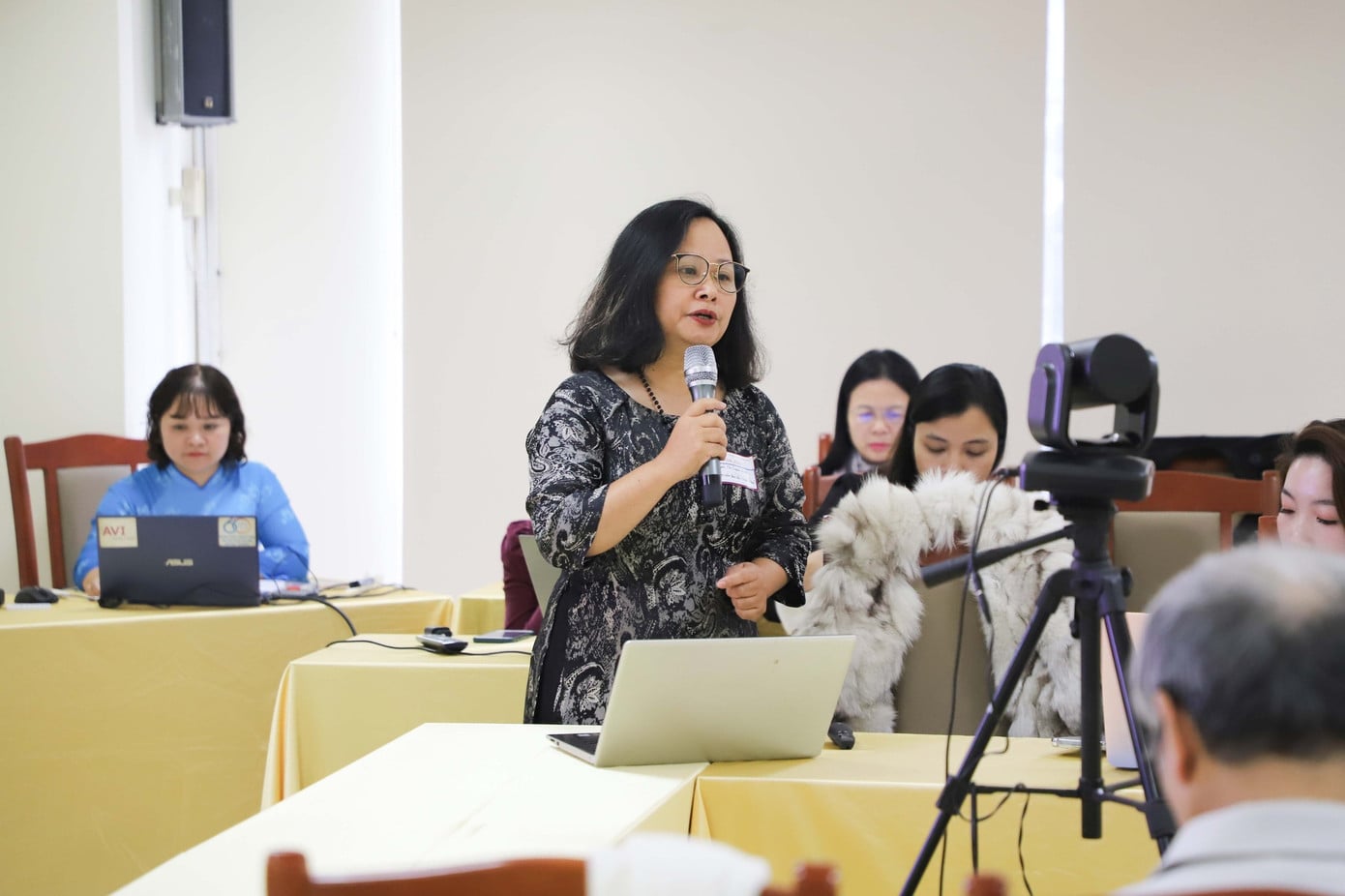
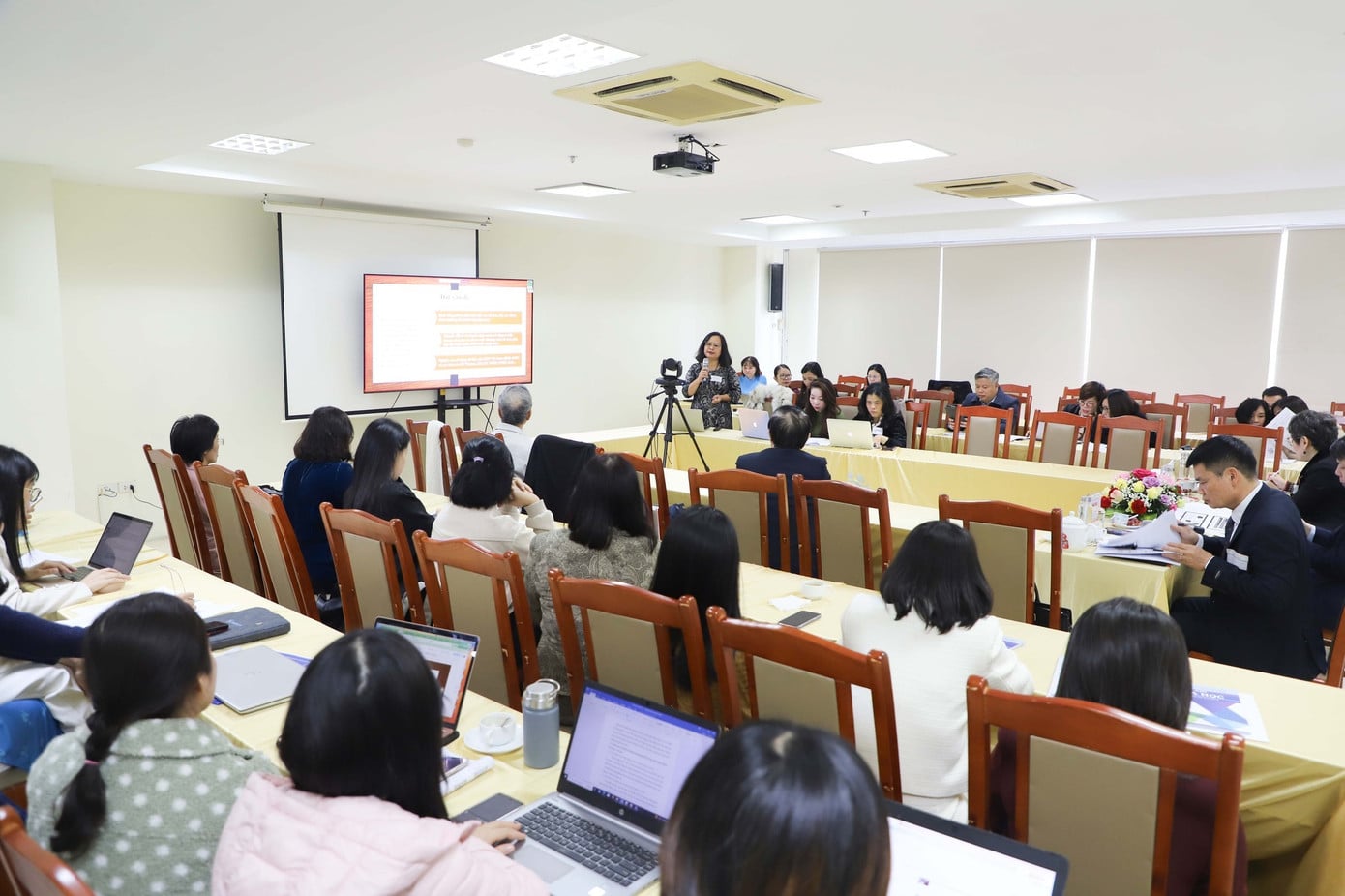
Dr. Nguyen Thi Tuyet Minh from the Academy of Journalism and Communication shared her insights at the 2025 International Scientific Conference on the theme "Gender Equality and the Role of Women in Sustainable Development".
Therefore, empowering women in the environmental and digital economy is essential to achieving sustainable poverty reduction. When women have access to digital skills, digital safety, and affordable online platforms, they can better access markets, participate in e-commerce, connect with services, and expand livelihood opportunities beyond agriculture.
Supporting women in handicraft production, agricultural product processing, or the development of OCOP (One Commune One Product) products will help increase stable income and reduce dependence on seasonal tourism. The linkages between tourism, agriculture, and handicrafts also facilitate access to wider markets for local products and enhance their added value.
In particular, equipping women with digital skills not only helps them increase their income but also supports them in improving agricultural productivity through the application of smart agriculture, weather forecasting, water resource management, and optimized input use. Narrowing the gender digital divide therefore opens up the possibility of replicating climate-adaptive livelihood models, increasing resilience, and mitigating risks for poor households.
In this context, mitigating risks for poor households is a critical requirement because they are the most vulnerable group to economic, social, and environmental changes. Poor households often lack financial savings, access to information, technology, and social services, so even a minor shock such as an epidemic, natural disaster, crop failure, or tourism disruption can plunge them back into even more severe poverty.
Risk mitigation aims not only to protect immediate livelihoods but also to help poor households maintain their capacity for reinvestment, participate in value chains, and build sustainable livelihoods. When risks are controlled, poor households have the opportunity to accumulate resources, enhance resilience, and escape poverty in the long term, avoiding "re-poverty"—a vicious cycle often encountered in vulnerable areas.
Therefore, risk mitigation is a fundamental condition for poverty reduction policies to be truly effective and sustainable, and to create momentum for socio-economic development in rural and mountainous areas.
According to Dr. Nguyen Thi Tuyet Minh, to achieve this, it is necessary to further develop the startup ecosystem for women, including access to capital, business mentoring, intellectual property protection, and networking, which will help women participate more deeply in the high-value economy.
When women have equal opportunities to start businesses, they can create sustainable products, develop green value chains, and contribute to local economic growth. Women's entrepreneurship not only benefits individual women but also creates a ripple effect in the community, promoting job creation, diversifying livelihoods, and reducing reliance on vulnerable sectors such as traditional agriculture.
Source: https://tienphong.vn/phat-trien-du-lich-cong-dong-de-giam-ngheo-va-tai-co-cau-kinh-te-post1803376.tpo
![[Photo] Prime Minister Pham Minh Chinh holds a phone call with the CEO of Russia's Rosatom Corporation.](/_next/image?url=https%3A%2F%2Fvphoto.vietnam.vn%2Fthumb%2F1200x675%2Fvietnam%2Fresource%2FIMAGE%2F2025%2F12%2F11%2F1765464552365_dsc-5295-jpg.webp&w=3840&q=75)








![Passion fruit 'capital' faces sustainability challenge: [Part 3] Building supply chain linkages](https://vphoto.vietnam.vn/thumb/402x226/vietnam/resource/IMAGE/2025/12/12/1765517075835_1232-akk00534-130606_948.jpeg)

























































Comment (0)