

As of November 30th, Ho Chi Minh City recorded 34,127 cases of hand, foot, and mouth disease, an increase of 68.6% compared to the same period in 2024 (20,236 cases).
According to the Ho Chi Minh City Center for Disease Control (HCDC), in more than 400 samples monitored since the beginning of the year, EV71 was only detected from the beginning of November. At the same time, Children's Hospital 1 recorded 18 severe cases of hand, foot, and mouth disease, of which 10 tested positive for EV71, accounting for 56%.
Experts believe that the reappearance of EV71 at a time when severe cases are surging indicates a clear link between this virus strain and the severity of hand, foot, and mouth disease in children.
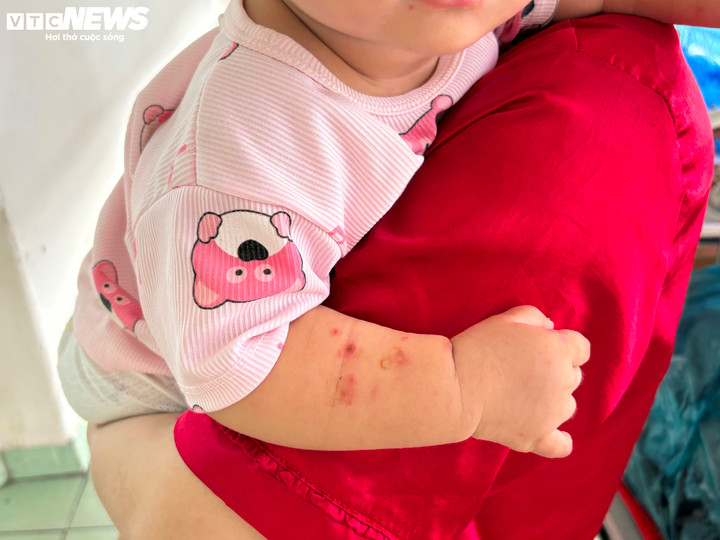
Family members should not apply colored dyes to the blisters on their own initiative, as this will make diagnosis more difficult.
EV71 is considered one of the most concerning agents in the group of pathogenic viruses. This strain can invade the central nervous system and cause serious complications such as encephalitis, meningitis, cardiac arrhythmias, or sudden respiratory failure.
According to Dr. Nguyen An Nghia, Deputy Head of the Infectious Diseases and Neurology Department at Children's Hospital 1 (Ho Chi Minh City), other strains are also capable of causing severe illness, but many studies have shown that EV71 is the strain most closely associated with a high risk of serious progression.
However, in reality, not all hospitalized children have the means to be tested to accurately identify the virus strain. Therefore, clinically, when receiving a case of hand, foot, and mouth disease, doctors must always be vigilant and closely monitor the child, regardless of the strain. Current treatment protocols rely entirely on clinical manifestations to assess the severity of the disease and predict the risk.
"The role of strain identification tests is only supportive, helping to increase the alert level, but it does not change the treatment protocol. This is because any strain causing hand, foot, and mouth disease can lead to severe complications if not closely monitored," Dr. Nghia said.
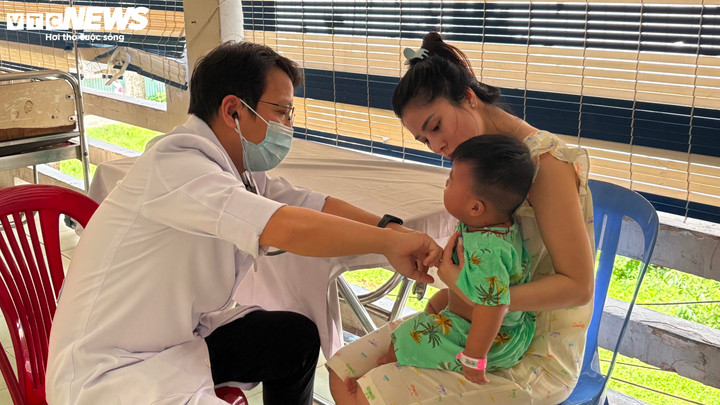
If a child has a persistent high fever, seizures, or blisters, parents should take the child to the hospital immediately.
According to experts, EV71 is not a new pathogen, and hand, foot, and mouth disease has broken out in several previous years. However, given the rapid progression of the disease, parents should not be complacent, especially during the first 7-10 days of illness. This is the period when children with the disease may experience complications affecting the heart and nervous system, and may even die if emergency treatment is delayed.
According to Dr. Truong Huu Khanh, an epidemiologist: “Children born after 2023, who have not experienced any major outbreaks, are at high risk from the EV71 wave. Therefore, parents need to pay special attention to warning signs such as high fever that does not subside; neurological symptoms such as startling, tremors; or severe signs including cyanosis, limb weakness, unsteady gait, and difficulty breathing. In these cases, children must be taken to the doctor immediately.”
Doctors advise against applying colored ointments to blisters as this will obscure the lesions, making diagnosis difficult. Children only need to be bathed and kept clean; if they have mouth pain, they can use mouthwash or appropriate pain relievers. For children with fever, parents can use paracetamol according to the prescribed dosage.
For children who have previously had EV71, the risk of reinfection is reduced, but they are not completely immune, so they still need to be closely monitored during the outbreak season.
Given the evolving situation with hand, foot, and mouth disease, the health sector advises people not to panic but to absolutely not to be complacent, as the disease tends to increase during the season, EV71 has appeared, and the risk of severe complications is higher.
To prevent hand, foot, and mouth disease in children, parents need to pay special attention to daily hygiene measures. First, hands should be washed frequently with soap, especially after changing diapers, before feeding children, and after using the toilet. Frequently touched surfaces such as toys, doorknobs, tabletops, and shared items should be disinfected and cleaned regularly.
In addition, parents must maintain hygiene of children's eating utensils and bottles to minimize the risk of infection. During an outbreak, it is necessary to limit children's contact with friends who are sick or show suspected symptoms to reduce the risk of spreading the disease in the community.
In preschools, teachers should check children at the classroom door each morning using two steps: spreading their hands and opening their mouths. This method can detect 50-60% of suspected cases. When a child is absent from school, the school must verify the reason and properly disinfect surfaces and toys to prevent the spread of infection.
During an outbreak, if a child develops a fever, drooling, complains of mouth pain, or has blisters on the palms, soles, buttocks, or knees, parents should immediately suspect hand, foot, and mouth disease and take the child to the doctor as soon as possible.
Source: https://baolangson.vn/nhieu-tre-mac-tay-chan-mieng-tro-nang-do-tac-nhan-ev71-bac-si-khuyen-cao-gi-5067936.html




































































Comment (0)