

To enter the global supply chain, you must surpass international standards.
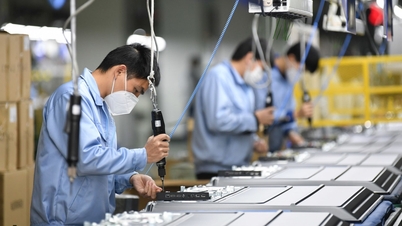
As a company specializing in the production of industrial electrical switchboards, serving factory projects, especially those of FDI enterprises, Bao Minh Chau Industrial Joint Stock Company is considered one of the companies with many years of experience in the supporting industries sector.
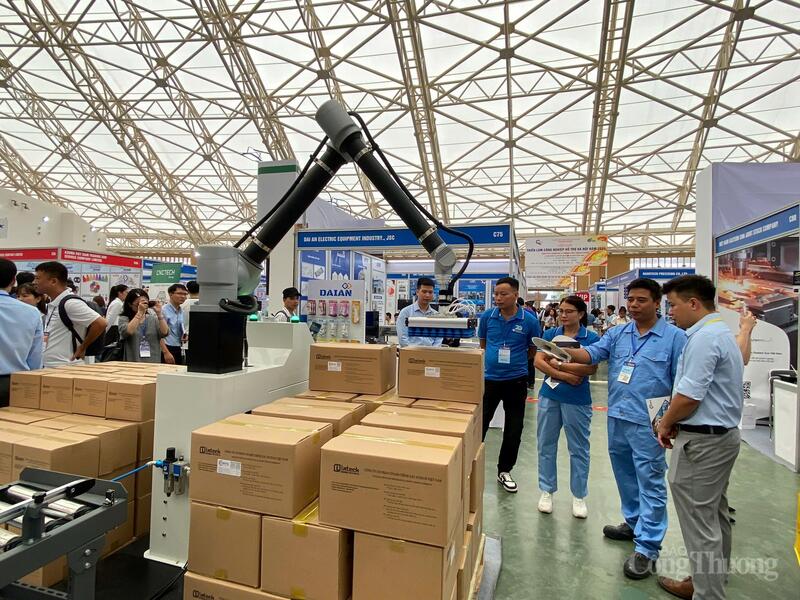
Hanoi 's supporting industrial enterprises participate in trade promotion activities. Photo: NH
Speaking with a reporter from the Industry and Trade Newspaper, Mr. Nguyen Quang Thang, Director of Bao Minh Chau Industrial Joint Stock Company, said that, to date, the company's revenue is basically the same as last year. After the Covid-19 pandemic, the company's production and business activities remain stagnant, failing to create a clear growth momentum.
According to Mr. Nguyen Quang Thang, the biggest challenge for supporting industrial enterprises today is not only the market, but also the increasingly high demands for international standards. “If Vietnamese businesses want to have a place in the global supply chain, they must meet international standards regarding quality, technology, management, and the environment. To achieve this, businesses need sufficient capital to invest in infrastructure, technology, and human resources,” Mr. Thang emphasized.
In reality, Vietnamese businesses do not lack manufacturing experience. Many have been operating for decades in the fields of mechanical engineering, electrical and electronic engineering, and manufacturing. However, the biggest limitation remains financial resources. Investing in high technology, building standard infrastructure, developing a team of engineers and experts, and establishing research and development (R&D) laboratories requires very large and long-term capital.
"Many of our products have to be tested and certified in international markets such as Germany and Australia to achieve global quality certifications. This is a mandatory requirement if we want to participate in the supply chains of multinational corporations, but the costs for these activities are considerable," Mr. Thang said.
Not only in Hanoi, but according to a representative of an industrial manufacturing and processing enterprise in Hai Phong , the biggest reality today is that many domestic supporting industrial enterprises are still unable to deeply participate in the supply chains of FDI enterprises. The reasons stem from many factors, most notably limitations in management capacity, international experience, and a lack of necessary support conditions in terms of capital, land, and technology.
Notably, the localization rate in many industries remains low. Although Vietnam's electronics exports have reached approximately $120 billion, the contribution of domestic enterprises accounts for less than 5%. This shows that while Vietnam exports a lot, the added value mainly belongs to the FDI sector.
"Vietnamese businesses are still outside the value chain, lacking access to expertise, capital, and production facilities. This is a situation that needs to change soon if we want to develop supporting industries sustainably," commented a representative of an industrial manufacturing and processing business in Hai Phong.
According to the Center for Industrial Development Support, Department of Industry ( Ministry of Industry and Trade ), there are currently nearly 7,000 supporting industrial enterprises nationwide. Among them, the group of enterprises producing components and spare parts plays a leading role, supplying manufacturing industries such as automobiles, motorcycles, mechanical engineering, and electrical and electronic industries. Some sectors have achieved a relatively high localization rate, creating a competitive advantage over imported goods.
However, overall, the localization rate of many industries remains low, at only around 30-40%, failing to reach the government's target of 50-60%. Furthermore, price competitiveness is limited; the scientific and technological level of many businesses is only average; and the ability to apply scientific research and develop new products is weak.
The policies are in place, now they need to be implemented effectively.
Experts believe that Vietnam is facing a rare opportunity as global supply chains shift, opening up the possibility of deeper involvement in the production of components and raw materials instead of just assembly. However, barriers related to technical standards, data transparency, product quality, and financial capacity remain significant challenges.
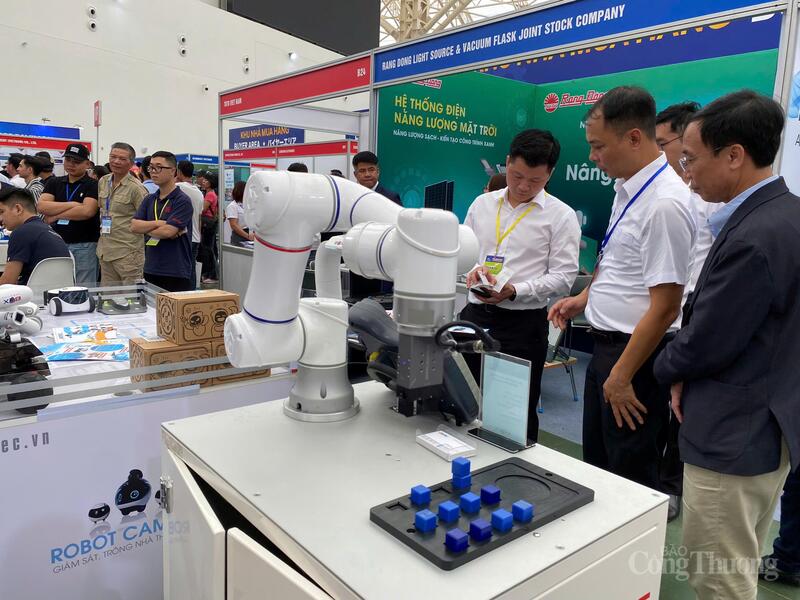
Hanoi aims to have approximately 1,200 supporting industry enterprises by 2030, with over 40% of them having production systems and products that meet international standards. (Photo: NH)
According to Mr. Nguyen Manh Linh, Deputy Head of the Industrial Research Department at the Institute for Strategic and Policy Research in Industry and Trade, Vietnam has long had a policy of developing supporting industries, with a relatively complete policy system. However, most domestic enterprises are small in scale, lacking capital, technology, and management capacity, thus failing to effectively exploit market opportunities. "After nearly 20 years of development, the connection between FDI enterprises and domestic enterprises remains weak, and stable and sustainable supply chains have yet to be formed," Mr. Linh assessed.
To address these bottlenecks, on July 14, 2025, the Government issued Decree No. 205/2025/ND-CP, amending and supplementing several articles of Decree 111/2015/ND-CP on the development of supporting industries, effective from September 1, 2025. The new Decree adds many important policies on supporting the application and transfer of technology. Accordingly, organizations and individuals researching, innovating, and perfecting technology to produce supporting industrial products in the priority list will receive incentives from the National Technology Innovation Fund, the National Science and Technology Development Fund, the National High-Tech Development Program, and other support policies.
One notable point is the mechanism for granting preferential treatment certificates: Small and medium-sized enterprises are granted certificates by the People's Committees of provinces and cities; large enterprises are assessed by the Ministry of Industry and Trade. The Decree also adds a list of priority supporting industrial products, creating a clearer legal framework for businesses.
At the local level, on December 10, 2025, the Hanoi People's Committee issued Decision No. 6126/QD-UBND, approving the Program for the Development of Supporting Industries for the period 2026-2030, with a vision to 2035. According to the Program, Hanoi aims to develop supporting industries in depth, linked to global value chains, with businesses at the center and the State playing a facilitating role. The focus is on increasing self-sufficiency in the supply of components, spare parts, and materials; reducing dependence on imports; mitigating the risk of supply chain disruptions; and enhancing added value.
By 2030, Hanoi aims to have approximately 1,200 supporting industry enterprises, with over 40% of them having production systems and products that meet international standards. By 2035, this number is expected to increase to around 1,400 enterprises, with 45% meeting international standards.
According to Mr. Nguyen Hoang, Chairman of the Hanoi Supporting Industries Business Association (HANSIBA), supporting industry businesses in Hanoi and across the country have increasingly participated in the global production chain. “The days when Vietnamese businesses couldn’t even make a screw are over. Currently, many businesses supply components to multinational corporations and participate in high value-added sectors such as electronic components, semiconductors, and aerospace support,” Mr. Hoang emphasized.
With a relatively complete industrial base, a developing high-tech ecosystem, and a high-quality workforce, Hanoi is considered to have many advantages for developing supporting industries. If opportunities are well-utilized and policies are implemented effectively, the coming period will be a time when supporting industry enterprises in the capital city will "improve qualitatively," gradually asserting their position in the global value chain.
Professor Phan Dang Tuat, Chairman of the Vietnam Association of Supporting Industries (VASI): Current regulations related to the supporting industry sector are mainly at the decree level, scattered across various laws, leading to a lack of consistency and even legal contradictions. This makes it difficult for many preferential policies to be implemented effectively. Therefore, a separate, robust law on supporting industries should be enacted soon to create a preferential legal framework, remove administrative barriers, and promote the substantive development of supporting industries.
Source: https://congthuong.vn/co-hoi-da-mo-cong-nghiep-ho-tro-van-vuong-ba-diem-nghen-434699.html
![[Image] Vietnam's colorful journey of innovation](/_next/image?url=https%3A%2F%2Fvphoto.vietnam.vn%2Fthumb%2F1200x675%2Fvietnam%2Fresource%2FIMAGE%2F2025%2F12%2F14%2F1765703036409_image-1.jpeg&w=3840&q=75)














































































Comment (0)