

Adding many outstanding incentives to the Da Nang Free Trade Zone.
On December 11th, with 442 out of 443 attending delegates voting in favor, the National Assembly passed a Resolution amending and supplementing several articles of Resolution 136/2024/QH15 on piloting some specific mechanisms and policies for the development of Da Nang City.
Compared to Resolution 136/2024/QH15, this revised version adds many mechanisms that are considered superior, creating new impetus for the city's economic growth, focusing on key pillars such as developing the Free Trade Zone, attracting strategic investors, implementing urban railways, and forming reclaimed land urban areas.
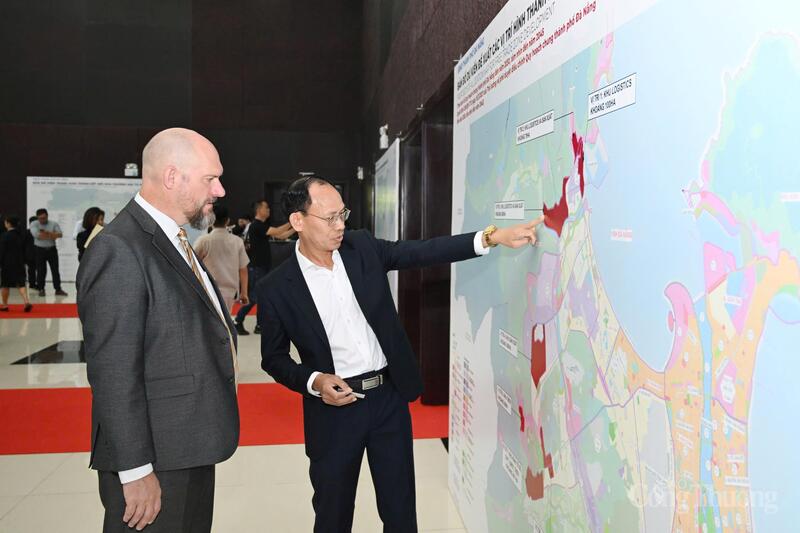
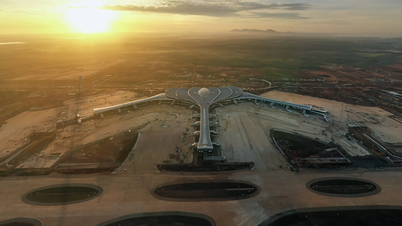
Investors explore the locations and functional zones of the Da Nang Free Trade Zone.
According to Le Thi Kim Phuong, Director of the Da Nang Department of Industry and Trade, the amended Resolution 136 has more flexible and open mechanisms and policies compared to Resolution 134/2024/QH15, especially the regulations related to the Da Nang Free Trade Zone.
The amendments to Article 13 regarding the establishment of the Da Nang Free Trade Zone allow for the application of a series of groundbreaking mechanisms, such as: Land allocation and leasing without auctioning land use rights or bidding for land-use projects in priority sectors; foreign direct investors are allowed to own up to 49% of charter capital in areas such as airport operations, cargo terminal services, aviation fuel services, ground handling and technical services, airfield operations, and in-flight catering; and they are allowed to own up to 51% of investment projects for international cargo transshipment logistics centers at the airport.
In addition, there are incentives such as exemption from specialized inspections for goods that have been certified as compliant and declared as conforming to standards; and a favorable mechanism for temporary import-re-export and transshipment of goods for foreign investors. These are all new provisions that directly impact costs, time, and the level of convenience in production and business activities.
Besides supplementing new mechanisms and policies to ensure superiority and breakthroughs, the policies for the Da Nang free trade zone also ensure similarity with the two localities currently piloting this model: Ho Chi Minh City and Hai Phong City.
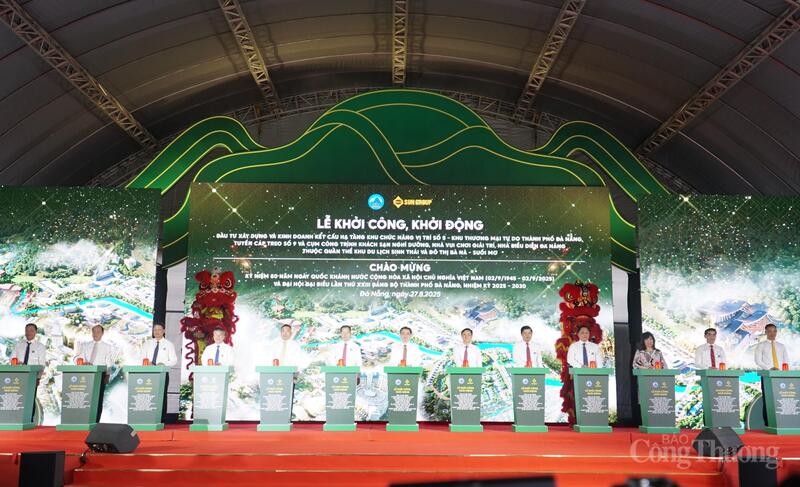
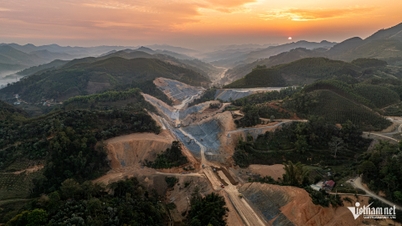
Construction of functional zone number 5 in the Da Nang Free Trade Zone commenced in August 2025.
Putting specific mechanisms into practice: Progress determines effectiveness.
On the same day, December 11th, the Da Nang City People's Council approved resolutions on socio-economic development and national defense and security for the years 2026-2030.
Accordingly, Da Nang City aims for an average economic growth rate of 11% or higher per year over the next five years, with a GRDP (Gross Regional Domestic Product) at current prices reaching over 720,000 billion VND by 2030.
To achieve this goal, Da Nang City has set out three breakthrough tasks. Prominent among these are: effectively implementing special mechanisms; removing difficulties and obstacles; strongly developing the private economy; mobilizing resources for infrastructure development; and promoting rapid and sustainable growth. Specifically, it is crucial to urgently attract strategic investors to the functional zones within the Da Nang Free Trade Zone; and developing logistics services in conjunction with the synchronized investment in the airport, seaport, economic zones, and international border gates.
In the context of Da Nang facing the need to accelerate its growth momentum, the National Assembly's approval of the amended Resolution 136 is expected to create a significant institutional impetus. However, according to Associate Professor Bui Quang Binh of the University of Economics (Da Nang University), the key factor lies not in "having a mechanism," but in the speed and extent of implementation.
According to Associate Professor Bui Quang Binh, the amended Resolution 136 is certainly more open and superior than Resolution 136/2024/QH15. This is a great advantage for Da Nang.
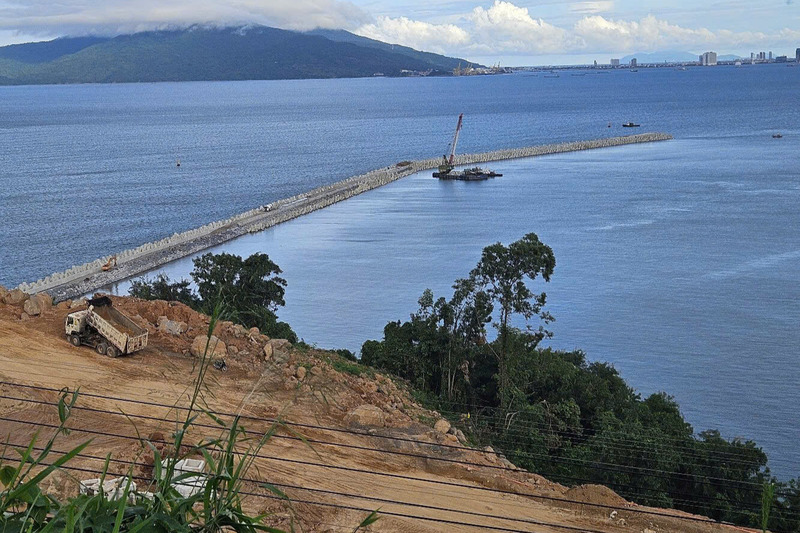
To expedite the development of the Free Trade Zone, Da Nang must also accelerate the construction of Lien Chieu Port.
The challenge for Da Nang now is to implement all these policies and mechanisms quickly. Currently, many localities are developing open economic zones, aiming to replicate the free trade zone model. Therefore, rapid implementation is crucial for the effectiveness of these specific policies and mechanisms. “All policies and mechanisms, if not implemented quickly, will become outdated and fall behind. Therefore, we must accelerate the process of putting these specific policies and mechanisms into practice. That is the most important thing,” said Associate Professor Bui Quang Binh, noting that implementation must be synchronized. For example, the core of the Da Nang Free Trade Zone is logistics, linked to Lien Chieu Port. Therefore, in addition to accelerating the construction of the Free Trade Zone and attracting strategic investors, it is also necessary to accelerate the implementation of Lien Chieu Port to ensure synchronization.
Overall, the amended Resolution 136 has "paved the way" institutionally. The remaining question is how quickly Da Nang will progress on that path.
With Da Nang entering a new phase with the goal of achieving double-digit economic growth of 11% or more per year, the National Assembly's approval of the Resolution amending Resolution 136/2025/QH15 is expected to create an "institutional leverage" to "pave the way" for Da Nang's economy to accelerate.
And in order for specific policy mechanisms to be effectively implemented, Da Nang needs to accelerate the process and quickly put the incentives from the Resolution into practice.
Source: https://congthuong.vn/nghi-quyet-136-sua-doi-mo-duong-cho-kinh-te-da-nang-but-toc-434742.html















































































Comment (0)