

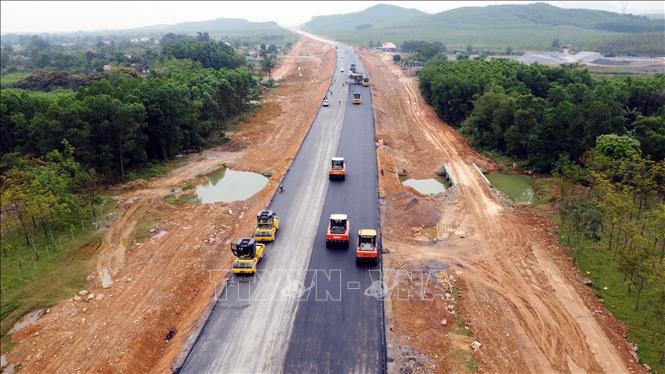
With thousands of kilometers of completed expressways, the widespread application of modern technical advancements, and the active participation of the private sector, transportation projects not only boost growth but also expand new investment opportunities. A reporter from the Vietnam News Agency (VNA) interviewed Associate Professor Dr. Tran Chung, Chairman of the Vietnam Association of Road Transport Infrastructure Investors (VARSI), about the positive impact of transportation infrastructure on investment, opening opportunities for businesses and private investors to participate in transportation projects.
How do you assess the significance and role of infrastructure, especially key projects, in the socio-economic development of the country?
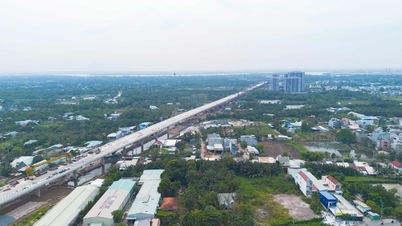
The resolutions of the 11th, 12th, and 13th Party Congresses continue to identify three strategic breakthroughs in the socio-economic development of the country; among them is the strategic breakthrough in infrastructure, including transportation infrastructure. Transportation is considered the "lifeblood" of the economy, and its role is crucial for economic development. Developing the expressway system is a key objective in achieving this breakthrough. With 3,000 km of expressways completed by 2025, this will serve as a foundation for striving towards the goal of having 5,000 km of expressways by 2030.
This achievement is the result of tremendous efforts from the entire transportation sector, local authorities, and especially the close guidance of the Government and the Prime Minister . Local authorities have also been active in land compensation and clearance, and in providing supplies and materials for the projects.
In addition, the role of businesses and private investors participating in public-private partnerships must be mentioned. They have been contributing to breakthroughs in the development of Vietnam's road transport infrastructure by accelerating project implementation, ensuring quality, exceeding efficiency and performance targets, and lowering investment costs.
Reporter: How have businesses and private investors contributed to ensuring the progress and quality of construction projects in the past, sir?
Expert Tran Chung: It can be said that the projects put into operation in recent times have not only ensured the objectives regarding progress, but the quality of the works has largely met the requirements and designs according to prescribed technical standards. To achieve this, first and foremost is the growing strength of Vietnam's highway construction contractors.
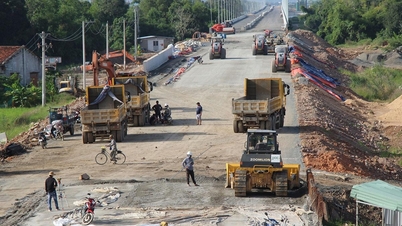
On highway construction sites across the country, the familiar scene of years past when manual labor was predominant is gone; today, the rate of mechanization on construction sites is very high. Besides tasks related to earthwork, embankment, leveling, and compaction, many other jobs such as observation and monitoring have also applied technological advancements, equipment, and digital technology from the survey and design phases to the construction phase.
The bold adoption of new technical advancements, the application of modern equipment and technologies by businesses has resulted in very high productivity in construction, while also making a significant contribution to controlling the quality and quantity of completed work. Furthermore, investing in advanced building information models such as BIM and laser scanning equipment allows for accurate assessment of construction quality against design. These devices and technologies also facilitate better management and operation after the operational phase. Science and technology create high construction productivity, which in turn drives faster and higher-quality project completion.
Businesses and private investors have also been very proactive and innovative in organizing and implementing projects. Investors like Deo Ca Group have initiated the public-private partnership (PPP++) method to mobilize capital for projects, meaning they not only borrow from banks but also invite other investors to participate when they see the project's potential for profit, contributing capital and jointly building.
Twenty years ago, the road transport system only had nearly 1,000 km of expressways, but by 2025 alone, approximately 1,000 km of expressways will be put into operation. With the participation of the private sector and this approach, the target of 5,000 km of expressways by 2030 will soon be achieved, meeting the aspirations of the Party and the State, as well as the transportation needs of the people.
Clearly, the collaborative effort to build a vital transportation network spanning the entire country, with thousands of kilometers of expressways, is creating a crucial impetus for the country's economic development, facilitating the flow of goods and connecting different regions. Simultaneously, it activates the economic development potential of localities, especially in mountainous areas like Cao Bang, remote regions like Ca Mau, and the Central Highlands provinces.
As a representative of businesses and contractors, what recommendations do you have for the development of transportation projects and infrastructure, thereby attracting private sector participation in the future?
The quality, progress, and investment efficiency of a transportation project depend heavily on many factors, first and foremost land acquisition. Transportation projects cannot be built haphazardly – clearing land as construction progresses, unlike civil engineering projects; transportation projects must address the issue of ensuring sufficient length for continuous construction.
In recent times, the Government and local authorities have shown great interest and determination in organizing land clearance for transportation projects, but this remains a very difficult issue. This is because it involves land compensation, resettlement for people, and issues related to forest land, agricultural land, etc., making it impossible for contractors to complete one section and then move on to another.
Following the merger of localities, a province is now much larger, both in terms of administrative boundaries and workload. Project enterprises want to ensure that the obstacles of administrative system reorganization do not affect the progress of land clearance.
Regarding difficulties with material quarries, the Prime Minister has also directed the southern provinces to immediately allocate materials and directly supply them to contractors, without going through intermediaries. Therefore, localities need to take decisive action to resolve this issue, thereby enabling businesses to simultaneously and completely implement construction, building confidence among investors.
Thank you, sir!
Source: https://baotintuc.vn/kinh-te/dot-pha-ha-tang-bai-cuoiha-tang-mo-duong-cho-dau-tu-20251215075212003.htm




















































![[Photo] General Secretary To Lam meets with voters in Hanoi.](https://vphoto.vietnam.vn/thumb/402x226/vietnam/resource/IMAGE/2025/12/15/1765783098527_image.jpeg)

























Comment (0)