

Restructuring development space
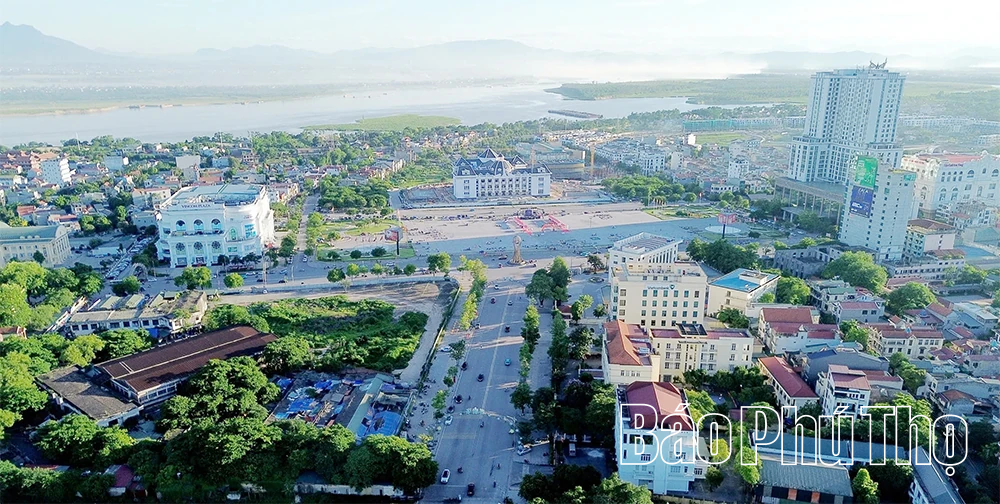
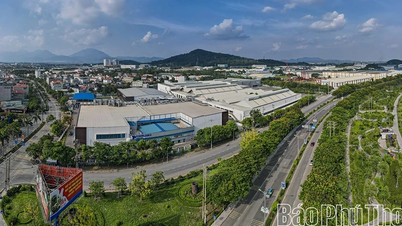
The provincial center is planned in a comprehensive and modern manner.
From July 1st, the merger of administrative units has created a new, larger, and more diverse Phu Tho province in terms of population and economy . In this context, planning needs a comprehensive review to avoid overlapping with existing plans and to ensure alignment with the province's new post-merger development strategy. This is the time for a regionally connected "development map," clearly defining the roles of each urban area, economic center, and satellite region; while balancing industrial and service development with ecological space preservation.
Accordingly, planning options are being reviewed and adjusted to suit the conditions after the province merger and the implementation of a two-tiered local government model. Specifically, the provincial planning is underway, aiming for completion before December 31, 2025; research is being conducted on urban planning options for both banks of the Lo River and the centralized administrative area; 5 planning projects, 14 adjusted zoning plans, 5 general planning projects, and 35 planning design tasks have been appraised; 2 industrial park planning projects (Thanh Ba and Doan Hung - Phase 1) have been approved; and the zoning plans for 12 industrial parks have been completed.
The consolidation of provinces opens up opportunities to build a multi-centered urban system, reducing the burden on the core area and effectively exploiting the potential of previously scattered areas. According to managers, the priority in this phase is investing in inter-regional transportation infrastructure, urban renovation, and improving the quality of public services.
In recent years, the province has paid attention to and focused on incorporating regional linkage and urban development into provincial planning, serving as a basis for enhancing the effectiveness of state management in regional linkage and urban development according to the plan. The province has seriously implemented the policy of developing dynamic regions and strengthened coordination among localities in regional economic development in accordance with the directives of the Central Government and the practical development of the locality. At the same time, it has strengthened exchange and coordination activities with neighboring provinces and localities in the region to develop in many sectors and fields.
Towards a synchronized and modern urban system.
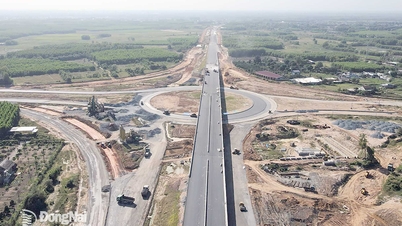
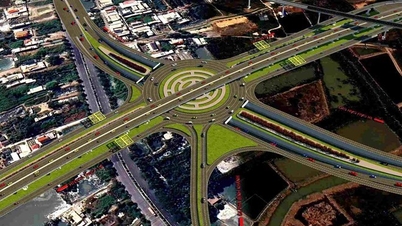
Key infrastructure continues to be invested in and improved, especially inter-regional transportation infrastructure such as the road connecting the Ho Chi Minh Highway with National Highway 70B, National Highway 32C from Phu Tho province to Yen Bai province; the route connecting the Noi Bai - Lao Cai expressway with the Tuyen Quang - Phu Tho expressway; the road parallel to the Hanoi - Lao Cai railway; the Hoa Binh - Moc Chau expressway; the Hoa Binh - Hanoi regional link road and the Son La (Hoa Binh - Moc Chau) expressway...
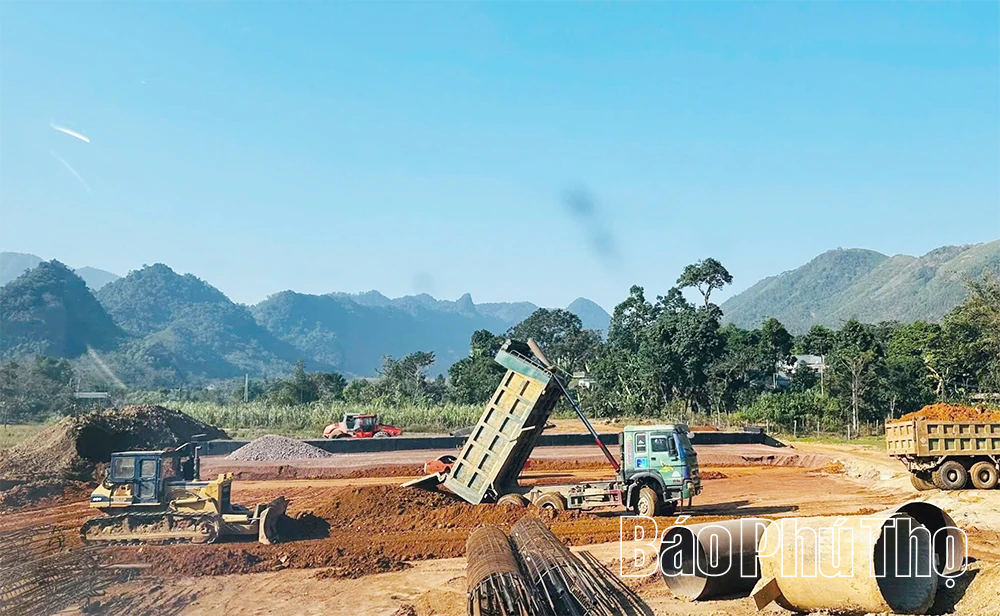
Construction of the Hoa Binh - Moc Chau expressway section passing through Da Bac commune is being accelerated.
The province currently has approximately 131 km of expressways; 941.9 km of national highways; 1,898.5 km of provincial roads, 1,438.8 km of urban roads, and 25,435 km of rural roads. The percentage of rural roads that have been paved reaches 81.5%; urban infrastructure is being invested in a civilized and modern direction, and the urbanization rate has reached 17.7%.
By October 2025, the province had implemented 9 social housing projects (2 projects completed, 7 projects under construction); by the end of 2025, a cumulative total of 4,460 units will be completed, reaching 115% of the plan (3,877 units), with an estimated 2,913 units completed in 2025 alone, exceeding the target set by the Prime Minister .
The power supply infrastructure ensures national energy security; the national power grid has supplied electricity to all communes and wards. 100% of communes and wards and 100% of households in the province have access to the national power grid. Many power grid projects and transmission lines and substations continue to receive investment. The province has coordinated well in implementing the Hoa Binh Hydropower Plant Expansion Project and the Lao Cai - Vinh Yen 500kV transmission line project.
The clean water network has been expanded, and water quality has improved with 40 water treatment plants and 619 rural clean water projects. Investment in waste treatment and wastewater drainage infrastructure has been prioritized. Infrastructure and distribution networks for commerce and services have developed into modern facilities in both urban and rural areas, with 368 markets, 9 shopping centers, 29 supermarkets, and a widespread Winmart+ convenience store system.
Infrastructure in national and key tourist areas is being gradually improved, with the commencement of the Cuoi Ha cable car system and Serena Resort, creating tourism highlights for the province.
Educational infrastructure includes many large-scale, modern architectural projects that have been completed and put into use. Advanced and modern medical facilities and equipment have been added. Cultural and sports infrastructure basically meets the requirements for serving political tasks, organizing major cultural events of the region and the province, and creating conditions for all segments of the population to participate in community activities.
Telecommunications infrastructure has developed synchronously, gradually eliminating areas without internet coverage and service, with 100% of commune centers having fiber optic cables; 3G and 4G coverage has reached 99% of the province's area, and 170 5G stations have been deployed in key urban and tourist centers. Infrastructure for industrial zones, urban areas, and national tourist destinations has received focused investment from various sources...

Overview of the expanded Hoa Binh hydroelectric power plant.
Mr. Phan Trong Tan, Vice Chairman of the Provincial People's Committee, commented: After the merger, the province faces a great opportunity to reposition its development strategy, but also numerous challenges regarding spatial organization and urban management. Building a comprehensive, synchronized, interconnected master plan based on scientific data will become the foundation for the next phase of development. In the context of increasingly fierce competition to attract investment among localities, a well-planned and effectively managed urban area will be a significant advantage, contributing to economic growth and improving the quality of life for its residents.
Dinh Thang
Source: https://baophutho.vn/quan-ly-quy-hoach-va-phat-trien-do-thi-sau-hop-nhat-tinh-244083.htm






































































Comment (0)