

In collaboration with the Center for Educational Development (CED), the program focuses on training in sustainable potato farming techniques, the application of modern agricultural technologies, and agricultural waste management, aiming to build a network of key farmers in the PepsiCo sustainable potato value chain, contributing to the goal of promoting sustainable agriculture in Vietnam.
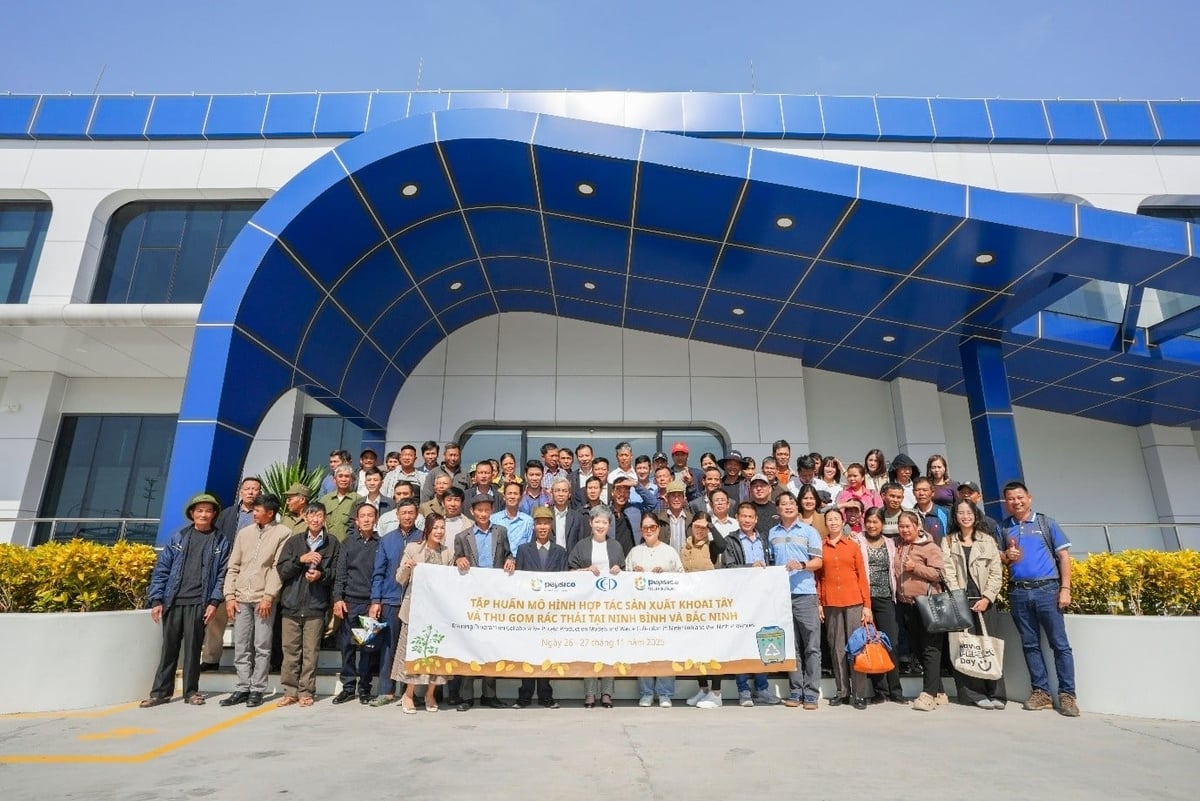
Farmers participate in a training course and tour the PepsiCo Ninh Binh Food Factory. Photo: PepsiCo.
The PepsiCo Ninh Binh Food Factory, inaugurated on November 25, 2025, marks a significant expansion for PepsiCo in the northern region, while also highlighting the urgent need for developing a stable, high-quality raw material supply area that is adaptable to climate change.
In line with this direction, the company reaffirms its commitment to supporting farmers in the northern provinces, focusing on technology transfer, applying digital technology to production, conserving resources, and enhancing waste management in agriculture . This is considered a crucial foundation for ensuring the quality of raw materials for the new factory, as well as improving production efficiency and reducing emissions for the entire sustainable agricultural value chain.
The training program, held on November 26th and 27th, 2025, is part of a project funded by the PepsiCo Foundation aimed at improving the quality of the local workforce as the new factory in Ninh Binh becomes operational.
The training course was designed as a comprehensive training model, including classroom exchange and guidance, and practical experience at the PepsiCo Academic Center in Bac Ninh on the PepsiCo potato production cooperation and value chain linkage model, cultivation processes applying emission reduction technologies such as soil analysis and improvement, double-row techniques, drone monitoring and pesticide spraying, precision irrigation systems, automatic fertilizer injection systems, mechanization, etc.
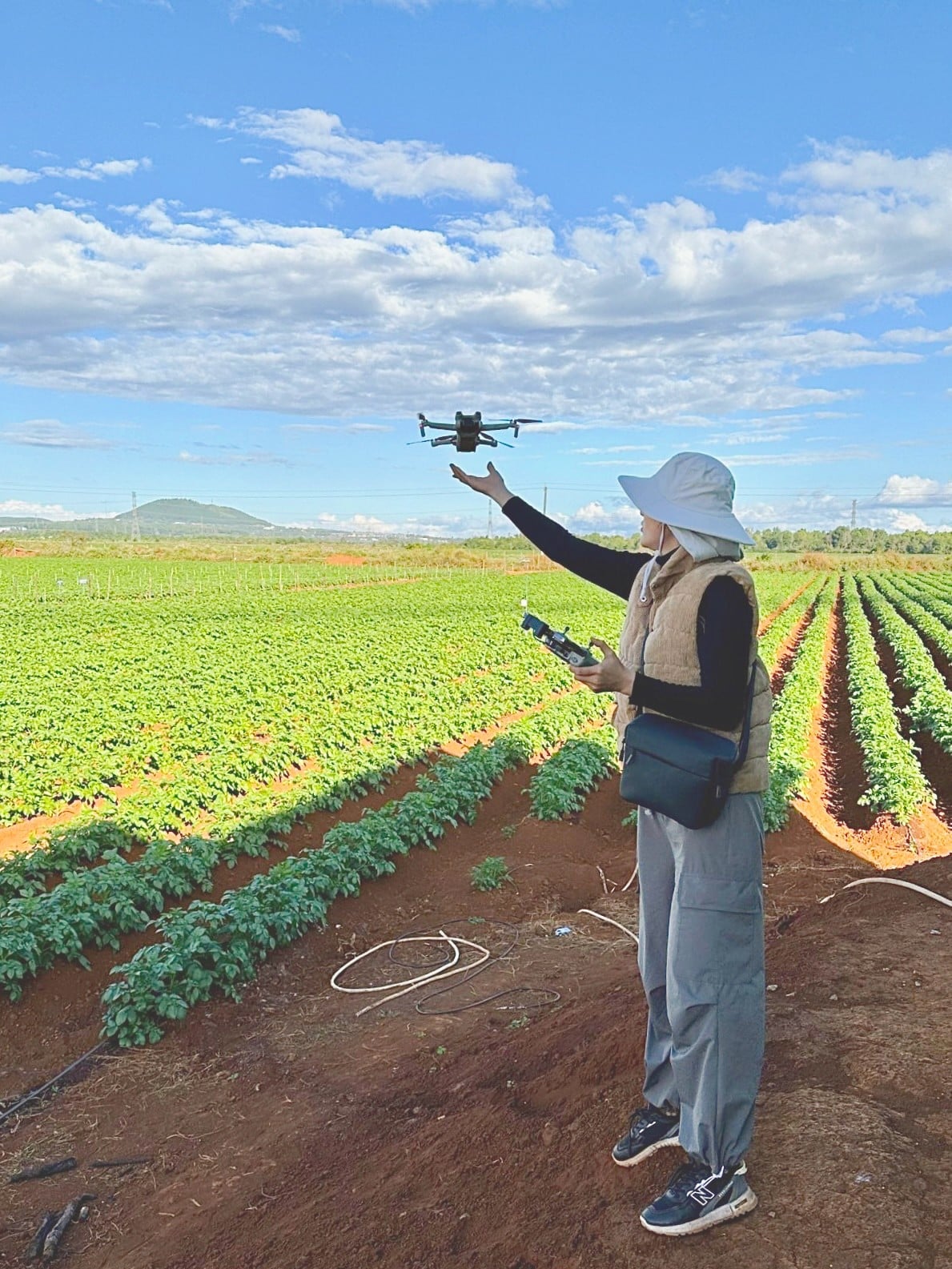
Farmers apply science and technology in sustainable agricultural practices. Photo: PepsiCo.
In particular, the farmers were very excited to visit the new PepsiCo Ninh Binh Food Factory, with a total investment of nearly 90 million US dollars and a capacity of more than 25,000 tons of various snacks per year. Witnessing firsthand the modern production line that transforms plump potatoes harvested in the North into crispy, delicious, and fresh snack products, the farmers shared their pride in bringing Vietnamese agricultural products to the global PepsiCo brand.
Notably, this training course also marks PepsiCo's intensified implementation in the North of its agricultural waste management program, which has been continuously and effectively implemented for many years in the Central Highlands region. This program supports the sorting of hazardous and non-hazardous waste, establishes a network of collection points, and creates a mechanism for recording the volume of waste at the local level for transfer to professional recycling and processing units.
During the training course, PepsiCo also launched a competition for collecting agricultural waste with key collection points in Bac Ninh, Thai Binh, and Thanh Hoa provinces during the 2025-2026 winter-spring crop season, contributing to reducing pollution in the fields and raising environmental awareness among farmers.
These activities yielded practical results by helping farmers improve their readiness to adopt sustainable farming standards, effectively utilize technology to reduce crop risks and conserve resources, and lay the foundation for forming a network of key farmers in the northern region—a force that will play a crucial role in future safe, climate-resilient, and emission-reducing production models.
The training programs and the scaling up of responsible agricultural waste collection models are part of PepsiCo's efforts to build a sustainable agricultural ecosystem in Vietnam, with tangible results observed in recent times.
Farming productivity increased by 23-26 tons/ha, reaching a peak of 54 tons/ha in 2024; irrigation water consumption decreased by an average of 3,800 m³/ha, contributing to saving more than 5 million m³ of water in 2024 alone; the amount of water used for mixing pesticides decreased tenfold, and production costs decreased by approximately 2 million VND/ha.
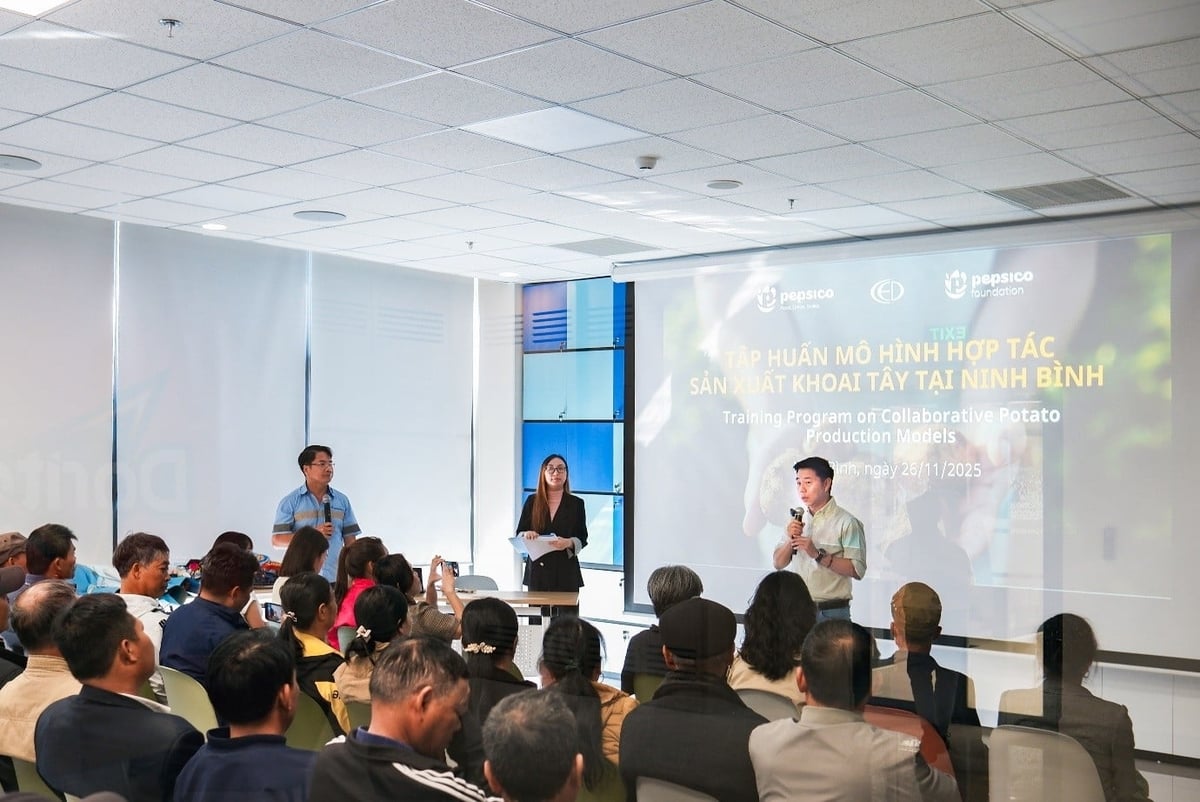
Mr. Denpong Archamongkol, Supply Chain Director of PepsiCo Indochina, welcomes farmers participating in the training course. Photo: PepsiCo.
These results are further expanded through PepsiCo's proactive role in national cooperation mechanisms, such as co-chairing the Fruit and Vegetable Industry PPP Group within the framework of the Vietnam Sustainable Agriculture Development Partnership (PSAV) and participating in the pilot model of the Vietnam Food Innovation Network (FIH-V).
Mr. Nguyen Kim Hanh, Director of Agriculture at PepsiCo Vietnam Food Company, stated, “The accelerated development of raw material areas in the northern provinces and the operation of the new food processing plant in Ninh Binh are important steps in building a solid and efficient supply chain for PepsiCo in Vietnam and the Asia-Pacific region.”
Implementing the PepsiCo Positive (pep+) global strategy in Vietnam, developing sustainable sourcing areas, training and supporting farmers, and applying emission reduction technologies will continue to be strategic priorities for the company in its journey towards Net Zero and contributing to climate-resilient agriculture in Vietnam.
Source: https://nongnghiepmoitruong.vn/pepsico-foods-viet-nam-thuc-day-phat-trien-vung-nguyen-lieu-ben-vung-tai-mien-bac-d789714.html
![[Photo] Prime Minister Pham Minh Chinh receives Lao Minister of Education and Sports Thongsalith Mangnormek](/_next/image?url=https%3A%2F%2Fvphoto.vietnam.vn%2Fthumb%2F1200x675%2Fvietnam%2Fresource%2FIMAGE%2F2025%2F12%2F16%2F1765876834721_dsc-7519-jpg.webp&w=3840&q=75)
![[Photo] Prime Minister Pham Minh Chinh receives the Governor of Tochigi Province (Japan)](/_next/image?url=https%3A%2F%2Fvphoto.vietnam.vn%2Fthumb%2F1200x675%2Fvietnam%2Fresource%2FIMAGE%2F2025%2F12%2F16%2F1765892133176_dsc-8082-6425-jpg.webp&w=3840&q=75)

![[Live] 2025 Community Action Awards Gala](/_next/image?url=https%3A%2F%2Fvphoto.vietnam.vn%2Fthumb%2F1200x675%2Fvietnam%2Fresource%2FIMAGE%2F2025%2F12%2F16%2F1765899631650_ndo_tr_z7334013144784-9f9fe10a6d63584c85aff40f2957c250-jpg.webp&w=3840&q=75)
![[Image] Leaked images ahead of the 2025 Community Action Awards gala.](/_next/image?url=https%3A%2F%2Fvphoto.vietnam.vn%2Fthumb%2F1200x675%2Fvietnam%2Fresource%2FIMAGE%2F2025%2F12%2F16%2F1765882828720_ndo_br_thiet-ke-chua-co-ten-45-png.webp&w=3840&q=75)








































![[Photo] Prime Minister Pham Minh Chinh attends the Vietnam Economic Forum 2025](https://vphoto.vietnam.vn/thumb/402x226/vietnam/resource/IMAGE/2025/12/16/1765893035503_ndo_br_dsc-8043-jpg.webp)














Comment (0)