

1. Common mistakes when learning HSK 2 vocabulary
Here are four of the most common mistakes you might be making when learning HSK 2 vocabulary:
- Learning vocabulary in a fragmented way, only remembering the Vietnamese meaning: Many people learn vocabulary using the "Chinese characters - pinyin - meaning" method, taking complete notes but lacking context. When faced with a question or needing to speak, the brain doesn't have time to connect the learned word with the situation in which it's used. As a result, the memory is vague and quickly forgotten.
- Learning in a scattered manner, lacking focus: HSK 2 covers many familiar topics (eating, time, daily life). However, if learning is scattered, touching on each topic briefly, learners will find it difficult to create a focal point for deep memorization.
- Ignoring Chinese characters and character formation structures: Another mistake is only learning pinyin and avoiding Chinese characters because they are difficult. This makes vocabulary fragmented, lacking visual or structural connections, leading to quick forgetting when pinyin is no longer available.
- Infrequent review and reuse of vocabulary: Vocabulary that is only "read" once without being used in sentences, spoken, or written down will be difficult to retain in long-term memory. Learning a lot but using it infrequently is a common reason why HSK 2 Chinese vocabulary is difficult to remember.
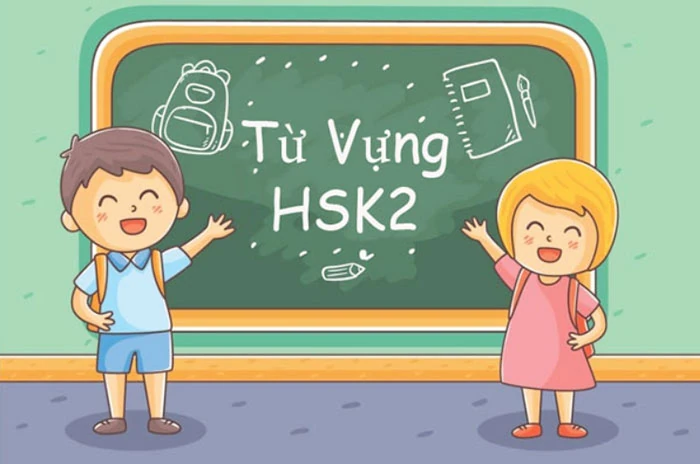
Learning words in isolation, only memorizing their Vietnamese meanings, is one of the common mistakes when studying HSK 2 vocabulary.
2. How to learn HSK 2 vocabulary correctly
To retain information and use it effectively, learners need to shift from simply learning enough to learning with a solid foundation, in context, and with repetition. Below are three effective learning methods suitable for busy people.
Method 1: Learn the 50 Chinese radicals as a foundation.
Chinese characters are not a random collection of symbols. The majority of HSK 2 vocabulary is composed of the 50 commonly used radicals in Chinese. Understanding the radicals makes it easier for learners to guess the meaning, remember the shape, and connect characters together.
Starting with the 50 most commonly used radicals in Chinese helps learners:
- Quickly identify the general meaning of a word.
- Remember words in phrases, not by rote.
- Significantly reduces the feeling of "fear of Chinese characters".
When encountering a new word, instead of learning it in isolation, break down the character to see which radicals it belongs to, associate the meaning, and place it within familiar words. The foundation of radicals is the "skeleton" that helps vocabulary stick more firmly.
Method 2: Learn HSK 2 Chinese vocabulary in simple phrases and sentences.
HSK 2 doesn't require complex sentences. Just one or two short, contextually relevant sentences are enough to memorize vocabulary. Instead of learning individual words, learn them in phrases:
- verb + object
- noun + quantifier
- familiar words and sentence patterns
For example, instead of learning "吃" (to eat) in isolation, learn "吃饭" (to eat) in a simple sentence. This helps the brain remember the word in context, leading to faster reflexes when speaking or doing exercises.
Learning HSK 2 Chinese vocabulary through sentences also helps learners review and consolidate basic HSK 2 Chinese grammar simultaneously, saving time and increasing memorization efficiency.
Method 3: Review short but consistent sessions, with reuse.
You don't need to study for too long each day. Just 15-20 minutes, but done regularly and repeatedly, will be much more effective than cramming. An ideal study session might include:
- Review 5-7 words you have learned.
- Read aloud 1-2 sentences containing each word.
- Change the context of the sentence to reuse the word.
Deliberate repetition helps vocabulary gradually transfer from short-term to long-term memory, reducing the tendency to learn and then forget.
Method 4: Connect vocabulary with familiar situations in personal life.
Instead of learning vocabulary based on "general" topics, connect words to the contexts you encounter daily: work, family, personal habits. When vocabulary is directly related to real-life experiences, the brain will remember it faster and for longer.
For example, if you frequently talk about your work schedule, prioritize words related to time and tasks, and create sentences that are appropriate to your own context. The sentences don't need to be fancy or complicated, just correct and familiar. This learning method helps vocabulary "have a place to be used," preventing the situation where you learn it and then forget about it.
With HSK 2, learning less but in the right real-life situations is far more effective than learning a lot without using it.
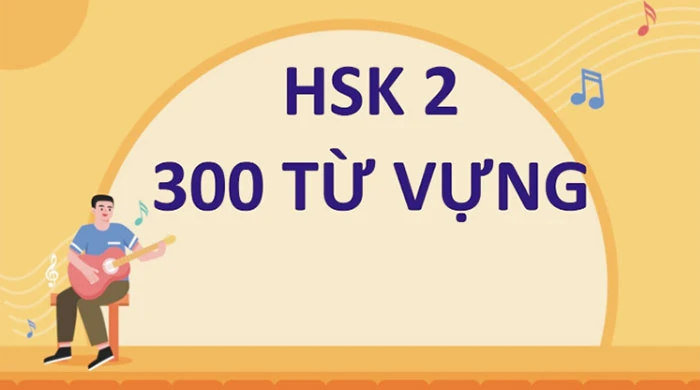
Connecting vocabulary to familiar situations in personal life is one of the four ways to properly learn 300 HSK 2 vocabulary words.
It's common for people to struggle to remember HSK 2 vocabulary, especially busy individuals. However, by changing your approach—starting with radicals, learning words in context, and reviewing regularly—memorization becomes much easier. A solid HSK 2 vocabulary foundation not only helps you learn more effectively now but also serves as a crucial stepping stone to confidently progressing to higher levels in your Chinese language learning journey.
Source: https://baothanhhoa.vn/4-ly-do-hoc-mai-khong-nho-tu-vung-tieng-trung-hsk-2-va-giai-phap-271835.htm
![[Photo] Prime Minister Pham Minh Chinh receives Lao Minister of Education and Sports Thongsalith Mangnormek](/_next/image?url=https%3A%2F%2Fvphoto.vietnam.vn%2Fthumb%2F1200x675%2Fvietnam%2Fresource%2FIMAGE%2F2025%2F12%2F16%2F1765876834721_dsc-7519-jpg.webp&w=3840&q=75)
![[Live] 2025 Community Action Awards Gala](/_next/image?url=https%3A%2F%2Fvphoto.vietnam.vn%2Fthumb%2F1200x675%2Fvietnam%2Fresource%2FIMAGE%2F2025%2F12%2F16%2F1765899631650_ndo_tr_z7334013144784-9f9fe10a6d63584c85aff40f2957c250-jpg.webp&w=3840&q=75)

![[Photo] Prime Minister Pham Minh Chinh receives the Governor of Tochigi Province (Japan)](/_next/image?url=https%3A%2F%2Fvphoto.vietnam.vn%2Fthumb%2F1200x675%2Fvietnam%2Fresource%2FIMAGE%2F2025%2F12%2F16%2F1765892133176_dsc-8082-6425-jpg.webp&w=3840&q=75)

![[Image] Leaked images ahead of the 2025 Community Action Awards gala.](/_next/image?url=https%3A%2F%2Fvphoto.vietnam.vn%2Fthumb%2F1200x675%2Fvietnam%2Fresource%2FIMAGE%2F2025%2F12%2F16%2F1765882828720_ndo_br_thiet-ke-chua-co-ten-45-png.webp&w=3840&q=75)


















































































Comment (0)