

From reviewing multidimensional poverty standards to synchronizing social security policies, credit, vocational training, and the socialization of resources, Phu Cat is demonstrating a systematic, decisive approach that puts the people at the center of the poverty reduction process.
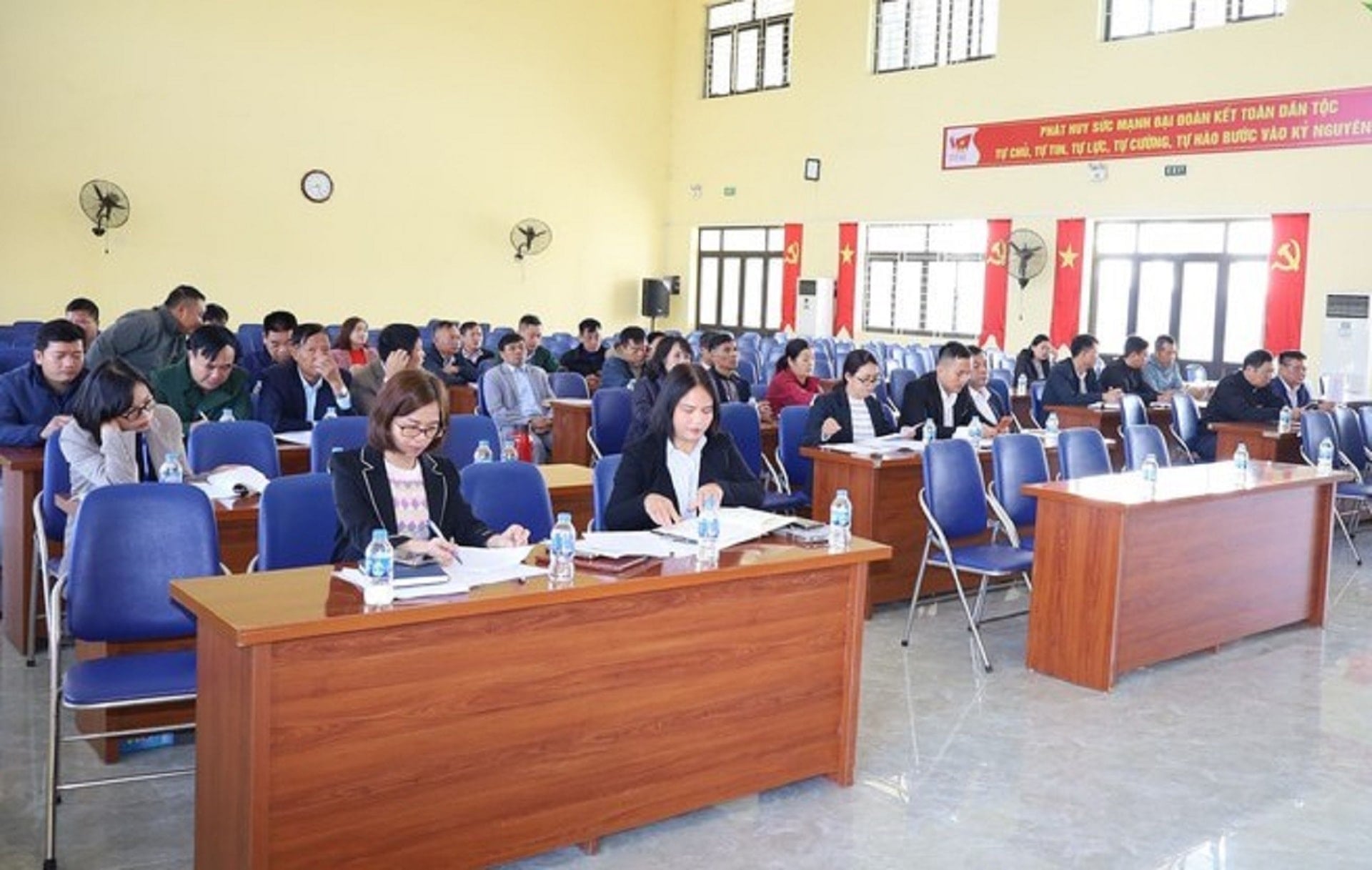
Phu Cat commune held a conference to evaluate the results of the review of poor and near-poor households. Photo: Ngoc Hiep
Review of the multidimensional poverty standard
For sustainable poverty reduction to be truly effective, we must first "face the truth." Recognizing this, at the end of November 2025, the People's Committee of Phu Cat commune organized a conference to implement the plan for reviewing poor and near-poor households periodically in 2025 according to the multidimensional poverty standard of Hanoi city for the period 2022-2025.
According to Ngo Van Tuyen, Vice Chairman of the Phu Cat Commune People's Committee, the review process is not simply about "finalizing data," but a crucial step in accurately assessing the living conditions of the people, serving as a basis for formulating realistic and effective poverty reduction policies. The entire process is carried out rigorously in six steps, ensuring transparency, democracy, and the participation and supervision of the people. The commune clearly defines poverty reduction as a continuous political task closely linked to socio-economic development. Maintaining poverty-free status is a mandatory requirement, but more importantly, preventing re-poverty and the emergence of new poverty. All policies must be substantive, tailored to each household and its root causes, avoiding mere formality.
According to Ngo Van Tuyen, Vice Chairman of the Phu Cat Commune People's Committee, from compiling the list of households needing review, collecting information from each family, holding village meetings, publicly posting the information, to summarizing, reporting, and issuing recognition decisions, everything was carried out by specialized officials of the commune and villages, ensuring that the process targeted the correct individuals and met the set deadlines. This meticulous approach has built trust among the people and ensured the accuracy of the review results.
The 2025 review results show that Phu Cat commune no longer has any poor households, and the number of near-poor households has decreased significantly. While at the end of 2024, the commune had 88 near-poor households, this number decreased to 51 by 2025; the goal is to have only 34 households by the end of the year, accounting for 0.31% of the total number of households. Notably, the commune has clearly analyzed the causes of near-poverty according to each dimension of deprivation, thereby developing appropriate support solutions. Specifically, the commune identified that most near-poor households do not lack land for production but lack capital, production knowledge, labor skills, or have dependents, sick family members, or serious illnesses. Specifically, 85 households lack health insurance, 61 households have dependents, and some households lack housing, living space, and access to information. This approach has helped Phu Cat commune shift from scattered support to focused, targeted support, linking each policy to specific "bottlenecks" faced by near-poor households.
According to Bui Tien Dung, Head of the Economic Department of Phu Cat Commune, in the plan to achieve poverty reduction goals, the commune aims to maintain the "zero poverty line" at all costs. For households at risk of falling back into poverty due to unforeseen events such as illness, accidents, or natural disasters, the commune requires villages to thoroughly understand the circumstances of each household and provide timely support, both material and spiritual, to prevent the emergence of new poor households. Poverty reduction is not just about "lifting them above the poverty line," but about creating a foundation for people to stand firm in the long term.
Credit leverage, vocational training, and sustainable livelihoods.
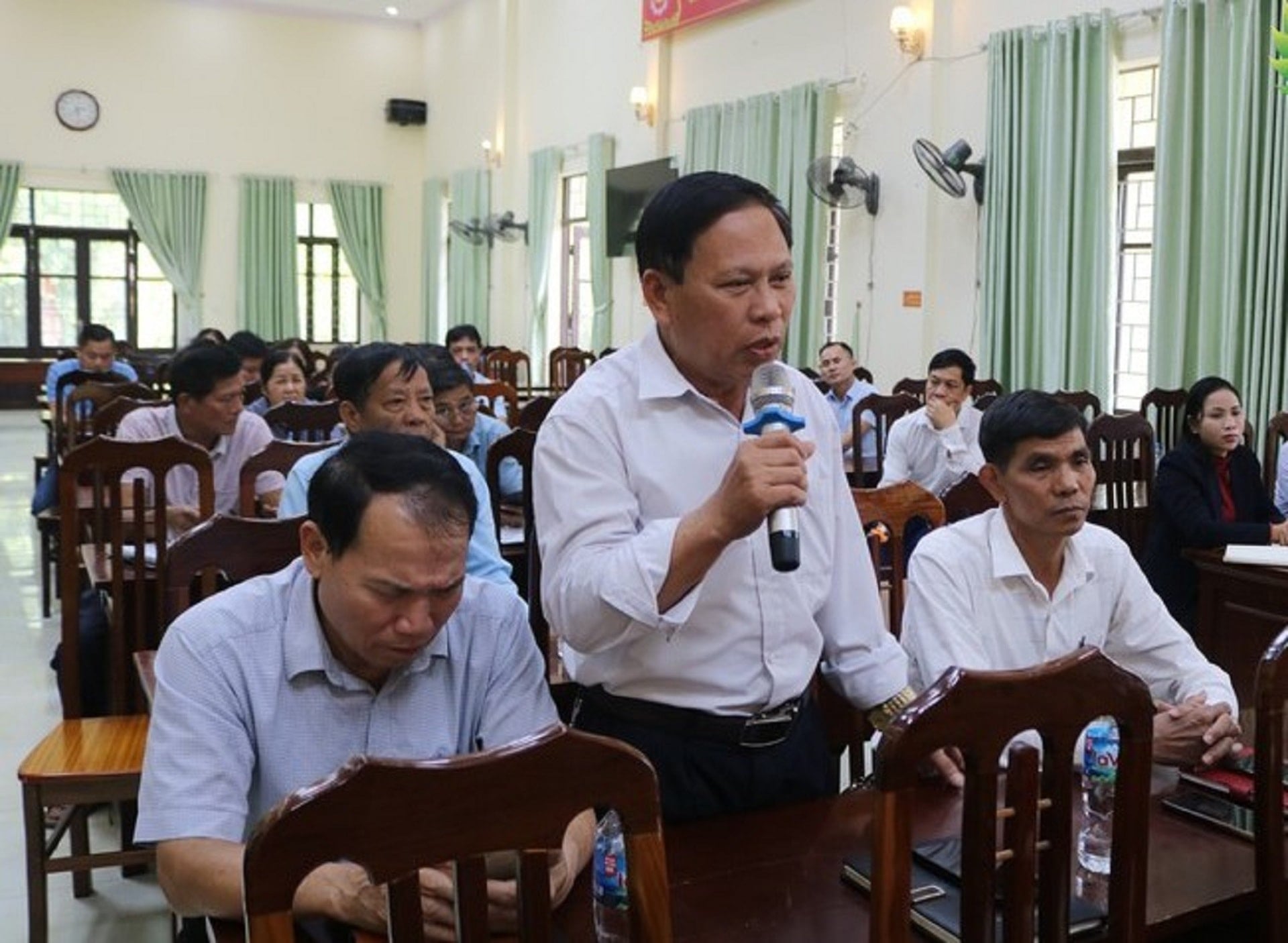
Delegates proposed several criteria for evaluating near-poor households according to the new standards. Photo: Ngoc Hiep
One of the key pillars of sustainable poverty reduction in Phu Cat commune is preferential credit policy. The commune closely cooperates with the Quoc Oai branch of the Vietnam Bank for Social Policies to ensure that 100% of near-poor households in need of loans have access to preferential capital for production, business, and service development. Accordingly, the Quoc Oai branch of the Vietnam Bank for Social Policies not only provides loans but also collaborates with local organizations and associations to guide people in using the capital effectively. As a result, the overdue loan rate is low, and many near-poor households have used the capital for its intended purpose, creating stable livelihoods and achieving sustainable poverty alleviation.
The reality at the grassroots level shows that when loans reach the right people at the right time, the results are very clear. For example, the family of Ms. Nguyen Thi Hoa in Long Phu village was a near-poor household for many years due to a lack of production capital and dependents. Thanks to preferential loans and participation in livestock training courses organized by the commune, her family boldly expanded production. Ms. Nguyen Thi Hoa shared: “Previously, my family only did small-scale work and didn't dare invest because of the risks. With guidance from the commune and organizations on how to borrow capital and how to do business, I feel more secure. Now, our income is stable, our children receive a full education, and our family is striving to escape near-poverty sustainably.”
Along with credit, Phu Cat commune promotes vocational training linked to job placement, organizes job fairs in the commune, creating conditions for laborers from near-poor households to access the labor market, increase income, and stabilize their lives. In addition, the commune recognizes that sustainable poverty reduction is not only measured by income, but also by the level of access to basic social services. By 2025, Phu Cat commune aims for 100% of people in near-poor households to have health insurance cards, children to attend school at the appropriate age, laborers to receive vocational training, and households to have access to information and telecommunications. In the housing sector, the commune continues to mobilize resources to support near-poor households in building and repairing houses. Specifically, in the 2024-2025 period, the Fatherland Front of the commune supported 18 near-poor households in building and repairing houses with a total budget of 155 million VND, contributing to improving living conditions for the people.
Chairman of the Vietnam Fatherland Front Committee of Phu Cat commune, Bui Van Thao, said: “Sustainable poverty reduction cannot rely solely on the state budget. Every contribution from the people and businesses helps to further motivate near-poor households to rise above poverty. More importantly, through these support activities, the spirit of solidarity and sharing within the community is increasingly strengthened.”
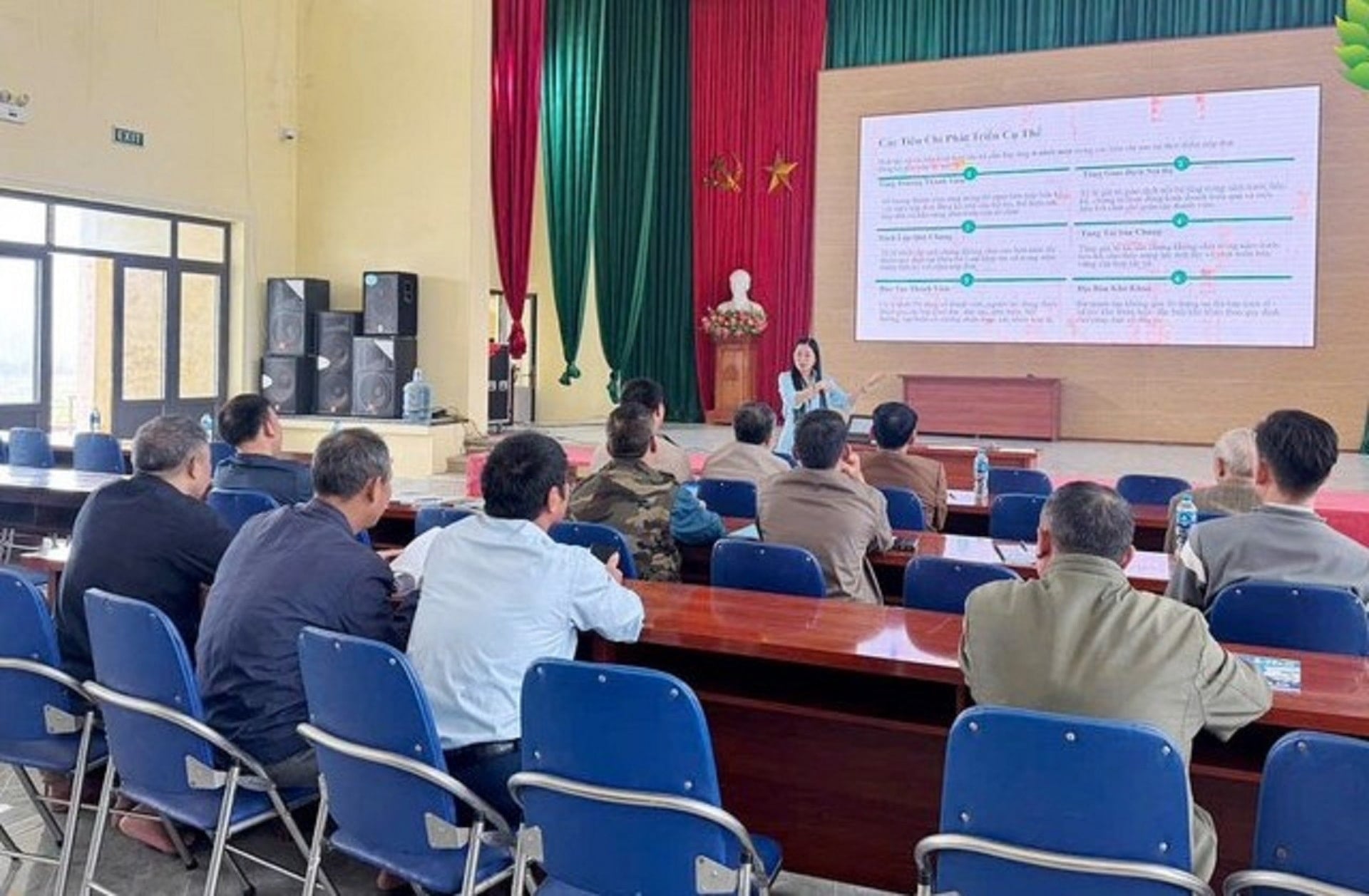
Phu Cat commune organized a training course for farmer households on economic development and sustainable poverty reduction. Photo: Ngoc Hiep
Furthermore, from the voices of the people to the views of the commune leaders, the Fatherland Front, and the Social Policy Bank, a common thread in poverty reduction efforts in Phu Cat is a high level of consensus and strengthened trust. When policies are implemented transparently, fairly, and realistically, the people are not only beneficiaries but also become the subjects of the poverty reduction process.
According to Ngo Van Tuyen, Vice Chairman of the People's Committee of Phu Cat commune, closely following the Central and Hanoi City's Sustainable Poverty Reduction Program for the period 2026-2030, Phu Cat commune has clearly identified the need to shift the focus from poverty reduction according to standards to inclusive development, improving the quality of life and resilience of people to socio-economic shocks. Based on this, poverty reduction efforts in 2026 will be implemented in a synchronized and interconnected manner, closely linked to the socio-economic development strategy, the construction of advanced new rural areas, and model new rural areas. At the same time, the commune will continue to closely manage and monitor near-poor households, newly escaped poverty households, and households at risk of falling back into poverty, considering these as the focus of preventive and conditional support policies. Preferential credit solutions, vocational training, and job creation continue to be implemented according to the principle of "giving a fishing rod," linking livelihood support with improving the capacity, labor skills, and market participation of the people.
Phu Cat also promotes the integration of poverty reduction with the development of education, health, housing, digital transformation, and access to information; leveraging the leading role of the people and the core role of the Vietnam Fatherland Front and socio-political organizations in mobilizing social resources. Through this, it gradually forms a multi-dimensional, sustainable, and adaptable poverty reduction model, creating a foundation for effectively achieving social security goals in the 2026-2030 period.
With strong political determination, a systematic approach, and the concerted efforts of the entire political system, Phu Cat commune is gradually realizing its goal of maintaining zero poverty, significantly reducing near-poverty, and moving towards a sustainable, long-term poverty reduction model – where no one is left behind on the path to development.
Source: https://hanoimoi.vn/phu-cat-lay-nguoi-dan-lam-trung-tam-cua-tien-trinh-giam-ngheo-727036.html

![[Photo] Prime Minister Pham Minh Chinh receives the Governor of Tochigi Province (Japan)](/_next/image?url=https%3A%2F%2Fvphoto.vietnam.vn%2Fthumb%2F1200x675%2Fvietnam%2Fresource%2FIMAGE%2F2025%2F12%2F16%2F1765892133176_dsc-8082-6425-jpg.webp&w=3840&q=75)
![[Photo] Prime Minister Pham Minh Chinh receives Lao Minister of Education and Sports Thongsalith Mangnormek](/_next/image?url=https%3A%2F%2Fvphoto.vietnam.vn%2Fthumb%2F1200x675%2Fvietnam%2Fresource%2FIMAGE%2F2025%2F12%2F16%2F1765876834721_dsc-7519-jpg.webp&w=3840&q=75)

![[Live] 2025 Community Action Awards Gala](/_next/image?url=https%3A%2F%2Fvphoto.vietnam.vn%2Fthumb%2F1200x675%2Fvietnam%2Fresource%2FIMAGE%2F2025%2F12%2F16%2F1765899631650_ndo_tr_z7334013144784-9f9fe10a6d63584c85aff40f2957c250-jpg.webp&w=3840&q=75)
![[Image] Leaked images ahead of the 2025 Community Action Awards gala.](/_next/image?url=https%3A%2F%2Fvphoto.vietnam.vn%2Fthumb%2F1200x675%2Fvietnam%2Fresource%2FIMAGE%2F2025%2F12%2F16%2F1765882828720_ndo_br_thiet-ke-chua-co-ten-45-png.webp&w=3840&q=75)




















































![[Photo] Prime Minister Pham Minh Chinh attends the Vietnam Economic Forum 2025](https://vphoto.vietnam.vn/thumb/402x226/vietnam/resource/IMAGE/2025/12/16/1765893035503_ndo_br_dsc-8043-jpg.webp)
























Comment (0)