

Proactively responding to water resource challenges.
Vietnam currently has over 7,500 lakes and dams with a total actively managed water storage capacity of approximately 70 billion cubic meters. However, surface water resources are unevenly distributed spatially and temporally, and largely dependent on transboundary water sources. Coupled with pollution, water exploitation facilities built long ago are dilapidated, difficult to repurpose to meet large-scale production needs, water management is weak, and the efficiency of water exploitation and use is low…

In this context, research and application of science and technology in the management, exploitation, use, and protection of water resources have become an urgent requirement. The KC.14/21 30 program, "Scientific and technological research to ensure water security and dam and reservoir safety," has been approved by the Ministry of Science and Technology with objectives for 2030 and a vision for 2045.
The program focuses on research, development, and application of advanced technological solutions to improve the efficiency of water resource management and the exploitation of reservoirs and dams in the context of climate change and increasing water demand. Specific targets include: 60% of tasks having successful application or testing results; 30% of tasks having intellectual property protection applications, of which 10% are granted patents or utility model certificates; and 20% of tasks involving the collaborative implementation of businesses.
According to Professor Nguyen Van Tinh, Head of the Program, the key contents will focus on technologies for assessing and forecasting the quantity, quality, and demand for water; technologies for water storage, treatment, and filtration; intelligent operation of water supply, irrigation, and drainage systems; as well as solutions for monitoring, supervising, and controlling water quality and sources of pollution.
Enhancing technology for dam safety and sustainable development.
Alongside the issue of water resources, ensuring dam safety also presents many challenges. According to Associate Professor Dr. Nguyen Dang Tinh, Deputy Director of the Water Resources University Branch, most reservoirs in Vietnam were built in the 1970s and 1980s and are now degraded, damaged, and lacking maintenance funds, while the capacity of management and operation staff remains limited.
Therefore, research and application of new technologies to improve the impermeability of earth dams, develop emergency response procedures, and implement smart reservoir monitoring and operation systems are essential. Simultaneously, it is necessary to refine dam safety assessment procedures, incorporating digital transformation, and building a modern, interconnected, and up-to-date dam information system.

In the Mekong Delta, the country's key agricultural production area, the challenge of water security is even greater due to the combined impacts of climate change, sea level rise, and land subsidence. Each year, the region is subsiding by 0.5–3 meters, with coastal areas experiencing an average subsidence of 1.5–3.5 cm per year.
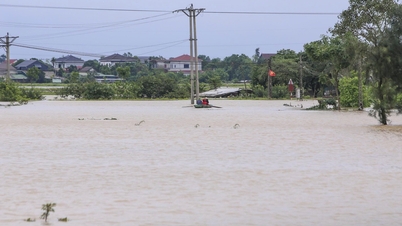
Forecasts indicate that by 2050, the land level in some provinces could reach -0.5 to -1 meter, and by 2100, -1 to -2 meters. Future rainfall is projected to decrease by 1–10%, leading to reduced water flow to the Mekong Delta, deeper saltwater intrusion, widespread flooding, increased coastal erosion, and the loss of hundreds of hectares of land annually.
Given this reality, experts believe that the development of the Mekong Delta must follow a "controlled adaptation" approach, meaning proactively creating a rational water regime based on natural conditions, reducing risks and uncertainties in production, especially agriculture. This is also the direction to optimally exploit natural factors such as land, water, and sunlight, and develop high-quality ecological and organic agriculture.
In addition, it is necessary to integrate key issues such as ensuring water security, flooding, and delta degradation into the socio -economic development strategies of the region and the nation; and to develop long-term plans for water-related issues, flood control, and protection of coastal mangrove ecosystems.
The program's practical experience shows that promoting research, application, and transfer of advanced technologies not only helps improve water resource management efficiency and ensure dam safety, but also contributes to proactively responding to climate change, protecting the environment, and promoting sustainable socio-economic development of the country.
Source: https://daidoanket.vn/bao-dam-an-ninh-nguon-nuoc-and-an-toan-ho-dap.html














![[INFOGRAPHIC] Who is the former President of Bolivia who was recently arrested?](https://vphoto.vietnam.vn/thumb/402x226/vietnam/resource/IMAGE/2025/12/12/1765543468412_thumb-cuu-tong-thong-bolivia-jpg.webp)





























































Comment (0)