


Starlink is currently the world's largest internet satellite network with over 7,600 satellites in orbit, but satellites are not the only way to bring internet to remote areas.

Over the past 10 years or so, many companies have sought to develop balloons and drones, collectively known as HAPS (High Altitude Positioning Systems), that operate in the stratosphere to transmit internet signals to a wider audience, especially in remote rural areas.

Google once had a project to build a balloon called Loon, but unfortunately, they abandoned the project in 2021.

In addition, some companies such as World Mobile Stratospheric (WMS) and Sceye are still sticking with this model.

WMS is particularly promising as it is developing an internet-broadcasting UAV called Stratomast that flies 18 km above the ground.

The Stratomast weighs 4 tons but has a wingspan of 56 meters, almost the same as a 120-ton Boeing 787-8. Its optimized weight is achieved thanks to its construction from ultra-light carbon fiber.

To compensate for the extremely wide wingspan, the aircraft's wings are made incredibly slender, almost like two pointed sticks. To prevent them from bending, vibrating, and breaking, there are two bracing bars underneath to transfer some of the force from the wings to the fuselage.
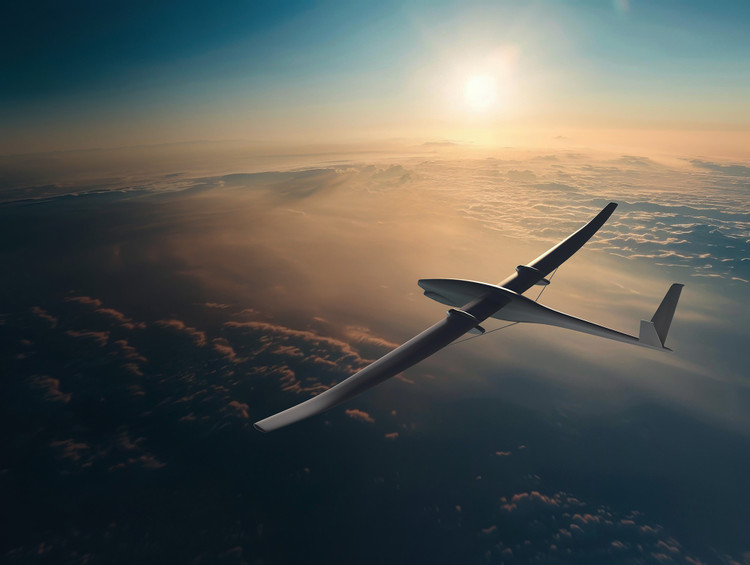
The aircraft's fuselage is bulging in the middle, tapering towards the rear, and at the tail are two thin wings arranged in a V-shape. Two liquid hydrogen-powered turbofan engines are mounted on the wings, allowing it to fly so slowly that it can almost hover for six days at an altitude of 18,000 meters.

Essentially, the Stratomast only flies within a small area. Underneath the fuselage are two protruding compartments housing 3x3 meter phased array antennas, arranged in two symmetrical clusters and also powered by liquid hydrogen.

After six days, it will return to the ground to refuel with hydrogen, and another UAV will fly in to take over the mission.
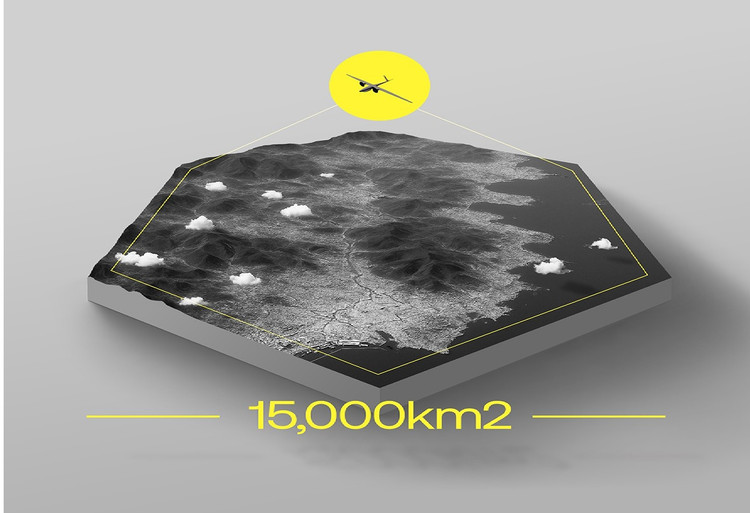
According to WMS, this antenna can connect half a million users on the ground to the internet simultaneously! They estimate that one Stratomast antenna can cover an area of 15,000 square kilometers. For example, Scotland is about 80,000 square kilometers; after accounting for some losses, just 9 Stratomast antennas would be enough to cover the whole of Scotland.
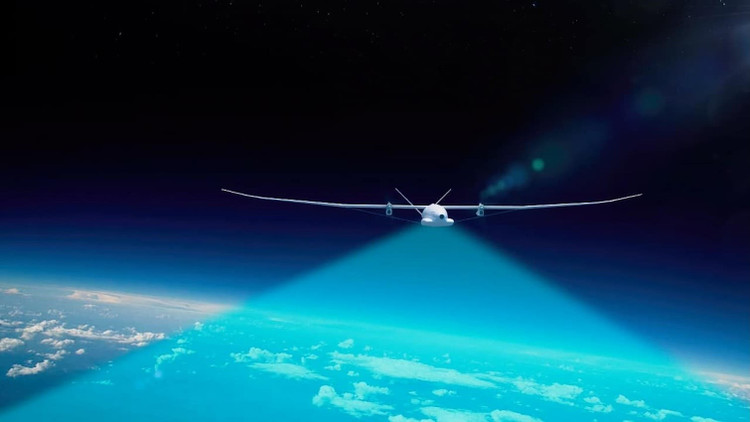
The annual cost of operating a fleet of nine aircraft is approximately £40 million ($52 million), meaning that Scotland's 5.5 million inhabitants could be provided with internet access for just 60 pence per person per month.
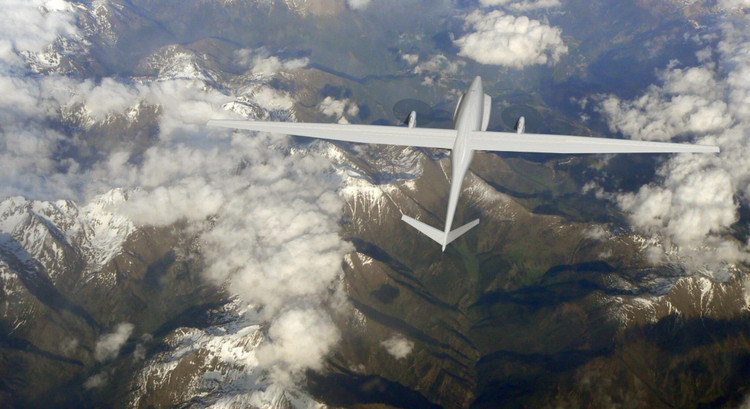
Stratomast will provide direct internet connectivity to users' phones at speeds of 200 megabits per second (25 MB/second). Currently, Stratomast is still in the design phase, but a prototype is planned for construction.
Source: https://khoahocdoisong.vn/chiec-may-bay-tam-cao-hua-hen-mot-ky-nguyen-internet-gia-re-post2149073462.html














![[INFOGRAPHIC] Who is the former President of Bolivia who was recently arrested?](https://vphoto.vietnam.vn/thumb/402x226/vietnam/resource/IMAGE/2025/12/12/1765543468412_thumb-cuu-tong-thong-bolivia-jpg.webp)





















































Comment (0)