

The winter-spring rice crop is a crucial production season that determines the yield and economic efficiency of the entire year. Given the unpredictable weather, drought, salinity, pests, and increasingly demanding market conditions, Can Tho, An Giang, and Dong Thap have proactively developed a concentrated and simultaneous planting schedule, avoiding brown planthopper infestations, while also integrating irrigation management and applying sustainable farming techniques.
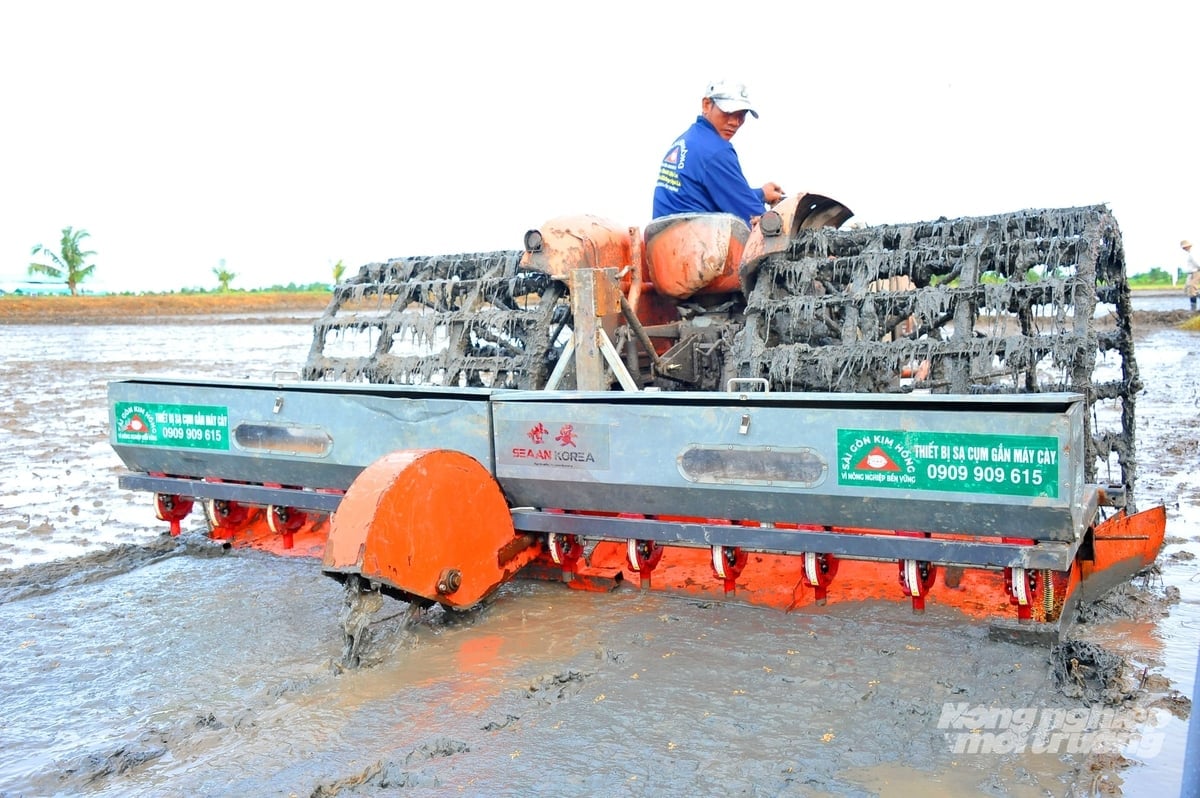
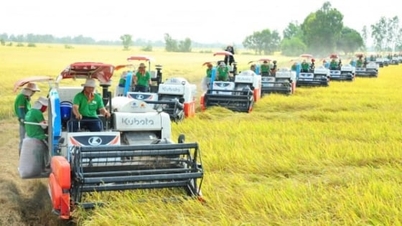
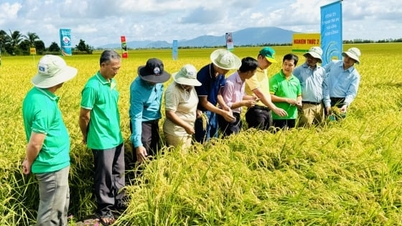
Farmers in the Mekong Delta provinces are planting the 2025-2026 winter-spring rice crop simultaneously and on schedule to avoid rice planthoppers and facilitate pest control. Photo: Le Hoang Vu.
A common feature in the production management of the three aforementioned localities is the use of the seasonal planting schedule as the "backbone," closely based on the results of monitoring brown planthopper light traps, meteorological and hydrological forecasts, and the actual conditions of each ecological zone. Sowing is required to be carried out simultaneously across each field and area, absolutely avoiding prolonged sowing and intercropping of multiple rice varieties, which increases the risk of pest outbreaks and water resource conflicts.
Simultaneously, localities are coordinating to review and strengthen the dike system, pumping stations, and regulating sluices, proactively operating irrigation works to ensure rational irrigation and drainage, and protecting agricultural production safely. Areas with controlled flood discharge are required to proactively manage the timing of water release and pumping to drain water promptly, creating favorable field conditions for timely sowing, avoiding pests, and effectively utilizing early-season water resources.
According to Ms. Nguyen Thi Giang, Deputy Director of the Department of Agriculture and Environment of Can Tho City, for the 2025-2026 winter-spring crop season, the city plans to plant 290,747 hectares of rice, striving for a yield of over 2.06 million tons. In addition, the area of fruit trees will reach over 102,000 hectares, and vegetables 32,500 hectares, contributing to diversifying production and increasing value per unit area.
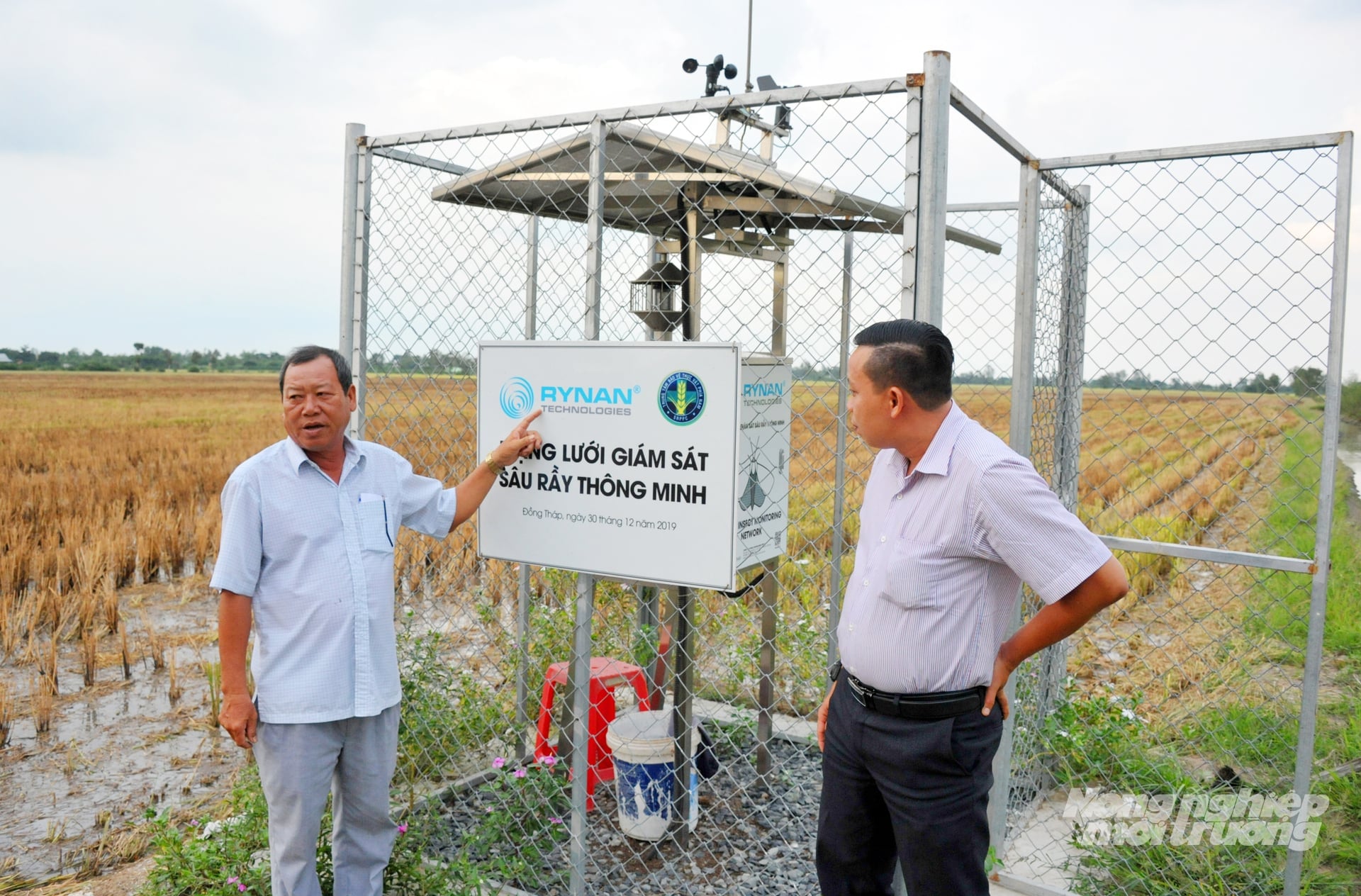
Agricultural technicians monitor brown planthopper light traps, providing a scientific basis for developing a planting schedule for the 2025-2026 winter-spring crop suitable for each ecological zone. Photo: Le Hoang Vu.
The planting schedule for the winter-spring rice crop is arranged into three phases, coinciding with brown planthopper migration periods in October, November, and December 2025, helping farmers avoid planthopper infestations right from the start of the season.
Regarding crop varieties, the city prioritizes high-quality varieties such as OM 18, OM 5451, and OM 380; fragrant and specialty rice varieties such as ST, Dai Thom 8, and RVT; and also allocates varieties tolerant to acidity and salinity in high-risk areas. In particular, Can Tho recommends ending sowing early by the end of December 2025 in coastal areas prone to drought and salinity at the end of the season.
In An Giang, Mr. Dang Thanh Phong, Deputy Head of the Department of Crop Production and Plant Protection, said that the 2025-2026 winter-spring rice crop is the main rice crop with a planned area of over 505,700 hectares, an average yield of 7.61 tons/ha, and an estimated production of nearly 3.85 million tons. Sowing will begin in early November 2025, with some areas with specific ecological conditions sowing earlier to avoid pests and suit hydrological conditions.
An Giang organizes production in a safe and synchronized manner, from planting seasons, seeds, irrigation to pest management. Areas with enclosed dikes are required to check the safety of the dikes before sowing, while areas outside the dikes proactively implement flood and drainage plans to avoid affecting the planting schedule.
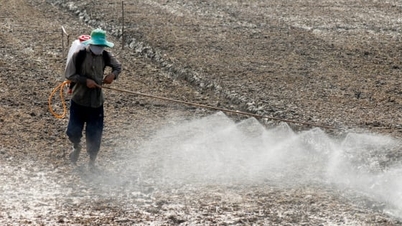
Simultaneously, the province is promoting the application of sustainable farming practices, integrated pest management (IPM), using pesticides according to the "four correct principles," reducing input costs, and protecting the ecological environment of the fields.
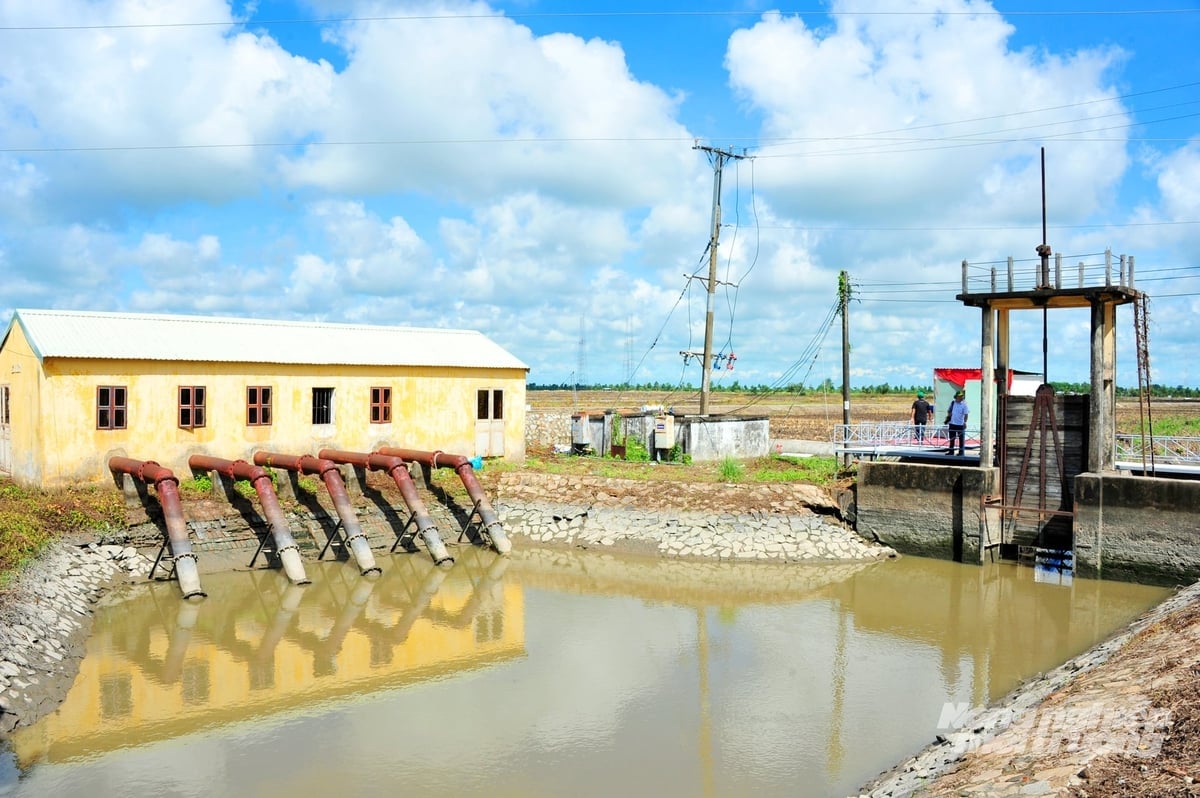
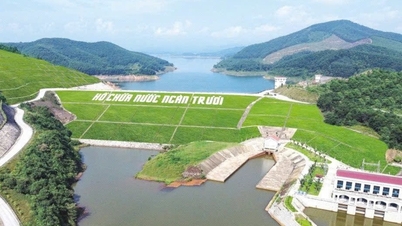
The drainage system and pumping stations are operated proactively to ensure water supply and timely flood drainage. Photo: Le Hoang Vu.
Adjacent to An Giang, Dong Thap is also urgently adhering to the planting schedule simultaneously, aiming to reduce emissions.
Mr. Le Chi Thien, Deputy Director of the Department of Agriculture and Environment of Dong Thap province, emphasized: The goal of organizing the 2025-2026 winter-spring crop production must ensure safety, efficiency, and sustainability. The total planned rice planting area is over 227,000 hectares, with a yield of over 1.64 million tons. High-quality rice accounts for approximately 85% of the area, and the rate of using certified seeds reaches 90%.
Dong Thap province has established a three-phase planting schedule, with the November 2025 phase being the main one, accounting for over 50% of the area. Local authorities are required to closely monitor rainstorms and tidal surges, and only sow seeds when the safety of the fields and irrigation systems is ensured. Some areas that sow late must complete the process before January 10, 2026, to minimize the risk of drought and salinity at the end of the season.
Dong Thap province focuses on applying technical packages such as "1 must, 5 reductions" and "3 reductions, 3 increases," alternating wet and dry irrigation (AWD), reducing seed sowing rates to approximately 80 kg/ha, and balanced fertilization according to soil type. Water management, straw management, and harvesting at the right ripeness are considered key solutions to improve rice grain quality and reduce greenhouse gas emissions.
Source: https://nongnghiepmoitruong.vn/dbscl-xuong-giong-vu-dong-xuan-dong-loat-de-ne-ray-d789464.html


![[Photo] Prime Minister Pham Minh Chinh receives Lao Minister of Education and Sports Thongsalith Mangnormek](/_next/image?url=https%3A%2F%2Fvphoto.vietnam.vn%2Fthumb%2F1200x675%2Fvietnam%2Fresource%2FIMAGE%2F2025%2F12%2F16%2F1765876834721_dsc-7519-jpg.webp&w=3840&q=75)






























































Comment (0)