

- Sir, speaking of documentary heritage, how do you assess the system of documentary heritage related to the Yen Tu complex?
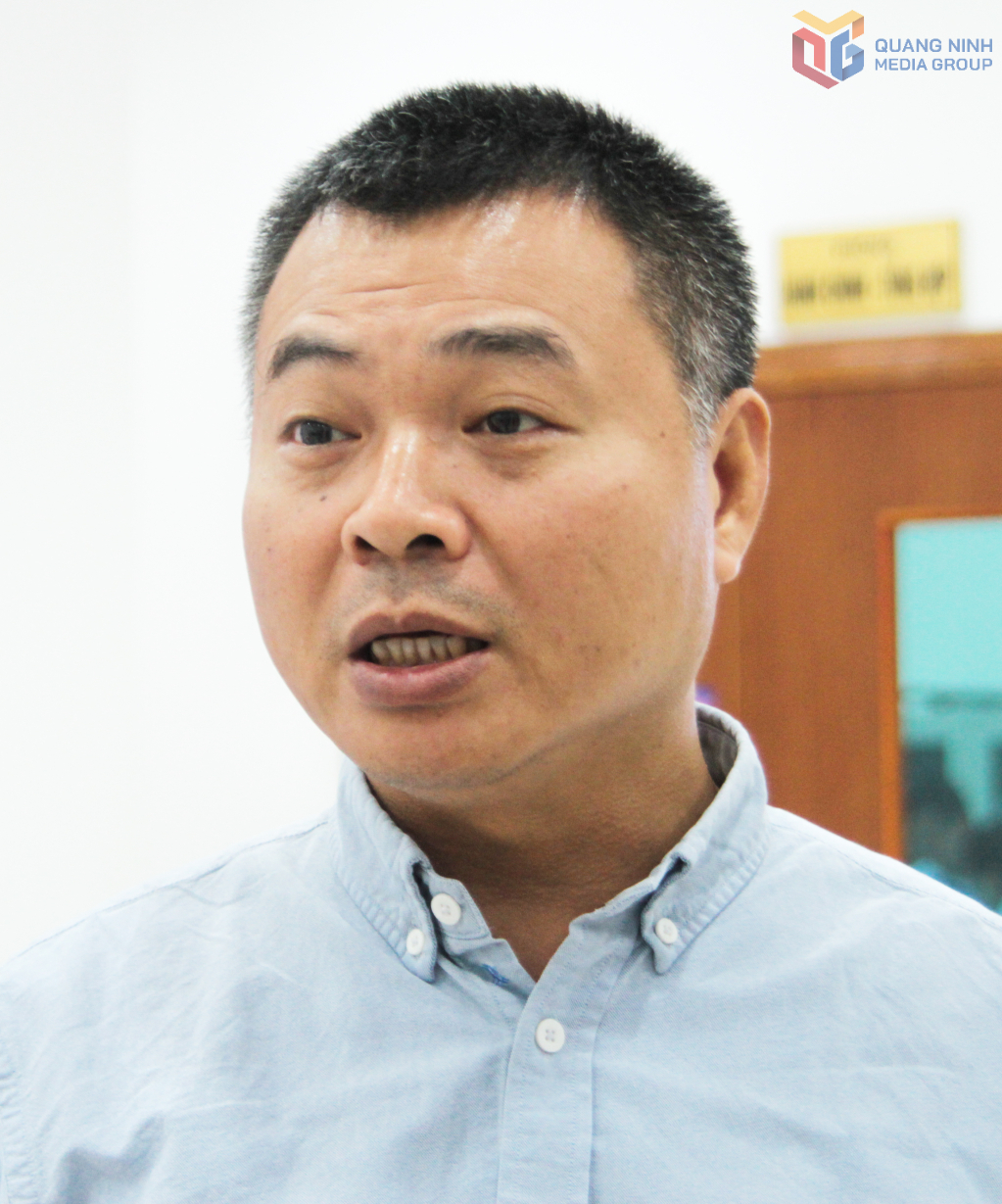
Dr. Nguyen Van Anh.
The documentary value of Truc Lam Buddhism is diverse. To date, research is focused on the system of inscriptions, particularly those found in temples and historical sites. The documentary heritage of Buddhism in Quang Ninh mainly consists of inscriptions.
Documentary heritage holds several very important values. Firstly, it has research value, revealing the formation process and contributions of Truc Lam Buddhism to social life and why this heritage has endured. This is because documentary heritage includes not only scriptures but also medicinal books, folk knowledge about healing, songs, and moral teachings. Secondly, and what we can explore further now, is the collection of documents on medicine and treatment methods. Currently, I know that several organizations working in the medical field are also interested in researching these remedies. At Yen Tu, programs offering tea meditation and walking meditation have been implemented to help visitors relieve the problems and pressures of modern society.
- In your opinion, after the Yen Tu - Vinh Nghiem - Con Son - Kiet Bac complex of historical sites was recognized, how should the connection of Buddhist heritage in Quang Ninh be addressed?
+ In the UNESCO heritage dossier, the core story relates to Truc Lam Buddhism. In terms of connectivity, the relics themselves are part of the story of an entire complex. Therefore, there is already an inherent connection. What we are focusing on here is connectivity in terms of transportation, infrastructure, and how to help visitors understand this connection. I think these are very important issues.
In fact, Quang Ninh has already taken fundamental steps to connect these historical sites. For example, two very important sites related to the Truc Lam Zen sect are Yen Tu and Ngoa Van. Quang Ninh has built and expanded a route called the pilgrimage route connecting Yen Tu to Ho Thien and Ngoa Van. That is one form of connection.
I think, technically, the transportation and infrastructure are already connected, but the issue now is to help people better understand why these historical sites are related to each other. And what each site represents within the overall story of the entire complex. The first and most important thing is to invest more in research and promotion to help tourists visiting Quang Ninh understand more about these sites. We have made similar proposals many times.
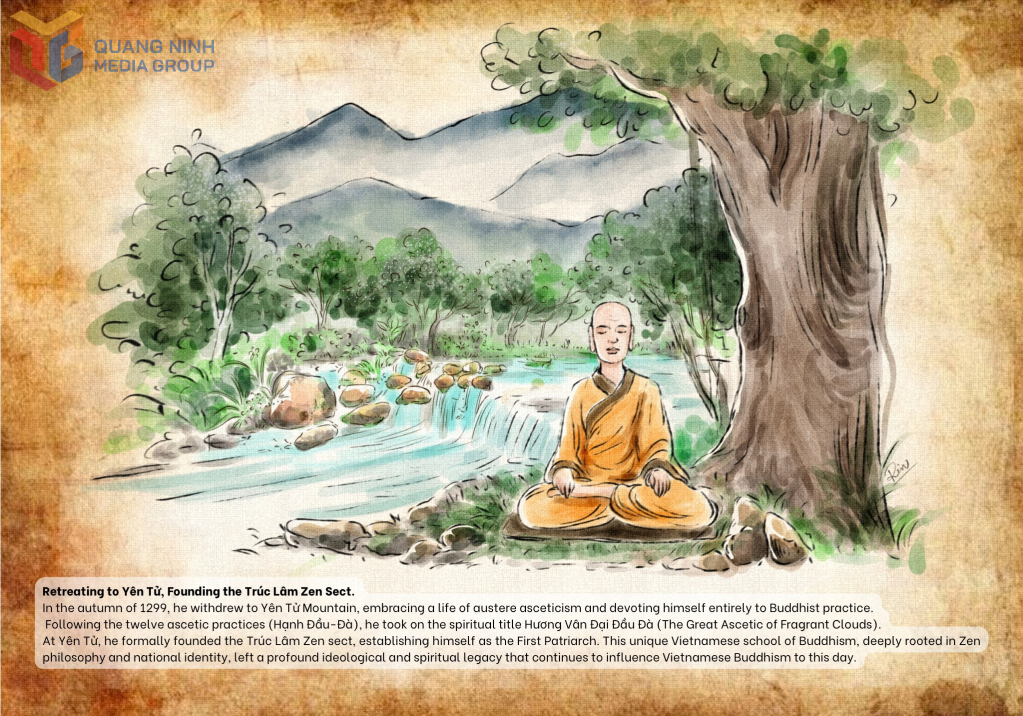
A painting depicting Emperor Tran Nhan Tong on Yen Tu mountain.
- What significance will that connection have for tourism development, in your opinion?
We know that the story of Emperor Tran Nhan Tong's renunciation of worldly life, his attainment of enlightenment, and his transformation into a Buddha mirrors the process of teaching, guiding, and peacefully transforming into a Buddha of Shakyamuni Buddha. Therefore, each location associated with his path to enlightenment is a Buddhist landmark. Among them are Hoa Yen Pagoda, part of the Yen Tu scenic area, where he renounced worldly life, practiced, taught, and guided monks; Ngoa Van, where he attained enlightenment, after which his disciples, particularly Phap Loa, organized a cremation to collect his relics; and Quynh Lam Pagoda, a center for training monks for the development of Truc Lam Buddhism.
Each such site serves a specific function and reflects the entire process and stages of the Buddhist Emperor's spiritual practice and enlightenment. More broadly, it represents the formation and development of Truc Lam Buddhism.
Once this complex is recognized and more tourists visit Yen Tu, we need to promote the sites to the community so they understand them better. For example, what role do Lan Pagoda, Hoa Yen Pagoda, Van Tieu Pagoda, etc., play? We need research to explain to tourists the story of each site and how they connect to form the overall story of Truc Lam Buddhism.
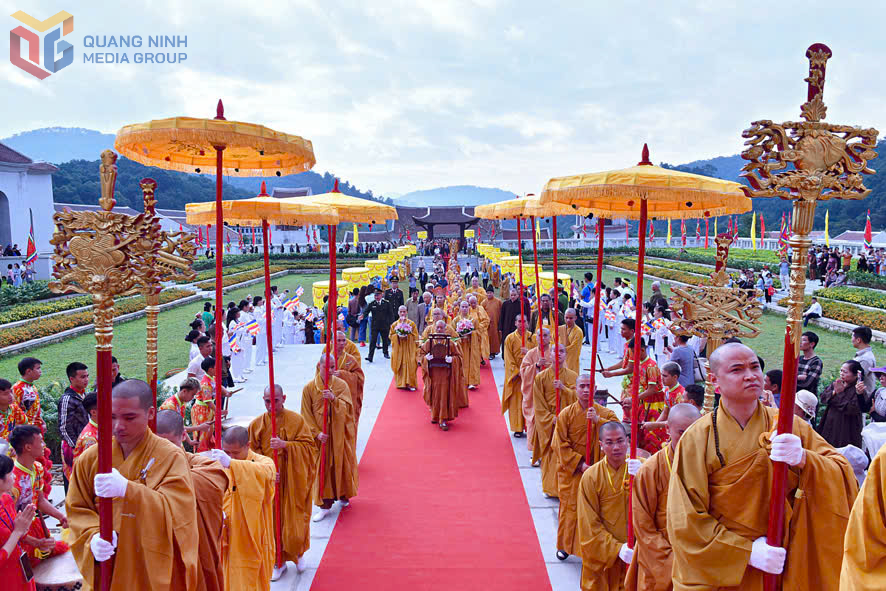
Venerable monks, religious leaders, nuns, and Buddhist followers gathered at Yen Tu to attend the spring festival.
- As you just said, does that mean that connecting the historical sites, especially those within the recognized complex, will create a driving force to spread awareness and help people learn more about the Truc Lam Zen sect?
+ That's right. And it's not just about connecting historical sites in Quang Ninh, but also connecting other locations in Bac Ninh and Hai Phong. For example, Thanh Mai, Vinh Nghiem, Con Son, and Kiet Bac will explain why they are part of that common story. Once we understand that, we can explain it to tourists. And each time tourists come here, in addition to paying respects to the Buddhist Emperor, they will also learn about the formation and development of Truc Lam Buddhism and gain a deeper understanding of Quang Ninh culture.
- In your opinion, what issues should we focus on in research on heritage sites?
In fact, we have invested heavily in research over the past decade. However, the history and issues of the Truc Lam Zen sect alone are vast and diverse. Therefore, the results we have achieved are only the initial and fundamental steps. The next step is to continue investing in research to clarify the values of the culture and heritage complex.
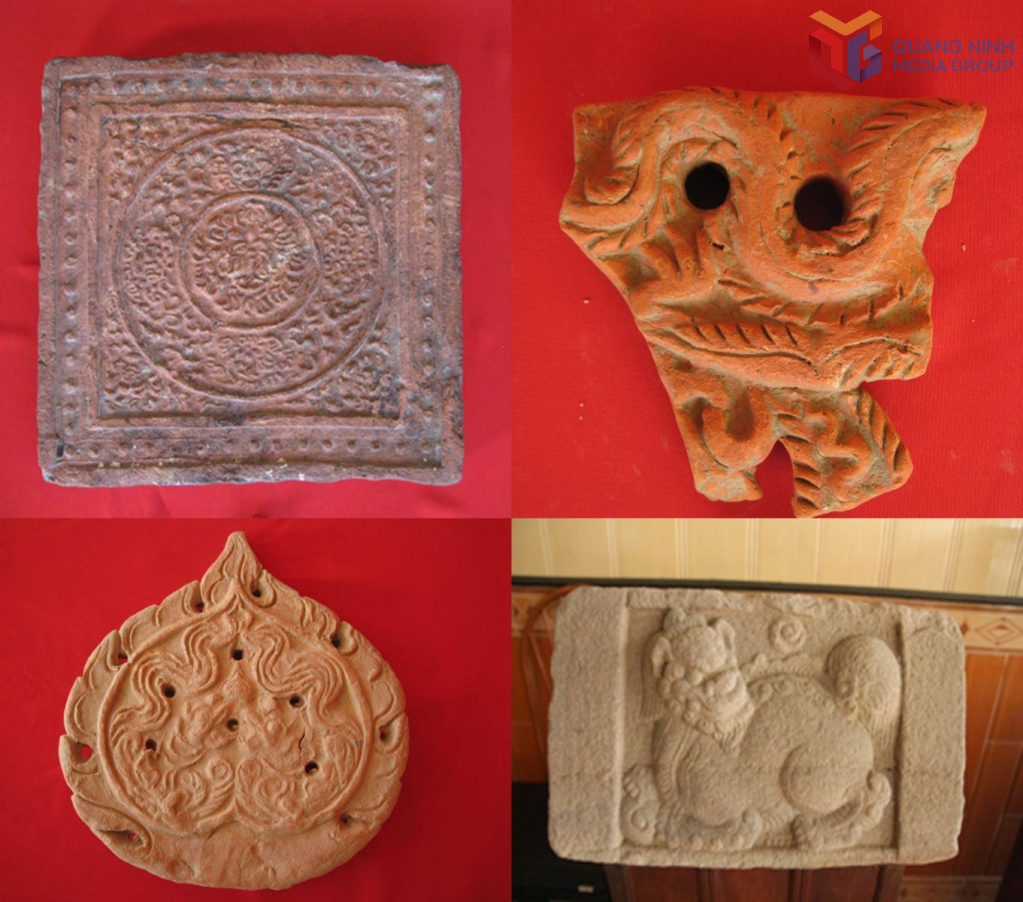
Artifacts dating back to the 13th and 14th centuries were found at Yen Tu.
Beyond the tangible values we've already seen, the crucial aspect to study is the ideology. The ideological values that Truc Lam Buddhism aims for—how to bring peace to society. Studying this will influence other factors, from how to promote the heritage to how to preserve it. I believe this is a fundamental task for other work. And that's why, in UNESCO's recommendations, they want us to continue interpreting the stories we've told in the dossier. Secondly, we must research and develop sustainable, systematic, and unified preservation plans across different areas and sites in various localities.
- Specifically, what is the most distinctive core content of Truc Lam Buddhism that we need to continue researching here?
+ Among its outstanding global values, an important and prominent aspect has also been highlighted: Truc Lam Yen Tu Buddhism has a very high degree of engagement with the world. This doesn't mean other religions lack this; every religion has an engagement with the world. However, the difference is that Truc Lam has integrated the values of other religious belief systems to suit the context and conditions of Vietnam.
Secondly, it is the value of engagement with the world that has created strength for the Vietnamese community and nation. Thanks to this, the Vietnamese people have overcome difficulties. We know that if we simply relied on Buddhist philosophies and scriptures, not everyone would understand them. But the Truc Lam Yen Tu Zen school explains things more simply so that even ordinary people can understand these profound beliefs.
Therefore, Emperor Tran Nhan Tong wrote "Living in the World and Finding Joy in the Dharma," explaining profound philosophies in simple terms that ordinary people can understand. He could immediately compare these concepts to current social phenomena and issues to reflect on and understand his own situation. It's like the everyday routine of eating when hungry and sleeping when tired. That's a very important value.
That value is not only important for the past, but it remains true for the present and even the future...
- That's right. The very important values of Truc Lam Buddhism in particular, and Buddhism in general, are very much in line with people's thoughts, feelings, and emotions. Truc Lam Buddhism not only addresses the issues of 13th-century society but also many issues that still exist in modern society. Some issues are even much bigger, such as stress, for example. This helps us understand why the lectures of Zen Master Thich Nhat Hanh can be listened to by many people, even those who are not religious. The viewpoints and actions of Truc Lam Buddhism remain relevant in solving many current problems. That's why Truc Lam Buddhism is so contemporary.
Thank you for the interview!
Source: https://baoquangninh.vn/moi-di-tich-o-yen-tu-deu-ke-mot-cau-chuyen-hap-dan-3388300.html
![[Photo] Prime Minister Pham Minh Chinh receives Lao Minister of Education and Sports Thongsalith Mangnormek](/_next/image?url=https%3A%2F%2Fvphoto.vietnam.vn%2Fthumb%2F1200x675%2Fvietnam%2Fresource%2FIMAGE%2F2025%2F12%2F16%2F1765876834721_dsc-7519-jpg.webp&w=3840&q=75)
![[Image] Leaked images ahead of the 2025 Community Action Awards gala.](/_next/image?url=https%3A%2F%2Fvphoto.vietnam.vn%2Fthumb%2F1200x675%2Fvietnam%2Fresource%2FIMAGE%2F2025%2F12%2F16%2F1765882828720_ndo_br_thiet-ke-chua-co-ten-45-png.webp&w=3840&q=75)


![[Photo] Prime Minister Pham Minh Chinh receives the Governor of Tochigi Province (Japan)](/_next/image?url=https%3A%2F%2Fvphoto.vietnam.vn%2Fthumb%2F1200x675%2Fvietnam%2Fresource%2FIMAGE%2F2025%2F12%2F16%2F1765892133176_dsc-8082-6425-jpg.webp&w=3840&q=75)


































![[Photo] Prime Minister Pham Minh Chinh attends the Vietnam Economic Forum 2025](https://vphoto.vietnam.vn/thumb/402x226/vietnam/resource/IMAGE/2025/12/16/1765893035503_ndo_br_dsc-8043-jpg.webp)

















Comment (0)