

Soil determines the vitality of plants.
The Mekong Delta – the country's largest rice and seafood producing region – is facing increasingly serious challenges from climate change. Salinity intrusion, drought, flooding, land subsidence, and unusual pest outbreaks not only threaten agricultural production but also silently weaken the most important foundation: arable land.

Assoc. Prof. Dr. Nguyen Khoi Nghia, Deputy Head of the Department of Soil Science – School of Agriculture (Can Tho University). Photo: Le Hoang Vu.
According to Associate Professor Dr. Nguyen Khoi Nghia, Deputy Head of the Department of Soil Science - School of Agriculture ( Can Tho University), the current issue of agricultural land degradation needs to be recognized as an urgent problem because the health of the soil directly determines the productivity, quality of agricultural products, and the ability of crops to withstand harsh climate changes.
Associate Professor Nghia stated that soil is not simply a place to keep plants standing, but also performs many vital functions. Healthy soil creates a stable physical environment that helps the root system anchor deeply and firmly, reducing the risk of falling over and increasing the ability to absorb water and nutrients.
If the soil is degraded, has poor structure, and is compacted, tree roots cannot grow deep or anchor firmly. As a result, trees are easily knocked over, grow poorly, and are more susceptible to stress from adverse weather conditions.
Beyond its role as a substrate, healthy soil is also home to a rich soil ecosystem. Beneficial microorganisms, fungi, and nematodes participate in biochemical cycles, helping to break down organic matter and release nutrients for plants in a natural and sustainable way.
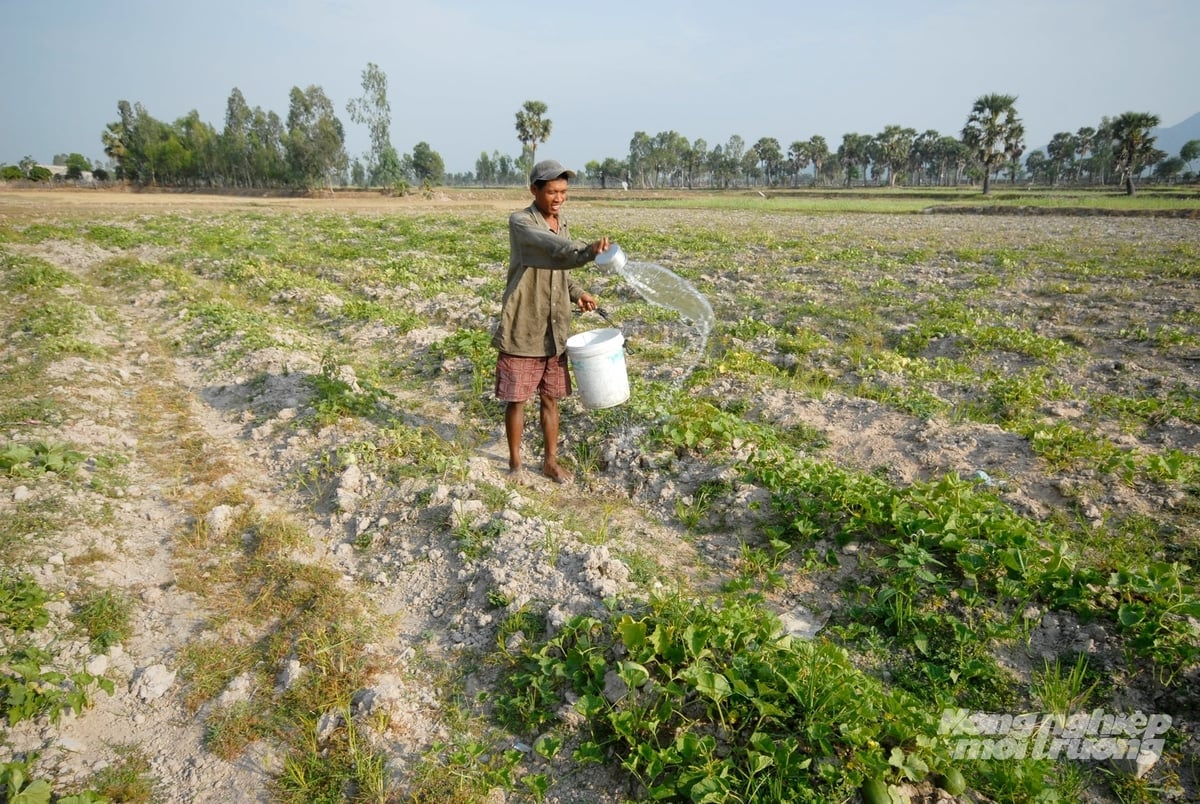
Degraded soil with poor structure and compaction prevents tree roots from growing deep. Photo: Le Hoang Vu.
Another important function of healthy soil is its ability to regulate water and microclimate. Soil rich in organic matter and with a good structure will form many pores, helping to store water effectively and provide a continuous water supply to plants throughout the growing season, and even the entire year.
"In increasingly severe drought conditions, soil with high organic matter content will retain water better, helping crops overcome periods of water scarcity," Associate Professor Dr. Nguyen Khoi Nghia emphasized.
Furthermore, soil biodiversity contributes to reducing greenhouse gas emissions, filtering the air, and regulating the environment. This is particularly important in the context of the Mekong Delta's agriculture being oriented towards reduced emissions and green growth.
The current reality shows that many agricultural lands in the Mekong Delta are becoming compacted, depleted of nutrients, lacking organic matter, and experiencing ecological imbalance due to the long-term overuse of chemical fertilizers and pesticides.
Associate Professor Dr. Nguyen Khoi Nghia warned that soil degradation will lead to a series of negative consequences: poor crop growth, unbalanced nutrition, increased pest and disease outbreaks, and especially the accumulation of toxins in the soil. When toxins accumulate in the soil, agricultural products are no longer safe for consumers, and it also has long-term effects on health and the living environment.
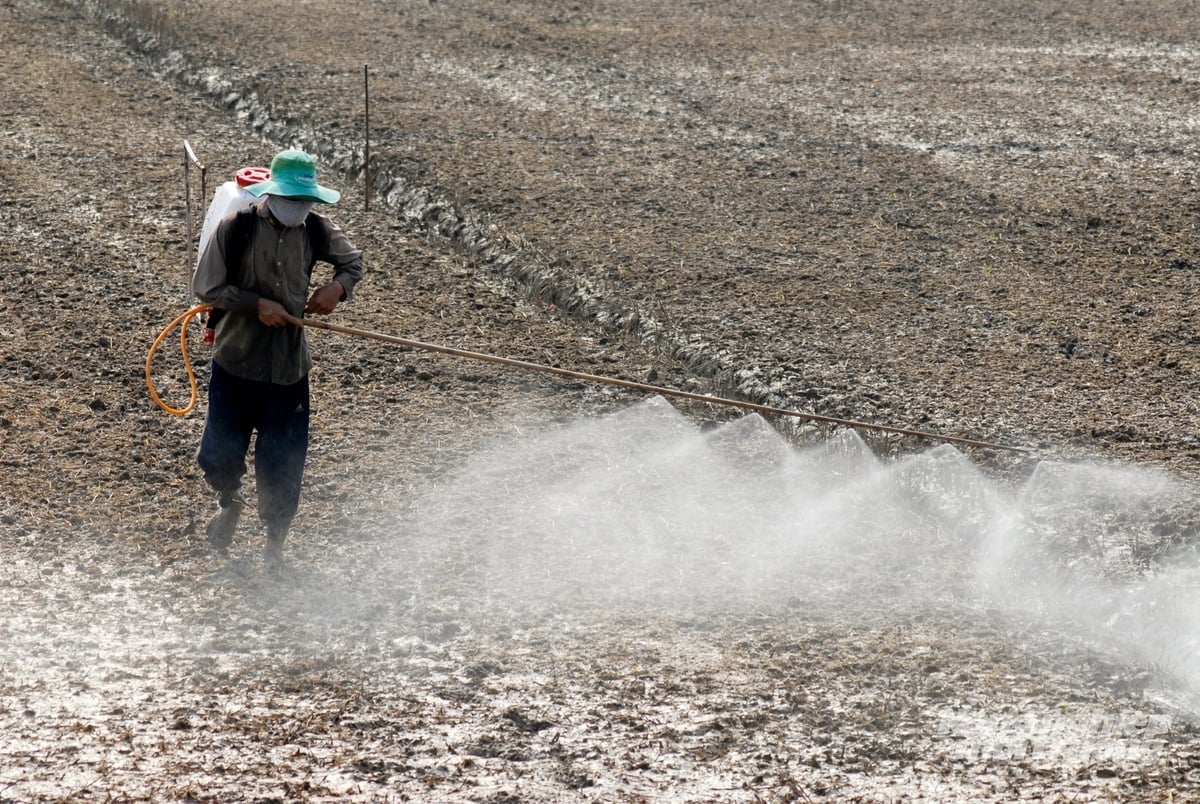
Many agricultural lands in the Mekong Delta are becoming compacted, depleted of nutrients, losing organic matter, and experiencing ecological imbalance. Photo: Le Hoang Vu.
Climate change exacerbates land degradation.
Climate change is increasing the vulnerability of agricultural land. Salinity intrusion introduces sodium ions from seawater into the soil, disrupting soil structure, causing soil fragmentation, and reducing water infiltration and gas exchange capacity.
Associate Professor Dr. Nguyen Khoi Nghia analyzed that when soil loses its structure, the surface easily becomes compacted, preventing plant roots from "breathing" and transporting water, nutrients, and oxygen to deeper layers. Along with this, erratic weather patterns give rise to new pests, insects, and weeds with increasing density and intensity, forcing farmers to increase the use of chemical fertilizers and pesticides, inadvertently accelerating soil depletion.
Given this situation, Associate Professor Nghia believes that restoring soil health must become the focus of agricultural production in the Mekong Delta. Organic farming, circular agriculture, and emission reduction are not only global trends but also the inevitable path for soil regeneration.
Increased use of organic fertilizers and agricultural by-products, a gradual reduction in chemical fertilizers and pesticides, combined with rational soil and water management, will help improve soil structure, increase organic matter, and restore biological balance in the soil.
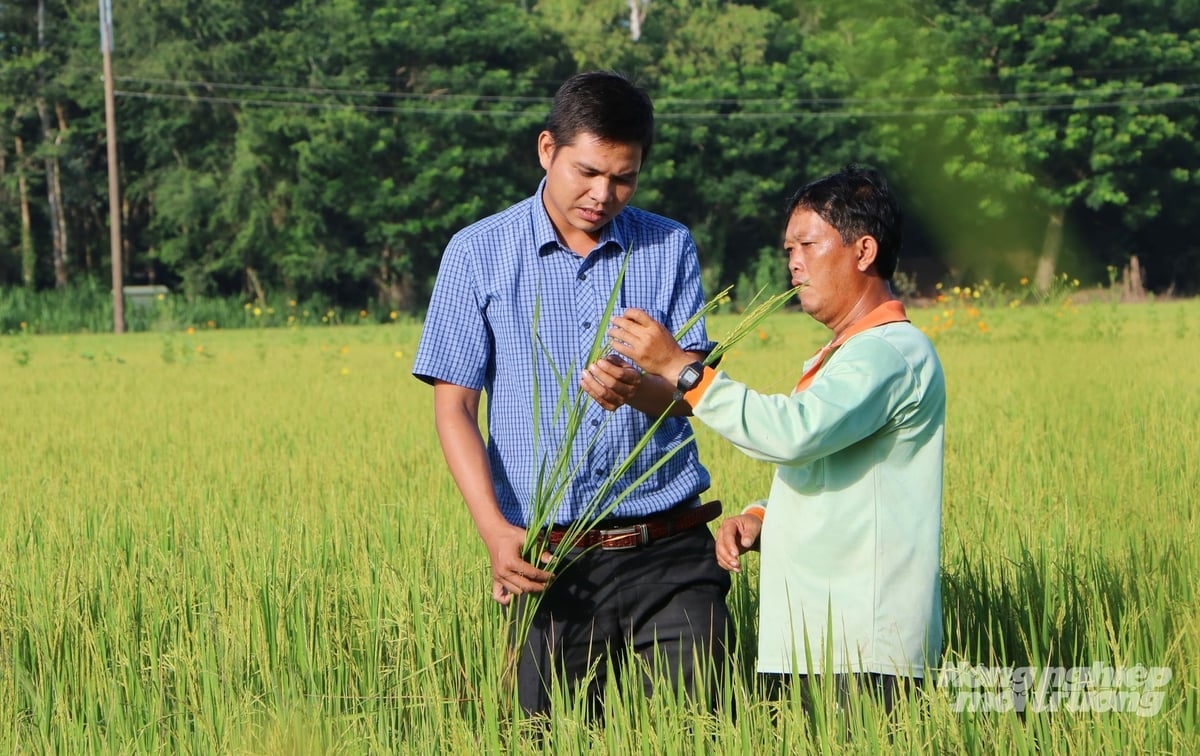
Organic farming, circular agriculture, and emission reduction are not only global trends but also the inevitable path to land regeneration. Photo: Le Hoang Vu.
Currently, many farmers in the Mekong Delta have begun to switch to environmentally friendly farming models; however, the scale is still small, lacks uniformity, and urgently needs stronger involvement from scientists, management agencies, and appropriate support policies.
In the context of increasingly severe climate change, pursuing productivity at all costs is no longer a sustainable option. Healthy soil is the foundation for healthy crops, safe agricultural products, environmental protection, and long-term secure livelihoods for farmers.
Associate Professor Dr. Nguyen Khoi Nghia affirmed that investing in soil health today is investing in food security, agricultural product quality, and the sustainable future of the Mekong Delta.
Source: https://nongnghiepmoitruong.vn/dat-khoe--nen-tang-song-con-cho-nong-nghiep-dbscl-truc-bien-doi-khi-hau-d789390.html
![[Image] Leaked images ahead of the 2025 Community Action Awards gala.](/_next/image?url=https%3A%2F%2Fvphoto.vietnam.vn%2Fthumb%2F1200x675%2Fvietnam%2Fresource%2FIMAGE%2F2025%2F12%2F16%2F1765882828720_ndo_br_thiet-ke-chua-co-ten-45-png.webp&w=3840&q=75)


![[Photo] Prime Minister Pham Minh Chinh receives Lao Minister of Education and Sports Thongsalith Mangnormek](/_next/image?url=https%3A%2F%2Fvphoto.vietnam.vn%2Fthumb%2F1200x675%2Fvietnam%2Fresource%2FIMAGE%2F2025%2F12%2F16%2F1765876834721_dsc-7519-jpg.webp&w=3840&q=75)
























































Comment (0)