

Where are the golden age now?
In late 2007, the Vietnam National Administration of Tourism, together with the Ministry of Culture, Sports and Tourism, organized a survey trip for overland tourism tours through countries located on the East-West Economic Corridor, including Vietnam , Laos, Thailand, and Cambodia. The survey aimed to examine and assess the current situation, potential, and connectivity of tourist destinations along the East-West Economic Corridor; to develop unique transnational tourism products; and to agree on solutions for effectively exploiting the tourism route. Subsequently, a number of tourism companies organized cross-country tours and programs, attracting a large number of tourists from Thailand, Cambodia, and Laos to Vietnam .
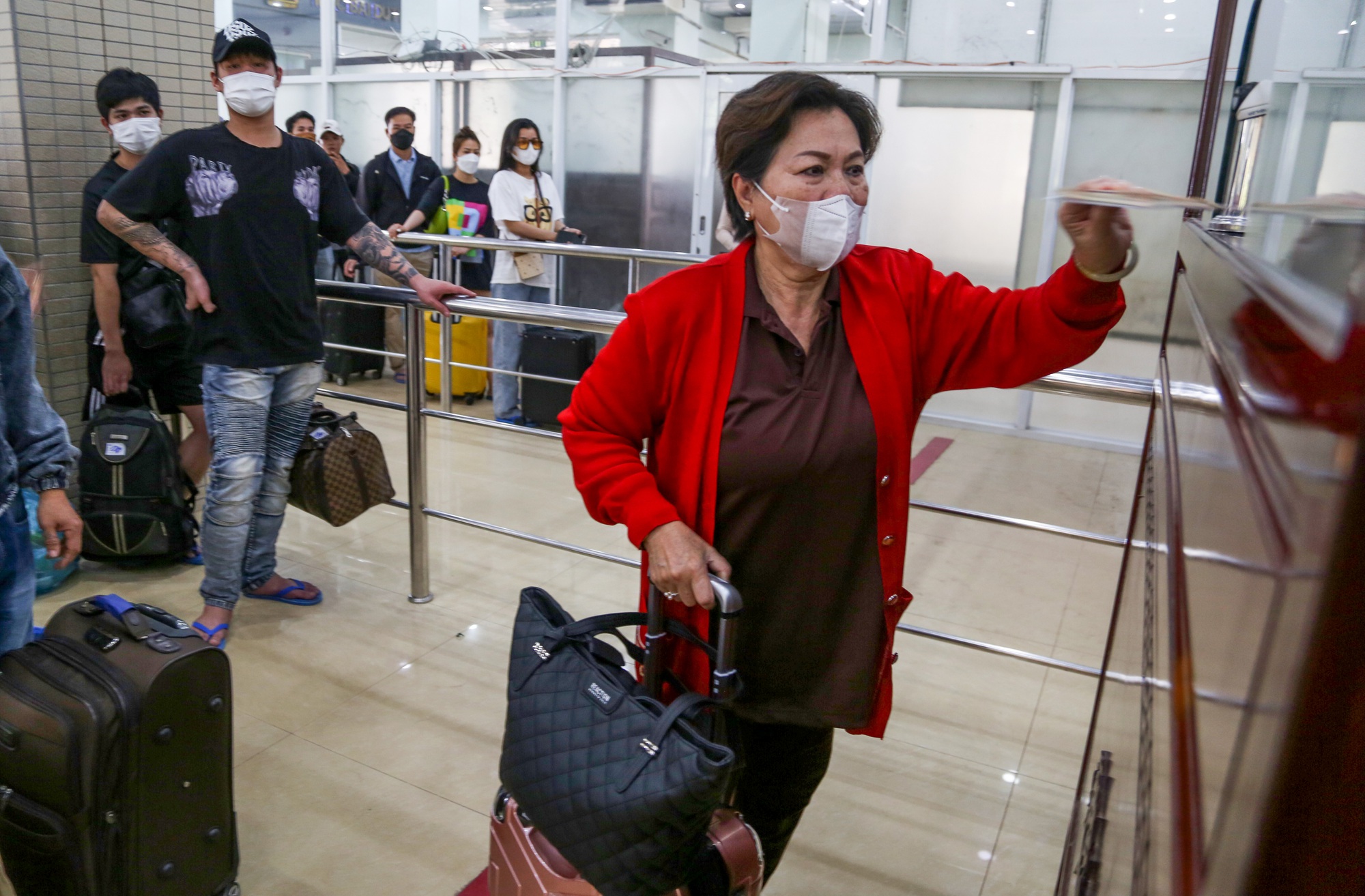
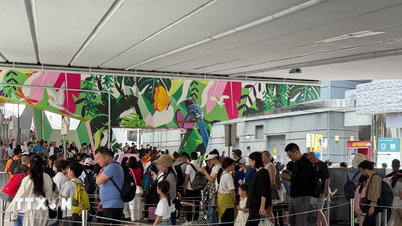
Complete immigration procedures from Cambodia into Vietnam via the Moc Bai international border gate.
After years of monitoring and researching this market segment, Mr. Cao Tri Dung, Chairman of the Board of Directors of Vietnam TravelMart, recalled that the formation of the East-West economic corridor, especially the opening of the Friendship Bridge 2 on December 19, 2006, connecting Mukdahan (Thailand) with Savannakhet (Laos), created favorable conditions for localities along the route from Savannakhet to Da Nang to experience strong growth in tourism.
From 2007 to 2010, the number of tourists visiting the central provinces of Vietnam along this route increased dramatically. In 2007, in the first six months alone, approximately 160,000 tourists entered Vietnam through the Lao Bao border gate (a 40% increase compared to the same period the previous year), bringing the total number of visitors through the Lao Bao international border gate for the whole year to 404,500 (double the number in 2006). In 2008, despite facing difficulties from the global financial crisis, the number of vehicles entering and exiting through the Lao Bao border gate remained at 56,000, the same as in 2007; the number of tourists through the Lao Bao border gate in 2008 increased by 32,629 compared to 2007.
In Thua Thien-Hue and Da Nang, the number of Thai tourists arriving by land helped Thailand rise to the number one position in terms of total international visitors to these two localities in the years 2007-2008.
" Vietnam is located on the Trans-Asian Highway and the East-West Economic Corridor, both vital routes, so the potential for overland tourism is enormous. However, after a period of rapid growth of 3-4 years, from 2011 onwards, the number of tourists began to decline. Localities along the route on the Vietnamese side no longer consider Thailand as the largest source of tourists. From 2011 to the present, the number of tourists arriving by road via the East-West Economic Corridor accounts for only a very small proportion, except for Savannakhet and Quang Tri. The largest source of overland tourists for Vietnam is China, but now most people in border provinces also travel to Vietnam . They are so familiar with overland tourism that the boom is no longer as strong as before," Mr. Cao Tri Dung lamented.
Mr. TH, the director of a travel company in Ho Chi Minh City, also believes that the Vietnamese tourism industry has overlooked the importance of overland tourism in recent years. After activating the East-West route market, Vietnam once proposed a "5 countries, 1 visa" scheme for Laos, Cambodia, Thailand, Myanmar, and Vietnam , meaning that tourists could use one visa to travel to all five countries.
Even now, many industry experts persistently advocate for the continued pursuit of the "one visa - multiple destinations" concept within the CLMV sub-region (Cambodia - Laos - Myanmar - Vietnam ), in which Vietnam plays a crucial role, yet the tourism industry rarely mentions it anymore. Conversely, as soon as Vietnam proposed the idea, Laos, Cambodia, and Thailand officially began cooperating to exchange tourists through the "two countries, one destination" model, allowing visitors with a visa to Thailand to enter Laos/Cambodia and vice versa.
Synchronization from infrastructure to policy framework
According to Mr. TH, besides objective reasons such as the rapid development of the aviation industry and the trend of quick, time-saving travel, there are two main reasons for the increasingly sluggish state of land-based tourism. Firstly, the entry policies still have many shortcomings; secondly, the products are monotonous and lack the linkages to change and innovate. Specifically, entry procedures into Cambodia are done on-site, easy, and convenient, while entry procedures into Vietnam require prior application.
The journey from Phnom Penh to the Bavet border crossing is 160 km, taking 3 hours and 10 minutes for customs procedures. The journey from Moc Bai to Ho Chi Minh City is half the distance but still takes 3 hours, plus time-consuming immigration procedures. The border crossing is designed to be closed, and at times, hundreds of tourists have to crowd together, making the wait very tiring. If tourists dislike the waiting time for procedures, transportation also faces many obstacles. Group vehicles undergoing temporary import and re-export procedures must meet many conditions and complete all kinds of paperwork before being cleared. For individual vehicles on caravan tours, the process is even more complicated. Especially for vehicles traveling in the opposite direction from Thailand to Vietnam , they even have to apply to the Ministry of Transport.
The southern border crossing between Thailand and Malaysia is bustling with travelers. The land border crossing between Thailand and Laos is also very busy. Looking further afield, tourists traveling to Europe can freely travel by land between countries, with border crossings often lacking barriers. In contrast, Vietnam's border crossings with China are almost exclusively busy, while most of its borders with Laos and Cambodia are not particularly vibrant. Considering transportation options for tourism, land travel is second only to air travel in importance and attractiveness to tourists. Land tourism is in no way inferior to cruise tourism in terms of passenger volume, potential, and product ecosystems. From this perspective, a comprehensive national strategy for developing land tourism needs to be quickly developed.
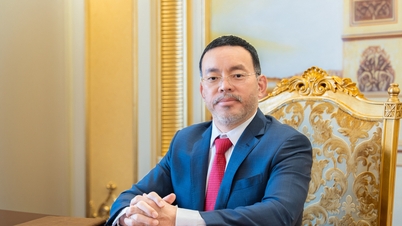
Mr. Cao Tri Dung, Chairman of the Board of Directors of Vietnam TravelMart Tourism Company
"Moreover, businesses simply bring tourists wherever they plan their tours, and no local authority is willing to take the initiative to coordinate and promote tour programs and routes to make the products more attractive and well-organized. Gathering this type of tourist is already difficult, so every business is discouraged and finds it hard to maintain," Mr. TH said.
From a market perspective, Mr. Cao Tri Dung assessed that the current tourism model and structure have changed significantly. Previously, tourists traveled in large groups, with travel companies handling everything from A to Z. However, the trend of individual travel and small groups of family and friends is increasing. If no one takes care of all the procedures and inconveniences, they will switch to other types of tourism. Therefore, the legal framework also needs to change in order to expand the source of tourists.
According to Mr. Dung, sustainable road tourism development depends on many factors, including the transportation system, road infrastructure, border crossings, road networks between countries, and accompanying policies. For tourists from third countries, for example from Europe to Bangkok (Thailand), to travel by road through Laos to Vietnam , the routes must be well-connected and have a synchronized highway network. In reality, only a few routes from Laos to Vietnam are still usable; the rest are long, dilapidated, and in poor condition. The route from Phnom Penh through the Moc Bai border crossing to Ho Chi Minh City is better, but the customer base is also outdated.
"Once we have the transportation infrastructure, we can then build a legal framework for road tourism. For example, how do we handle left-hand drive vehicles? What are the regulations regarding ASEAN visas for tourists with third nationalities? Can we pick up vehicles from their side of the border? We must remove, streamline, and accelerate these bottlenecks through the legal framework related to road transport and agreements within the ASEAN bloc. At least Vietnam , Laos, Cambodia, and some other Southeast Asian countries should implement an interconnected road network like European countries," Mr. Dung proposed.
Source link








































































Comment (0)