Continuing the cultural heritage of the Ede people.
Along the Serepok River, the Ede people in the villages of Nui, Buor, Trum, and Ea Po in Cu Jut commune, Lam Dong province, continue to preserve their ethnic culture. Amidst modern life, the Ede identity still resonates in the sound of gongs, the melodies, the longhouses, and the warm smiles of the people from this red basalt land.
Báo Lâm Đồng•06/11/2025
Those who keep the cultural flame alive
Among the Ede people dedicated to their ethnic culture, the distinguished artisan Y Sim Êban in Nui village is considered a "great figure" in teaching the playing of gongs and traditional musical instruments. Artisan Y Sim is knowledgeable in dozens of ancient gong melodies and knows how to craft many types of musical instruments such as the đinh năm, đinh buôt, and mouth flute...
Distinguished artisan Y Sim Êban, of the Ê Đê ethnic group, from Nui village, Cư Jút commune.
Artisan Y Sim shared: “We Ede people are proud of our gongs, brocade fabrics, and festivals steeped in our ethnic spirit. Thanks to the government's attention, these values have been preserved to this day. I always tell my children and grandchildren to know how to play the gongs, sing folk songs, and speak the Ede language, so that no matter where they go, they will never forget their roots.”
"
We Ede people are proud of our gongs, our brocade fabrics, and our festivals steeped in our ethnic spirit. Thanks to the government's attention, these values have been preserved to this day. I always tell my children and grandchildren to know how to play the gongs, sing folk songs, and speak the Ede language, so that no matter where they go, they will never forget their roots.
Distinguished artisan Y Sim Êban, Nui village, Cư Jút commune
Along with artisans like Y Sim, the young Ede people in Cu Jut are continuing their passion for traditional culture. Youth gong clubs attract a large number of young people. They learn how to preserve and play gongs, practice dancing, weave fabrics, and contribute to spreading the Ede cultural heritage to future generations.
Distinguished artisan Y Sim Êban (standing in the middle) performs with young Ê Đê people in a community program.
Cư Jút currently preserves seven ancient gong sets along with many traditional longhouses in the villages of Buôr, Ea Pô, Nui, and Trum. Each village has its own gong ensemble and performing arts group, contributing to the preservation of its unique cultural space. During festivals, the resonant sound of gongs blends with the vibrant colors of brocade fabrics, creating a lively cultural tapestry rich in the Ede identity in the heart of the Central Highlands.
Cư Jút currently preserves 7 sets of ancient gongs and dozens of traditional longhouses in the villages of Buôr, Ea Pô, Nui, and Trum.
The Ede people in Cu Jut also particularly cherish their language, writing system, and traditional clothing. From a young age, Ede children are taught by their parents to speak their ethnic language, to greet others, and to tell stories in Ede. In schools, teachers also organize Ede language lessons, helping students learn to read and write their ethnic language.
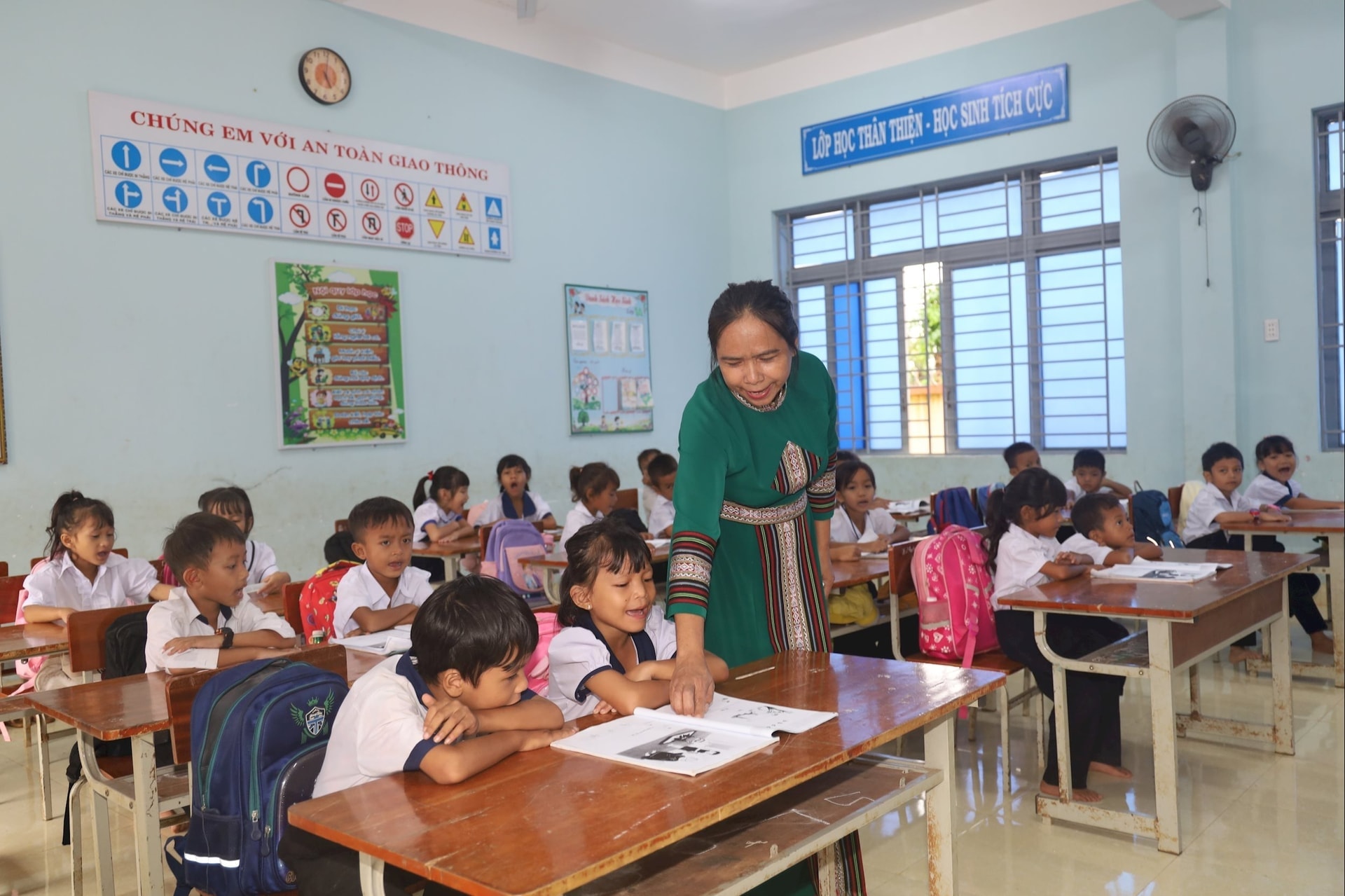
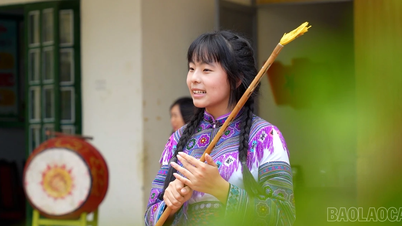
For over 15 years, teacher H'Dơk Lúp of Y Jút Primary School has diligently taught the Ê Đê language to her students, contributing to the preservation of the ethnic language.
Teacher H'Dơk Lúp, from Y Jút Primary School in Cư Jút commune, has dedicated over 30 years to the cause of educating children, with more than half of that time devoted entirely to teaching the Ê Đê language. For Ms. H'Dơk Lúp, this is not just a subject, but a way to preserve and pass on the essence of the Ê Đê language and writing system.
"
The Ede language is the soul of the village, the thread connecting descendants to their ancestors. I always hope that my students will not only learn to know but also learn to be proud of and love their ethnic language.
Ms. H'Dơk Lúp, a teacher at Y Jút Primary School, Cư Jút commune.
The traditional Ede clothing is still cherished and used by the people in their daily lives. On festive occasions, Tet (Lunar New Year), or weddings, the Ede people proudly wear their traditional dresses and outfits as a way of expressing their self-respect and love for their ethnic identity.
On festive occasions, New Year celebrations, or weddings, the Ede people proudly wear their traditional clothing as a way of expressing their self-respect and love for their ethnic identity.
Beyond their traditional clothing, the cultural beauty of the Ede people is also reflected in their affectionate and united relationships within families and villages. Whenever there's a common cause, everyone contributes their efforts and shares the burden. This spirit of community has helped them build a new life and together develop their villages into increasingly civilized and prosperous communities.
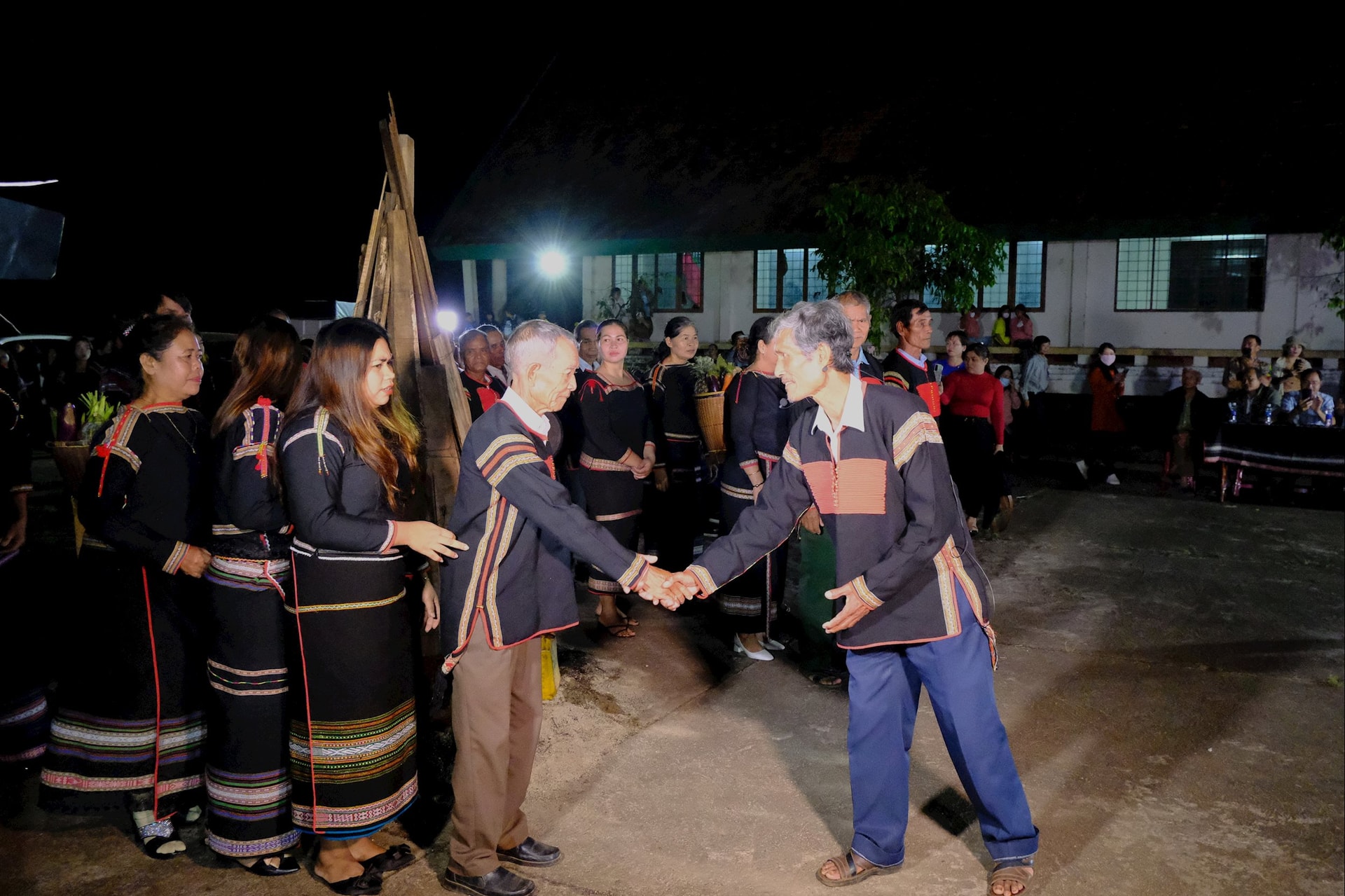
The cultural beauty of the Ede people is reflected in their affectionate and united behavior among families and brothers in the village.
Not only do the Ede people in Nui village preserve traditional values, but they also know how to promote their identity to develop the economy . At stop number 18 within the UNESCO Dak Nong Global Geopark, the people here have built a community tourism model, allowing visitors to experience Ede life through gong music, rice wine, looms, and ancient longhouses. Culture has become a bridge helping the Ede people both preserve their heritage and open up a path to sustainable development.
Continuing the tradition and promoting the cultural values of the Ede people.
Amidst the vast forest landscape, Cu Jut stands out as a cultural beacon, a place where the Ede people steadfastly preserve and pass on their traditional values, ensuring that the sounds of gongs, looms, and festivals continue to resonate in the village life.
Over the years, local Party committees and authorities have consistently paid attention to and implemented a comprehensive range of solutions to preserve the cultural identity of the Ede ethnic group.
Over the years, local Party committees and authorities have consistently paid attention to and implemented many comprehensive solutions to preserve the national cultural identity. The Party and State's policies and guidelines have been actively disseminated; numerous cultural, artistic, and sports activities have been organized, creating a platform for community engagement.
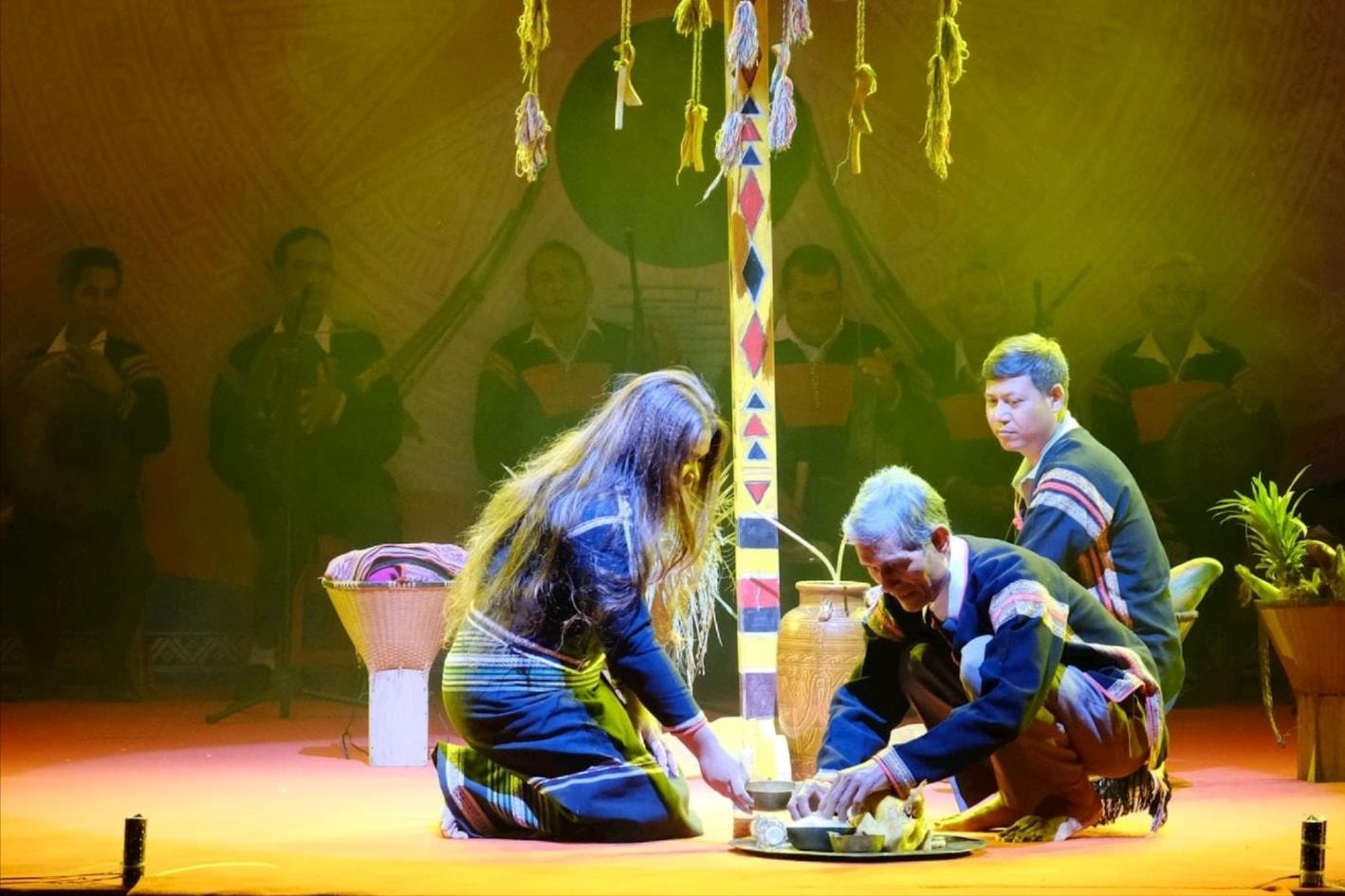
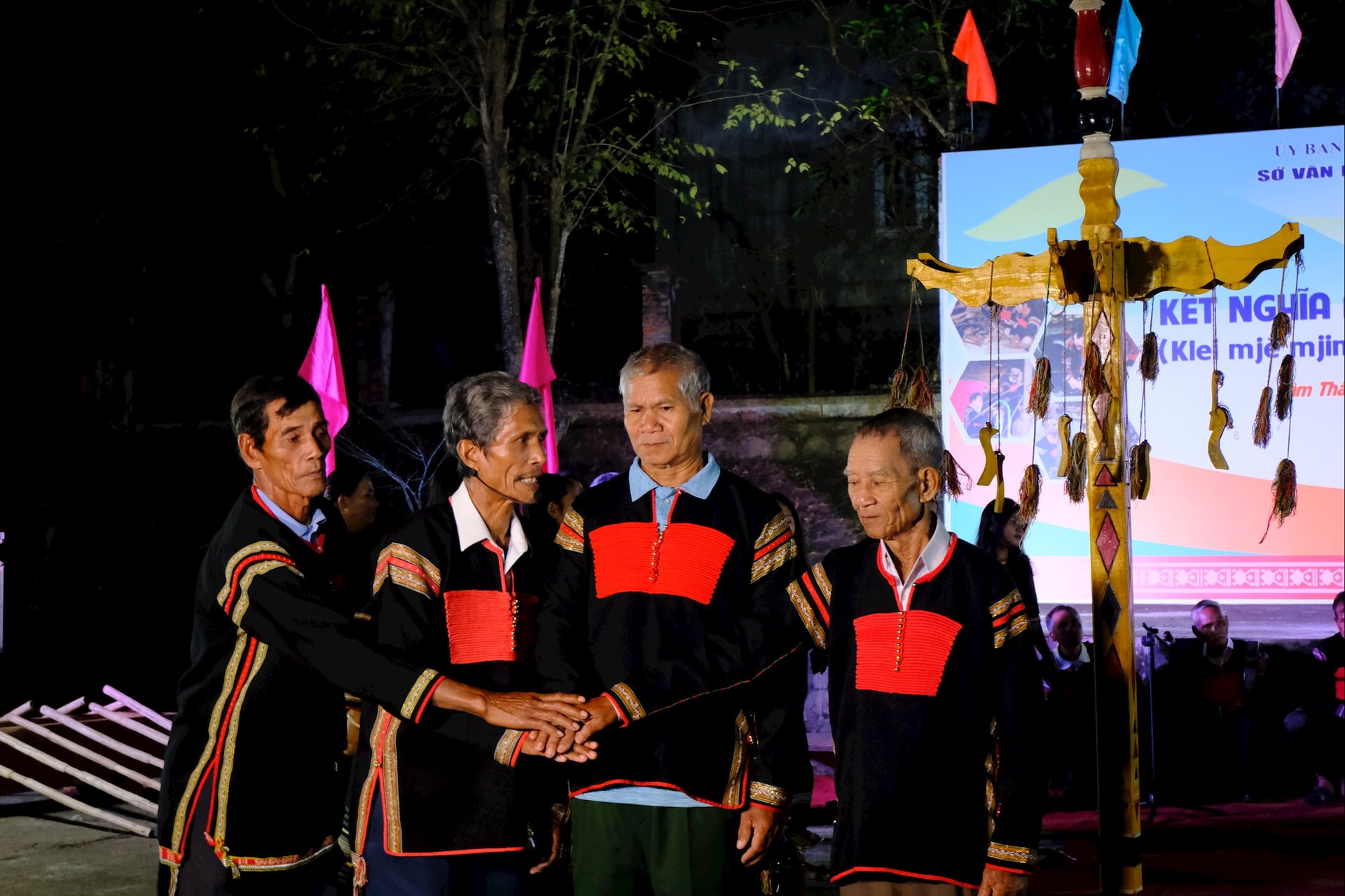
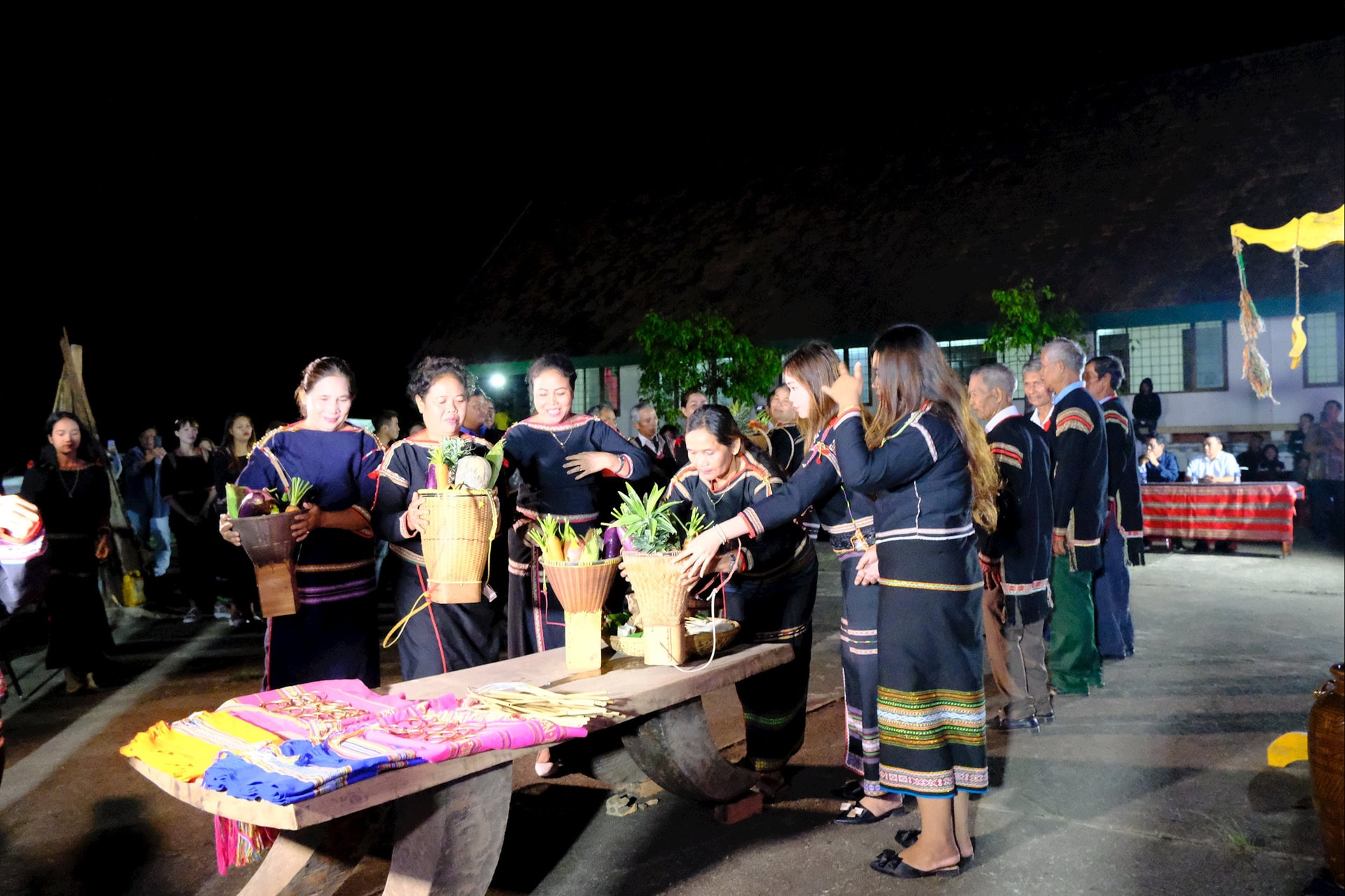
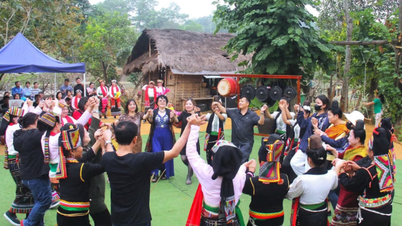
In particular, traditional festivals such as the brotherhood ceremony, the rain-praying ceremony, the new rice harvest celebration, the K'pan procession, etc., have been restored and regularly maintained, contributing to strengthening solidarity and arousing national pride among the people.
Traditional festivals are regularly revived and maintained (Photo: Reenactment of the Ede people's brotherhood ceremony in Cu Jut commune)
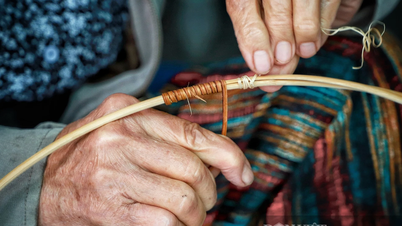
Along with that, the government focuses on eradicating outdated customs and building a civilized lifestyle in weddings and funerals. To date, most villages have cultural centers that meet the standards of the new rural development program, where people gather for community activities, practice gong playing, weave brocade, and pass on the distinctive cultural features of their ethnic group.
In the coming period, Cu Jut will continue to invest in preserving and promoting the cultural values of the Ede people, focusing on restoring festivals, expanding the space for gong performances, and reviving the traditional brocade weaving craft associated with community tourism development.
In the coming time, Cu Jut will continue to invest in preserving and promoting the cultural values of the Ede people, focusing on restoring festivals, expanding the space for gong performances, and reviving the traditional brocade weaving craft associated with community tourism development. The locality will also mobilize businesses, organizations, and people to contribute resources to preserve and promote the beauty of traditional culture, create unique tourism products, and increase income for the ethnic minority people here.


.jpg)
.jpg)
.jpg)
.jpg)


![[Photo] General Secretary and President To Lam and the President of the Philippines hold talks.](https://vphoto.vietnam.vn/thumb/1200x675/vietnam/resource/IMAGE/2026/06/01/1780286997787_anh-man-hinh-2026-06-01-luc-11-09-43.png)



































































Comment (0)