First and foremost, it must be acknowledged that a remarkable achievement is Hanoi's operation of a two-tiered local government system amidst the greatest demands, scale, and pressure of governance in the country. Simultaneously, the city implemented the 2026 Capital City Law, deployed the Hanoi Capital City Master Plan with a 100-year vision, accelerated strategic infrastructure projects, carried out unprecedented large-scale organizational restructuring, and ensured regular political tasks and its role as the national political and administrative center. Despite having to handle numerous strategic, urgent, and complex tasks simultaneously, the city maintained political stability, unity, and cohesion throughout the system. This affirms the leadership capacity, organizational strength, and adaptability of the capital's political system in the face of unprecedented and significant reform demands.
Moreover, the reorganization of commune-level administrative units in the city was not carried out mechanically, simply to reduce administrative layers, but was linked to the reorganization of development space and the restructuring of the capital's governance model. The reorganization process not only contributed to streamlining the organizational structure but also created new development spaces, facilitating the effective implementation of the capital's specific mechanisms and policies.
The two-tiered local government system in the capital city, when operational, has proven to be a proactive government, serving the people and businesses increasingly better. This two-tiered system has initially shifted from a management-oriented administration to a service-oriented administration; from management through intermediate levels to direct governance at the grassroots level; and from focusing on resolving internal issues to prioritizing the needs of the people and businesses in service delivery.
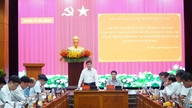

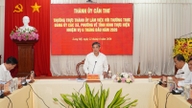
Hanoi 's initial results have significant practical implications for the continued improvement of the organizational model of the two-tiered political and local government system nationwide.
In the coming period, Hanoi's requirements are not only to continue perfecting the two-tiered local government model but also to play a pioneering role in researching, piloting, and refining new governance models. Hanoi needs to be aware of its role and mission as a practical testing ground for evaluating and perfecting major mechanisms and policies before summarizing and replicating them nationwide. The central task is to proactively pilot new models regarding organizational structure, decentralization, delegation of power, urban governance, digital transformation, socio-economic development, and building the political system at the grassroots level; thereby continuing to affirm its leading role and contribute practical experience to the process of perfecting the two-tiered local government model nationwide.
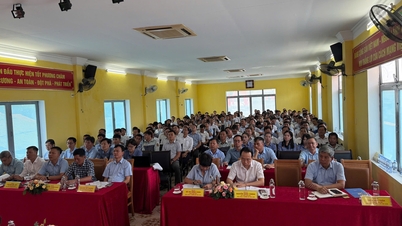
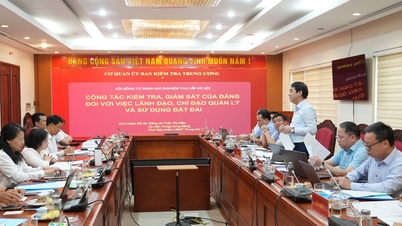
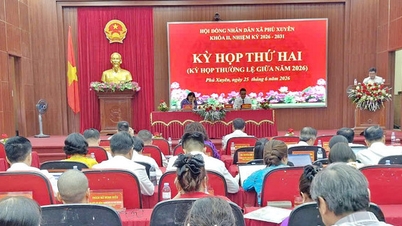
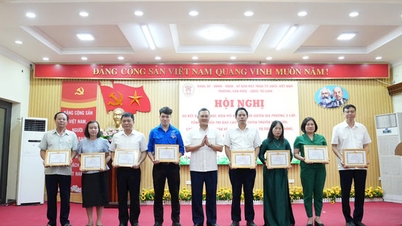
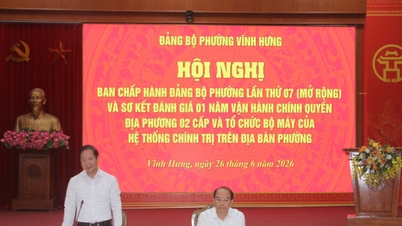
Attending and directing the conference summarizing one year of operation of the two-tiered political and local government system in Hanoi on the afternoon of June 9th, Politburo member, Secretary of the Central Committee of the Communist Party of Vietnam, and Head of the Central Organization Department Nguyen Duy Ngoc, Head of the Central Steering Committee for the one-year review of the operation of the two-tiered political and local government system, emphasized the need for Hanoi to continue affirming its pioneering role in reforming the organizational structure and building a model of the two-tiered political and local government system. Hanoi needs to continue to innovate its governance thinking, leadership methods, and implementation methods; proactively summarize practical experiences, promptly identify new issues, and propose solutions appropriate to the position and responsibilities of the capital city.
Given the high demands placed on the operation of the two-tiered local government system in the capital city, Politburo member, Secretary of the Hanoi Party Committee, and Head of the Hanoi National Assembly Delegation, Tran Duc Thang, stated that the city has clearly identified the "bottlenecks," including issues within the city's jurisdiction and those requiring recommendations to the central government. The Standing Committee of the Hanoi Party Committee requested that all levels of Party committees and government continue to unify their understanding, thinking, and actions to further enhance leadership capacity, governance capacity, and build a modern, digital government that meets the development requirements of the capital city in the new phase. The goal is to essentially eliminate these "bottlenecks" within the city's jurisdiction and responsibility by July 1, 2026.


Source: https://hanoimoi.vn/tiep-tuc-doi-moi-tu-duy-quan-tri-1159748.html































![[Image] Ho Chi Minh City: Ma Lang area, Chicken-Rice Market about to change its appearance](https://vphoto.vietnam.vn/thumb/1200x675/vietnam/resource/IMAGE/2026/06/25/1782377698627_ndo_br_m1-jpg.webp)