

From ancient times to the present day, people have talked a lot about ghosts and spirits. Some believe, some don't. But even those who don't believe are... afraid of ghosts! And whether or not there is an extraterrestrial civilization is something scientists are still trying to find out.
During the war years in my hometown, there were many ghost stories and mysterious events that couldn't be explained.
Do you believe in ghosts?
Besides ghost stories, I also believe in "spirit summoning" and "spirit casting," because I used to participate in these rituals on moonlit nights in the cemetery after the 1954 ceasefire in Cay Gang hamlet, now Tan Thanh commune, Ham Thuan Nam district, Binh Thuan province. (This story is well-known to the elderly in Phan Thiet. Quite a while ago, I was having coffee with some friends, including an older man from Phan Thiet. I told him about "spirit casting" and sang, and he joined in: "Spirit casting, oh spirit casting/ you sing gently for us to hear/..." I asked in surprise, and he said that he was from Binh Thuan, and after the ceasefire, he also used "spirit casting," believing that if you went to Lau Ong Hoang on a moonlit night to perform spirit summoning or "spirit casting," it was very effective!)
Before 1975, I read the book "Metaphysical Phenomena." It's been so long that the book has been lost, so I don't remember the author or publisher. But one thing is certain: "Metaphysical Phenomena" was used as a reference book for students in the Theology Faculty. The content of "Metaphysical Phenomena" is a comprehensive record of paranormal events that occurred, including the time, people, and events, throughout the world , including Vietnam. Naturally, these were things that science had not yet been able to explain.
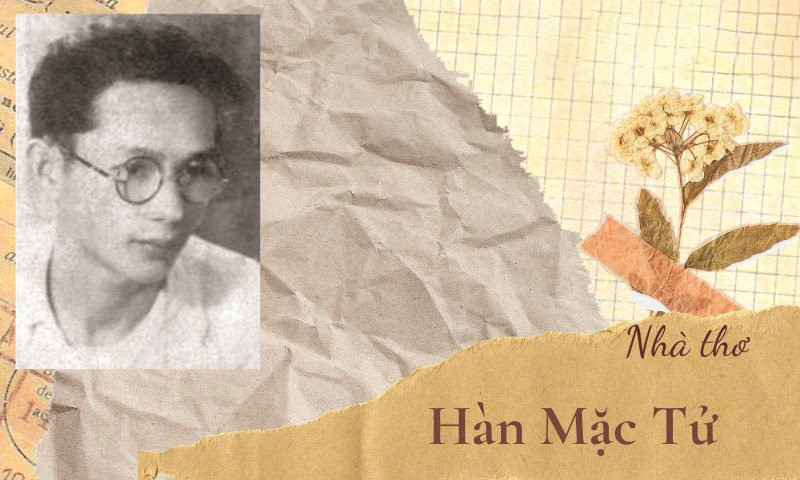
In particular, in "Metaphysical Phenomena," there is a poem that the book claims is "The Melancholy Poem" by the poet Han Mac Tu. The truth is difficult to know, but it is a rather unusual poem. (I am transcribing it here from memory; if there are any omissions, please forgive me and feel free to add more information if you know of any):
Divertissement
Oh, the sky is as clear as a mirror tonight!
No clouds, no mist.
Moonlight drapes like a curtain over countless branches.
The golden moon silk trembles like a sound.
...
From where does the mournful sound of the flute come from?
Sad like the autumn evening clouds.
Soft as silk on her shoulder
Fragile like words of love
...
I went closer, oh, it was unusual.
Moon Goddess, oh, it's Thương Thương!
In a panic, I hugged Nuong tightly.
Alas, she has turned into mist.
I embraced the mournful sound of the flute.
Wandering aimlessly, sowing sadness in the deep night.
I remember it vividly, because it was an unusual story, and I also admired the poetry of Han Mac Tu.
The story goes like this: The author of "Metaphysical Phenomena" explains that the poem originated on the anniversary of the death of poet Han Mac Tu on November 11, 1940 (October 12, Year of the Dragon). Those who knew and admired Han Mac Tu's poetry performed a spirit medium ritual, and Han Mac Tu responded by composing the poem "Dispelling Sorrow." The following year, on the anniversary of his death, they performed another spirit medium ritual, and Han Mac Tu returned, asking for some corrections to the poem, such as capitalizing the words "Thuong Thuong" and "Nuong."
(Incidentally, I should also mention a little about séances. Whether you believe it or not is up to you. I, the author, have participated in one. The séance is a heart-shaped object (large or small depending on the maker) made from coffin lid wood. In Central Vietnam, there are places where it is customary to bury the dead for a certain period of time, then dig up the grave, remove the coffin lid, and fill the grave back in. On a quiet night, preferably a cemetery, choose a person with a pure heart (kind and moral character). On a piece of cardboard, cut a circle, write 24 letters evenly spaced around it, place the séance in the middle, gently press the séance with your finger, light incense, and sincerely pray for what you want to know. Whichever letter the séance lands on, write it down on paper, and you will be able to guess what the deceased wants to say. It's superstitious, isn't it? If you have a séance, try it; the hardest part is finding a coffin lid!)
Now let's see if the poem "Despair" and Han Mac Tu have any connection:
Oh my god! It's Phan Thiet! Phan Thiet!
And all that remains is a fallen crescent moon.
We arrived at the place where she had been absent for a long time.
That means dead from centuries ago.
(Phan Thiet – Phan Thiet)
The young man was too shy to look.
Not to mention she's a girl from the neighboring village.
(Spring Wedding - Getting Married)
This afternoon, the flower's soul withers.
The longing and sorrow fill my heart with pain.
(An unnecessary sadness)
My name is Tran Thuong Thuong.
He is Han Mac Tu
Not the yin-yang method
There might also be a reunion.
(Cam Chau Duyen)
...
After the incident, people brought the poem "Desperate Sorrow" to the poet Quách Tấn (Quách Tấn was the keeper of Hàn Mặc Tử's posthumous poems), but Quách Tấn replied: "...This is Hàn Mặc Tử's poetic voice, but this poem is not in his posthumous works."
In "The Melancholy," there are also "Thuong Thuong" and "Nuong." "The Melancholy" is imbued with the ethereal moonlight, blurring the lines between dream and reality.
These few brief opinions merely highlight an event and are not intended as scholarly research; surely there are many fascinating mysteries surrounding this matter that the author has yet to uncover. I respectfully request the guidance of writers and poets to shed light on this issue.
Who is the author of this poem, "Dispelling Sorrow"?
Source
![[Photo] Prime Minister Pham Minh Chinh receives the Director of RMIT University Melbourne (Australia)](https://vphoto.vietnam.vn/thumb/1200x675/vietnam/resource/IMAGE/2026/04/02/1775142120087_thiet-ke-chua-co-ten-2026-04-02t214220784-png.webp)
























































Comment (0)