

 |
| Many decades-old pomelo trees are at risk of being cut down due to unsold produce, affecting the livelihoods of growers. |
Trang Xa is a mountainous commune, home to many ethnic minority groups such as the Tay, Nung, Dao, and Mong... Economic conditions are still limited. For many years, pomelo trees have been considered the main crop helping to improve income and create stable livelihoods for the people.
In fact, during favorable years, Trang Xa pomelos are favored by the market for their sweetness and attractive appearance, especially during the Lunar New Year. The selling price at the orchard ranges from 10,000 to 25,000 VND per fruit, bringing in an income of approximately 100-150 million VND per hectare.
However, over the past three years, the market has faced many difficulties. The situation peaked in 2025, when many households experienced bumper harvests but were unable to sell their products.
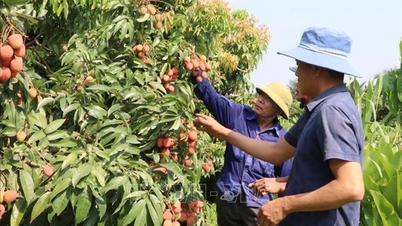
In the villages of Cau Nho and Lang Den, during harvest season, it's easy to find orchards laden with pomelos but lacking buyers. Locals say that even if buyers do come, they only select large, beautiful fruits in small quantities at low prices, insufficient to cover the costs of care and harvesting. Unable to sell their produce, many households are forced to harvest and discard large quantities of fruit to clear their orchards and prepare for the next season. A year's worth of hard work is thus significantly wasted.
Currently, the entire commune has about 280 hectares of pomelo orchards with many varieties such as Dien pomelo, Hoang pomelo, green-skinned pomelo, red-sugar pomelo, etc. Of these, Dien pomelo accounts for the majority. In 2025, the estimated production is about 7.5 million fruits, but nearly half cannot be sold. This situation is not only happening in Trang Xa but also in many other fruit-growing areas, showing the instability of the agricultural market.
The primary reason is that production is still largely spontaneous and lacks coordination. Most households depend on traders and lack long-term sales contracts. When the market fluctuates, growers have very limited ability to respond.
Furthermore, product quality is inconsistent and does not meet the requirements of modern distribution channels. Brand building and traceability are still limited, reducing competitiveness compared to established growing regions.
Weather conditions and market fluctuations also have a significant impact. In 2025, agricultural production in Thai Nguyen was affected by unusual weather, with heavy rains and floods causing damage and reducing product quality. Input costs increased while consumption decreased, making output even more uncertain.
For the people of Trang Xa, grapefruit trees not only provide income but also represent the result of many years of land improvement and crop restructuring. Therefore, cutting them down is something no one wants. However, under economic pressure, some households have considered this option. Mr. Nguyen Van Dung, a grapefruit grower, shared: "If the product cannot be sold, it will be very difficult to ensure a livelihood."
 |
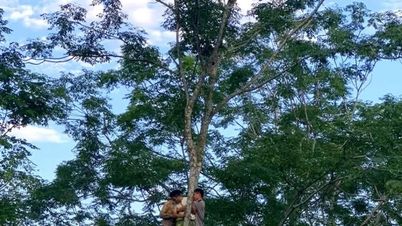
| Many grapefruit orchards have bloomed and borne fruit for the new season, but the fruit from the previous season is still left on the trees, clearly reflecting the difficulties in selling the produce. |
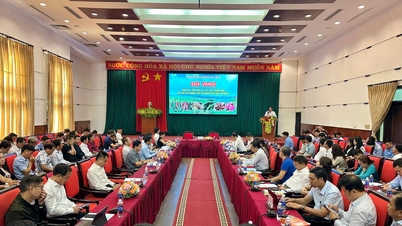
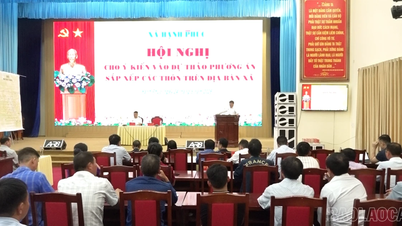
Faced with this situation, the local authorities have held numerous meetings to find solutions. However, the problem of finding markets for agricultural products remains complex and requires a comprehensive, long-term approach. According to experts, to overcome the situation of bumper harvests but difficulty in selling, Trang Xa needs to shift strongly towards production based on value chains.
First and foremost, localities need to focus on building a brand for pomelo products, moving towards registering collective trademarks and geographical indications. This will serve as a basis for enhancing value and building consumer trust.
In addition, people need to innovate their production methods and apply standards such as VietGAP and OCOP to ensure consistent quality and meet market demands. Another important solution is to strengthen linkages between farmers, cooperatives, businesses, and the government. When businesses participate in purchasing and distributing agricultural products, market risks will be significantly reduced.
Furthermore, the locality has begun to exploit the advantages of its pomelo orchards to develop eco -tourism and experiential tourism , contributing to the promotion of the product. Ms. Duong Thi Huong, Vice Chairman of the People's Committee of Trang Xa commune, said: This direction opens up more opportunities for consumption and enhances the value of the product.
The story of the pomelo trees in Trang Xa clearly reflects a familiar problem in agriculture: production may yield good results, but consumption faces many obstacles. In a locality with many poor households, mainly ethnic minorities, ensuring market access for agricultural products is closely linked to social welfare goals.
For pomelo trees to continue playing a significant role in economic development, more decisive involvement from all levels of government, relevant agencies, and the people themselves is needed. When production is linked to market demand, and when growers have a reliable source for product consumption, the difficulties faced during pomelo harvests will gradually be overcome. Only then will the sweetness of Trang Xa pomelos truly become a sustainable part of people's lives.
Source: https://baothainguyen.vn/kinh-te/202603/tim-dau-ra-cho-buoi-o-trang-xa-dbe64b5/



















































































Comment (0)