

 |
 |
 |
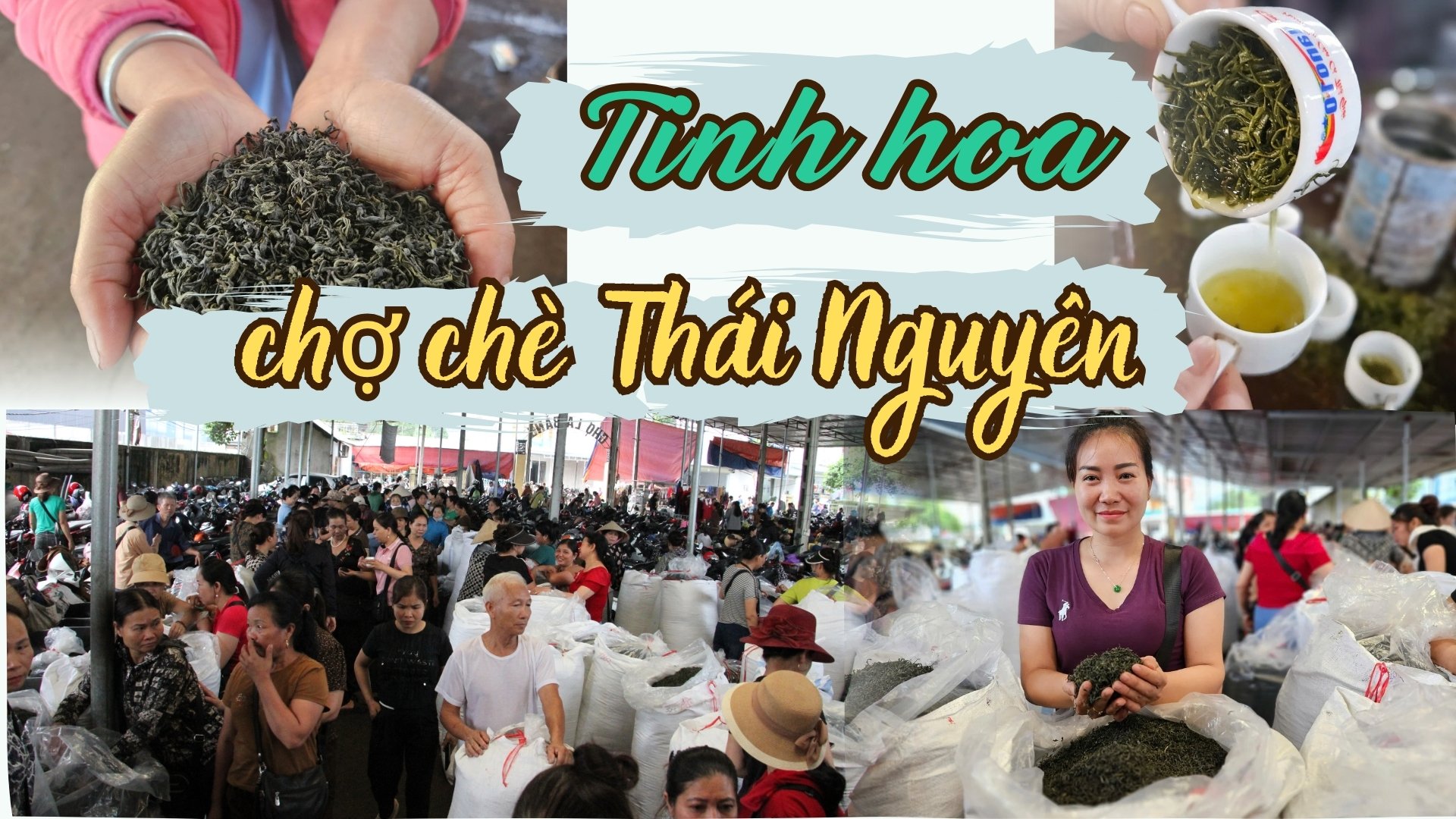
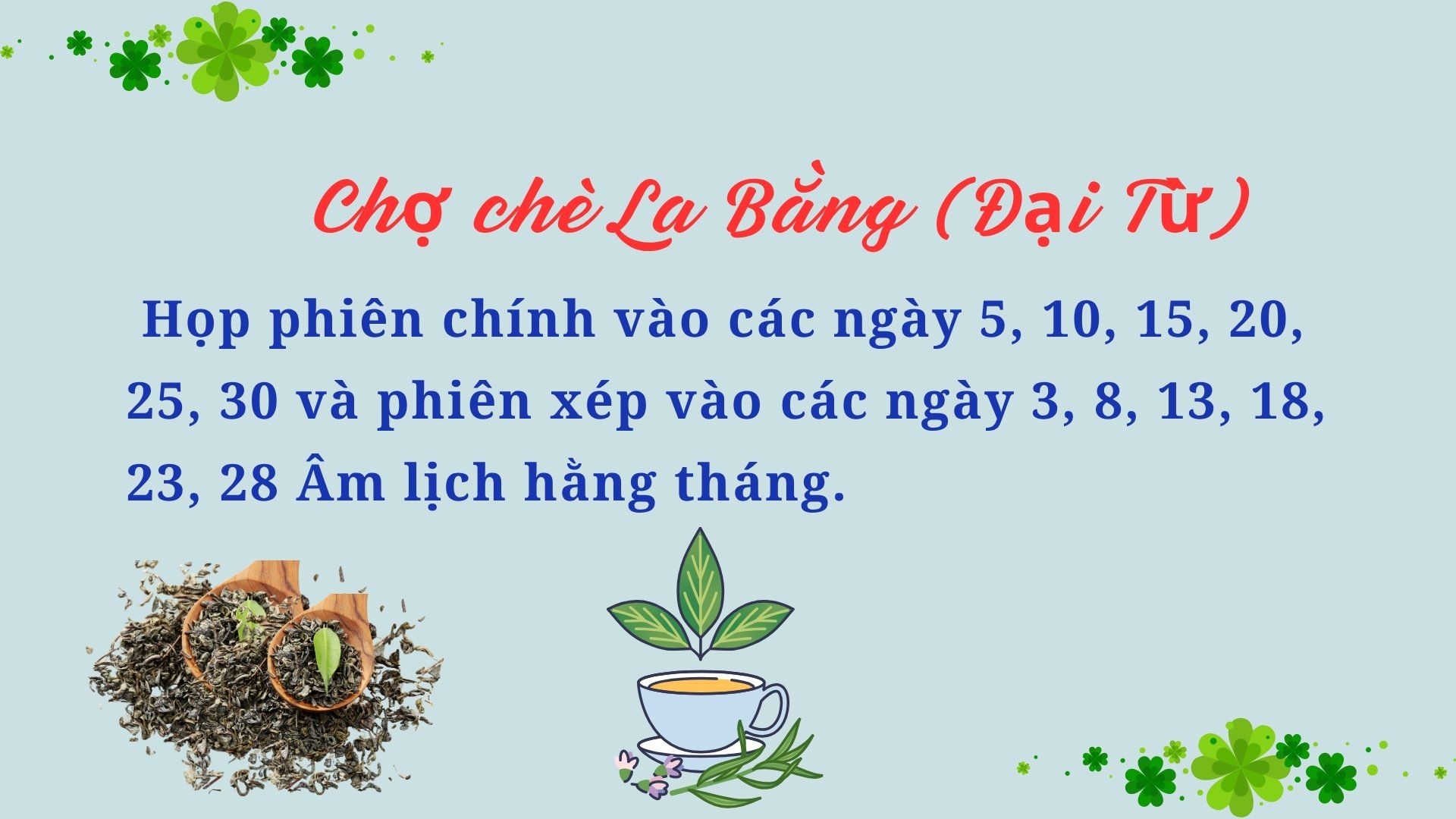
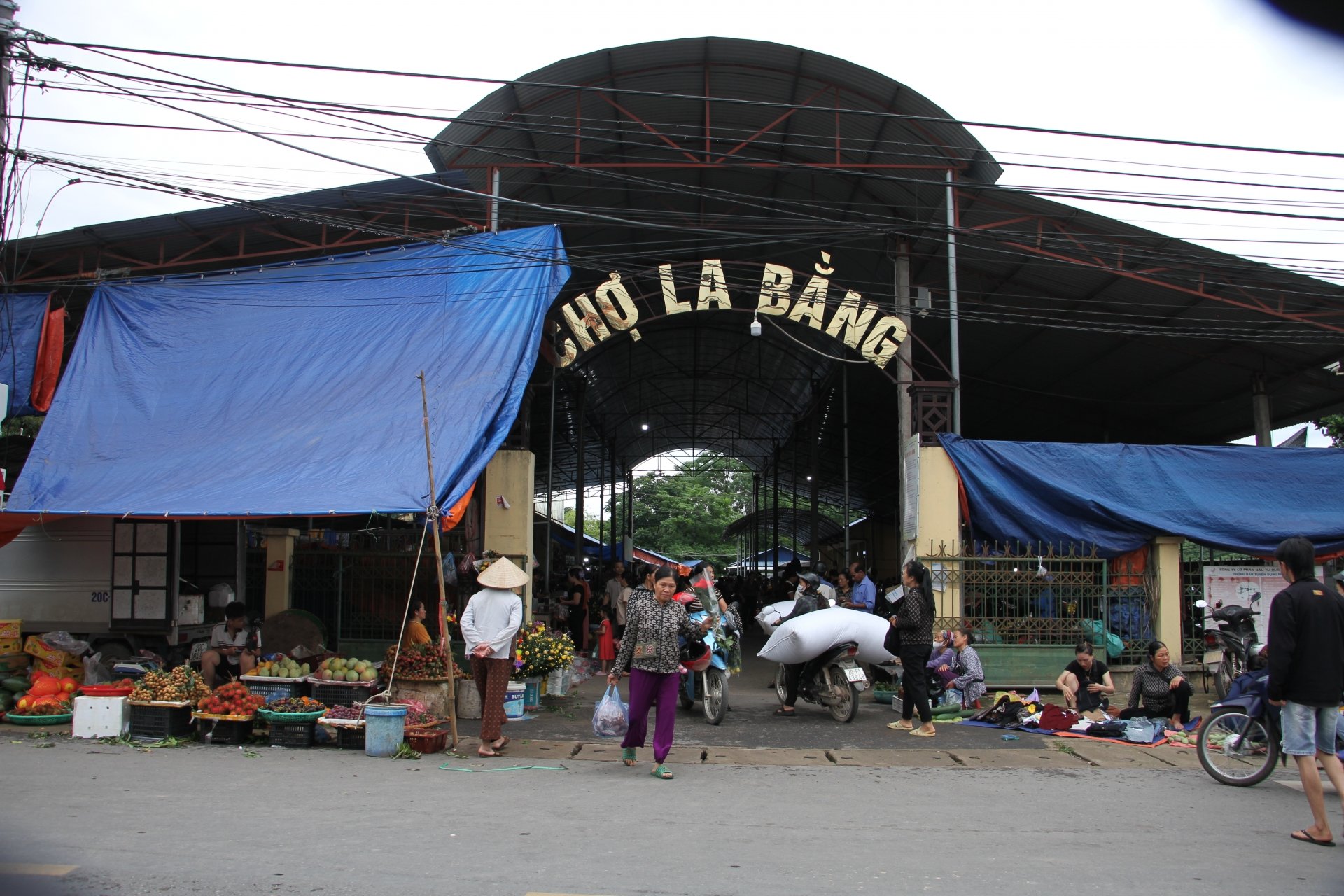
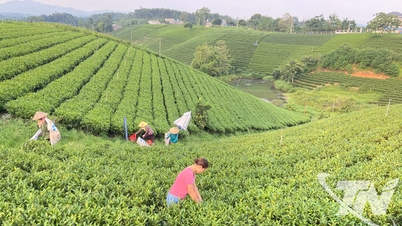
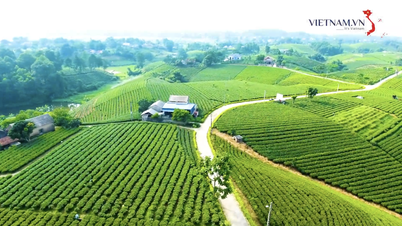
In the early morning, while the city was still asleep, we left the town and traveled along the lush green tea hills to the mountainous region of La Bang, to experience the local tea market. Arriving at the La Bang tea market at dusk, we could already hear the murmur of people talking and the rustling of tea bags being transported in.
 |
From all directions, footsteps crept down the misty mountains, some carrying baskets, others hauling tea, trudging silently to the market, their shoulders wet with the night dew. Their faces still bore traces of sleepiness, but their eyes shone with hope for a successful tea market with quick sales and good prices.
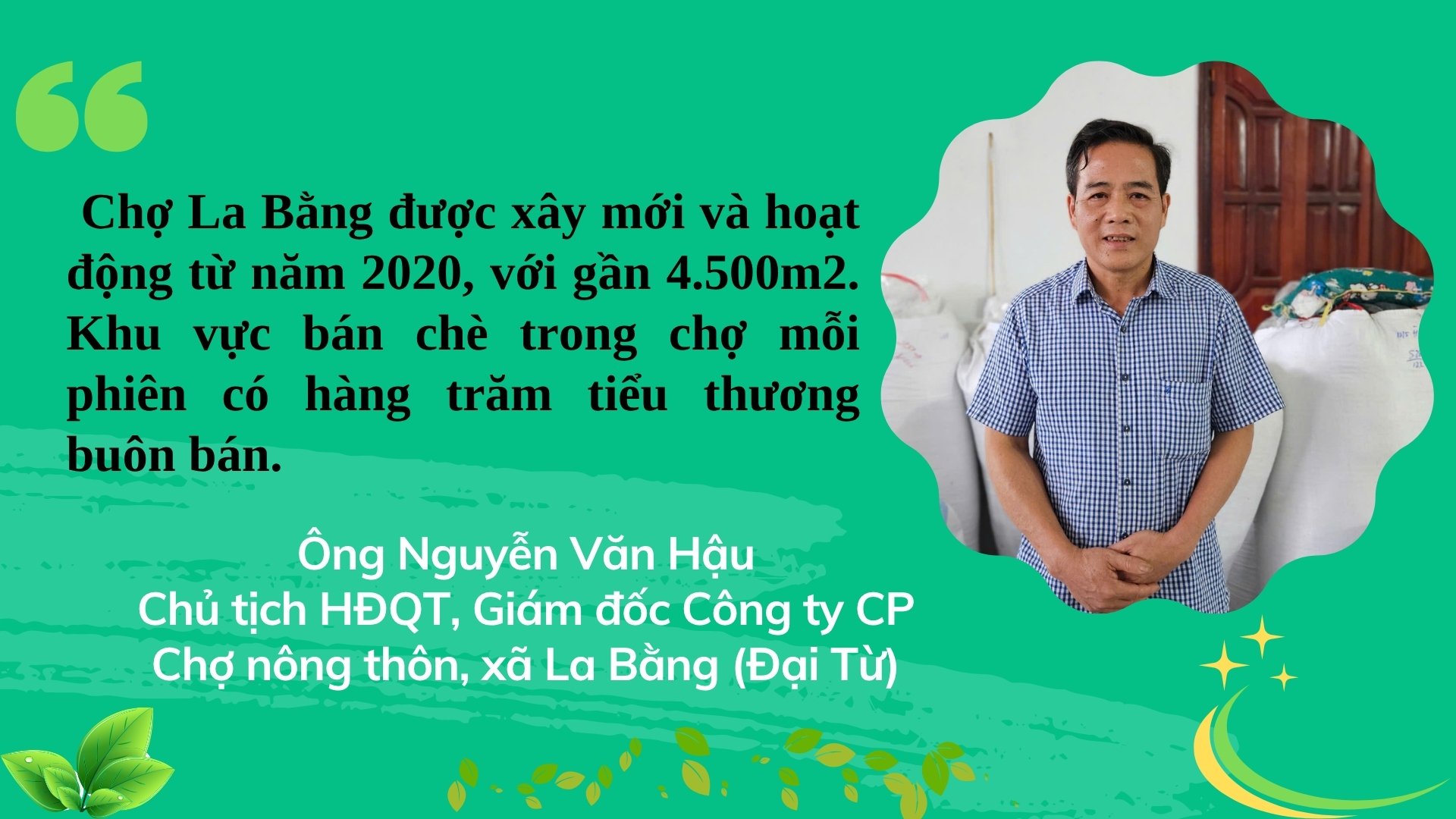 |
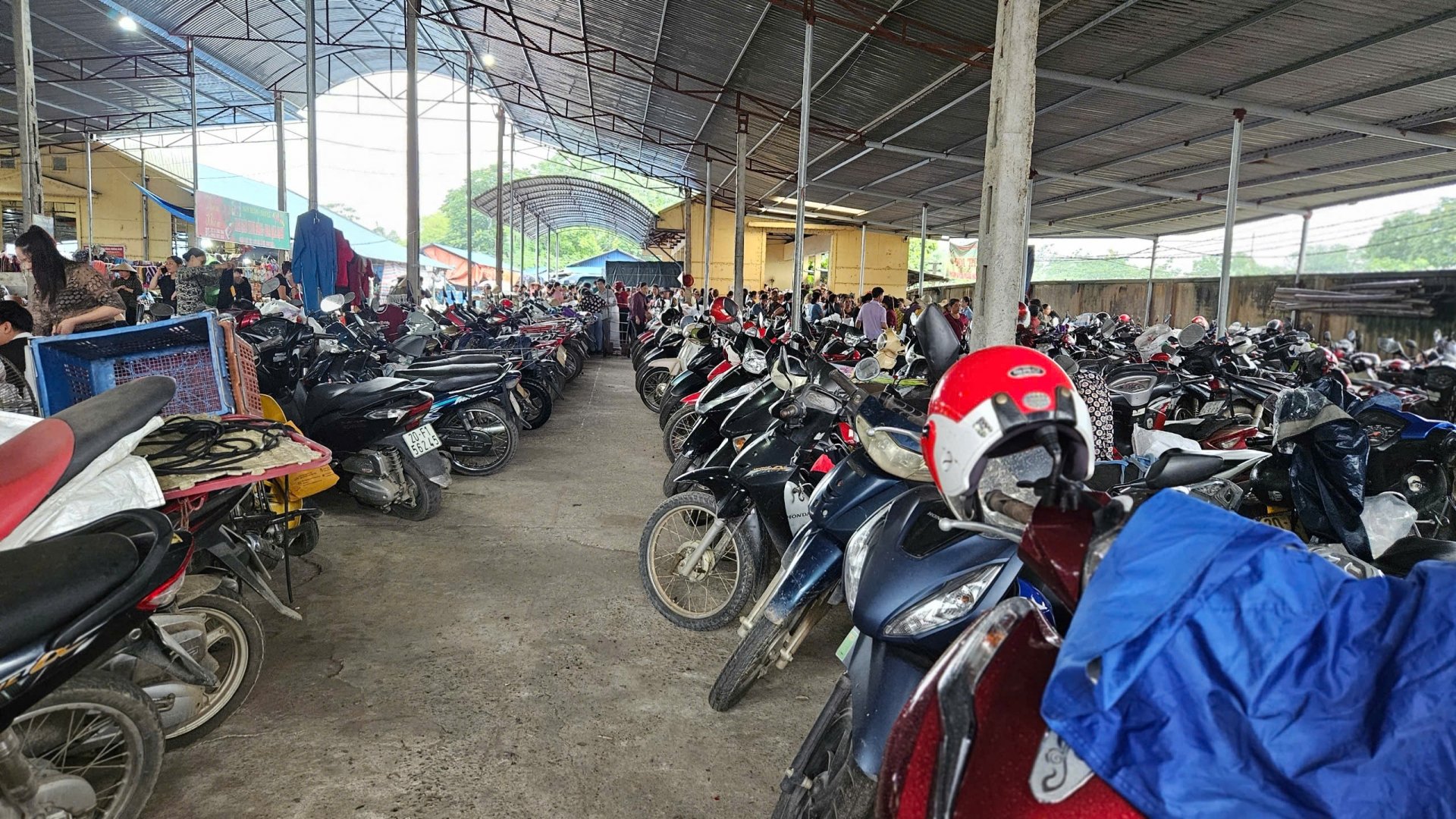
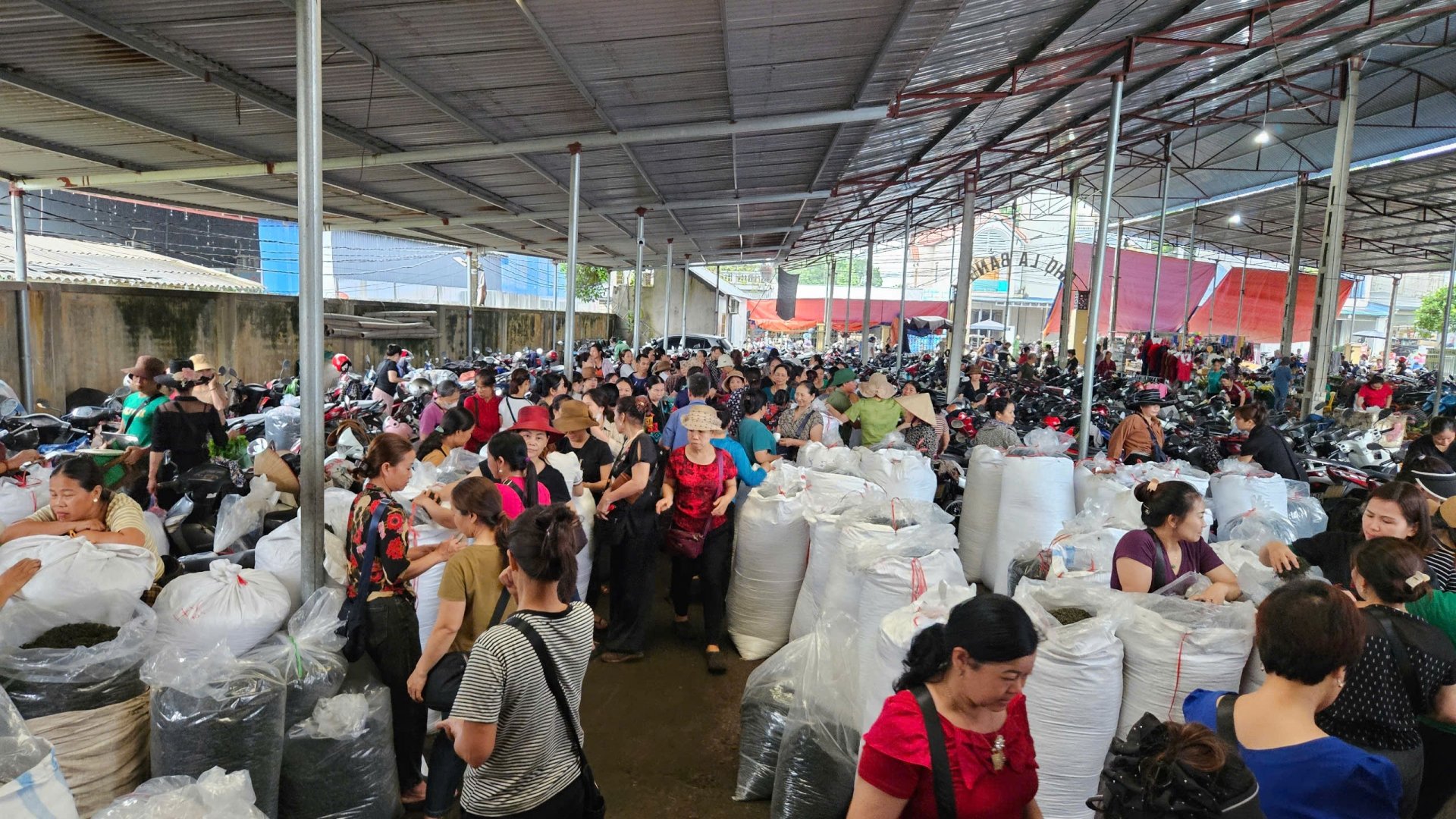
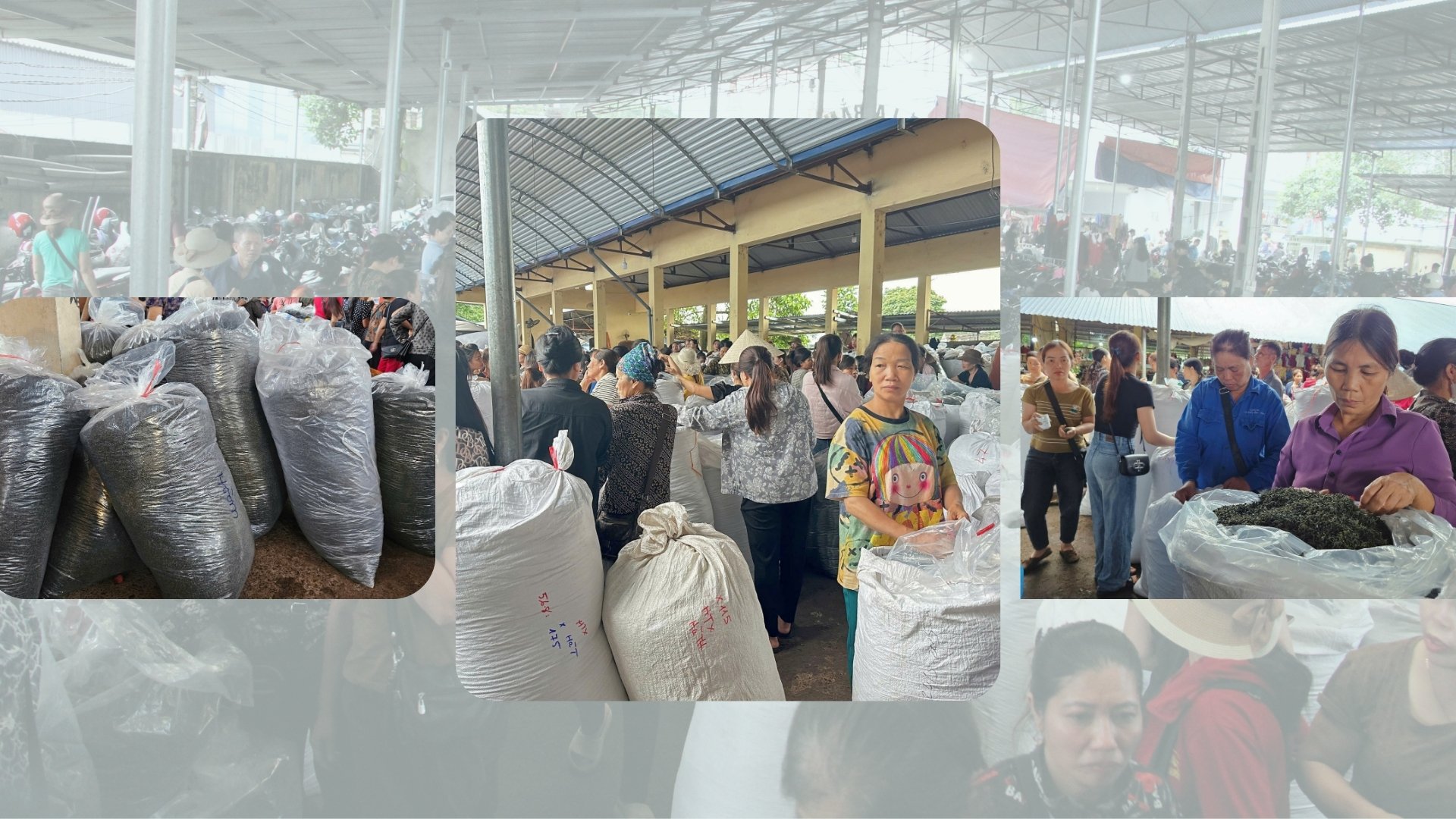
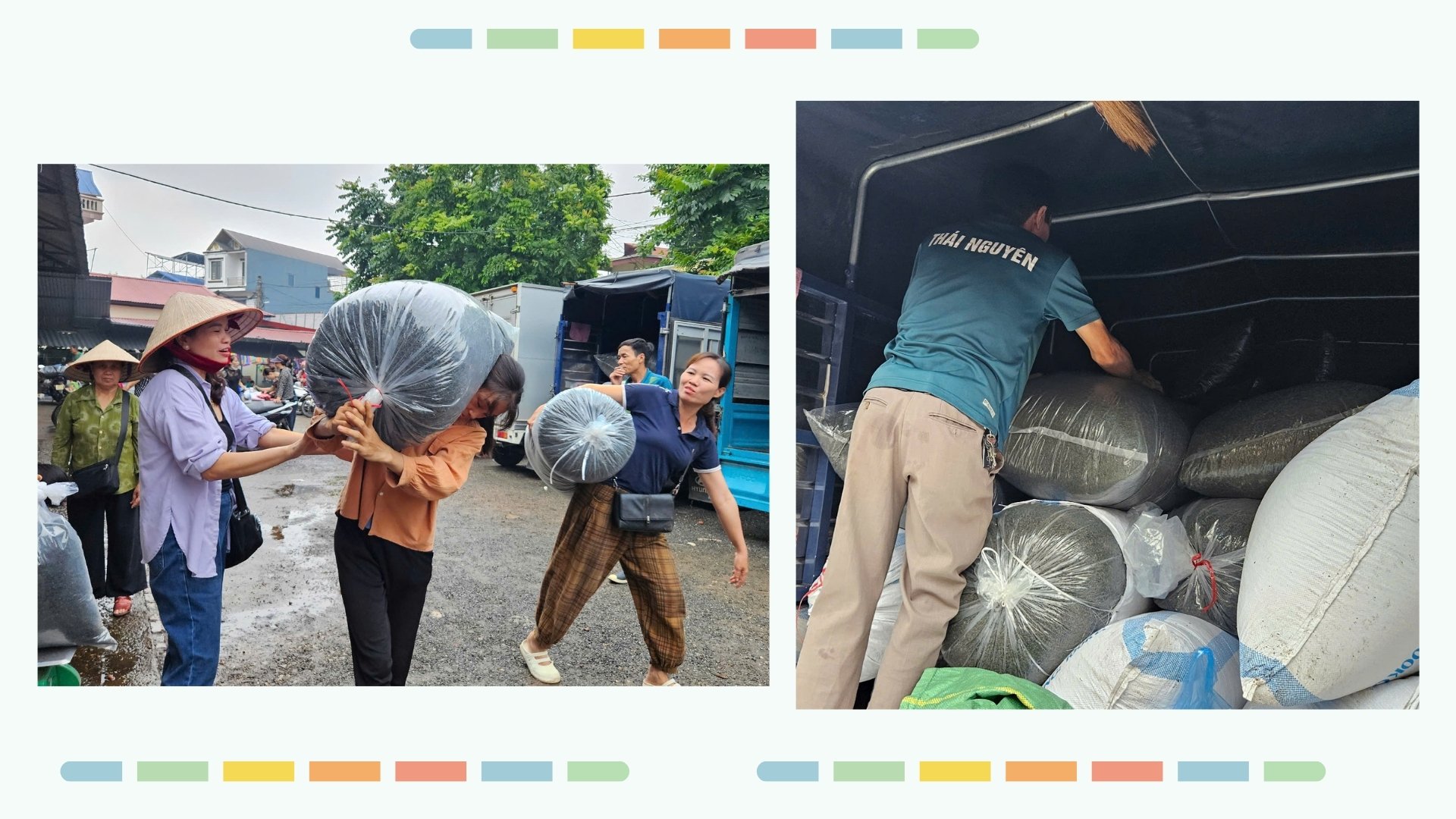
As dawn broke, the market gradually filled up. By around 6:30 a.m., it was bustling. Large sacks of tea, as thick as a person's arm, were brought into the market. The tea, in its simple, rustic form, was carefully wrapped in a layer of burlap by the locals.
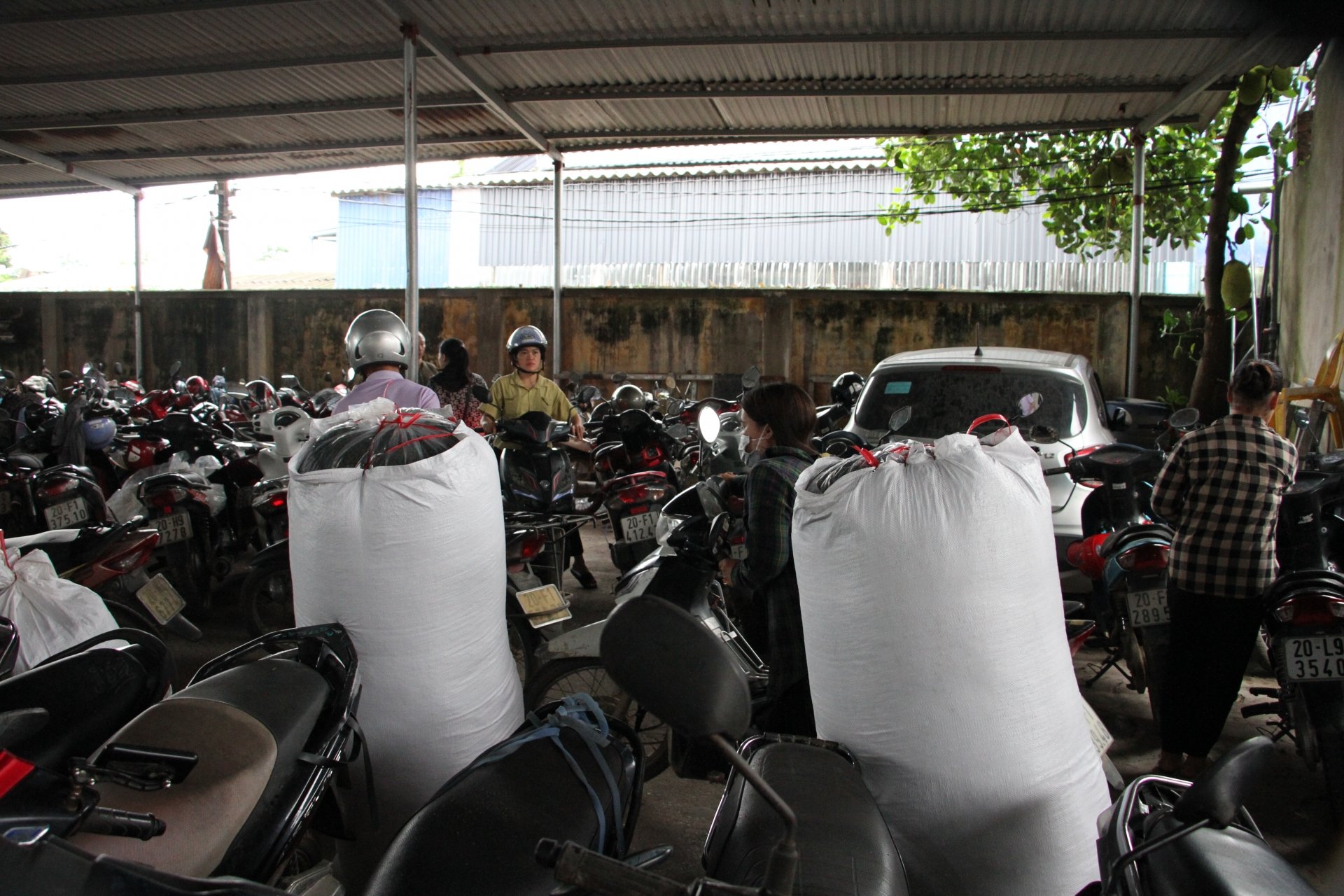 |
They find a spot in the market, skillfully open the bag, revealing tightly twisted, glossy black tea buds. And a fragrant aroma of young rice spreads through the air, waiting for customers to come and choose their purchases.
 |
Mr. Van Trong Nhiem chose a spot in the middle of the tea stall. Seeing us, he smiled brightly, holding a bag of tea to prevent it from spilling with one hand, and fanning himself with a cardboard sign in the other, as if deliberately trying to waft the fragrant aroma towards our noses, then quickly greeted us:
- Buy some tea, dear, Long Vân tea, grown organically at home, that's why it's so clean!
As if to further solidify his reputation, he continued: "My family owns over one acre of tea plantations, growing and processing everything from A to Z ourselves. I come here to sell at every market, and if the tea isn't up to quality, just come to the market and find me to return it!"
 |
 |
Standing nearby were women guarding their tea bags, chatting animatedly about the harvest season. Seeing a stranger at the market looking at tea, Mrs. Hoang Thi Luyen eagerly said, "Buy some before the market closes. The market only opens early in the morning and gradually disperses around 8 o'clock."
 |
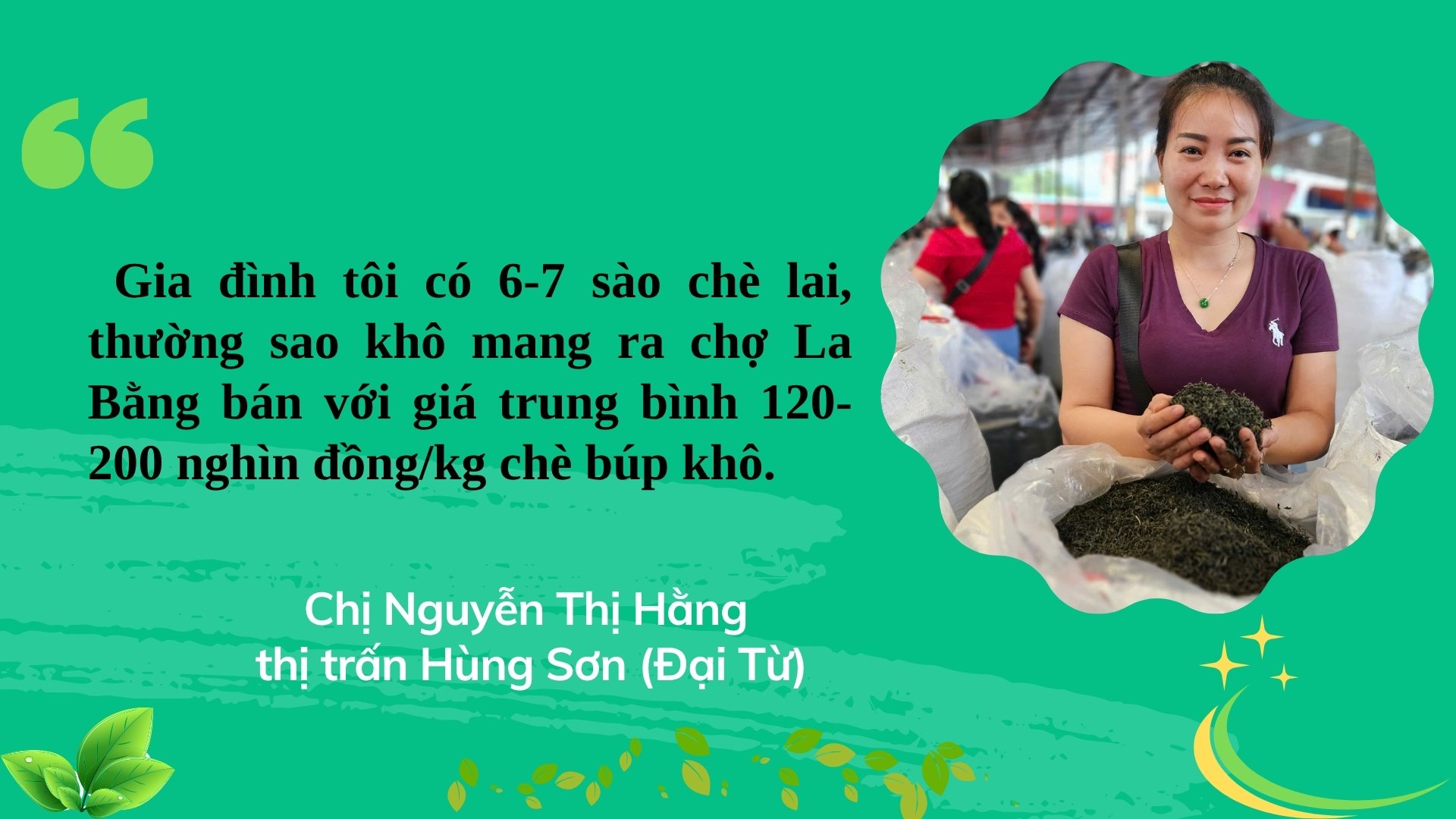
According to Mrs. Luyen, even though she lives far away, she always brings her tea down to La Bang market to sell because it's busier there, with more buyers. For each market day, she prepares her goods the day before, loading them onto her cart, so that she can just wake up at 4 a.m. the next morning and take them to the market to sell. Each market day she sells nearly 100 kilograms of dried tea.
 |
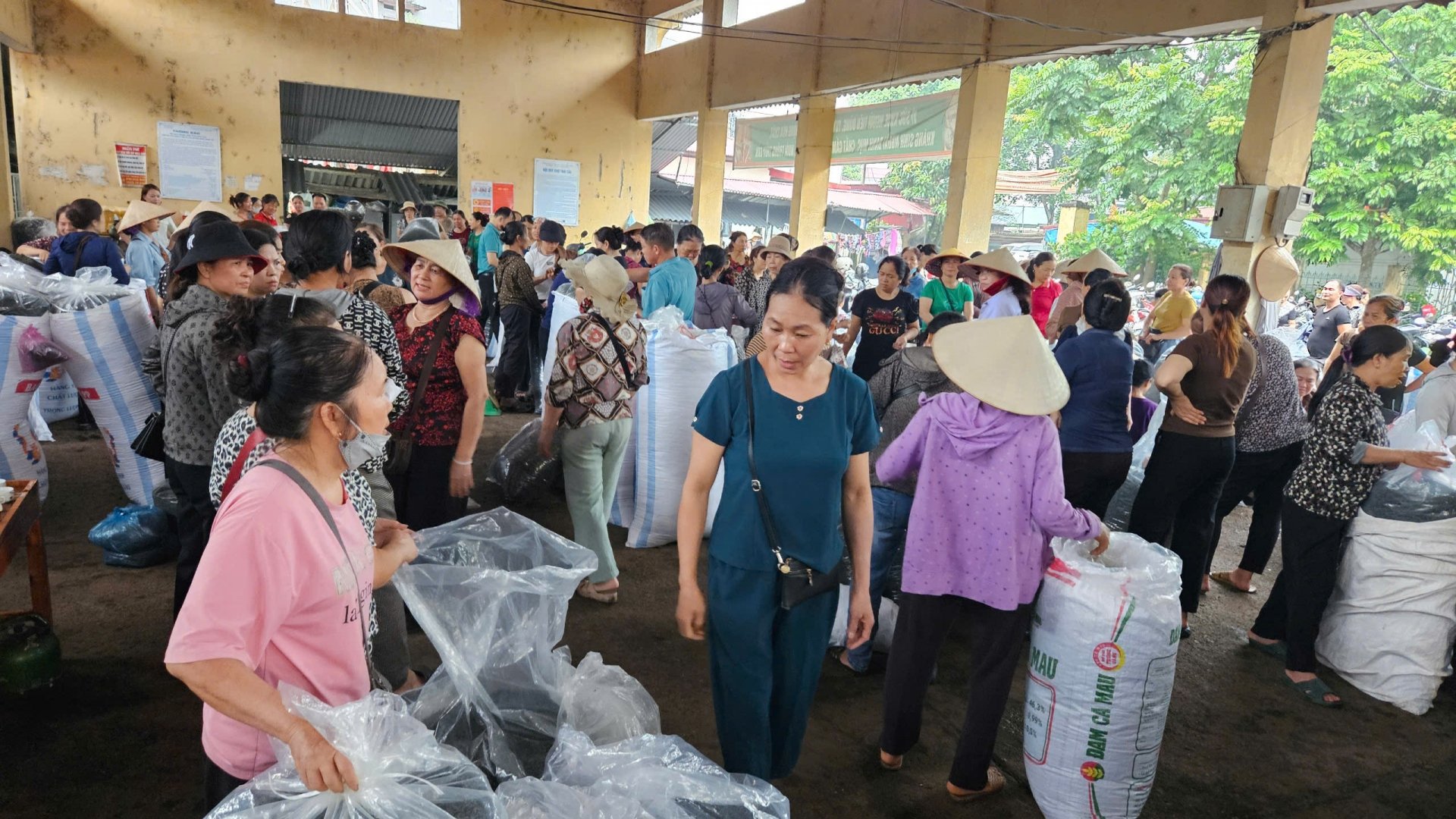
From La Bang, we continued our journey to other tea markets to explore the flavors and customs of each region. A must-see was Phuc Xuan market, a trading hub for the famous tea-producing communes of Tan Cuong, Hong Thai, and Phuc Xuan. Here, we met Ms. Nguyen Thi Nhung, a trader, who told us: "This market has a special kind of tea; when you rub the tea leaves by hand, they make a soft 'crack' sound like pottery shards clashing together, and they release a fragrant aroma of young rice, making a very good brew."
 |
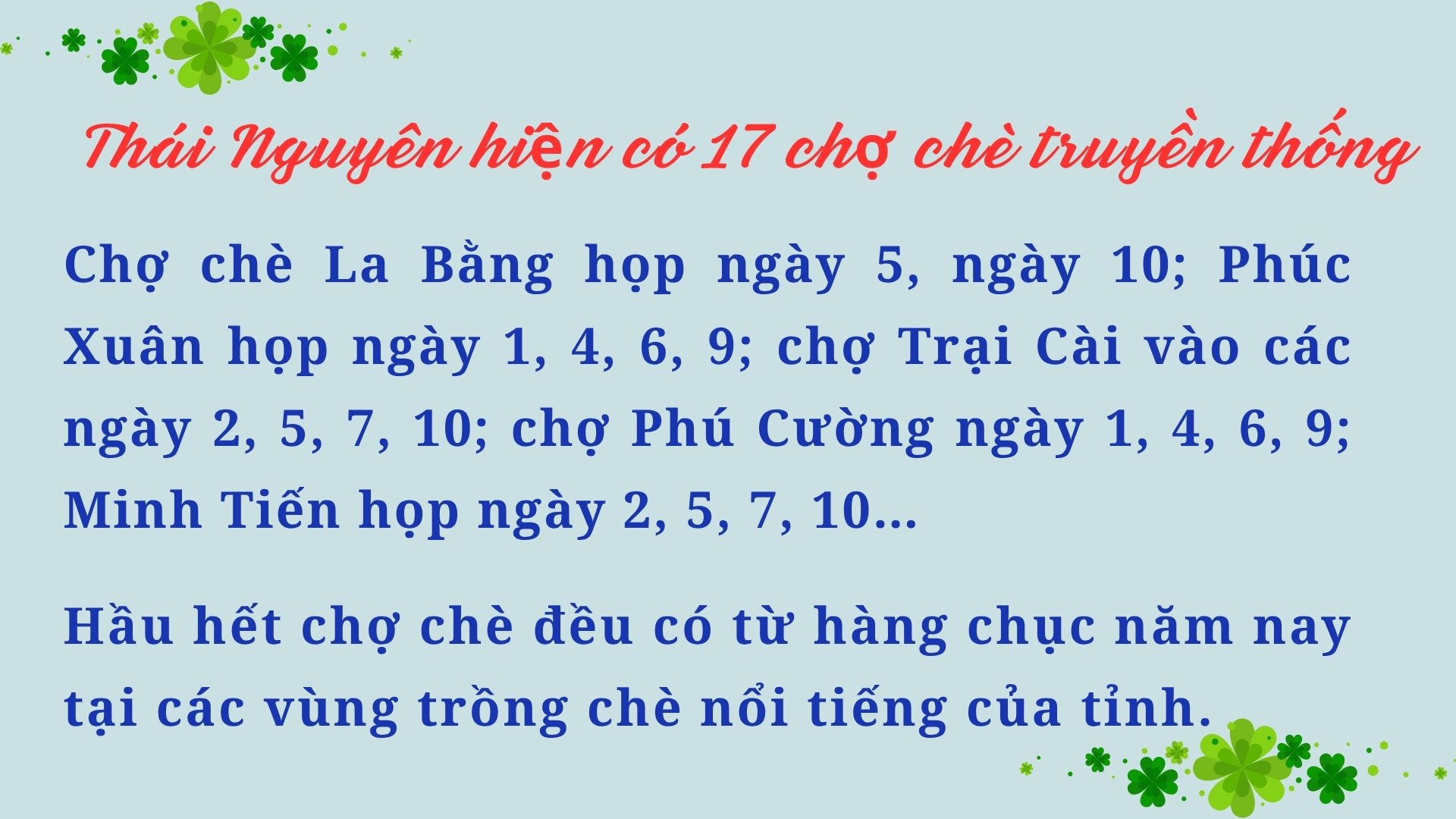
During our enjoyable tea market experience, we also leisurely made our way up to Trai Cai area, Minh Lap commune, a place once immortalized in Thai Nguyen 's proverb: "Cai tea, Hich girls" (referring to the specialty Trai Cai tea and the beautiful girls of Hich town in the former Dong Hy district).
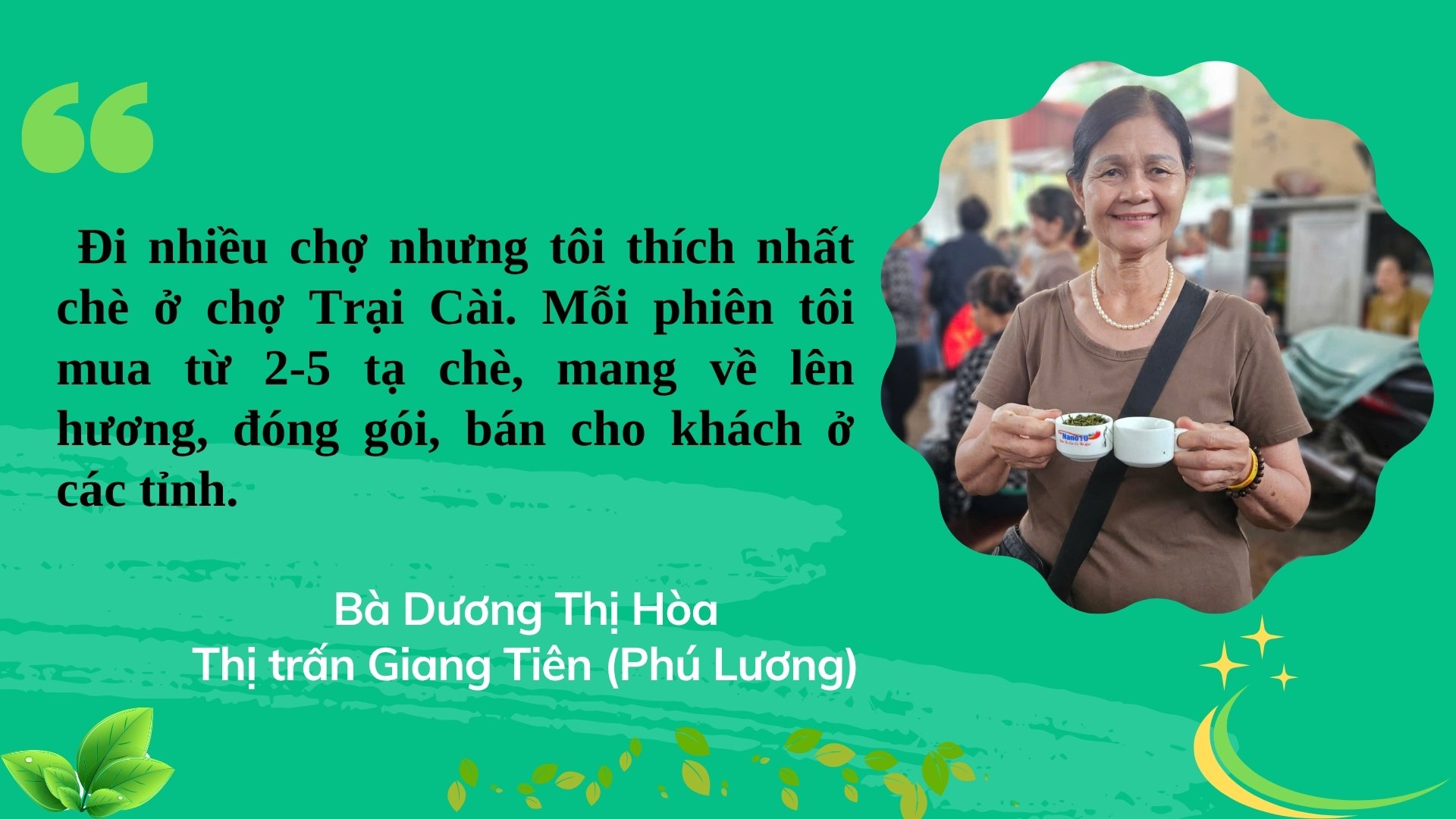
This market was established over thirty years ago and includes tea from specialty tea-growing regions of Minh Lap commune, Hoa Binh province, Song Cau town (Dong Hy district); and Tuc Tranh and Phu Do (Phu Luong district). It is also the tea market with the most sessions (12 sessions) per month, with the main sessions on the 10th and 15th.
 |
 |
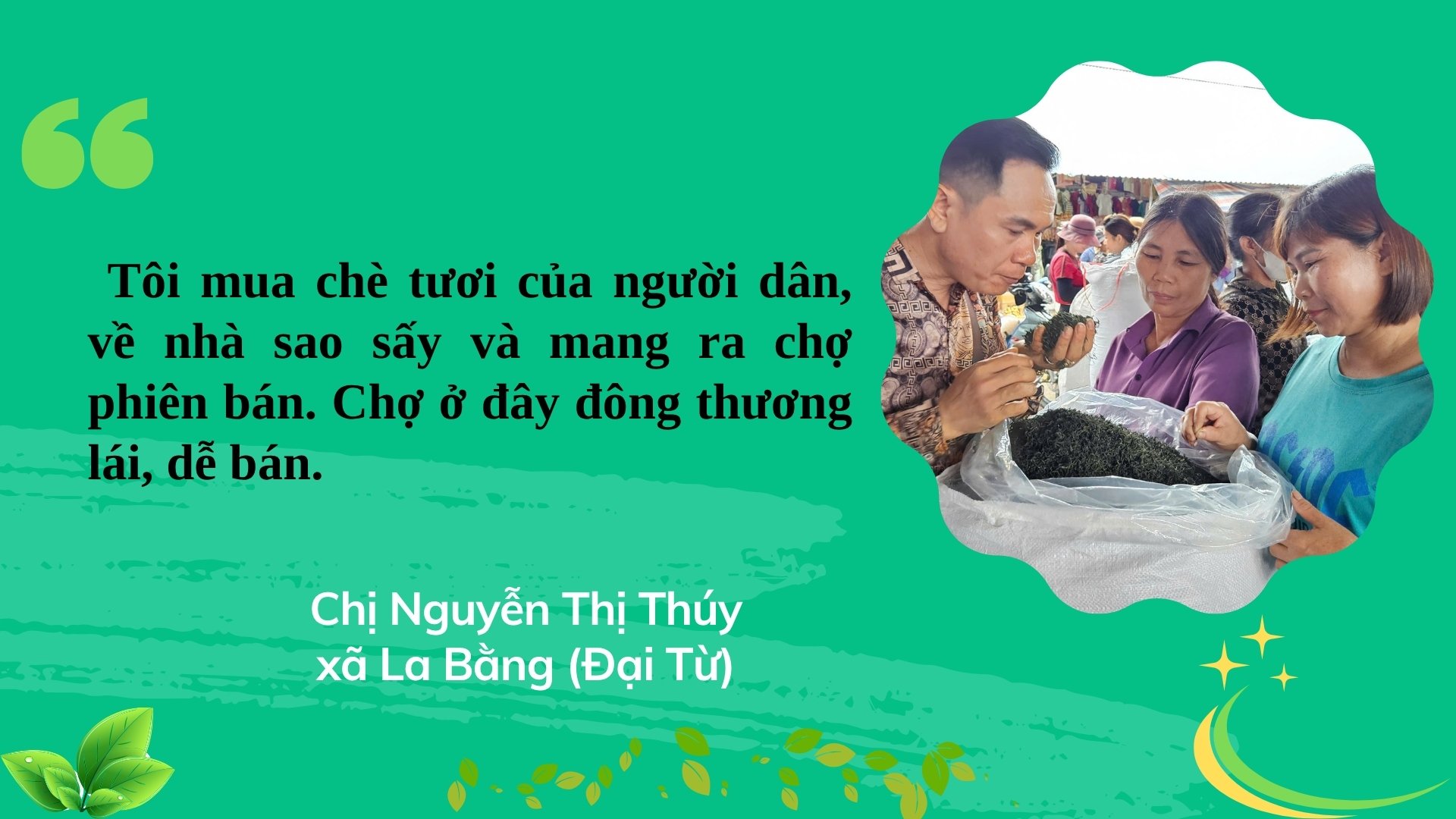
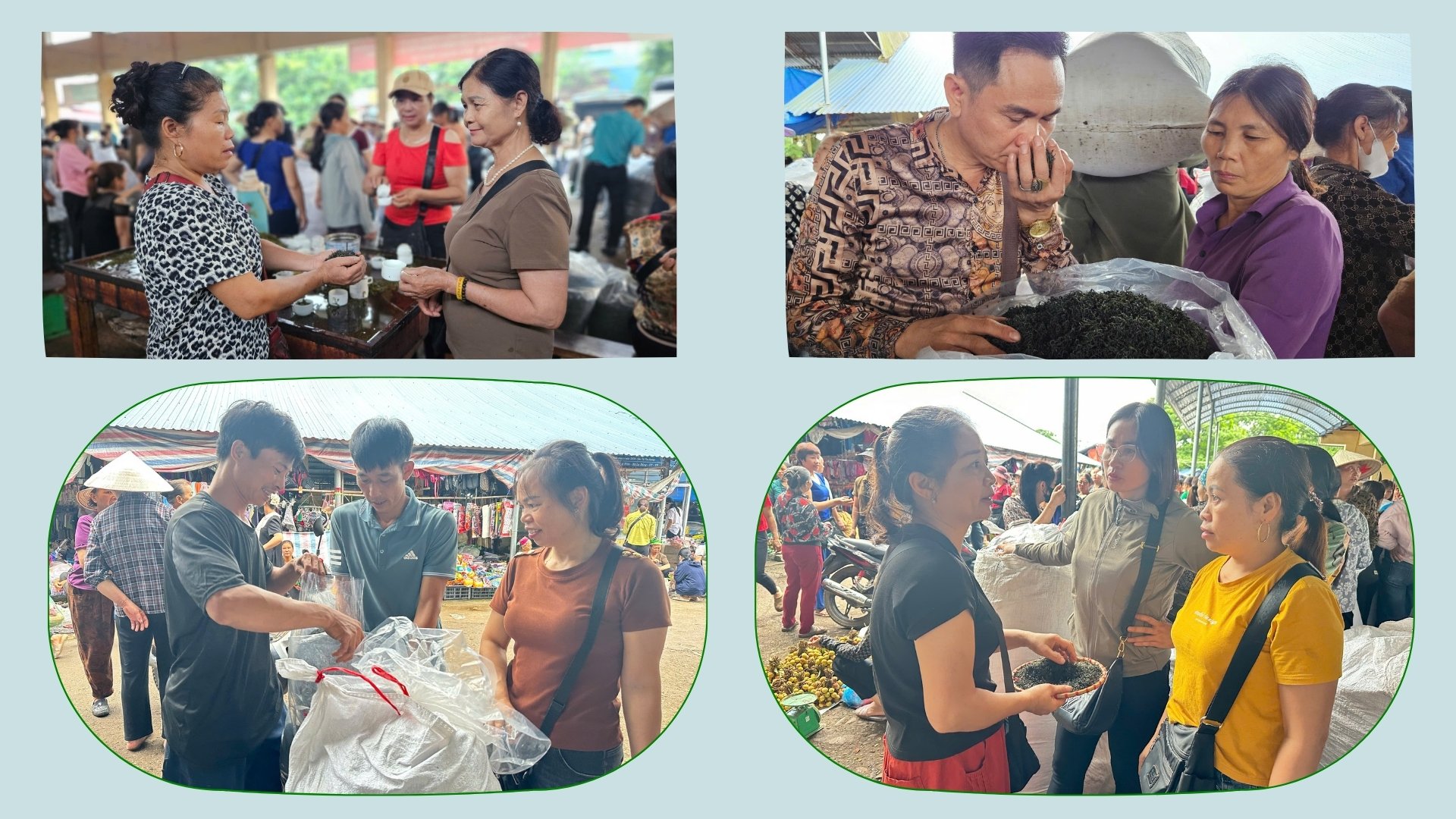
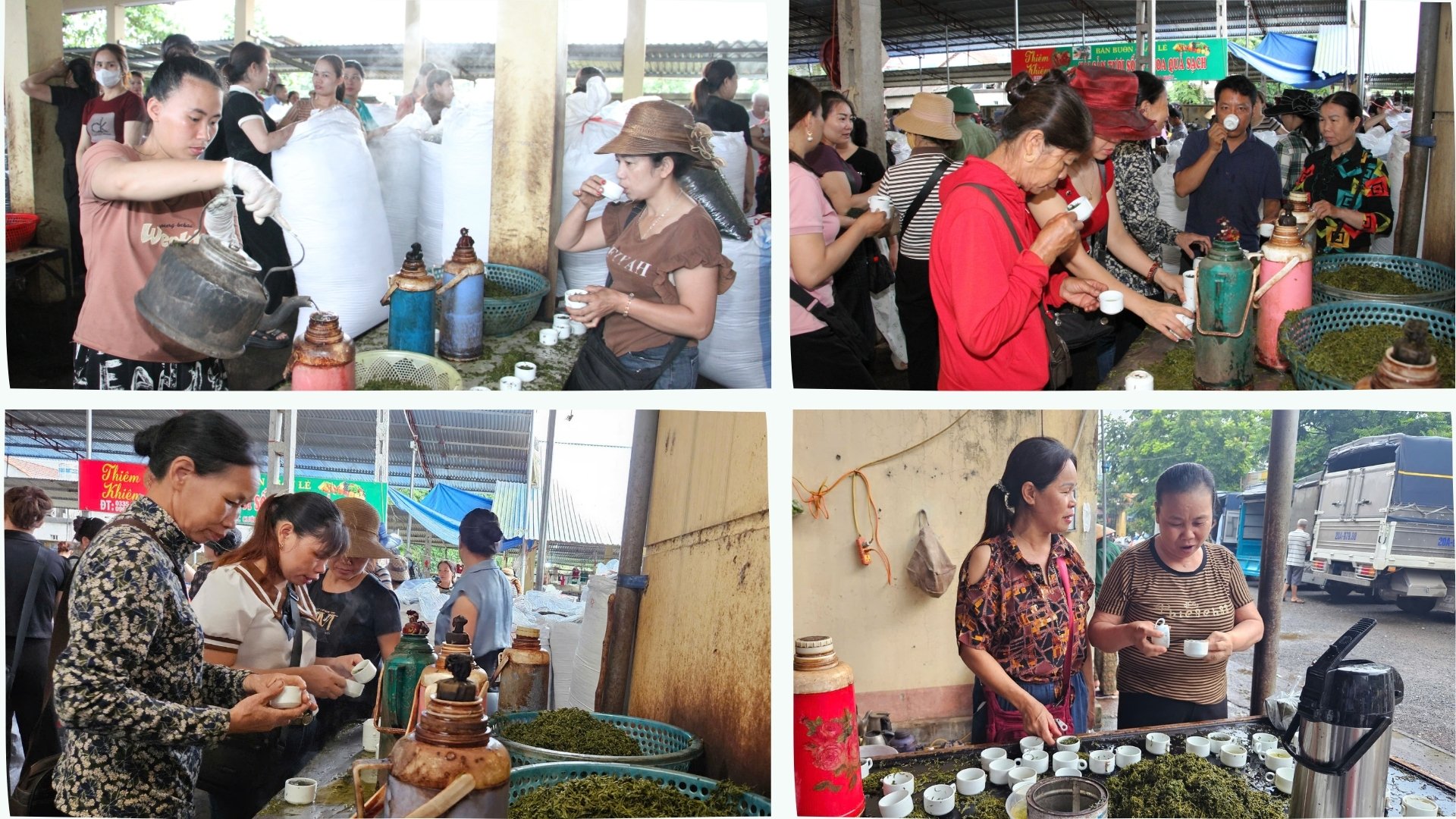
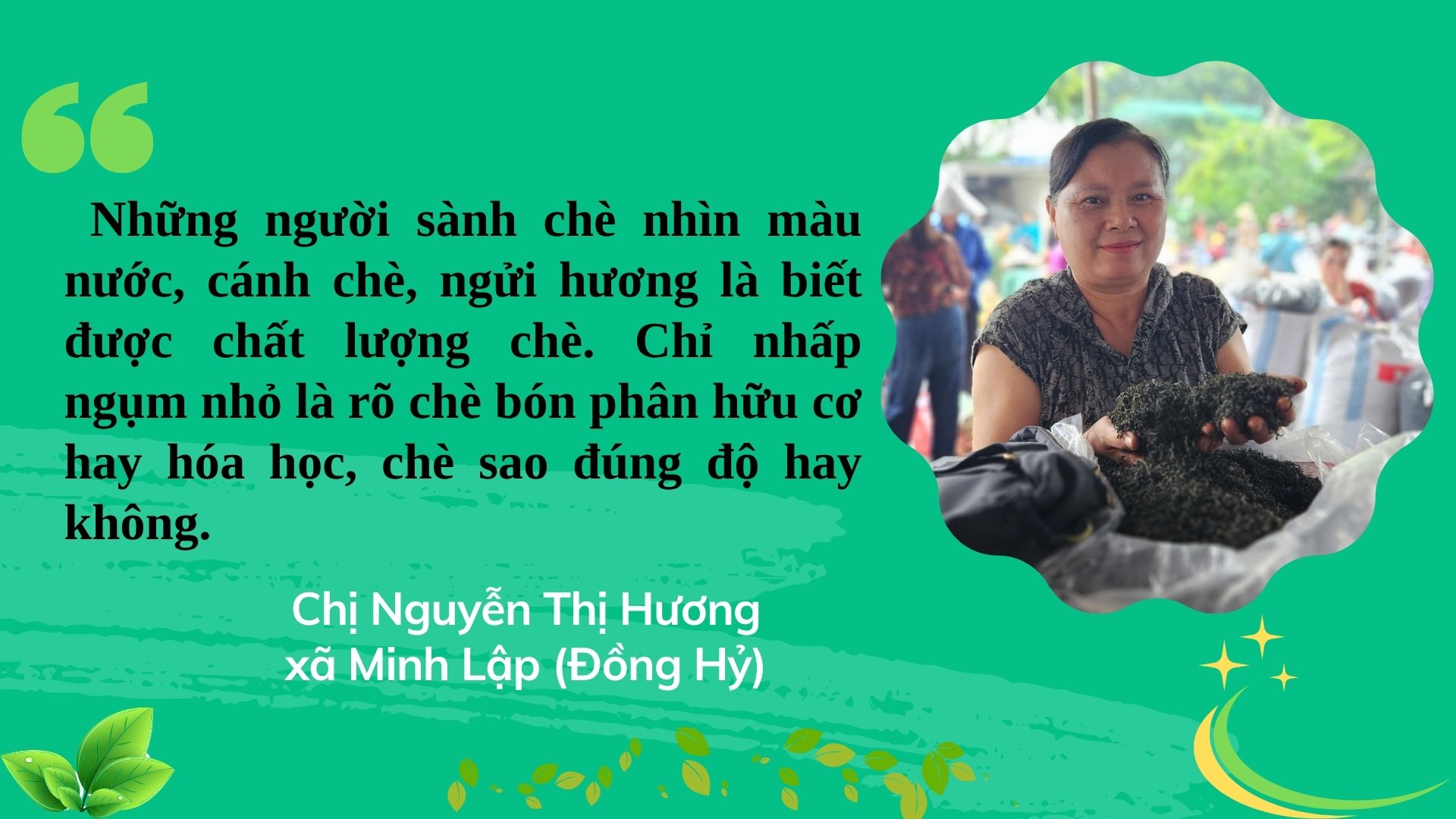
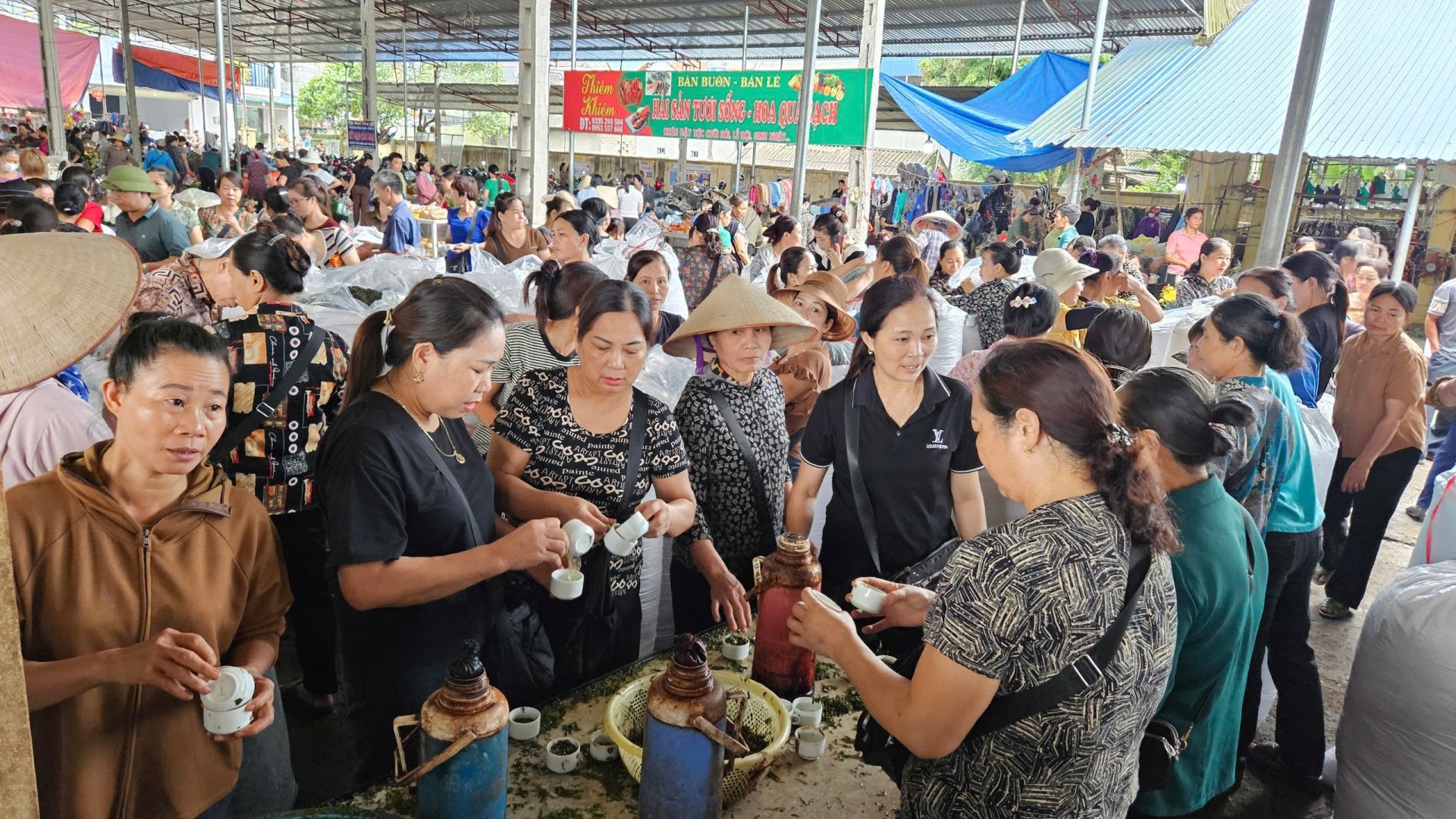
At the tea market, most people are connoisseurs with extensive experience in selecting tea, so it's rare for second-grade tea to be sold at first-grade prices. Customers browse the market, examining the tea bags, and if they like a particular tea, they take a pinch, spread it out in their palm to feel the texture, admire it visually, and smell its aroma. Only when satisfied do they decide to brew it. Seeing us meticulously choosing tea, Mr. Nguyen Van Dong from La Bang commune said, "Like wine, like tea," how can you classify tea without tasting it directly?
 |
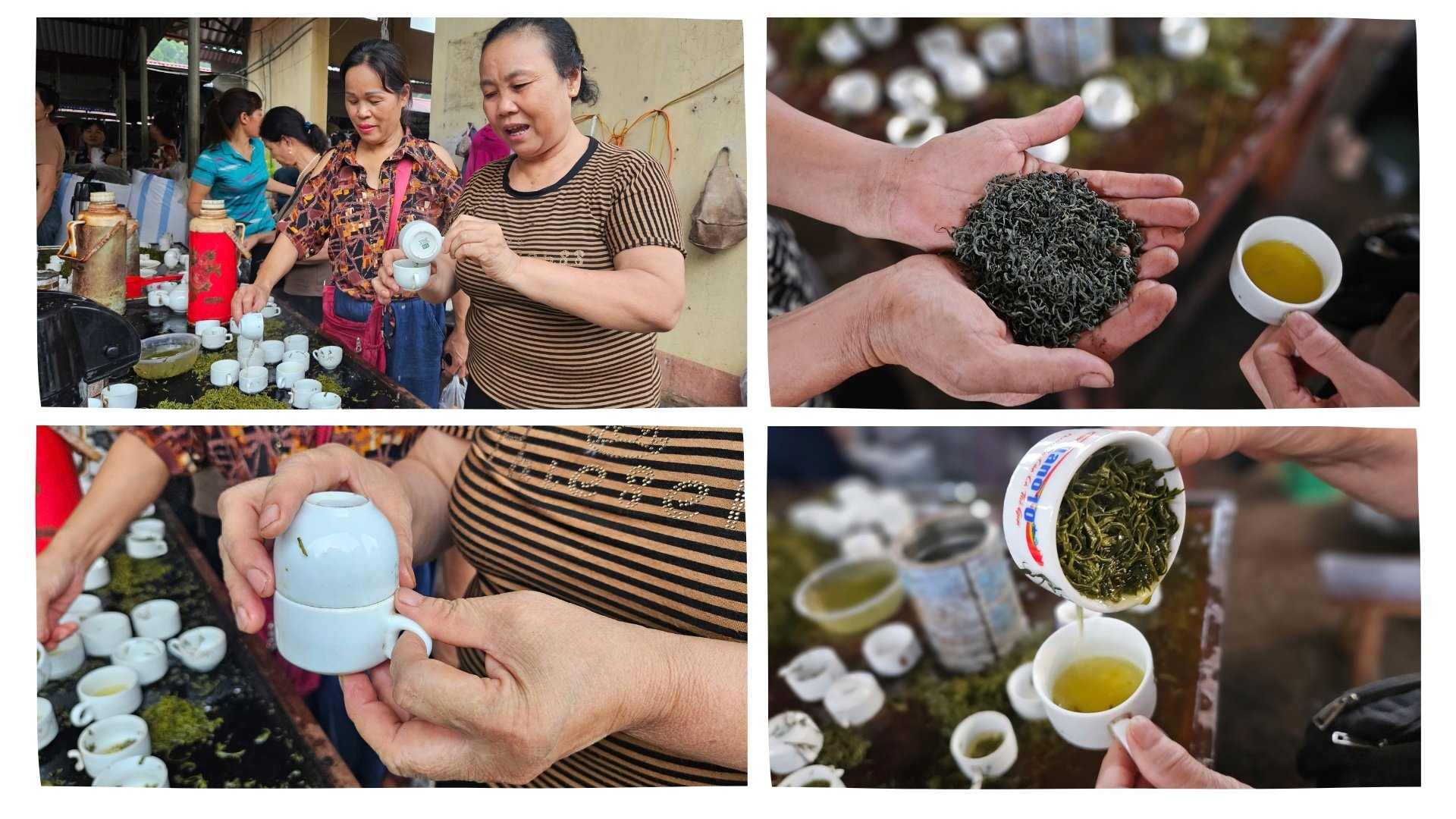
Therefore, in every corner of the tea market in Thai Nguyen, you'll find wooden tables, a few small sets of cups, and thermos flasks of boiling water. Tea connoisseurs here don't use teapots, but only two small cups placed upside down. A pinch of tea is placed in the cup, boiling water is poured in, the cup is covered for about twenty seconds, and then the liquid is poured out.
Just by looking at the clear, yellowish-green color of the tea, smelling the subtle aroma of roasted rice, and taking a small sip, connoisseurs can tell what kind of tea it is, how it was cultivated, whether it's ready yet, and then decide to place an order.
 |
Depending on the quality and variety, tea has different prices. The choice of tea also depends on individual taste: Long Vân tea is always a popular choice and commands a higher price because it has a strong aroma and a bright green color. Bát Tiên tea, although its color is a light red, has a sweet aroma reminiscent of sticky rice. Hybrid teas like F1 and Tri777 are also easily distinguishable, each with its own unique flavor. Customers are the most objective judges of product quality.
 |
Ms. Bui Thi Huyen, from Minh Lap commune (formerly Dong Hy district), shared her experience in choosing good tea: "Tea must possess five qualities – color, aroma, fragrance, taste, and spirit – to be considered top-quality. Therefore, tea buyers often select meticulously, and sellers are more accommodating to customers' choices."
 |
 |
The tea market is primarily for wholesalers, so most of the tea sold there is still raw and unprocessed, dried tea leaves. To achieve the ultimate aroma and flavor, the tea must be roasted on a rotating drum, sifted, winnowed, and flavored. For retail customers, especially tourists visiting the tea market, sellers will direct them to a nearby facility that adds flavor, vacuum-packs, and bags according to their needs.
 " hideimage="null" src="https://vstatic.vietnam.vn/vietnam/resource/IMAGE/2025/7/3/f2ab4ed70e5044939153e2f4931e3156" style="float: center;width: 1200px;"> " hideimage="null" src="https://vstatic.vietnam.vn/vietnam/resource/IMAGE/2025/7/3/f2ab4ed70e5044939153e2f4931e3156" style="float: center;width: 1200px;"> |
Without the need for extensive advertising, at each Thai Nguyen tea market, tea sellers practice their trade with integrity, their hands, and the heart of tea makers. Buyers can freely choose, bargain, and feel no pressure.
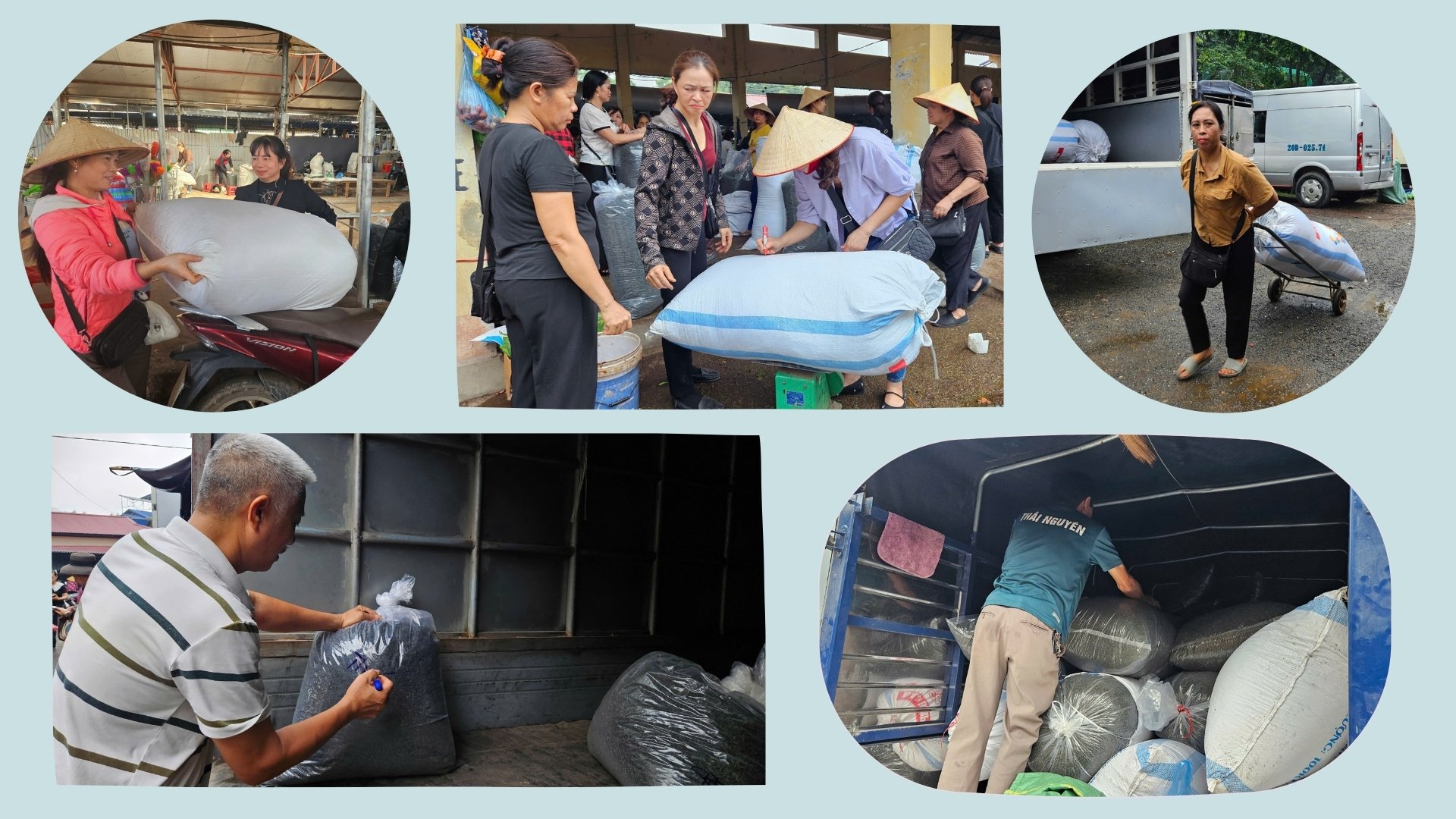 |
At Trai Cai tea market, before 7 a.m., we saw that Mrs. Pham Thi Nga (a trader from Vo Tranh commune, formerly Phu Luong district) had already bought several hundred kilograms of tea, loading it into a small truck parked at the market gate. She explained: "The tea from this region has a rich, fragrant flavor, so I don't need to be picky. I buy any tea with small, uniform leaves that brew into a light green tea with a pleasant aroma, a slightly bitter taste that gradually turns sweet." She then finalized the deal with a firm handshake with the seller.
 |
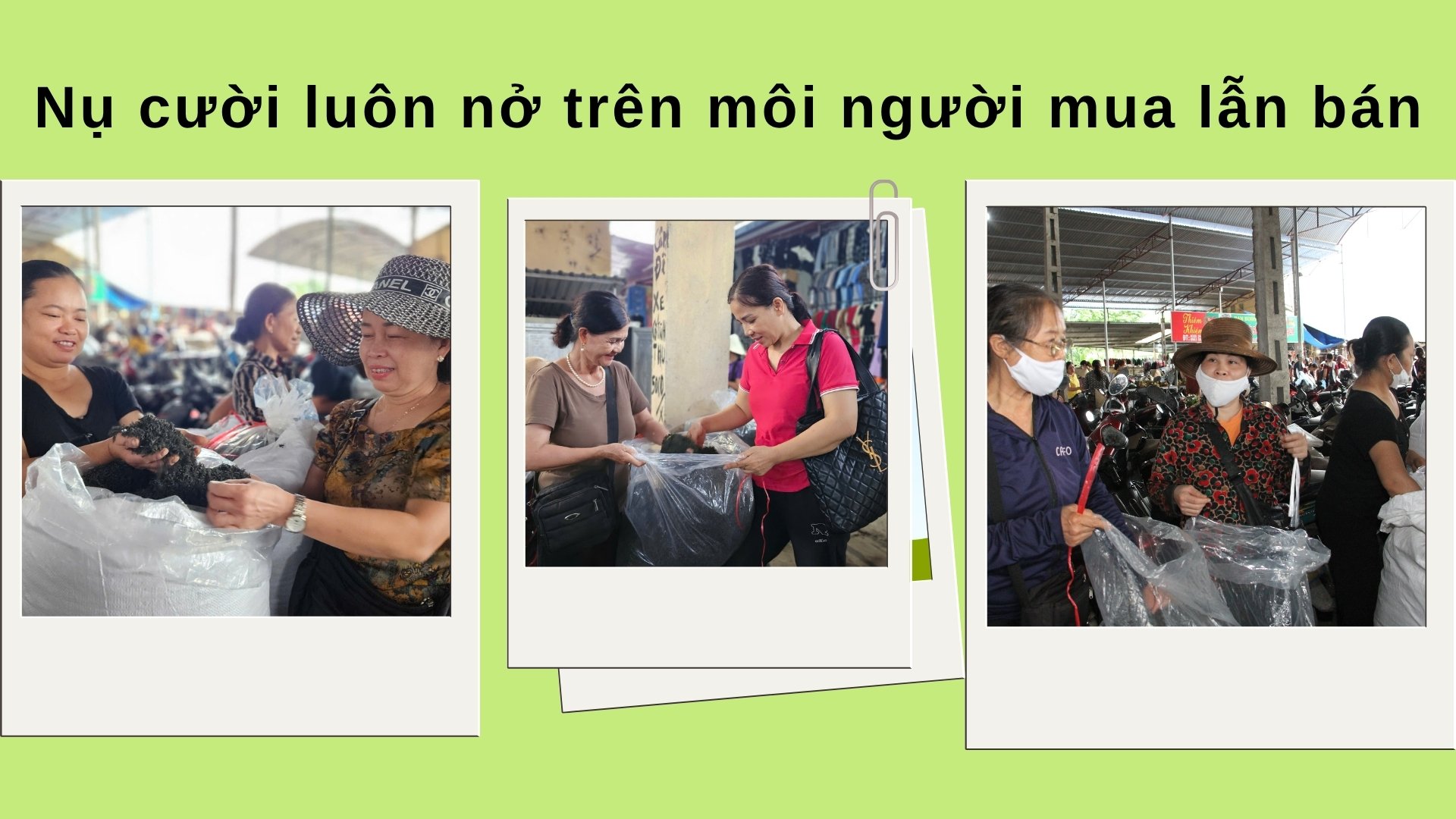
The tea market is not only a major sales channel for Thai Nguyen tea, but also a cultural space. People come to the market not just to buy and sell, but also to socialize and share experiences between tea lovers and tea producers. Even if they are just strolling around without buying anything, visitors are free to choose tea to brew and drink. The vendors are cheerful and friendly, even if they haven't made a sale yet.
 |
Through the market, tea growers have the opportunity to meet each other, exchange experiences on soil preparation, seed selection, and pruning, and readily share valuable cultivation secrets that are not recorded in any books. In addition, tea growers can meet traders and understand market demands. Sellers and buyers meet over cups of tea and conversations, and the lively atmosphere spreads throughout the market.
 |
We left each tea market, never forgetting to carry a few small packets of tea, but in our hearts, we took home a whole realm of memories. Each market reminded us of the figures of mothers and sisters carrying tea in the early morning mist, of sincere handshakes, and of the affectionate countryside, where the aroma of tea not only dissolved in the water but also permeated the land, the people, and the simple lives of farmers for generations.
 |
Source: https://baothainguyen.vn/multimedia/emagazine/202507/tinh-hoa-cho-chethai-nguyen-4662f9c/






































































Comment (0)