

(NB&CL) This cake, a variation of the banh chung (square sticky rice cake) made during the "journey to the South" of our ancestors, later became a traditional cake of the people of the South during ancestral commemorations or every spring: Banh Tet!
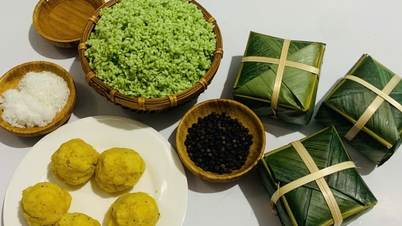
Bánh tét is not called a "piece" but rather a "stick" (đòn bánh tét!) because it has a long, cylindrical shape like a... wooden support; a shape that bears no resemblance to the original bánh chưng! This modified shape was probably convenient for carrying as food during the migrations of people from the South in the past. The ingredients are similar to bánh chưng: sticky rice, pork, scallions, and spices for the filling. The difference is that beans are not used to prevent the cake from spoiling quickly. Another difference is that the filling of bánh tét is "raw"; meaning it is only marinated, not stir-fried beforehand!
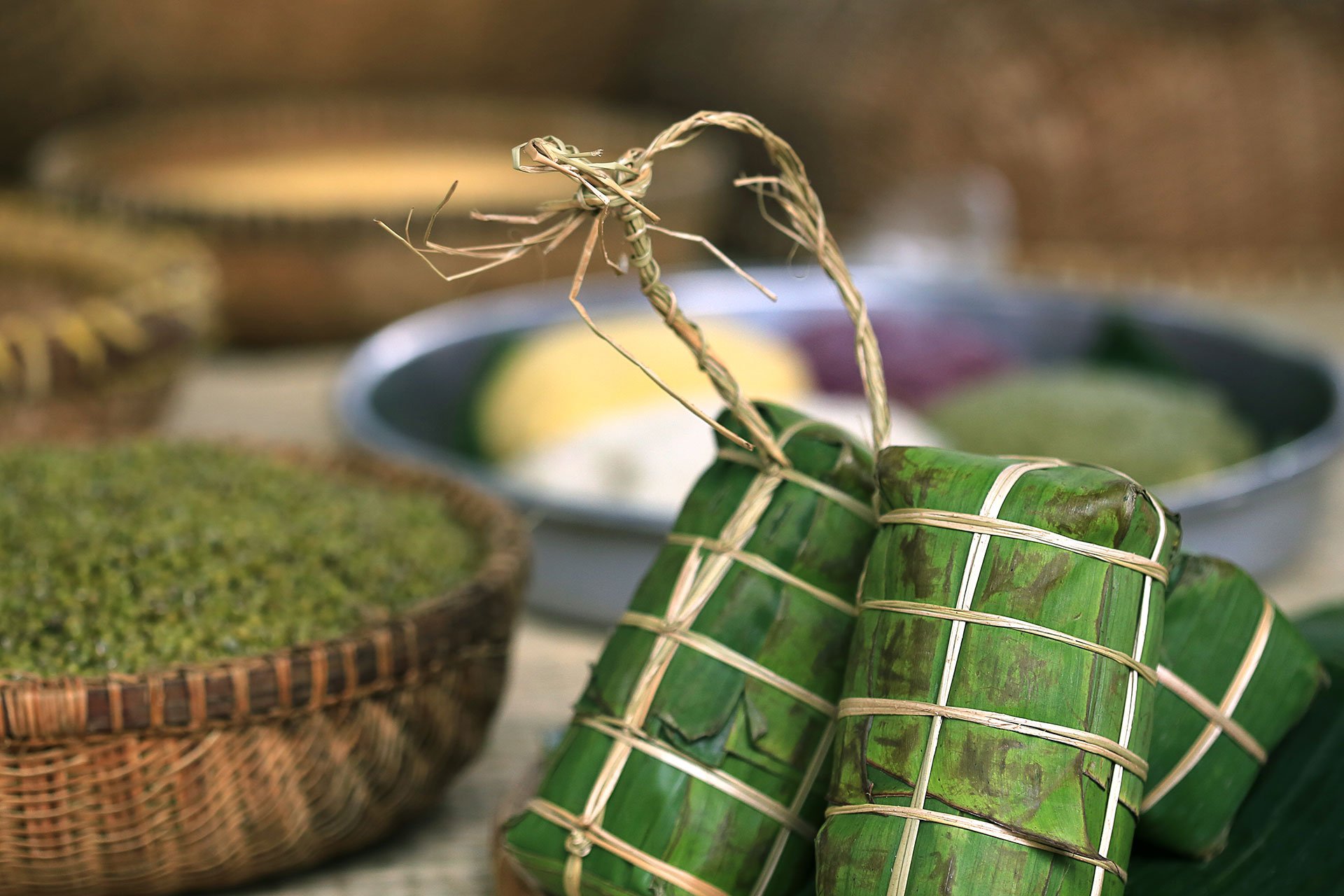
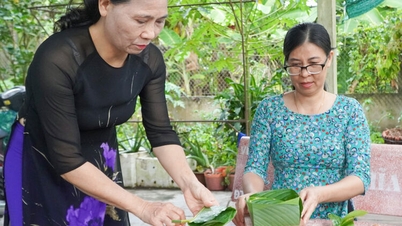
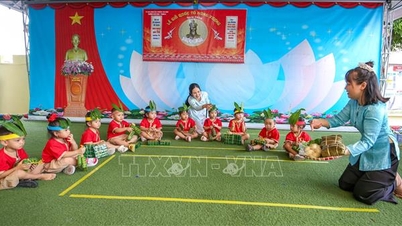
Wrap the rice cakes in banana leaves, tie them with bamboo strips or thin strips of dried banana leaf sheath. Cooking bánh tét is similar to cooking bánh chưng, usually taking a whole day or even a whole night. Arrange the cakes in a large pot or container; set up a large stove in the garden or yard; place the pot on the stove, add enough water to cover the cakes, cover tightly, and cook with large logs of firewood. Watch the pot carefully; add more water if the water runs low. It usually takes several times of adding water for the bánh tét to cook through…
It's called bánh tét because when eating it, people rarely cut it with a knife, but instead use a thick string to "tear" the cake. The tearing method is quite simple: hold one end of the string in your hand, the other end in your mouth; the other hand holds the cake after removing part of the wrapping leaves. Pull the string taut, placing it horizontally across the cake at the desired tearing point. Keeping it taut, slowly wrap the string around the cake to form a tight loop. Pull both ends of the string tightly so that the "noose" slowly tightens (like the method of execution used by feudal kings!). The tension of the string will sever the part of the cake you want to tear into a thin, straight, round slice that looks like a... wheel. The remaining piece of cake, if you want to save it for later, simply fold and tie a bunch of leftover leaves to cover the cut. This layer of leaves will temporarily protect the cut surface of the cake, preventing it from coming into contact with air and becoming moldy.
Banh tet can be enjoyed as a snack or a full meal; it's like a condensed meal, containing both food and ingredients all in one roll! That's why, to truly enjoy banh tet, you need... fish sauce! Using chopsticks to pierce a slice of banh tet, dip it into the chili fish sauce, and bring it to your mouth. You'll savor a harmonious blend of sticky rice, banana leaves, pork, and fried shallots, complemented by the savory, authentically Vietnamese flavor of the chili fish sauce; a flavor that true Vietnamese people will never forget, even in death! I don't know how true the poetic legend of Prince Lang Liêu is, but this banh tet, a snack that's both satisfying and delicious, is truly a unique and creative inheritance of the traditional banh chung of Southern Vietnam. No wonder, even though the time of our ancestors' expansion is long gone, banh tet still endures in the South, always present on the Tet feast table every spring…
Y Nguyen
Source: https://www.congluan.vn/tinh-lang-lieu-tren-dat-phuong-nam-post331357.html























































































Comment (0)