The history of national development is always marked by the contributions of generations of young people. Each historical period has presented different missions and demands on the younger generation. During wartime, young people were the ones who "fought to the death for the survival of the Fatherland," present in the trenches, on the front lines, and in the rear areas. In the early years of the Doi Moi (Renovation) period, the country needed people who dared to lead in labor, production, poverty reduction, and integration. As the economy opened up more widely, young people were expected to become the vanguard force in industrialization and modernization.
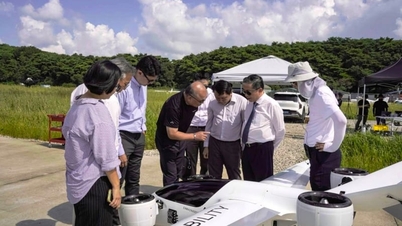
Today, the context is different! Vietnam aims for rapid but sustainable development, building an economy based on science and technology , innovation, and digital transformation. Competition among nations is also changing. While previously resources, cheap labor, or scale of production were important advantages, now a nation's strength is increasingly determined by knowledge, technology, and the quality of its human resources. As the drivers of growth change, so do the demands for human resources. And that is the context for re-evaluating the role of youth in the country's development strategy.
"Investing in youth is investing in the long-term competitiveness of the country" - the view of General Secretary and President To Lam clearly reflects the development thinking in the new era. In the age of artificial intelligence, a skilled workforce of engineers is the foundation for the nation's breakthrough. A workforce that masters technology is a condition for building a digital economy. And young people who dare to innovate, dare to start businesses, and master knowledge will create businesses with global competitiveness. Therefore, youth are not only seen as the successor force or the vanguard force, but also as the resource that determines the long-term competitiveness of the country. Investing in youth today is also investing in labor productivity, innovation, and the competitiveness of the economy for many years to come.



From this perspective, the requirements for the Youth Union also change. Along with ideological education, the Youth Union must create an environment for young people to study, research, innovate, and connect with businesses, research institutes, and the market. The goal is not just to inspire a desire to contribute, but to help young people "transform dreams into abilities, transform abilities into products, and transform products into value for the country."
More importantly, this approach also places new demands on each young person. In a world where technology changes daily, knowledge is constantly updated, and competition is increasingly fierce, each person's advantage no longer lies in their degree or current job, but in their ability to learn, adapt, and innovate continuously. That is the "new spirit" that the General Secretary emphasized – a generation that knows how to learn throughout life, master technology, dare to innovate, and is ready to enter new fields, to transform knowledge into value and contribute more to the development of the country.
"The 'New Spirit' is not just a message or a call to action for young people! It is a requirement of a Vietnam transitioning to a growth model based on knowledge, technology, and innovation. Each generation of young people has its own mission. If previous generations left their mark with courage in war and dedication in the Doi Moi (Renovation) process, today's generation will be recognized for its creative capacity, ability to master technology, and the new values it creates for the country. This is how young people continue the tradition in this new phase, in this new era of the nation."


Source: https://daibieunhandan.vn/tinh-than-moi-cho-chang-duong-moi-10421617.html
































![[Image] Ho Chi Minh City: Ma Lang area, Chicken-Rice Market about to change its appearance](https://vphoto.vietnam.vn/thumb/1200x675/vietnam/resource/IMAGE/2026/06/25/1782377698627_ndo_br_m1-jpg.webp)