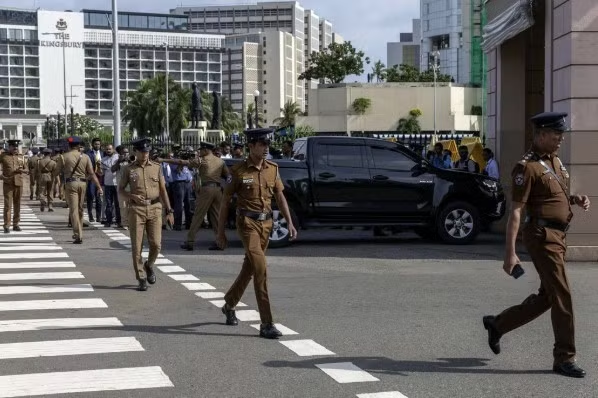
On June 16, Sri Lankan police spokesperson Fredrick Wootler stated that the country is witnessing an “alarming” increase in cybercrime committed by individuals entering the country as tourists. Those arriving on tourist visas have secretly set up scam centers targeting victims worldwide .
Since the beginning of this year, Sri Lankan authorities have conducted more than a dozen raids on facilities suspected of being centers for fraud, arresting and deporting nearly 700 foreigners.
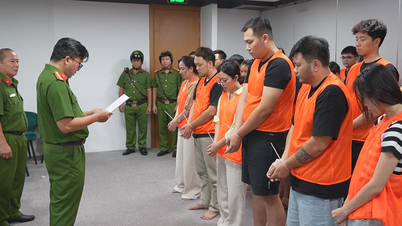
On June 11, Sri Lankan police conducted their latest raid in the capital Colombo, arresting 18 Chinese nationals. At the scene, the suspects left behind numerous forged documents, including fake legal certificates, forged documents from the US Treasury Department , and fake business registration records claiming their companies were worth up to $10 billion.
An inspector from the Criminal Investigation Bureau who participated in the raid said that authorities seized 62 passports, the majority of which belonged to Chinese citizens.
“We found phones, laptops, USB drives, RAM, computer processors, seals used to forge documents, and a lot of counterfeit papers. A framed certificate hanging on the wall was also forged to prove they were a registered business in the U.S.,” the inspector said.
Senior police chief Kamal Ariyawansa confirmed that this was a criminal organization led by Chinese nationals, attempting to defraud American investors into pouring money into a fake US-based company.



The majority of those arrested and deported were Chinese citizens, but there were also citizens of India, Indonesia, the Philippines, Malaysia, Myanmar, and other countries. According to the police, all of them entered the country on tourist visas.
Downsize, move constantly
The transnational fraud industry has flourished in Southeast Asia in recent years, becoming one of the world's largest forms of organized crime. This activity is primarily run by Chinese gangs, employing hundreds of thousands of workers, many of whom are trafficked or forced into the scheme.
From large-scale, fortified complexes in Cambodia and Myanmar, these “fraud factories” deploy a range of scams, including romance scams, cryptocurrency fraud, online gambling, and money laundering, on a global scale. The U.S. estimates that its citizens lost approximately $10 billion to fraud centers in Southeast Asia in 2024.
As political pressure mounts in Southeast Asian countries, many fraudulent criminal complexes have been cracked down on by authorities, forcing criminal gangs and their Chinese operators to seek new locations.
According to experts, Sri Lanka is becoming a new destination due to its easy tourist visa application process, along with the newly implemented "digital nomad" visa program. Additionally, the country has lenient regulations regarding SIM cards and internet connectivity, while office and hotel rentals are relatively inexpensive.
Sri Lanka already has a significant presence of Chinese businesses and infrastructure projects, so the arrival of Chinese citizens hasn't drawn much attention. The country has recently relaxed regulations related to gambling and online gaming, while mechanisms for dealing with cybercrime remain limited. Currently, the most common measure is deportation of foreigners found guilty of cybercrime rather than criminal prosecution.
Instead of building large, easily detectable complexes, these groups typically operate in small groups of about five people, constantly moving between different hotels, apartments, and offices every three months or so.



The Chinese embassy in Colombo has also publicly acknowledged that Chinese citizens are involved in telephone scam gangs, confirming that these individuals have moved to Sri Lanka after being targeted by crackdowns in Southeast Asia.
"Such incidents cause great harm. The Chinese Embassy fully supports Sri Lankan law enforcement agencies in resolutely suppressing the suspects," the Chinese Embassy stated.
Source: https://tienphong.vn/toi-pham-lua-dao-tu-dong-nam-a-do-bo-sri-lanka-post1851902.tpo