


DEMOLITION OF POPULATION IS AN URGENT NEED
At a recent conference, the Ho Chi Minh City Party Committee approved the Ho Chi Minh City Planning for the period 2021-2030, with a vision to 2050, and the revised master plan for Ho Chi Minh City until 2040, with a vision to 2060. Mr. Nguyen Van Nen, Member of the Politburo and Secretary of the Ho Chi Minh City Party Committee, emphasized that this is an extremely important task with special significance for the sustainable development of Ho Chi Minh City. To date, the planning has been implemented meticulously and seriously, although it is behind schedule, due to the city's large size and the many issues requiring careful planning and consideration.
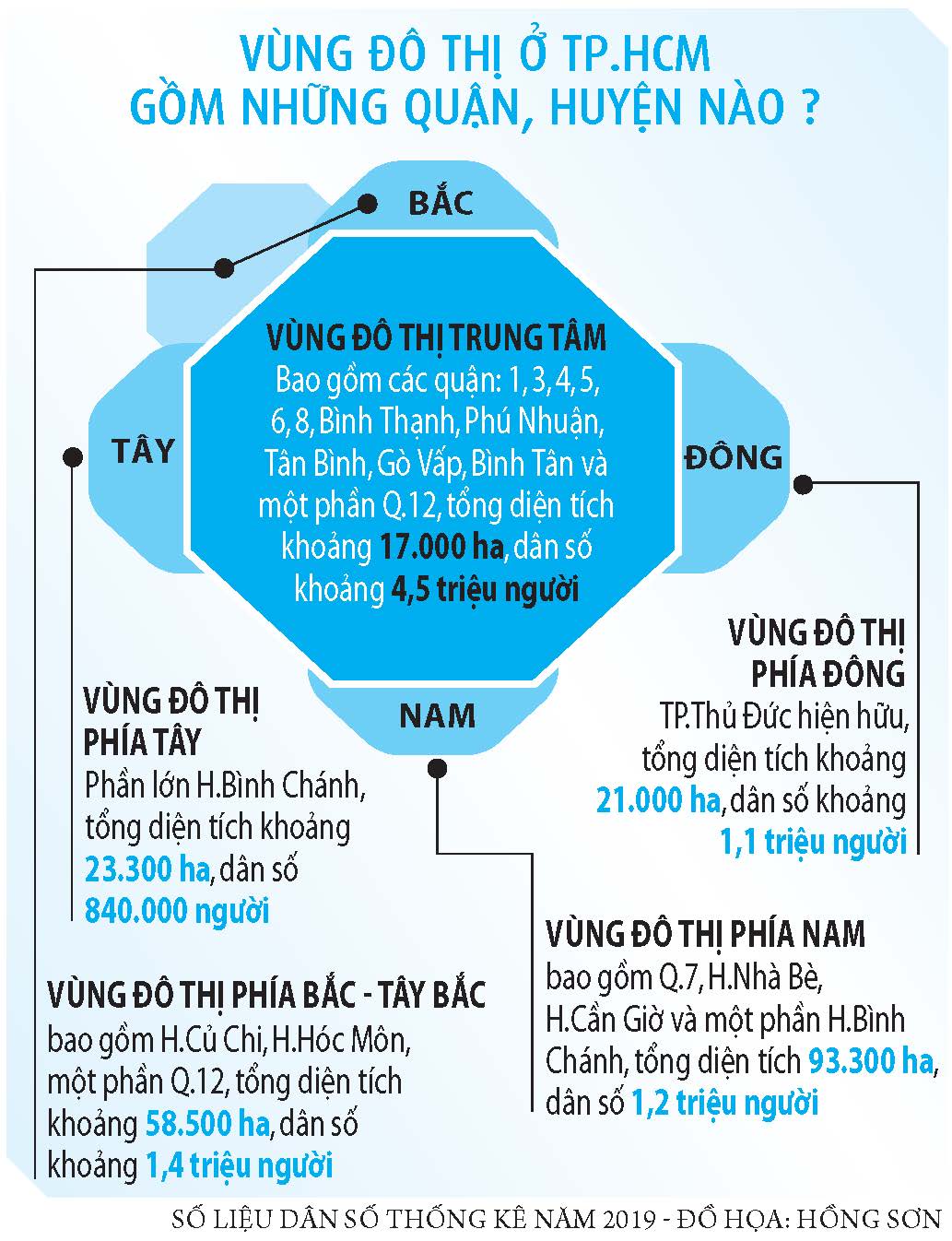
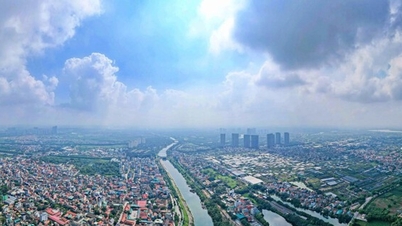
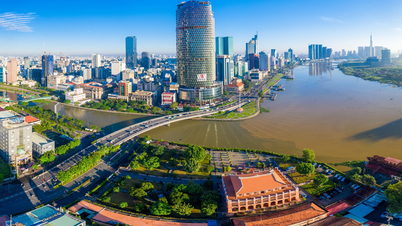
The revised master plan for Ho Chi Minh City projects a population of 13 million by 2040, increasing to 14.5 million by 2050 and reaching 16 million by 2060. Ho Chi Minh City's urban development is oriented towards five zones: the central area, the eastern zone, the northern-northwestern zone, the western zone, and the southern zone. These zones are considered the five satellite cities of Ho Chi Minh City.
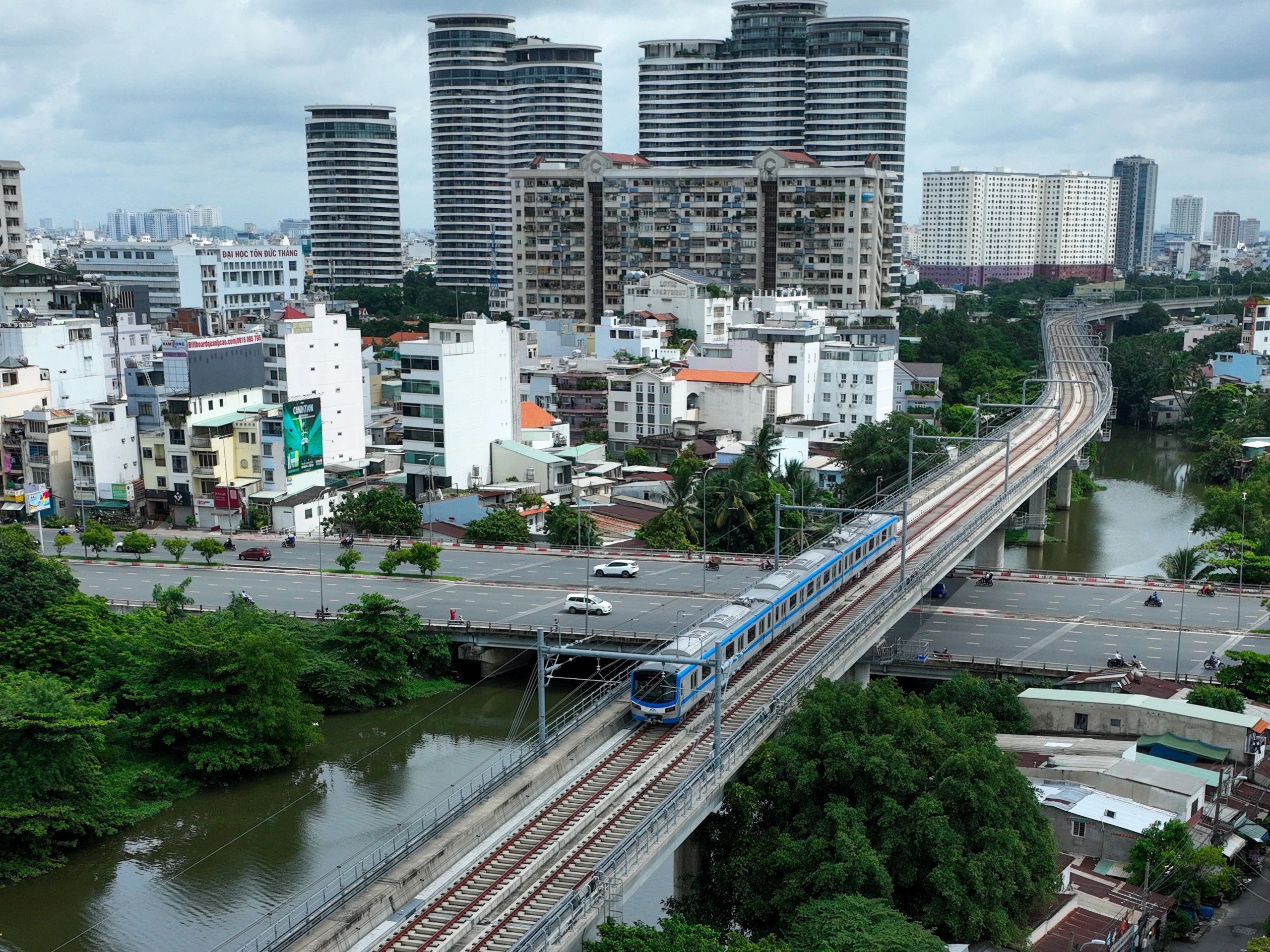
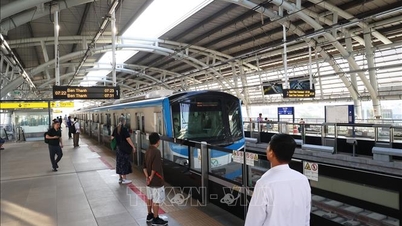
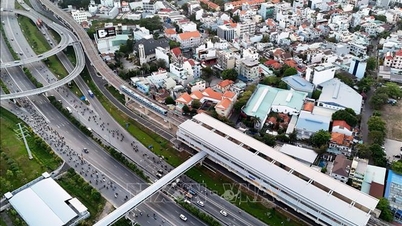
The metro will be the main means of connecting future satellite cities in Ho Chi Minh City.
Nearly 15 years ago, the multi-center urban model was outlined in the 2010 revised master plan for Ho Chi Minh City, aiming to create four satellite cities in the east, west, south, and north to alleviate population density in the central area. However, to date, only the eastern city, Thu Duc City, has been established. Meanwhile, the current state of each planned zone presents numerous intractable problems, particularly overcrowded housing in the central area, as well as housing along canals and waterways, a lack of public spaces, and traffic congestion.
Mr. Duong Anh Duc, Secretary of the District 1 Party Committee, cited the example of residents in the Chicken Market and Rice Market areas (Cau Ong Lanh Ward) living in cramped spaces with high fire risks and very difficult living conditions. "Some families have to take turns sleeping because of the cramped conditions. There are plots of land only 15 square meters in size but with 4-5 households living there," Mr. Duc stated. Not far away, the Ma Lang area (Nguyen Cu Trinh Ward) shares a similar plight. Despite repeated calls for investment to renovate the urban area, because it is located within the 930-hectare planning zone (the existing central area, including parts of Districts 1, 3, 4, and Binh Thanh) with height and land use coefficient restrictions, investors who came to inquire about the area never returned.
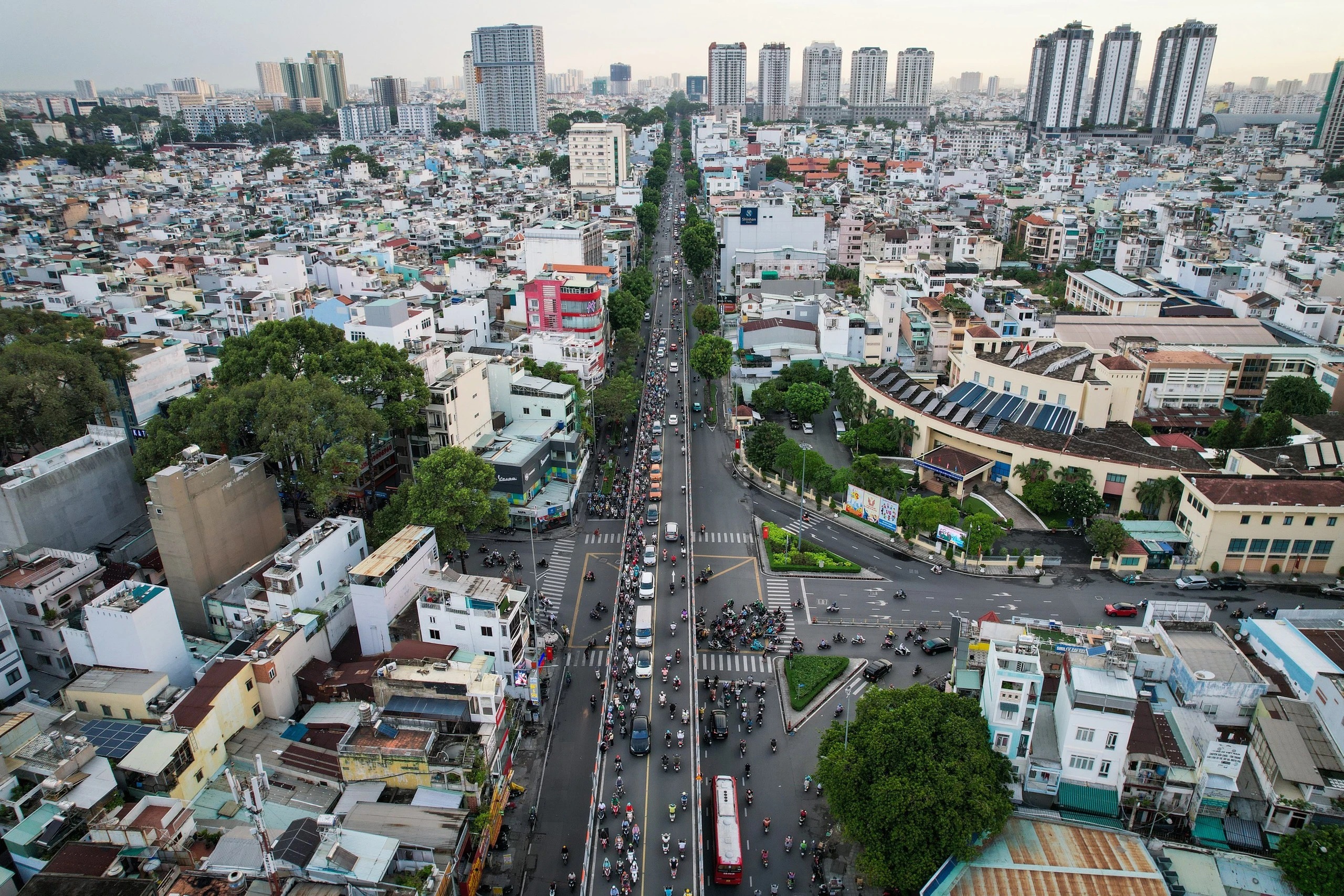
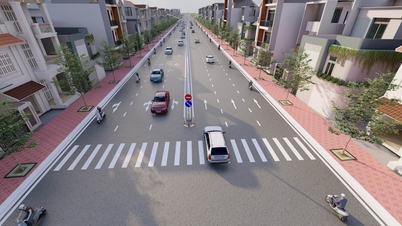
Ho Chi Minh City aims to develop into five cities based on a multi-center model.
Sharing the same plight of dilapidated housing, residents in many suburban areas of Ho Chi Minh City face the ironic situation of owning land but being unable to build houses due to "suspended" urban planning projects. Some projects have dragged on for decades without construction, while families have grown larger.
METRO WILL BE THE BACKBACK
Mr. Hoang Minh Tuan Anh, Chairman of the People's Committee of District 7 (formerly Head of the General Planning Management Department under the Department of Planning and Architecture), said that the old plan aimed to develop four satellite cities to alleviate population density in the city center, but this was not achieved due to a lack of investment in technical and social infrastructure. Mr. Tuan Anh believes that the TOD (Transit-Oriented Development) model will be the solution for Ho Chi Minh City in the future. Specifically, along the urban railway line, residential areas will be formed around the stations in a compact urban style, but not in a scattered manner.
Further elaborating, Director of the Department of Planning and Architecture Nguyen Thanh Nha stated that for compact urban development to occur, the planning must include population targets, and especially, investment in infrastructure, road expansion, and public welfare facilities is essential. Compared to the existing central area, compact urban development in the area between Ring Road 2 and Ring Road 3 will be more convenient due to the availability of more vacant land.
In this latest master plan adjustment, Ho Chi Minh City is adding road connections to strengthen its central position, such as extending Nguyen Huu Tho road, connecting the coastal road in Tien Giang , connecting to Long Thanh airport, and especially identifying urban development areas following the TOD (Transit-Oriented Development) model along the metro line and the正在 construction of Ring Road 3.
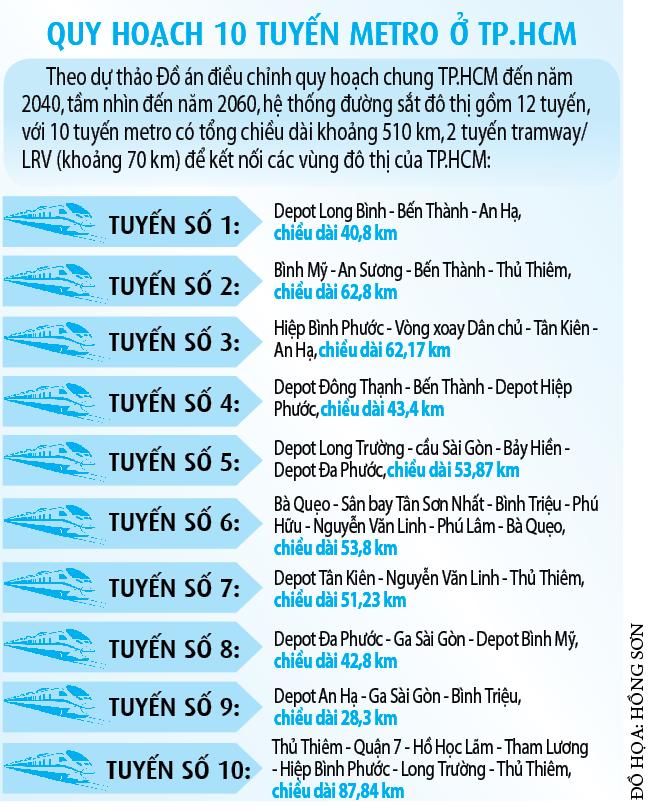
Mr. Tran Quang Lam, Director of the Department of Transport, said that in the urban railway system development plan, Ho Chi Minh City aims to complete 6 urban railway lines/sections with a total length of 183 km by 2035, with a total cost of over 871,000 billion VND (over 36 billion USD). To achieve this goal, Ho Chi Minh City has proposed 28 mechanisms belonging to 6 groups concerning planning; land acquisition, compensation, and resettlement support; capital mobilization; procedures, processes, and authority for investment and construction; technical standards, technology, norms, and unit prices; and management and operation organization.
Regarding the TOD (Transit-Oriented Development) plan, the Department of Natural Resources and Environment has identified 10 potential sites along metro line 1 (Ben Thanh - Suoi Tien) and metro line 2 (Ben Thanh - Tham Luong) with a total area of over 290 hectares. These are land areas directly managed by the state. In addition, it is estimated that nearly 360 hectares of land along three metro lines (lines 3, 4, and 5) managed and used by organizations, households, and individuals could also be exploited under the TOD model. It is estimated that this land fund will generate approximately 120,500 billion VND in revenue for the state budget by 2035.
Affirming that from now until 2030, Ho Chi Minh City will maintain its 16 districts, 5 suburban districts (Binh Chanh, Nha Be, Can Gio, Hoc Mon, Cu Chi) and Thu Duc City, Chairman of the People's Committee of Ho Chi Minh City, Phan Van Mai, stated that this period will focus on consolidating and improving the quality of technical infrastructure. The 5 suburban districts will concentrate on infrastructure development towards urban standards to be upgraded to cities directly under the provincial administration (cities within cities ). After 2030, Ho Chi Minh City will organize urban areas according to a multi-center model, and by 2040, 5 cities similar to the current Thu Duc City will be formed. At that time, the metro will be the main mode of connection.
A SPECIAL MECHANISM IS NEEDED
Evaluating the revised master plan, which inherits the multi-center urban orientation, Chairman of the People's Committee of District 7, Hoang Minh Tuan Anh, believes it is necessary to define the core central areas of the city in the future to include in the planning. "Just as South Saigon City identifies District 7 as its center, where will the center of the western and northern parts of the city be? We must identify the center to concentrate public and private investment capital for development. After 10 years, with solid infrastructure, the districts will then confidently become part of the city," Mr. Tuan Anh proposed.
Besides planning for future satellite cities, local leaders believe that immediate problems need to be addressed. The Chairman of the People's Committee of District 7 cited Ho Chi Minh City as an example, where many projects to relocate houses along canals and waterways are progressing very slowly, with 2,000 houses in District 7 alone. He argued that following the old approach of compensation pricing for residents would not solve the problem, because most houses on and along canals and waterways lack proper documentation and certificates. According to current regulations, they would not receive compensation but only support, and the amount of support received would certainly not be enough to buy a house and stabilize their lives. "If we continue with the old approach, the problem will still not be solved in 10-20 years," Mr. Tuan Anh said.
Similarly, District 1 Party Secretary Duong Anh Duc suggested that a special mechanism is needed to allow for increased building height and land use efficiency to address the problem of overcrowded housing in the existing central area.
In his role as a business connector, Mr. Tran Phu Lu, Director of the Ho Chi Minh City Trade and Investment Promotion Center, suggested that after the planning is approved, a list of projects to attract investment should be identified, linked to major goals such as the green economy , financial centers, and logistics. He argued that planning is the first step in attracting foreign investment. Simultaneously, Mr. Lu suggested that specific mechanisms and policies should be developed for each objective to be truly attractive to investors. For example, regarding the formation of a financial center, models from other countries show that establishing such a center requires more than just including it in the planning; it also involves mechanisms and policies to attract infrastructure and financial institutions, and connecting the financial center with domestic financial institutions.
Mr. Lu also pointed out that the biggest reason for delays or stalled projects in the disbursement of public investment capital is land acquisition. "For foreign investors, besides transparency in project legal documents, they also raise concerns about the progress of land acquisition. Even with good planning and mechanisms, if there isn't a mechanism for creating clean land and acquiring it in advance to prepare for investors, then opportunities will be lost compared to other localities," Mr. Lu added.
Mobilizing public support for metro construction.
Regarding the metro development project with a capital investment of over 36 billion USD, Chairman of the Ho Chi Minh City People's Committee Phan Van Mai acknowledged that this is a large sum and requires a breakthrough mechanism to mobilize resources. The Chairman shared that when studying foreign cities, the metro is an essential means of development. The main source of investment capital comes from the budget, with only a few items receiving social resources. For example, in Busan (South Korea), revenue from ticket sales, advertising, and land lease costs only accounts for 40-50%, with the remainder being subsidized by the budget and through mechanisms for exploiting land along the route.
Mr. Phan Van Mai analyzed that if the 36 billion USD is divided over 10 years, nearly 4 billion USD per year, it's not too much, including both capital mobilization and future debt repayment. "Ho Chi Minh City is not considering borrowing ODA funds but will borrow from the public through metro bonds," Mr. Mai said. Several large banks in the area affirmed that if interest rates are equal to or higher than government bond interest rates, they can raise this amount.
With the metro network in place, the head of the Ho Chi Minh City People's Committee believes it will not only help resolve traffic congestion but also develop multi-centered urban models, utilize underground space, and develop elevated spaces.
Source: https://thanhnien.vn/tphcm-phat-develop-thanh-pho-ve-tinh-185240616231621754.htm





































































Comment (0)