

For several days now, images of two elephants chained at Hanoi Zoo (Thu Le Park) have attracted nationwide attention. There has even been a campaign to collect signatures to "rescue" the two elephants and return them to their natural environment.
Most recently, Animals Asia sent a letter to the Hanoi People's Committee proposing a plan to transfer two elephants from Hanoi Zoo to Yok Don National Park ( Dak Lak ).
In the forest, elephants will howl and roar.
Animals Asia believes the best solution is to return the two elephants to their natural habitat in Yok Don National Park (Dak Lak province), where elephant conservation is currently underway. The organization is willing to fund the transportation costs if the proposal is approved.
"These two elephants are in the final stages of their lives, and they have the right to be cared for and live in a semi-wild or natural environment," Animals Asia stated.
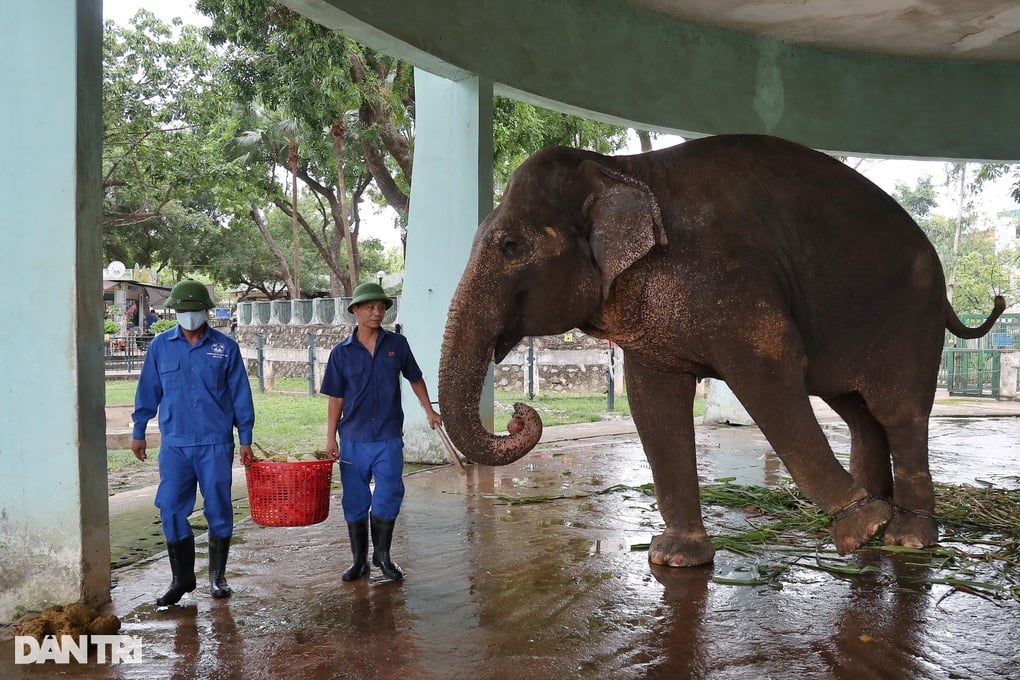
Images of an elephant with its legs chained at Hanoi Zoo have caused a public outcry.
David Neale, Global Welfare Director of Animals Asia, said that living in chains negatively impacted the lives of the two elephants.
If brought back to Yok Don, Thai and Banang (the names of the two elephants) will be cared for by highly experienced professionals, receiving medical and nutritional support.
Following the Hanoi Zoo's response that relocating the two elephants back to their natural environment was impossible, a representative from Animals Asia expressed a contrasting view.
"We have demonstrated that many elephants that had been kept in captivity for many years, when returned to their natural environment, exhibited natural behaviors such as howling and roaring… Behaviors they had never shown before while in captivity," David Neale cited as an example.
Among the 14 elephants in Yok Don, there is H'khun, who is 67 years old this year. This elephant was brought back to the forest in Yok Don in 2018 and is now participating in the elephant-friendly tourism program of Yok Don National Park.
Besides H'khun, there are 3 other elephants over 50 years old and 3 elephants over 40 years old living healthily in the forest of the national park.
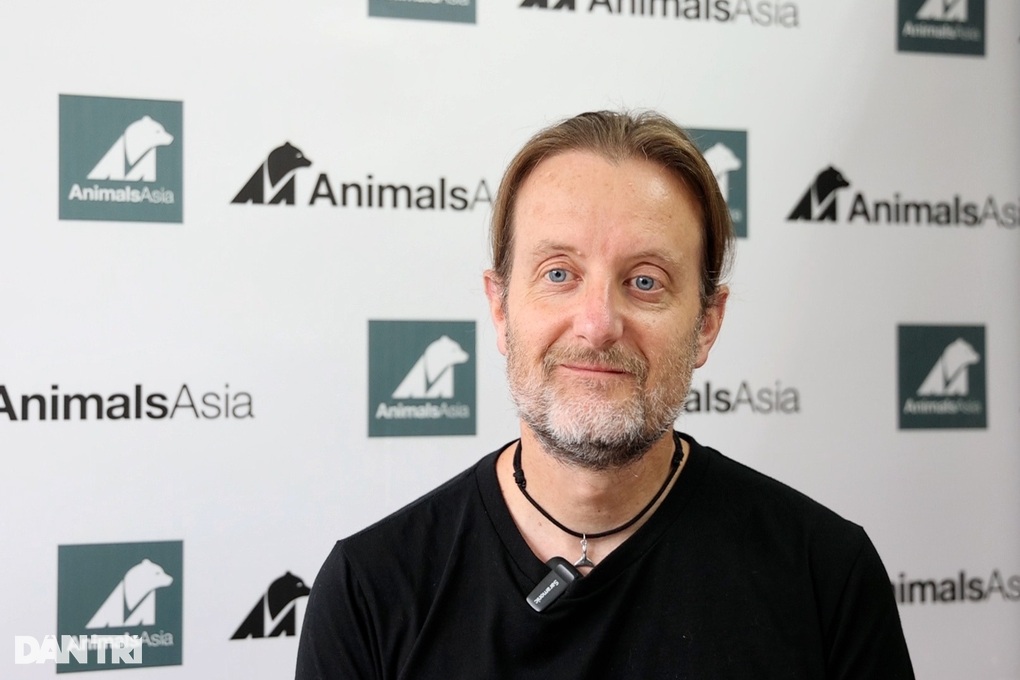
David Neale, Global Welfare Director of Animals Asia.
The director also stated that when brought to Yok Don National Park, the elephants are always cared for and guided by mahouts (caretakers) to prevent them from becoming disoriented in the new environment and getting lost in residential areas.
Upon returning to a semi-wild environment, the elephants are grouped together to explore, forage, and swim in the forests of Yok Don National Park, under the supervision of staff and experts from the organization.
Here, individual elephants will gradually get acquainted with each other, initially from a distance before getting closer to eventually pair up and form herds, ensuring they live according to their natural habits.
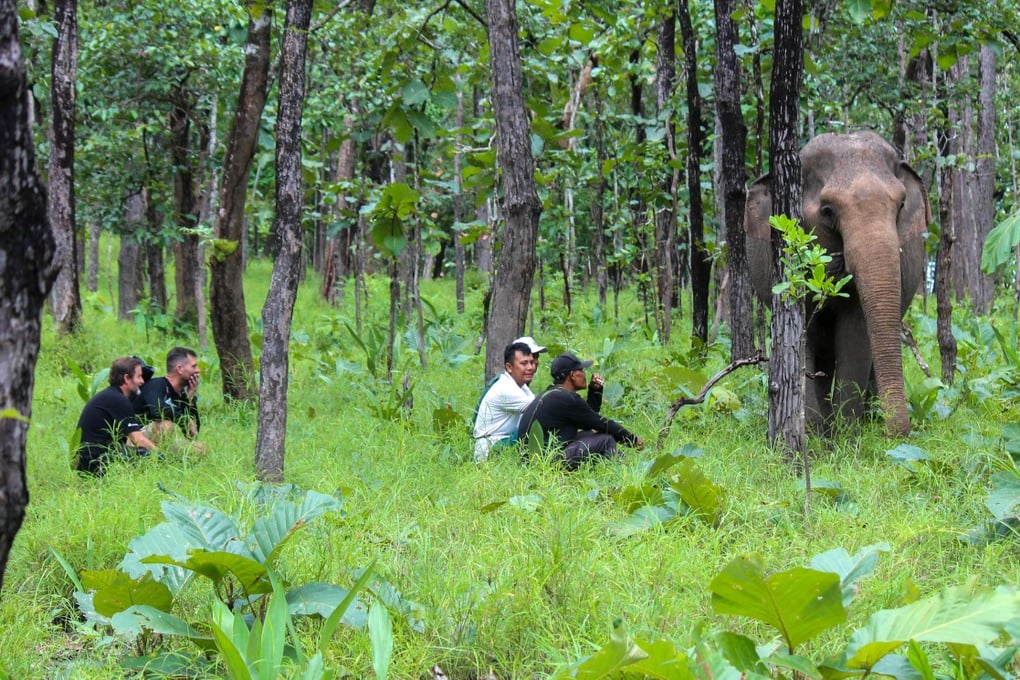
Staff and foreign experts observe an elephant in Yok Don National Park (Photo: Animals Asia).
The Director of Global Welfare at Animals Asia also stated that many zoos around the world have decided to stop keeping elephants and return them to semi-natural environments. Zoos built in urban areas, in particular, face limitations in terms of space and facilities.
Numerous disagreements with Hanoi Zoo.
As an animal welfare expert, David Neale could not remain silent when witnessing the way the Hanoi Zoo treated the two elephants, Thai and Banang.
He stated that since 2014, Animals Asia had repeatedly supported and collaborated with the Hanoi Zoo. Sadly, the Hanoi Zoo heeded very little of Animals Asia's recommendations and support. Therefore, the two sides ended their cooperation in 2018.
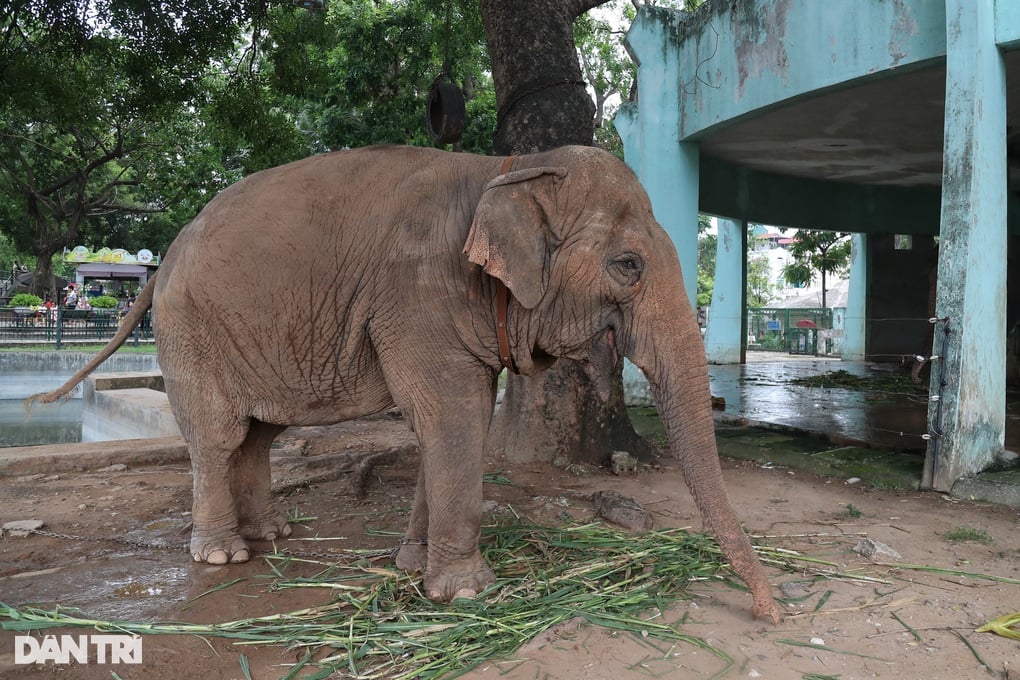
Representatives from the Hanoi Zoo stated that transporting elephants could lead to many problems and pose numerous risks.
"We sent animal welfare experts to help, including Dutch experts who stayed here for six months. We tried to advise and help build a different living environment for these two elephants, so that they could be healthier and more active, but it wasn't implemented," he explained.
To allow elephants to roam freely, Animals Asia supported and designed an electric fence for the Hanoi Zoo. The electric fence lets the elephants know their boundaries so they don't get too close to visitors, while also creating their own space to move around. However, the zoo's maintenance has not been carried out.
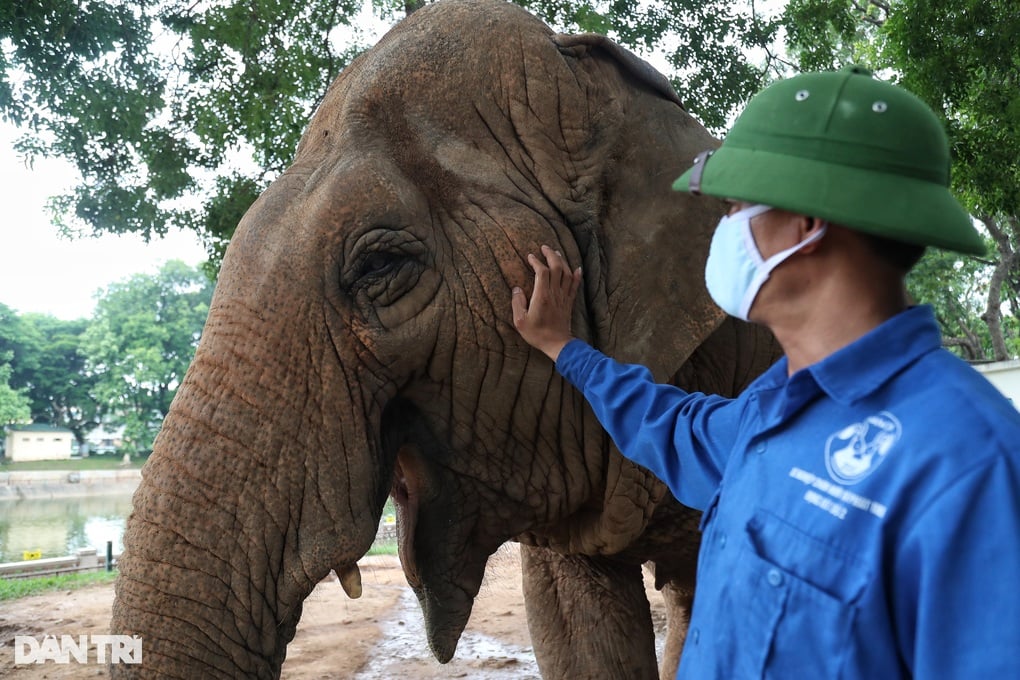
Animals Asia suggests that the best solution is to transfer the two elephants from Hanoi Zoo back to their natural habitat in Yok Don National Park (Dak Lak).
Animal welfare experts further shared that, unlike Thailand, India, or Myanmar, which have thousands of elephants, Vietnam has a very small elephant population. Therefore, conservation plans are needed to protect elephants from extinction.
The expert suggested that Vietnam urgently needs to build a natural corridor to bring together elephant herds that are currently separated in different regions. Only then will wildlife conservation truly be effective.
Source link






















































![[Photo] Closing Ceremony of the 15th Conference of the Central Committee of the 13th Party Congress](https://vphoto.vietnam.vn/thumb/402x226/vietnam/resource/IMAGE/2025/12/23/1766462841764_a1-bnd-3731-1647-jpg.webp)
























Comment (0)