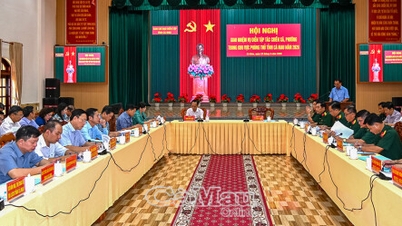
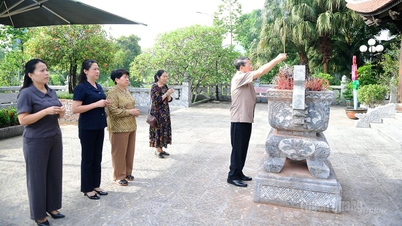
In late May 2026, at Dinh Lap Martyrs' Cemetery in Dinh Lap commune, the atmosphere was one of urgency. Each grave was carefully excavated by the relevant authorities, with biological samples taken, preserved, and information digitized. Dinh Lap Cemetery is the resting place of 82 martyrs. During this phase, the Provincial Steering Committee for the Search, Collection, and Identification of Martyrs' Remains (Steering Committee 515) collected 20 biological samples from unidentified graves.
Mr. Phan Lac Hoai Thanh, Deputy Director of the Department of Health and a member of the Provincial Steering Committee 515, stated: The remains have been buried underground for many years, directly affected by natural conditions, so the quality of biological samples is at risk of degradation. Therefore, units must meticulously carry out each step, strictly adhering to the procedures of the health sector and the military. The sealing and preservation process at the site is done systematically and scientifically to ensure the best sample quality for subsequent work.
It is known that the province currently has nearly 3,000 martyrs' graves, but more than 1,100 graves still have partial information and 990 graves lack information. The units have urgently monitored the actual situation in the area, collected documents, and standardized the data.

In this campaign, the province aims to search for and collect 3 to 5 remains of fallen soldiers; and complete DNA testing for 353 remains at 4 cemeteries: Dinh Lap (Dinh Lap commune), Bong Lau (That Khe commune), Ban Trai (Khang Chien commune), and Cao Loc (Ky Lua ward). Simultaneously, the work of clearing mines and explosive materials to facilitate the search is also being implemented.
Colonel Nguyen Cong Khue, Political Commissar of the Provincial Military Command and Deputy Head of the Standing Committee of the Provincial Steering Committee 515, stated: Identifying this as a key and urgent task, the military and medical forces have closely coordinated and advised the authorities at all levels in directing and organizing the implementation. Throughout the process, the functional forces have coordinated smoothly, ensuring progress, accuracy, absolute safety, and meeting all medical and military requirements. Through this, they are determined to complete the campaign's objectives before July 27, 2027.
To date, the Provincial Steering Committee 515 has completed the survey of the current status of all 12 cemeteries in the province, encompassing nearly 3,000 graves. Communes and wards have also mobilized maximum resources to support the specialized task force.
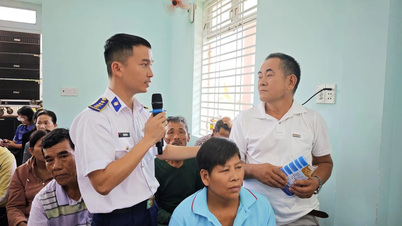
Mr. Nong Ngoc Tien, Vice Chairman of the People's Committee of That Khe commune, said: "As soon as we received the plan from the higher authorities, the commune intensified propaganda to ensure that people understood the purpose and significance of the campaign. We proactively arranged militia forces to ensure security and order in the cemetery area, and provided supplies, equipment, and assembly points so that the provincial task forces could carry out their duties smoothly and continuously."
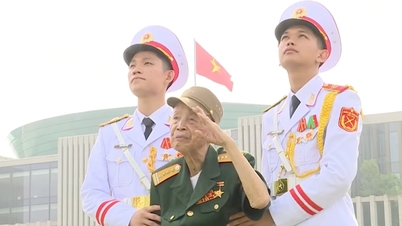
Although the war is long over, identifying the remains of fallen soldiers has become even more challenging. However, with a sense of responsibility and profound gratitude from the Party Committee, government, armed forces, and people of all ethnic groups in Lang Son province, this sacred journey continues. Each preserved biological sample, each verified piece of information, offers a glimmer of hope, helping to alleviate the pain and fulfill the long-awaited hopes of countless relatives and families of fallen soldiers across the country.
In a practical effort to commemorate the 80th anniversary of the Day of War Invalids and Martyrs (July 27, 1947 - July 27, 2027), on April 2, 2026, at the Quang Tri Ancient Citadel historical site, the National Steering Committee launched the "500-Day Campaign to Intensify the Search, Collection, and Identification of the Remains of Martyrs". Campaign objectives: - Approximately 7,000 remains of fallen soldiers have been searched for and collected. - Completed the sampling of remains of martyrs from approximately 230,000 unidentified martyrs' graves in martyrs' cemeteries and from remains that have been found and collected. - DNA testing was conducted on approximately 18,000 samples of remains of fallen soldiers. - To build, complete, and put into operation a database of genes of relatives of martyrs whose information has not been identified, serving the work of matching and identifying the remains of martyrs... |
Source: https://baolangson.vn/xac-dinh-ten-cho-cac-anh-hung-liet-si-5094415.html
![[Image] Ho Chi Minh City: Ma Lang area, Chicken-Rice Market about to change its appearance](https://vphoto.vietnam.vn/thumb/1200x675/vietnam/resource/IMAGE/2026/06/25/1782377698627_ndo_br_m1-jpg.webp)


![[Photo] General Secretary and President To Lam receives Palestinian Ambassador Saadi Salama](https://vphoto.vietnam.vn/thumb/1200x675/vietnam/resource/IMAGE/2026/06/25/1782365384740_a1-bnd-9423-8322-jpg.webp)

![[Image] Schools organize meetings and introduce teaching models to students admitted to grade 10.](https://vphoto.vietnam.vn/thumb/1200x675/vietnam/resource/IMAGE/2026/06/25/1782368077271_ndo_br_z7970052192242-1ec8daeb77a6eed1a4e9f58c564ddd3e-jpg.webp)