

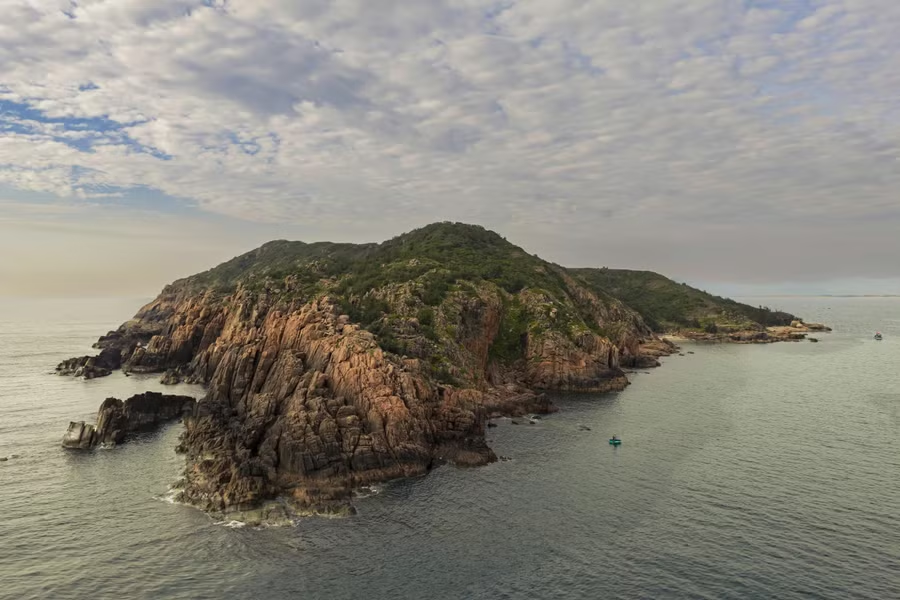
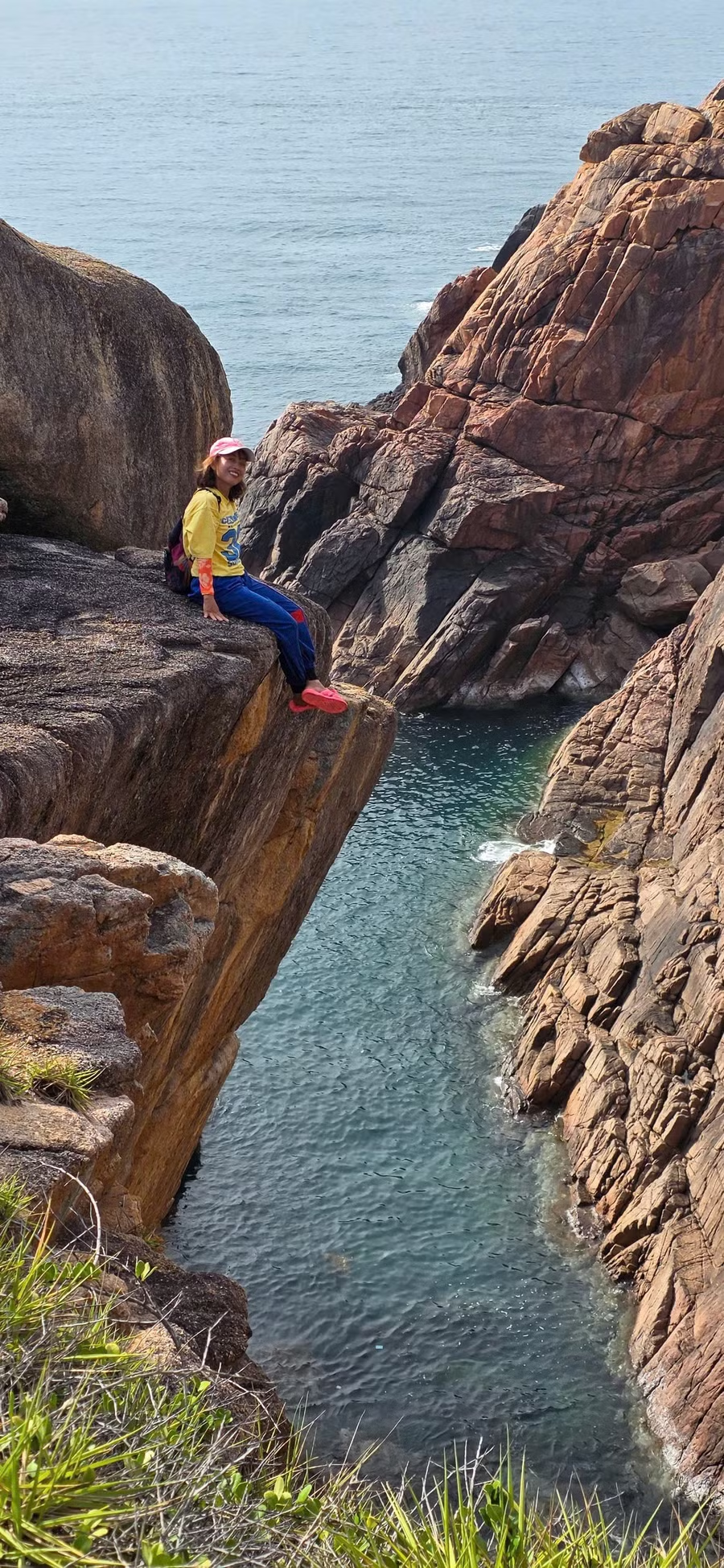
Hon Dat Island is uninhabited, boasting pristine white sand beaches and undulating, diverse rock formations, offering opportunities for swimming, mountain climbing, and survival experiences amidst nature.
Hiking to see monkeys and swimming in the sea.
Before sunrise, from Bai Xep beach, Mr. Vo Ngoc Thuan's motorboat, belonging to a fisherman who has spent many years in this area, glided over the calm waves, bringing us closer to Hon Dat. The trip lasted less than 15 minutes, but it was enough to clearly feel the change in the scenery. The seawater around the island was so clear and blue that we could see the underwater rocks, schools of small fish swimming around the boat's base, and even seaweed swaying at the bottom.
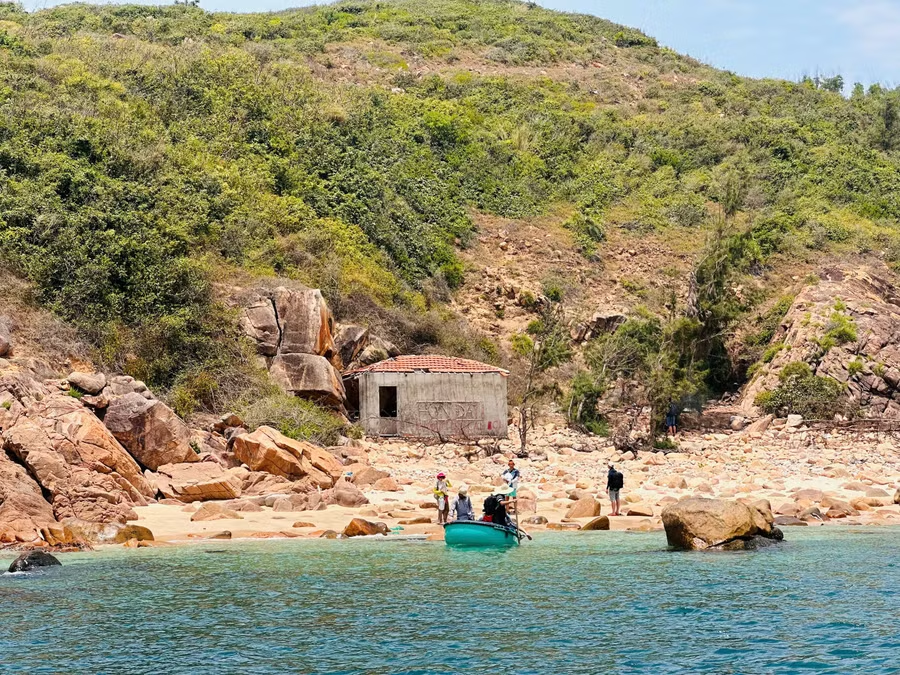
Stepping onto the island, we were greeted by a small strip of white sand interspersed with pebbles, winding along a rocky slope. Behind the sand were clumps of low bushes, wild cacti, and countless jagged rocks. We set up a makeshift tarp for shade, left our luggage, and began climbing the mountain to explore the island.
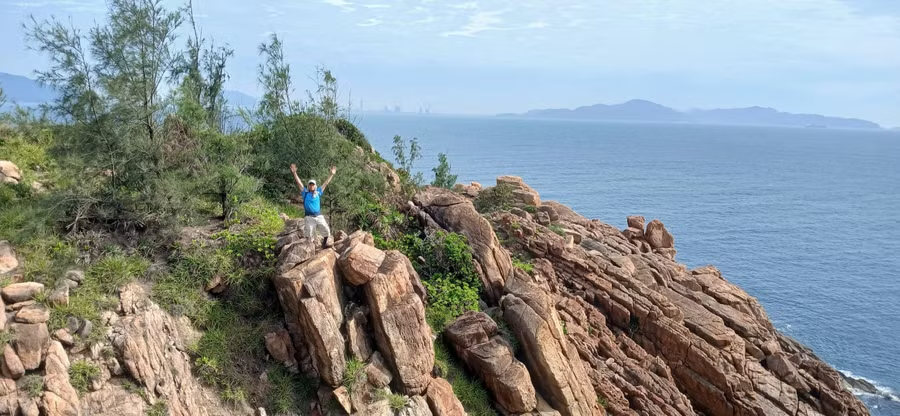
Hon Dat has no mountain trails. Following Bui Minh Chuong, who was born and raised in Bai Xep and used to be the neighborhood leader in this fishing village, we pushed through thorny bushes and jumped over jagged rocks to reach the summit.
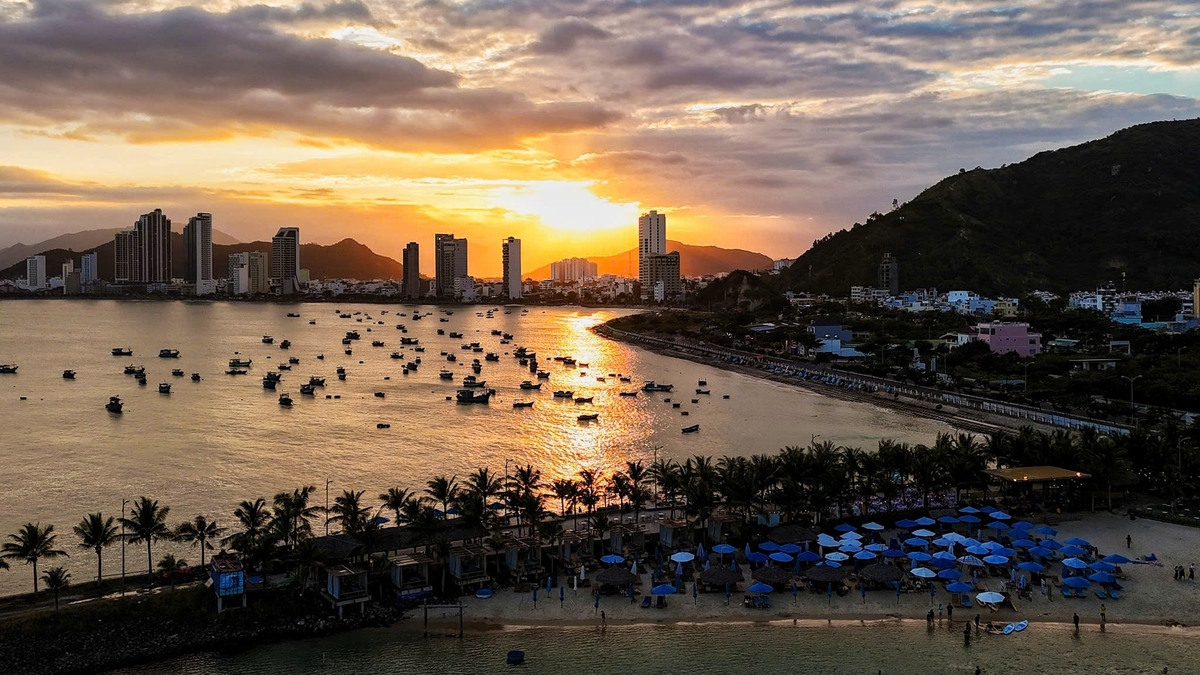
The higher you go, the stronger the sea breeze becomes, and the open space becomes expansive. From the island's summit, looking north, the entire Quy Nhon coastal city unfolds in the distance, with its high-rise buildings and coastline curving like a crescent moon. At the foot of the mountain, white-crested waves relentlessly crash against the rocky cliffs, creating a rhythmic sound like the sea's breath.
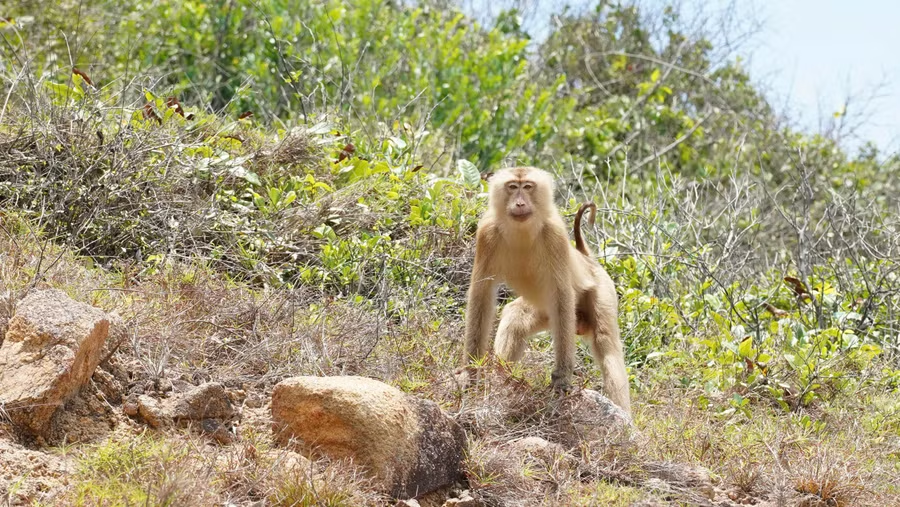
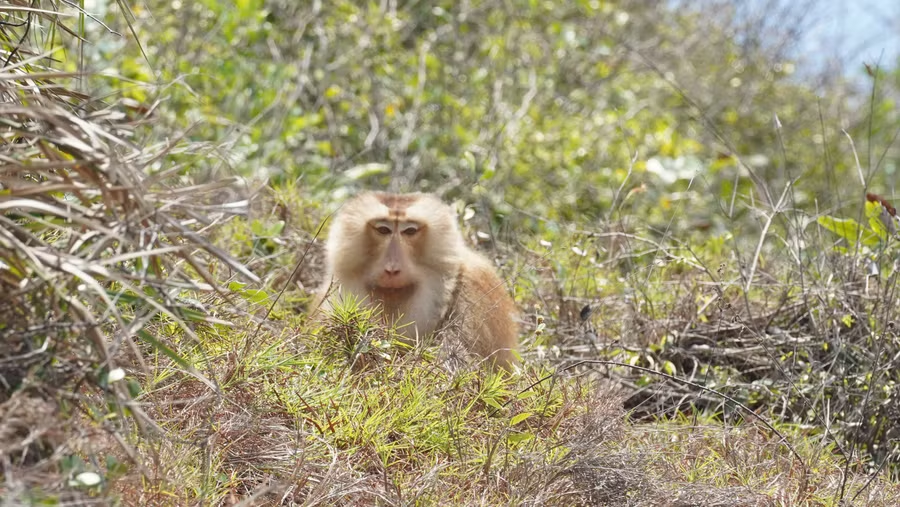
The most surprising thing was that on that uninhabited island, there was a troop of over 20 monkeys living there. From the dense bushes, these cunning monkeys poked their heads out to observe the strange group of visitors. Some quickly moved across the dry branches, while others sat still on the rocks, their eyes darting around warily. Despite being warned to carefully guard our bags of food, a moment of carelessness resulted in one monkey lunging down, tearing open a bag of our snacks and fruit, and disappearing into the bushes.
“Previously, the island had almost no large animals. Around 2016, when a company was granted permission to survey and develop ecotourism here, they brought a few monkeys along with some other animals to the island. The project was later halted, but the monkey population continued to grow, leading fishermen to call Hon Dat Island the 'Monkey Island',” Mr. Chuong recounted.
In the middle of an uninhabited island, the appearance of the monkeys made the exploration more vibrant. At the same time, it gave us the feeling of stepping into a space close to pristine nature, where humans are merely passing visitors.
Oh, Hon Dat Island, open up…
While one group climbed the mountain, others went out to the rocky shores by boat with local fishermen to dive for seafood. Without oxygen tanks, only wearing diving masks, two local fishermen took turns diving to a depth of about 4-8 meters to extract marine life. Each time they surfaced, they brought back mussels, snails, oysters, and other shellfish clinging to the rocks.
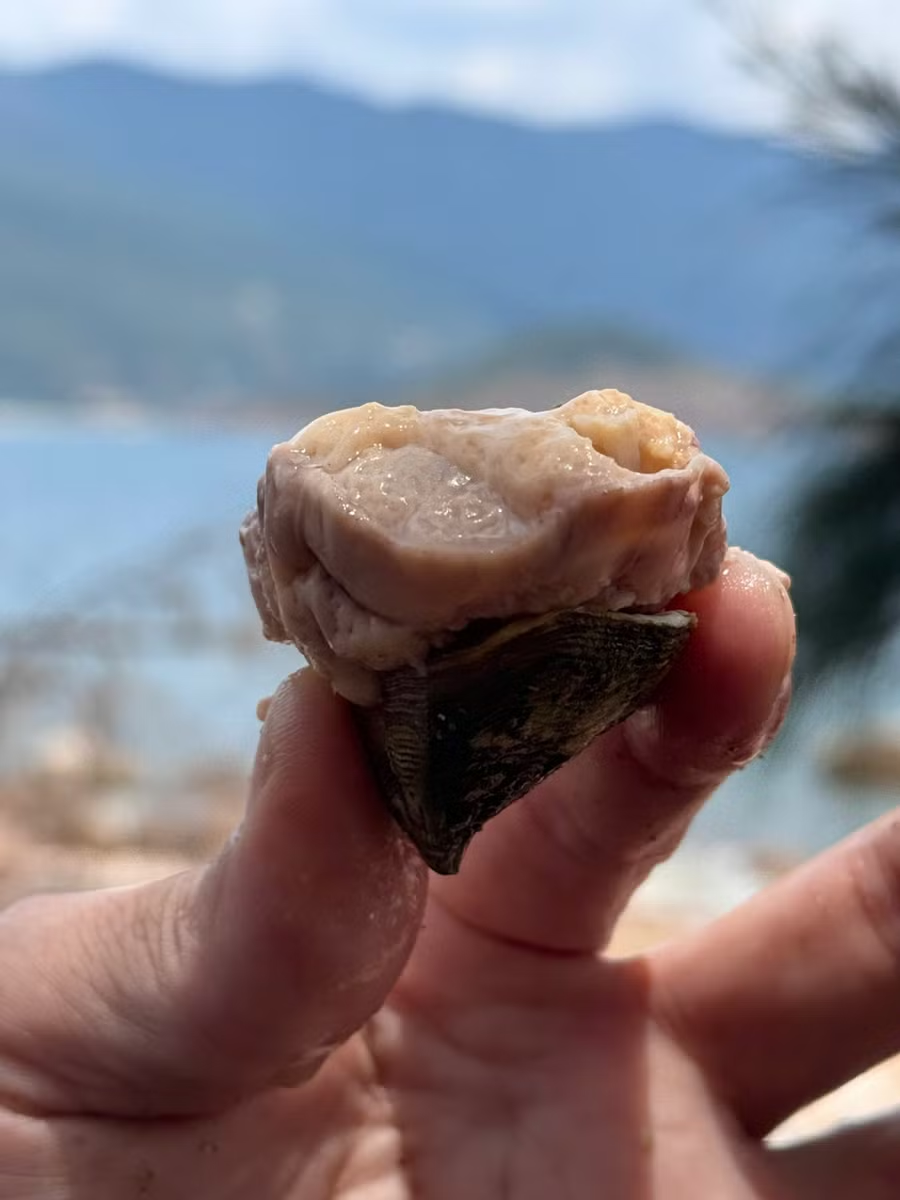
In less than an hour, the catch filled two small net bags. A campfire was lit right on the sand. Most impressive was the local delicacy, with its rough, bumpy shell resembling small concrete blocks. After boiling, the hard shell had to be cracked open with a stone to access the inside. The rich, savory, and salty taste of the sea made this rustic dish even more special amidst the island's unspoiled landscape.
Mr. Vo Ngoc Thuan recounted: "In the past, fishermen from Bai Xep often stopped at Hon Dat to take shelter from the wind, rest between fishing trips, or go up the mountain to collect firewood and hunt for seafood. Now, I still often take tourists to Hon Dat. They are foreign tourists vacationing at coastal resorts, and tourists from Quy Nhon or nearby areas like Hai Minh and Xuan Hai… who want to experience new activities here."
Meanwhile, Mr. Bui Minh Chuong remains deeply concerned about developing ecotourism in his hometown. According to him, to develop sustainable tourism, there must be models that directly create livelihoods for fishermen. Locals could invest in services such as transporting tourists to the islands, working as diving guides, catching seafood on the spot; renting out tents, life jackets, diving goggles, etc.
When the value of experiential tourism services is added to the value of marine products, the revenue will be much greater than the conventional way of exploiting and selling seafood. In particular, according to Mr. Chuong, the most important thing if we want to develop tourism in Hon Dat is to preserve the island's original pristine beauty.
From the perspective of someone who has just experienced it, we found that Hon Dat has all the conditions to form "A Day as Robinson Crusoe" style tours: taking a boat to the island in the morning, climbing mountains to admire the sea, diving to catch seafood and cooking it right there, or camping overnight amidst the sound of waves.
The most captivating aspect of Hon Dat Island lies not in its man-made structures, but in the feeling of being immersed in pristine nature. This includes the clear blue sea water, the uniquely shaped rock formations, the wild monkeys living naturally on the island, and the simple, rustic lifestyle of the fishermen of Bai Xep.
Amidst the increasing concrete development of many beaches, unspoiled spaces like Hon Dat are more valuable than ever. If developed properly and sustainably, this small island off the coast of Quy Nhon could not only become an attractive tourist destination but also create new livelihoods for the local fishing villages.
Source: https://baogialai.com.vn/trai-nghiem-hon-dat-post588068.html



























































































Comment (0)