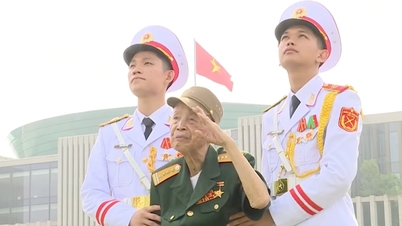
However, the heart of that hero stopped beating on June 24, 2026, due to old age and serious illness. Although we know that this is the natural law of life, the passing of Hero of the People's Armed Forces La Van Cau still leaves an irreplaceable void in the hearts of the people nationwide. This includes us, those of us who were fortunate enough to meet and talk with him many times during his lifetime.
 |
| A sketch of soldier La Van Cau, 1952. |
Born in 1932, he was the only child in a Tay ethnic family from Phong Nam commune, Trung Khanh district, Cao Bang province (now Dinh Phong commune, Cao Bang province). In 1948, although not yet old enough to enlist, he volunteered. “Back then, the recruiters told me, ‘You’re too young, you can’t go anywhere yet, come back.’ But my resolve was firm, my heart remained unchanged. I told the recruiters that I was indeed young, but young people can do small things. The organization could assign me to be a liaison for the unit. When I grew up and felt confident in handling a gun, they could let me fight directly. My heart told me that I would do whatever benefited the community, and I wouldn’t take anything that didn’t benefit the community, not even a single strand of hair,” recounted Colonel La Van Cau, Hero of the People’s Armed Forces.
The heartfelt words of the young La Van Cau convinced the organization. Later, in the ranks of Company 671, Regiment 174, Division 316 (now Division 316, Military Region 2), he demonstrated his determination through 29 battles, large and small, during the resistance against French colonialism. From the ambush at Bong Lau - Lung Phay (on Highway 4), which eliminated many enemy troops and contributed to creating a favorable battlefield situation, to the opening battle to liberate Dong Khe in the Border Campaign (Autumn-Winter 1950), our first general counter-offensive aimed at "opening the border gate," creating a crucial historical turning point for our country's revolution. Immediately after the campaign ended, he was awarded the First Class Resistance Medal.


Later, whenever he recalled his injury, Hero La Van Cau still felt a pang of regret. Although the team's mission to detonate explosives to open a path was successful, the losses were heavy; all four survivors were wounded, and the rest perished. “In that perilous situation, we thought of nothing else but ourselves, fueled by our determination to complete the mission and finish the battle as planned. Only then could the country be liberated sooner. I will never forget begging Squad Leader Nong Van Pheo to help me cut off my arm so it wouldn't be a hindrance. Knowing I was an only child and severely wounded, he absolutely refused, saying, ‘No, Cau, you can't. Go back and let the others do it,’ but I remained determined. Once my arm was gone, I continued to carry the explosive charge with my remaining hand, charging forward to destroy the bunker and open the way for the unit to charge and achieve victory,” he recounted.
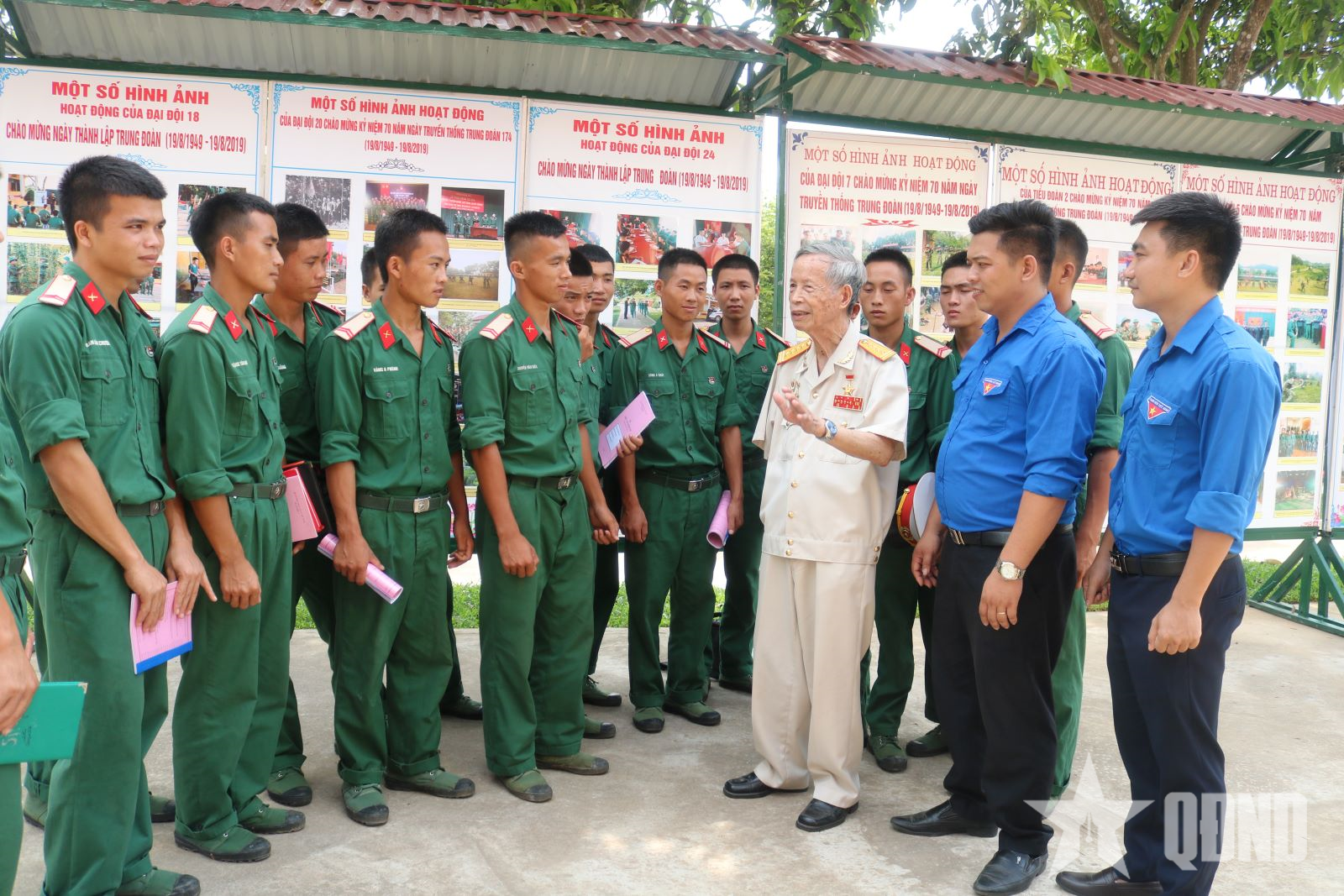 |
| Colonel La Van Cau, Hero of the Armed Forces, recounts traditional stories to young soldiers of Regiment 174 (Division 316, Military Region 2). |
Following the 1950 Border Campaign, Comrade La Van Cau had the honor of being selected as an outstanding delegate to attend the All-Army Emulation Congress, which opened on April 12, 1952. In his speech at the closing session of the congress on April 18, 1952, General Vo Nguyen Giap, Commander-in-Chief of the People's Army, mentioned Comrade La Van Cau with deep pride: "There are comrades like La Van Cau who are shining examples because of their hatred of the enemy, their love for their comrades, their spirit of obeying orders, and their selfless dedication to the people, with touching gestures such as cutting off their own hands to fulfill their duties."
Later, Comrade La Van Cau had the honor of being one of the 50 military delegates to the First National Congress of Emulation Fighters and Exemplary Cadres. Notably, he was then one of the first seven soldiers nationwide to be awarded the title of Hero of the People's Armed Forces by President Ho Chi Minh .
After the war, despite suffering serious injuries, he continued to work in the Army, holding many positions in propaganda, youth work, and personnel management; he was promoted to the rank of colonel and retired in 1996. After retirement, he continued to participate in social work and was a former member of the Central Committee of the Vietnam Fatherland Front. “Like my friends, as we get older, our wounds ache when the weather changes, but we never complain. We are proud to have contributed our blood and bones to the Fatherland and the people,” he shared.


In every conversation with us, Hero La Van Cau always maintained an optimistic, sincere attitude and a remarkably admirable humility. He often boasted that his left hand was no different from his right. "You see, no one in our Army gets to disobey regulations their whole life. Salute with your left hand, it's still very impressive!" he said with a laugh.
Source: https://www.qdnd.vn/anh-hung-luc-luong-vu-trang-nhan-dan/trai-tim-con-dap-con-chien-dau-1046079
![[Photo] General Secretary and President To Lam receives Palestinian Ambassador Saadi Salama](https://vphoto.vietnam.vn/thumb/1200x675/vietnam/resource/IMAGE/2026/06/25/1782365384740_a1-bnd-9423-8322-jpg.webp)

![[Image] Ho Chi Minh City: Ma Lang area, Chicken-Rice Market about to change its appearance](https://vphoto.vietnam.vn/thumb/1200x675/vietnam/resource/IMAGE/2026/06/25/1782377698627_ndo_br_m1-jpg.webp)
![[Image] Schools organize meetings and introduce teaching models to students admitted to grade 10.](https://vphoto.vietnam.vn/thumb/1200x675/vietnam/resource/IMAGE/2026/06/25/1782368077271_ndo_br_z7970052192242-1ec8daeb77a6eed1a4e9f58c564ddd3e-jpg.webp)