

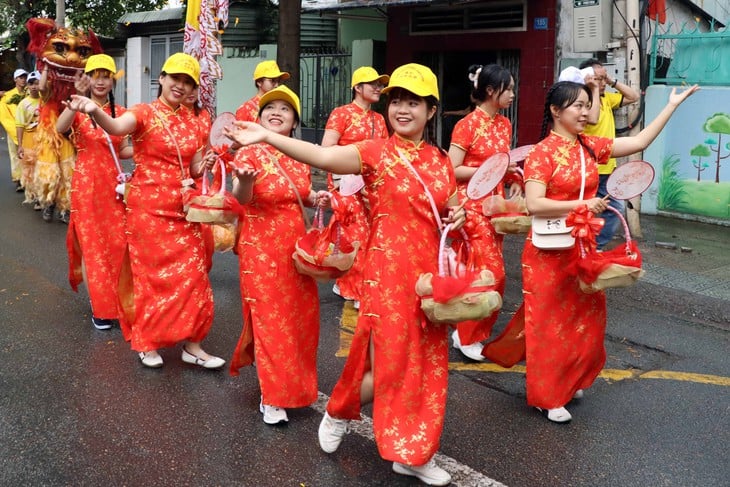
Approximately 800 performers in traditional costumes participated in the procession of the deity along the streets and markets of Bien Hoa (Tran Bien ward, Dong Nai province ) as part of the annual Ong Pagoda festival - Photo: A Loc
On February 26th (the 10th day of the first lunar month), the 11th Ong Pagoda Festival in 2026 was enlivened by the procession of the deity around Bien Hoa market and the surrounding streets, attracting thousands of locals and tourists.
This is an annual festival that takes place at the beginning of the Lunar New Year. This year, the Ong Pagoda festival will last for 5 days, from February 25th to March 1st (corresponding to the 9th to 13th days of the first lunar month of the Year of the Horse).
The "Nghinh Than" ceremony is an activity where folk deities, those who contributed to the reclamation and development of the Bien Hoa - Dong Nai region, are brought to visit the people at the beginning of the new year. Through this, people pray for a new year of national peace and prosperity, favorable weather, and a happy and prosperous life for the people.
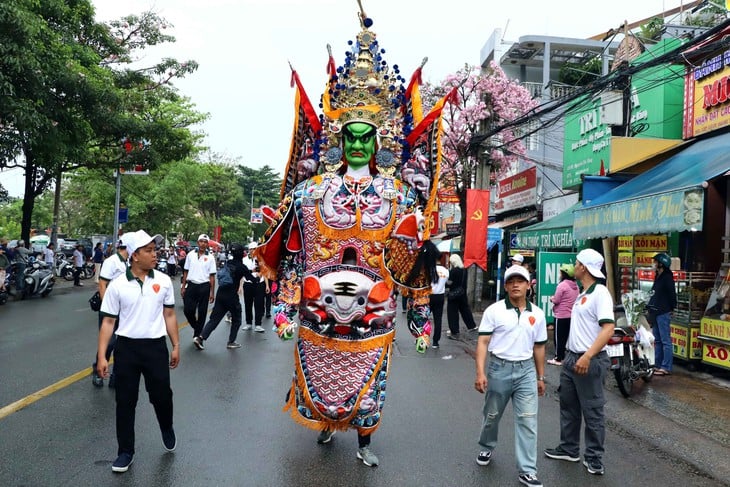
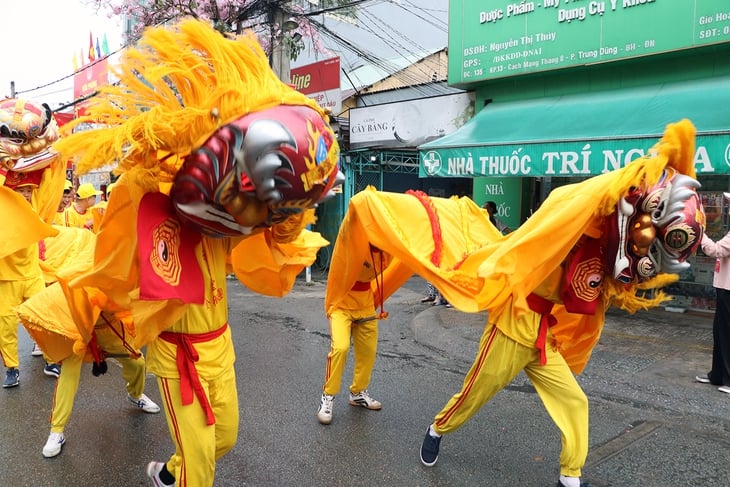
This year, the procession consisted of approximately 800 performers adorned with magnificent flags and banners, featuring novel costumes depicting mythical figures, lion and dragon dances, and traditional music performances of distinctive Chinese melodies, creating a vibrant and festive atmosphere on the river.

Ong Pagoda is an annual festival in Dong Nai that attracts a large number of locals and tourists every spring.
The street parade featured numerous folk dance performances by Chinese associations; models of generals and historical figures; lion and dragon dance troupes; and traditional Teochew and Minnan music, creating a colorful and lively street festival that attracted thousands of locals and tourists.
Besides the procession of the deity, the Ong Pagoda festival also includes many other activities such as performances of traditional Vietnamese music, cải lương (reformed opera), and classical theater; chess and checkers exchanges; lion and dragon dances, martial arts demonstrations, and folk games; Vietnamese and Chinese calligraphy exchanges; and the release of auspicious balloons.
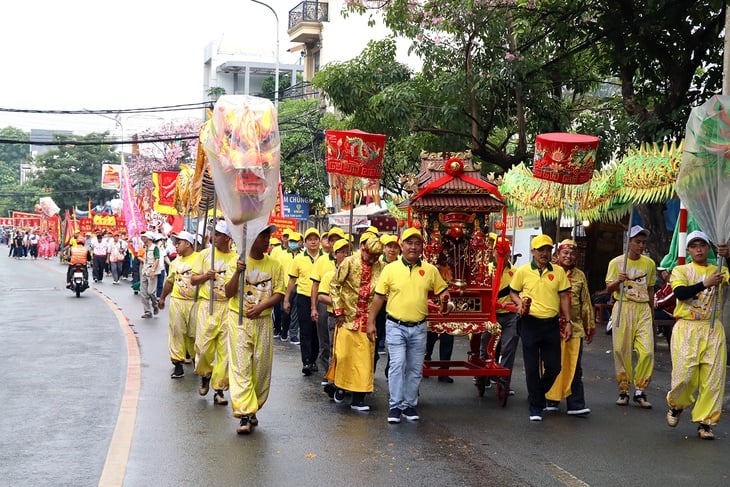
Despite the light rain, processions carrying the deity still made their way through many streets and markets in Bien Hoa.

This year, the area for the lantern-releasing ceremony on the Dong Nai River has been expanded, with no limit on the number of participants. The organizing committee has coordinated with relevant units to implement plans to ensure security, traffic safety, environmental hygiene, and fire prevention and control.
According to the organizers, the Ong Pagoda Festival (Seven Palaces Ancient Temple in Bien Hoa) is maintained and organized annually to preserve and promote the value of the national intangible cultural heritage. At the same time, it creates a cultural and spiritual space, connecting the Chinese and Vietnamese communities through traditional rituals, ceremonies, and folk cultural, artistic, and sporting activities.
This will gradually lead to the formation of unique cultural and religious tourism products in Dong Nai province, attracting tourists and locals to visit; meeting the needs for cultural and religious activities and healthy entertainment for people during the New Year.
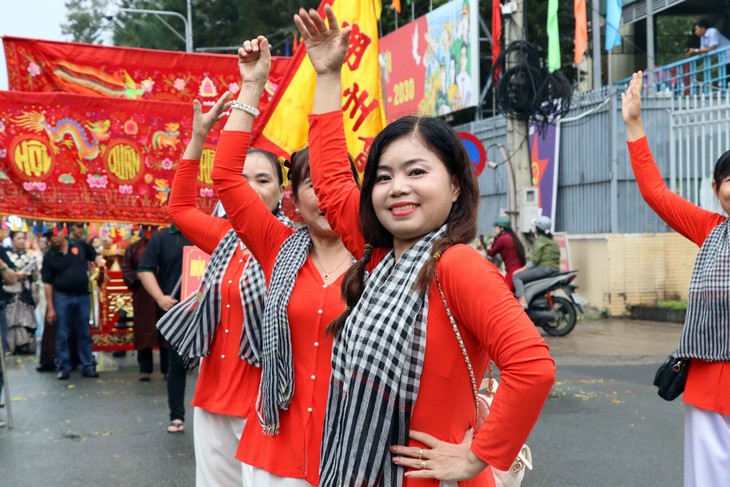
The groups wearing traditional Vietnamese costumes interspersed throughout the festival create a unique cultural fusion.


The Ong Pagoda Festival promotes cultural exchange between China and Vietnam. Ong Pagoda (also known as That Phu Ancient Temple) was built in 1684 on Pho Island (now Tran Bien Ward), adjacent to the Dong Nai River. This is the oldest temple in Southern Vietnam, marking a historical milestone in the coexistence of the Vietnamese and Chinese communities in the process of reclaiming land, establishing settlements, and protecting the Bien Hoa - Dong Nai region. The Ong Pagoda Festival is a folk festival organized by local people for a long time, associated with the belief in worshipping the deity Quan Thanh De Quan. Maintaining and organizing the annual festival at Ong Pagoda aims to preserve and promote the intangible cultural values of the locality, meet the needs of folk beliefs, connect and exchange cultural ideas within the community, and demonstrate the cultural integration between China and Vietnam. Ong Pagoda was classified as a National Historical and Cultural Monument in 2001. In November 2023, the Ong Pagoda Festival was recognized as a National Intangible Cultural Heritage. |
According to Tuoi Tre Newspaper
Source: https://baoangiang.com.vn/tray-hoi-chua-ong-a477908.html
![[Photo] First session of the 14th Congress of the Vietnam Trade Union](https://vphoto.vietnam.vn/thumb/1200x675/vietnam/resource/IMAGE/2026/06/03/1780465947883_ndo_br_img-3852-jpg.webp)























![[Video] Sunset at Lap An Lagoon – Where the sun sets over the fishing nets](https://vphoto.vietnam.vn/thumb/1200x675/vietnam/resource/IMAGE/2026/05/31/1780192137701_beach-landscape-sea-water-nature-grass-745871-pxhere-com.jpeg)
























Comment (0)