

Recently, a series of tragic drowning incidents occurring during the summer holidays have caused considerable anxiety among parents. This situation continues to raise alarm bells about the gaps in the management, supervision, and safety education of young children. According to Dr. Vu Thu Huong, former lecturer in the Department of Primary Education, Hanoi Pedagogical University, many families still have a complacent attitude towards the potential dangers even in their children's familiar living environments.
According to Dr. Vu Thu Huong, drowning in children is no longer a story of "unexpected accidents," but largely stems from a lack of preparation and supervision by adults.
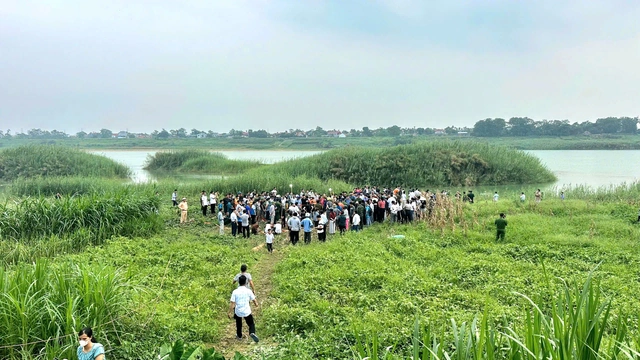
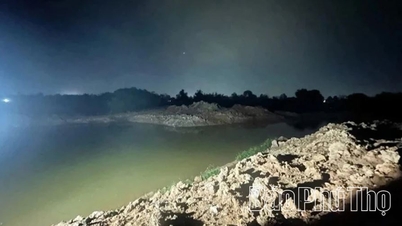
The scene of the recent drowning incident in Phu Tho where five male students drowned. Photo: Nguyen Hoang.
"Many parents think that simply telling their children 'don't go to the ponds' is enough. But children are naturally active and curious, especially during the summer when they have so much free time. Just one moment of carelessness can lead to heartbreaking consequences," she said.
According to the expert, the worrying thing is that many families are now "giving their summer vacation to their phones." Children are at home, but parents think they are safe because they aren't going far. However, in reality, many children go to rivers, lakes, canals, and flooded structures to swim without the adults knowing.
She argued that drowning prevention skills are still undervalued in Vietnam. Children learn a lot of cultural knowledge but lack basic survival skills. They are not taught enough about how to handle dangerous situations such as falling into water or how to protect themselves.
"Knowing how to swim isn't the only way to be safe. More importantly, children need to know where the danger lies, know how to refuse invitations to swim in rivers, know how to call for help, and absolutely not try to rescue a friend instinctively when they lack the necessary skills," said Dr. Vu Thu Huong.
According to education expert Vu Thu Huong, many accidents occur when one child is in danger and other children rush to save them, leading to particularly serious consequences. Therefore, children need to be taught emergency response skills from an early age.
Besides the role of the family, Dr. Vu Thu Huong believes that schools and local authorities need to change their approach and cannot simply promote summer activities as a temporary campaign.
"Currently, extracurricular activities are too theoretical. Children need to learn practical skills, practice scenarios, learn how to use life jackets, call for help, and escape skills in water…," she said.
Dr. Vu Thu Huong advises parents not to be complacent when letting children play near rivers, lakes, ponds, or water tanks, even in familiar areas near home. For young children, the most important principle is to always have an adult supervising them.
We need a human resource development strategy that starts from the ground up.
Dr. Vu Thu Huong believes that to reduce heartbreaking incidents like child drowning, it's not enough to just have short-term awareness campaigns during the summer; instead, it needs to be viewed as a comprehensive human development strategy.
According to her, the government needs a long-term strategy for child development from birth to adulthood, which should not only focus on academic knowledge but also pay special attention to life skills, social skills, communication skills, reflexes in the face of danger, and the ability to protect oneself.
"For many years, we have placed too much emphasis on grades and academic achievements, but we have not had comprehensive and thorough research on the development of Vietnamese people today. A well-developed child is not only defined by academics but also by survival skills, communication skills, behavior, and the ability to adapt to society," said Dr. Vu Thu Huong.

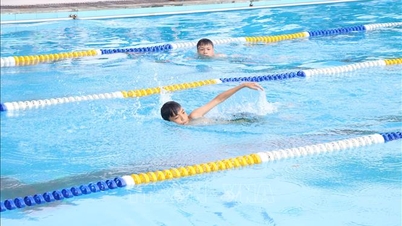
Parents should not be complacent when letting children swim, play, etc. Photo: Quynh Mai.
According to the expert, to develop effective policies, large-scale investigations, surveys, and research on Vietnamese children and adolescents are needed, focusing on a comprehensive and multi-dimensional approach. These studies must fully assess everything from their living environment, family education, social skills, and mental health to their habits of using electronic devices and their ability to handle dangerous situations.
"Only with complete data and serious research can we know what children are lacking and where their weaknesses lie, in order to develop appropriate educational programs. Otherwise, solutions will remain piecemeal and reactive," emphasized Dr. Vu Thu Huong.
Dr. Vu Thu Huong believes that educating children about safety skills should be done regularly and continuously throughout the school year, starting from preschool, instead of just reinforcing reminders during the summer vacation.
Source: https://suckhoedoisong.vn/tre-em-duoi-nuoc-noi-am-anh-ky-nghi-he-169260524154501698.htm






























































































Comment (0)