

The World Bank (WB) believes that the outlook for global growth is brighter. However, the increase in new trade barriers and the spread of protectionist policies pose a long-term threat to global growth.
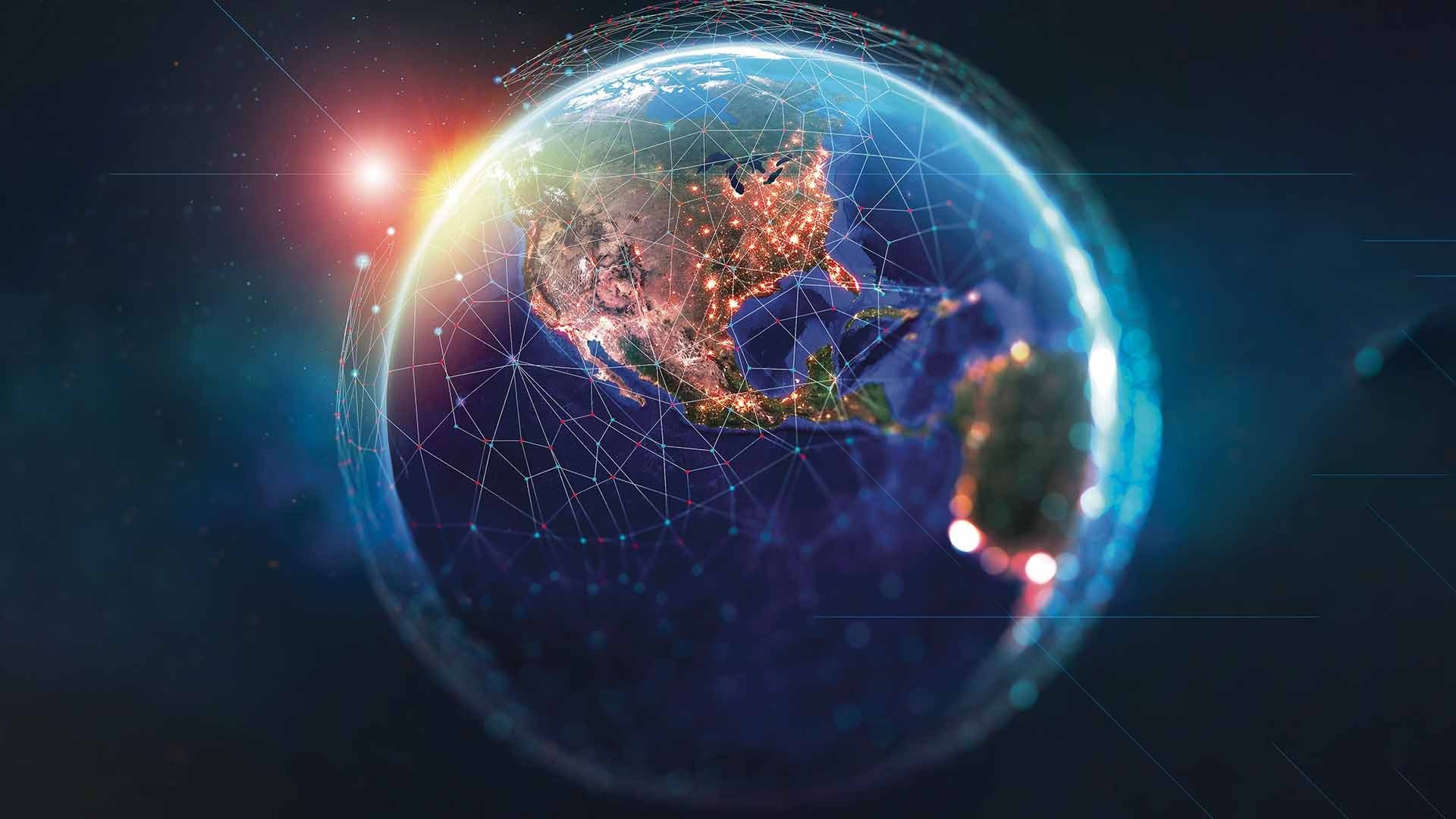 |
| The World Bank believes that the outlook for global growth is becoming brighter. |
In its latest Global Economic Prospects report, the World Bank raised its forecast for global growth to stabilize at 2.6% this year, higher than its January forecast of 2.4%, and predicts it will rise to 2.7% by 2025.
A bleak outlook for the second half of 2024?
Indermit Gill, the World Bank's chief economist, stated, "Four years after the 'shake-ups' caused by the Covid-19 pandemic, military conflicts in Ukraine and the Middle East, inflation, and monetary tightening, it appears that global economic growth is stabilizing."
However, sluggish growth continues to plague the world's poorest economies, which are still struggling with inflation and high debt burdens. The World Bank notes that over the next three years, economies accounting for more than 80% of the world's population will experience slower growth than in the decade before the pandemic. While better forecasts are being driven by the resilience of the world's largest economy – the US – advanced European economies and Japan are only growing at a rate of 1.5% per year, with output remaining low. In contrast, developing and emerging economies are growing at a rate of 4%, led by China and Indonesia.
In its World Economic Outlook report, the United Nations (UN) assessed the global economic outlook as improved compared to previous forecasts, with major economies avoiding a severe recession, although still facing some challenges. Most major economies have managed to reduce inflation without causing unemployment to rise and trigger a recession.
Specifically, the latest UN report forecasts that the global economy will grow by 2.7% in 2024 and 2.8% in 2025, a slight increase from the earlier forecast of 2.4% for 2024 and 2.7% for 2025. The UN raised its world economic forecast thanks to more optimistic economic prospects in the US, which could achieve 2.3% growth this year, and several leading emerging economies such as Brazil, India, and Russia. China's economy is projected to grow by 4.8% in 2024, a slight increase from the 4.7% forecast in January.
Meanwhile, the Organization for Economic Cooperation and Development (OECD) raised its forecast for global economic growth this year and next, thanks to the strong recovery of the US economy, while the Eurozone lagged behind. Accordingly, the global economy is projected to maintain its growth rate of 3.1% this year, the same as last year, and accelerate to 3.2% next year. In its February 2024 report, the forecasts for global economic growth this year and next year were 2.9% and 3%, respectively.
However, in the second half of the year, despite improved prospects, the global economy continued to face significant uncertainty from the Russia-Ukraine conflict and the Israel-Hamas "hotspot" in Gaza, which could spill over into the wider region. Trade tensions between the world's two largest economies, the US and China, also increased and could further destabilize international trade. The EU considered new tariffs on Chinese green energy technology, amid growing concerns about the country's excess industrial capacity…
Against this fragile backdrop, the World Bank notes that “trade-distorting policies” such as tariffs and subsidies have increased sharply since the Covid-19 pandemic. The World Bank warns that such measures are tending to distort supply chains, making them less efficient and “redirecting” trade flows to avoid import tariffs.
In line with this view, UN experts argue that the economic outlook is only cautiously optimistic, as persistently high interest rates, bad debt, and escalating geopolitical risks continue to hinder stable and sustainable economic growth. Severe climate shocks pose numerous challenges to the global economic outlook, potentially jeopardizing decades of development achievements. Rapid technological change – including artificial intelligence – is bringing both new opportunities and risks to the world economy.
Shaping a multipolar international economic balance of power.
The website Eurasiareview commented that world politics is in turmoil and its center of gravity is shifting. Western Europe and parts of the East are in a state of uncertainty, and the old continent of Europe is losing its appeal.
In early 2010, commenting in the Telegraph, Professor Gary Becker, the 1992 Nobel laureate in economics, asserted that "Asia will be the new center of attraction for the world." It would be beneficial for the United States to accept the fact that objective demographic, economic, and social developments are transforming Asia into the world's leading center of attraction in the 21st century.
The shift in focus from the Atlantic to East and South Asia is an inevitable development that has been unfolding for decades. An interesting political issue is that Moscow and Washington have only been indirectly involved in this process. From now on, the growing influence of countries in this region will not be negated or hindered by their political prowess.
In this context, the Russia-China relationship is currently at its peak. These two economic giants are together forming a solid foundation for a new, multipolar and balanced international order. According to Professor Gary Becker, the basis of Russia-China cooperation has stood the test of nearly 30 years, weathering numerous international crises in recent decades. Therefore, the West must understand that "the sand they feel shifting beneath their feet is much deeper, and these are unstoppable seismic shifts."
According to the 2024 Asian Economic Outlook and Integration Report, published at the Boao Forum in March 2024, the Asian economy continues to face numerous internal and external challenges, but will maintain relatively high growth rates thanks to strong consumer drivers and proactive fiscal policies.
Asia's trade and tourism sectors are expected to reverse their downward trend, driven by key drivers such as the strong growth of digital commerce, the rapid recovery of tourism, and progress in the implementation of economic and trade agreements… such as the Regional Comprehensive Economic Partnership (RCEP).
In terms of attracting investment, Asia is considered "still vibrant and an attractive investment destination," with FDI flows mainly into four key sectors: consumer goods, industry, electronics, and semiconductors. This is a positive sign, because when more investment flows into sectors like advanced manufacturing, it will contribute to improving productivity and significantly increasing the added value of Asian products.
In addition, a series of macroeconomic regulatory policies by major economies are expected to continue to have an effect and contribute to consolidating the recovery momentum of the Asian economy this year.
Asia currently boasts three of the world's five largest economies. China alone contributes over 30% to global growth. Its rapid development in recent years has made Asia an indispensable link in areas such as trade, investment, and manufacturing. The most noticeable impact is the shift in the economic center of gravity from the West to the East, thereby shaping a more multipolar and balanced international economic landscape.
For countries in the region, the stable development of major economies creates numerous opportunities for market expansion, attracting foreign investment, and expanding supply chains. Furthermore, the leading role of these economies is a crucial prerequisite for promoting exchange, cooperation, and regional integration.
Of course, along with the bright future come numerous challenges, requiring smaller economies in the region to strive to improve productivity, product quality, as well as infrastructure and the business environment in order to enhance their competitiveness in trade and investment.
As a central hub in global supply chains, producing and exporting a wide range of goods to the world, the Asian regional economy is increasingly asserting its significant role in the global economy. The growing economic cooperation and integration among Asian countries will undoubtedly help the region further enhance its position in the future.
Source: https://baoquocte.vn/kinh-te-toan-cau-trien-vong-dan-tuoi-sang-275701.html

![[Photo] President Luong Cuong presides over the welcoming ceremony for the President of the European Council, Antonio Costa.](/_next/image?url=https%3A%2F%2Fvphoto.vietnam.vn%2Fthumb%2F1200x675%2Fvietnam%2Fresource%2FIMAGE%2F2026%2F01%2F29%2F1769662707713_ndo_br_1-jpg.webp&w=3840&q=75)


![OCOP during Tet season: [Article 4] Elevating local products](/_next/image?url=https%3A%2F%2Fvphoto.vietnam.vn%2Fthumb%2F402x226%2Fvietnam%2Fresource%2FIMAGE%2F2026%2F01%2F29%2F1769652810578_2935-z6982071462129_649e82db06fb2f2ea701388b1f5f5b0b-173322_176-185229-202804_457.jpeg&w=3840&q=75)


![OCOP during Tet season: [Part 3] Ultra-thin rice paper takes off.](/_next/image?url=https%3A%2F%2Fvphoto.vietnam.vn%2Fthumb%2F402x226%2Fvietnam%2Fresource%2FIMAGE%2F2026%2F01%2F28%2F1769562783429_004-194121_651-081010.jpeg&w=3840&q=75)

![OCOP during Tet season: [Part 2] Hoa Thanh incense village glows red.](/_next/image?url=https%3A%2F%2Fvphoto.vietnam.vn%2Fthumb%2F402x226%2Fvietnam%2Fresource%2FIMAGE%2F2026%2F01%2F27%2F1769480573807_505139049_683408031333867_2820052735775418136_n-180643_808-092229.jpeg&w=3840&q=75)





Comment (0)