

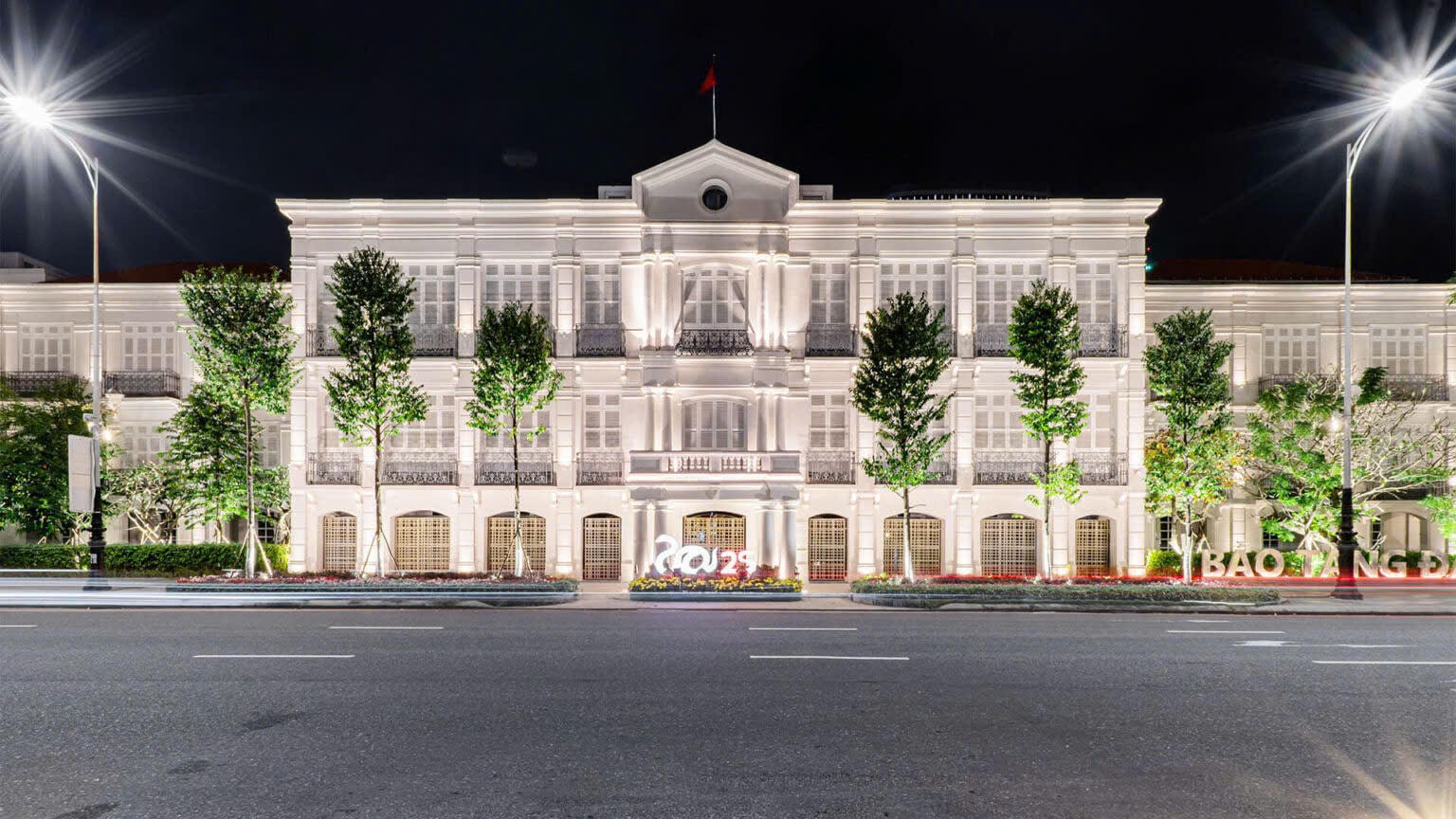
Da Nang today is larger, more populous, and offers more opportunities, but along with these advantages comes the challenge of how to develop the city while preserving its identity, memories, and the cultural essence that has nurtured it throughout its history.
That story isn't just about urban planning or the new buildings that spring up, but also about how people behave, interact, share, and preserve the living spaces around them.
Culture is not something distant; it is directly and subtly present in people's lives. Simple things like saying thank you, giving way, maintaining silence in public, putting a chair back in its place after leaving a restaurant, or keeping the street clean…
And a civilized city is not measured by the height of its buildings, but by how its people treat each other and the space around them. Sometimes, simply slowing down allows us to hear the breath of culture in every tree, every street corner, every old tiled roof.
During the restructuring of the two-tiered government apparatus, many old administrative buildings became deserted. Viewing them merely as assets to be liquidated would be a great waste, because within each room, each brick still holds the memories of the community – places where countless meetings and stories of a period of development took place.
Now, as Da Nang seeks to revitalize itself, these buildings can enter a different life cycle – one that is closer and more connected to the people. The effective use of these former public buildings is a practical necessity and a major concern for the people.
According to statistics, the entire city currently has more than 1,600 offices and public service facilities; after the merger, only a portion will be needed, while the rest will be surplus land and buildings.
The city government has implemented a review and handling of vacant office buildings following the merger, avoiding waste of public assets and utilizing some advantageous locations to develop public spaces. This opens up opportunities for buildings that were once administrative headquarters to be "reborn" into spaces serving the community.
And Da Nang could absolutely be a pioneer in this direction – by transforming a portion of its surplus office space into friendly community areas where the elderly can stroll, children can play, and young people can have a space for creativity; spaces with clean restrooms, civilized waste collection and processing points, and tidy parking lots for residents.
These seemingly small amenities are actually a measure of urban culture. A livable city begins with clean corners, friendly rest areas, and places where people feel respected and learn to respect others.
The city once led the nation with its "Comfort as Home (CAH)" program, where many hotels and restaurants voluntarily opened their restrooms for free use by residents and tourists. If this spirit is spread to new public spaces, it will contribute to creating the image of a "livable" city, not just in slogans, but in everyday experiences.
The government has issued clear regulations to enable localities to proactively reuse surplus office buildings for the benefit of the community and culture. However, what is more important is not the regulations themselves, but the vision of each locality, daring to see in these old buildings a new opportunity for life, instead of just viewing them as a burden awaiting disposal.
In line with the government's call for "public and private sectors working together to build a strong and prosperous nation," the revitalization and reactivation of public, cultural, and creative spaces in former headquarters is a concrete example at the local level.
When the State creates mechanisms and opens pathways, and private individuals, businesses, and the community work together to operate, invest in, and preserve these seemingly "surplus" spaces, they become connecting points between public and private, between the government and the people, between memory and the future. This is how the spirit of "co-building the nation" enters daily life, not only in large forums, but in every street corner, rooftop, park, and small courtyard of a city that is changing every day.
An old wall, if preserved in the right place; a courtyard, if covered with greenery; an old meeting room, if opened to the community – all can become pieces of a cultural city. Because sometimes, the way we renew what is old is also the way we engage in dialogue with ourselves – with the memories of a livable city.
Source: https://baodanang.vn/tru-so-cu-khong-gian-moi-3306713.html
![[Photo] National Assembly Chairman Tran Thanh Man working with the Standing Committee of the National Assembly's Ethnic Council](https://vphoto.vietnam.vn/thumb/1200x675/vietnam/resource/IMAGE/2026/05/21/1779337435930_ndo_br_1-jpg.webp)

![[Image] "Journey of Hope" promotes the organ and tissue donation movement in Vietnam.](https://vphoto.vietnam.vn/thumb/1200x675/vietnam/resource/IMAGE/2026/05/20/1779294400833_1-8910-jpg.webp)





















































Comment (0)