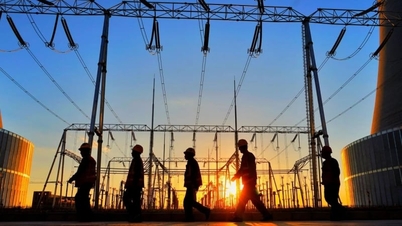
China has just announced a new phase of its energy development plan, aiming for 50% of its electricity production to come from non-fossil fuel sources by 2030, up from the 42.3% target set for 2025.

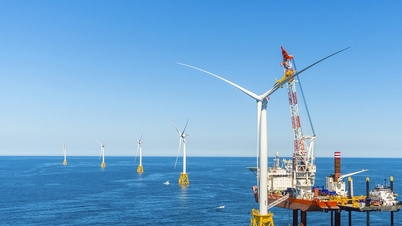
China aims to have half of its electricity production come from non-fossil fuel sources by 2030. Photo: SCMP.
This is one of the key directions to promote the energy transition and realize the commitment to peak carbon emissions before 2030.


According to the plan, wind and solar power will account for approximately 30% of total electricity production by 2030, up from 22% in 2025. At the same time, these two energy sources will account for more than 50% of the country's total installed power generation capacity, equivalent to approximately 2,700 GW, up from 47% by the end of 2025.
Yao Zhe, a policy advisor at Greenpeace East Asia, noted that the new targets are still quite conservative compared to the pace of renewable energy development in China in recent years. He believes that actual electricity production from renewable sources could increase even faster than the official targets if current investment trends are maintained.
However, he also suggested that electricity sector emissions could continue to rise between 2026 and 2030 if electricity consumption maintains a growth rate of over 5% per year. Nevertheless, the new target remains consistent with China's roadmap to peak carbon emissions by 2030.
As the world's largest renewable energy developer and also its largest carbon emitter, China aims to reduce the carbon intensity of its electricity sector by more than 10% over the next five years. This target reflects emissions per unit of electricity produced, rather than total emissions.
According to analyst Qi Qin of the Center for Energy and Clean Air Research, the carbon intensity reduction target remains quite modest. He argues that if electricity production continues to increase by about 4-5% annually, the emission intensity of the power sector needs to decrease by 17-23% by 2030 for total emissions to remain at levels no higher than 2025.



Besides expanding renewable energy, China has also raised its pumped-storage hydropower development target to 300 GW and aims to produce 2 million tons of renewable hydrogen annually by 2030. The plan also reaffirms the goal of peaking coal consumption by 2030, but does not specify a concrete figure. Furthermore, "space-based power stations" have been identified as a potential future technological direction.
Source: https://nongnghiepmoitruong.vn/trung-quoc-nang-muc-tieu-dien-sach-d818932.html


![[Photo] General Secretary and President To Lam works with the Party Committee of the Government on the work of preventing and combating storms, floods, extreme natural disasters and climate change.](https://vphoto.vietnam.vn/thumb/1200x675/vietnam/resource/IMAGE/2026/06/29/1782729441945_a1-bnd-0385-9454-jpg.webp)
![[Image] A look back at the capital's preparations for the century-long master plan.](https://vphoto.vietnam.vn/thumb/1200x675/vietnam/resource/IMAGE/2026/06/29/1782750453122_quy-hoach-100-nam-minh-duy-1-2118-jpg.webp)