

Tighten the network
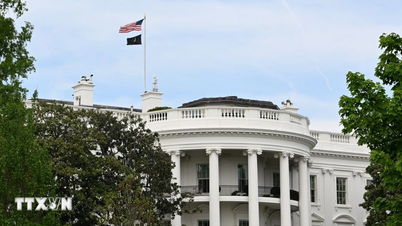
On February 7th (local time), US President Donald Trump held talks with Japanese Prime Minister Shigeru Ishiba at the White House. Speaking after the meeting, Trump emphasized: "The alliance between our two countries and other nations will continue to grow and thrive in the long term." In addition, President Trump invited Indian Prime Minister Narendra Modi to visit the White House next week. Several diplomatic sources revealed that Prime Minister Modi's visit to the US will take place from February 12th to 14th. It is expected that the two leaders will discuss agreements regarding India's purchase of additional defense equipment from the US.
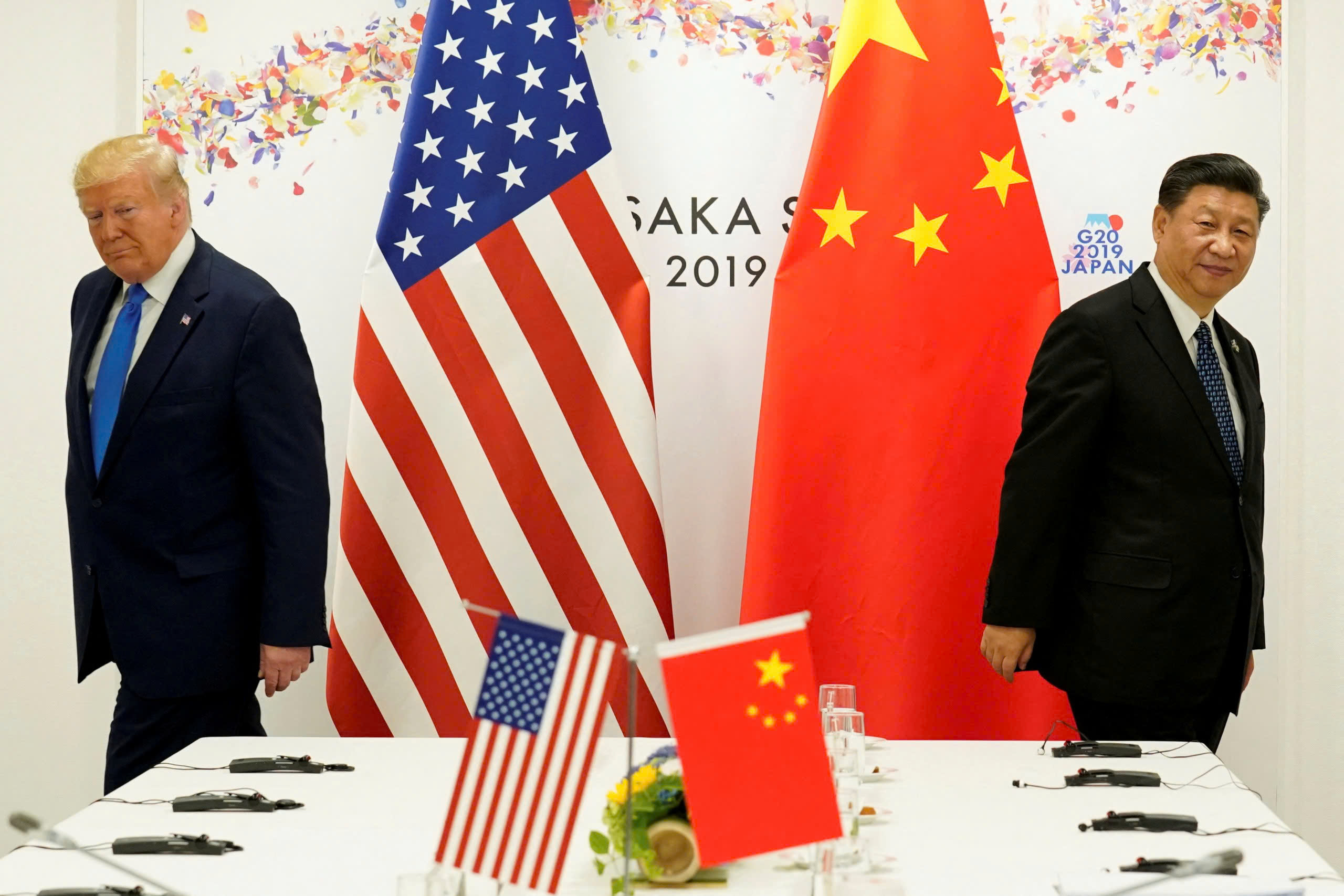
US President Donald Trump and Chinese President Xi Jinping during a meeting in 2019.
A US judge blocked a plan to suspend 2,200 USAID employees.
On February 7, federal district court judge Carl Nichols ordered the U.S. government to stop furloughing approximately 2,200 employees of the U.S. Agency for International Development (USAID), a move seen as part of the Trump administration's plan to cut USAID's operations.
According to Reuters, Judge Nichols' ruling, effective until February 14, also reinstated approximately 500 other USAID employees who had previously been furloughed. In addition, the US government is prohibited from transferring USAID humanitarian aid personnel currently operating overseas.
Bao Hoang
Both India and Japan have trade surpluses with the US, but so far Trump has not issued any pressure messages to New Delhi or Tokyo. Even India, despite being considered one of the sources of fentanyl, has not been singled out by Washington in the same way as Canada, Mexico, or China.
Also on February 7th, US Defense Secretary Pete Hegseth met with Australian Deputy Prime Minister and Defense Minister Richard Marles at the Pentagon. Following the meeting, Secretary Hegseth stated that President Trump supports the nuclear submarine deal under the AUKUS agreement (a tripartite agreement involving the US, UK, and Australia), after Australia confirmed its first payment of $500 million under the agreement on February 7th. "The President is very supportive of AUKUS, recognizing the importance of a defense industrial base," Reuters quoted Hegseth as saying at the opening of his meeting with Marles.
Thus, in just over three weeks since President Trump took office on January 20th, his administration has continuously engaged in diplomatic activities with the remaining three members of the "Quad" group (USA - Japan - Australia - India) - which plays a crucial role in the US strategy in the Indo-Pacific. On January 22nd, the foreign ministers' meeting of the four "Quad" members also took place in Washington DC.
Recently, on February 4th, the US deployed two B-1 Lancer heavy bombers to cooperate with three FA-50 fighter jets from the Philippines for exercises in the South China Sea. Commenting on the exercise, Dr. Satoru Nagao (Hudson Institute, USA) assessed: "This move will be a symbolic step showing that the Trump administration will choose a tougher stance towards China."
Deep disagreement
Against this backdrop, numerous sources claim that both sides are preparing for a summit meeting between President Donald Trump and Chinese President Xi Jinping this year.
In an analysis sent to Thanh Nien newspaper , Dr. Ian Bremmer, President of Eurasia Group (USA) - a leading global political risk research and consulting firm, assessed: "Beijing wants a stable relationship with the US, especially as China is grappling with serious economic challenges, growing concerns about social stability, and an ineffective military. For his part, President Trump also wants a 'big bargain' which he sees as a victory over China."
"Although both Xi Jinping and Donald Trump want an agreement, it's difficult for them to reach a viable compromise. There's a huge gap between what the Trump administration wants and what Beijing can deliver," Dr. Bremmer observed.
Further explaining, the expert pointed out: "For China, they might agree to buy more agricultural products and energy, treat American companies in China better, increase Chinese investment in the US, compromise on TikTok, and possibly even help facilitate a ceasefire in Ukraine. But Beijing will also demand concessions in return, especially the US lifting sanctions against China in the technology sector."
"But with many members of Trump's cabinet holding hardline views toward Beijing, China is a strategic competitor that needs to be contained while the U.S. retains its advantage. They want nothing more than structural reforms to the Chinese economy, a complete decoupling of technology, and an end to China's military modernization. Those are things Xi Jinping will not negotiate," Dr. Bremmer predicted.

Therefore, he believes that the disagreements between the two sides are unlikely to be resolved anytime soon, and that Washington's 10% tariff increase on Chinese goods is only the first shot in a series of upcoming attacks.
Mexico has accepted nearly 11,000 migrants deported from the United States.
Mexican President Claudia Sheinbaum said on February 7 that her country has received nearly 11,000 migrants deported from the United States since January 20, the day President Donald Trump took office. Sheinbaum stated that this figure includes approximately 2,500 non-Mexican citizens. According to Reuters, earlier this week, Sheinbaum reached an agreement with Trump to temporarily postpone planned tariffs on Mexican goods. In return, Mexico will deploy thousands of police officers to its northern border with the United States to further reduce the flow of migrants to the US.
Tri Do
Source: https://thanhnien.vn/trung-quoc-trong-doi-sach-cua-tong-thong-trump-18525020823262754.htm





































![[Video] Sunset at Lap An Lagoon – Where the sun sets over the fishing nets](https://vphoto.vietnam.vn/thumb/1200x675/vietnam/resource/IMAGE/2026/05/31/1780192137701_beach-landscape-sea-water-nature-grass-745871-pxhere-com.jpeg)
























Comment (0)