


Students at the University of Finance and Marketing. Currently, the percentage of lecturers with doctoral degrees at the university is only 32%, projected to increase to 68% by 2027 – Photo: NT
Circular 01/2024 of the Ministry of Education and Training on standards for higher education institutions will take effect from March 2024.
According to this circular, for higher education institutions that do not offer doctoral programs, the percentage of full-time lecturers with doctoral degrees must not be lower than 20%, and from 2030 not lower than 30%; for higher education institutions that do offer doctoral programs: not lower than 40%, and from 2030 not lower than 50%.
The Ministry of Education and Training will begin publishing the results of the implementation of higher education institution standards for universities before June 30th of each year, starting from 2025.
Attraction policy
According to statistics from the HEMIS system of the Ministry of Education and Training, based on declarations from educational institutions, the total number of full-time lecturers nationwide in 2024 was 91,297. This includes 743 lecturers with the academic titles of Professor/Doctor, 5,629 Associate Professors/Doctors, 23,776 PhD holders, 53,412 Master's degree holders, and over 6,000 Bachelor's degree holders…
Thus, the total number of university lecturers with doctoral degrees is over 30,000, accounting for 33% of the total number of lecturers.
While the national average is as stated, the percentage of lecturers with doctoral degrees varies greatly among universities. Many large, long-established universities have this percentage reaching 60-70%. Meanwhile, newer universities only have between 20% and over 30% of their lecturers holding doctoral degrees…
Mr. Pham Tien Dat, Rector of the University of Finance and Marketing, said that currently the percentage of lecturers with doctoral degrees at the university is about 32%, a significant increase compared to 22% in 2021.
"However, the university is unlikely to reach the standard of 40% of its faculty holding doctoral degrees by 2025. Currently, 210 faculty members are pursuing doctoral studies and are expected to complete them by 2027. In the past few years, the university has only attracted 6 PhD holders due to similar policies among universities," Mr. Dat said.
Similarly, Mr. Nguyen Quoc Anh, Vice Rector of Ho Chi Minh City University of Technology, said that the university is having difficulty meeting the standard for the percentage of lecturers with doctoral degrees in its first announcement. Currently, only about 25% of the university's lecturers have doctoral degrees.
“The university aims to achieve a 30% target in the first announcement. Besides support policies to encourage young faculty members to pursue doctoral degrees, the university is also strengthening its recruitment of PhDs, especially those who have studied abroad.”
"Besides recruitment policies, the university identifies the key issue in attracting PhD-level lecturers as a suitable working environment and compensation policy," Mr. Quoc Anh added.
Meanwhile, many universities currently do not meet the standard for the percentage of lecturers with doctoral degrees, but are expected to achieve it by 2025. Mr. Nguyen Xuan Hoan, Rector of Ho Chi Minh City University of Industry and Trade, said that currently about 39% of the university's lecturers have doctoral degrees. It is expected that by the end of 2024, the percentage of lecturers with doctoral degrees will exceed 40%.
"The policy of attracting PhD-level lecturers to the university has been relatively effective. In the past two years, more than 20 PhD holders have come to work at the university. One-third of them graduated from overseas universities."
"In addition, the university also has policies to support and penalize faculty members who pursue doctoral studies. This has increased the number of full-time faculty members earning PhDs," Mr. Hoan said about the university's policy to increase the number of PhDs.
At Ho Chi Minh City University of Industry, Mr. Phan Hong Hai – the university's rector – said that last week the university recruited 15 PhD holders. Depending on the field and job position, each PhD holder receives a stipend of 100-200 million VND. Currently, the percentage of lecturers with PhDs at the university is about 40%.
"Attracting PhDs from outside, especially those who studied abroad, helps shorten the time and meet the standards and quality goals of the university," Mr. Hai said.
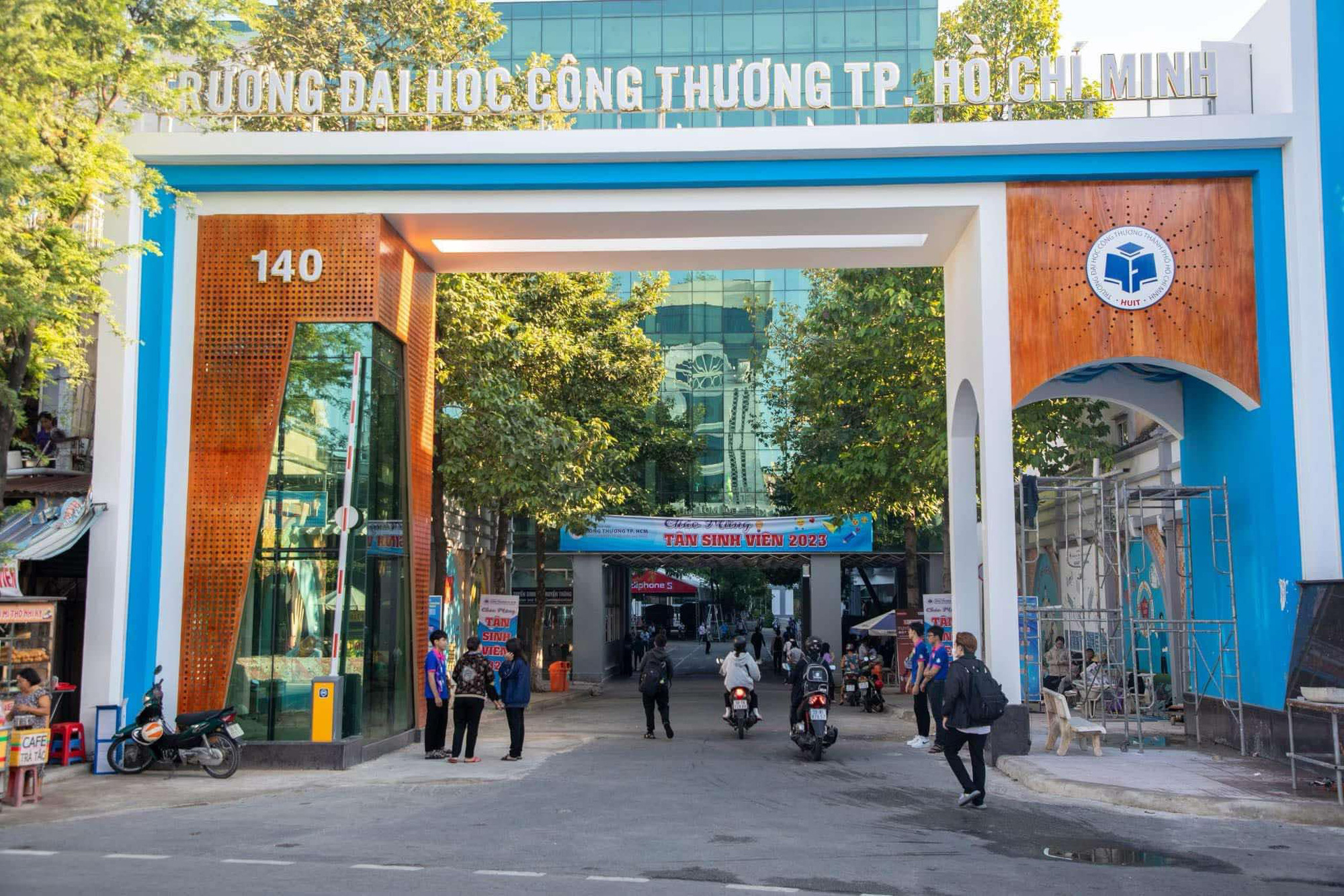
Ho Chi Minh City University of Industry and Trade (HUIT) anticipates that by the end of 2024, the percentage of lecturers holding doctoral degrees will exceed 40% – Photo: HUIT
Focus on internal strength.
Currently, most universities have policies that encourage highly qualified individuals to work for them. However, the effectiveness of this policy is not guaranteed for all universities. Furthermore, those who come because of the recruitment incentives may leave if other universities offer better policies.
Even Mr. Nguyen Tuan Khanh, Secretary of the Party Committee of Kien Giang University, expressed concern: the university supports the costs and ensures policies for its lecturers when they pursue doctoral studies both domestically and internationally, but the risk of losing them is very high as universities are currently implementing policies to attract PhDs.
"The school is about to become autonomous, and its training scale is not yet large. Given the attractive recruitment policies of many other universities, the school is genuinely worried about the risk of losing students," Mr. Khanh frankly stated.
Speaking about the staff development strategy when the percentage of lecturers with PhDs is nearly 20%, Mr. Khanh said that most universities send their staff to pursue doctoral studies both domestically and internationally. The university fully funds tuition fees for the duration of the study period and ensures benefits similar to those provided by the university.
"According to regulations, those studying abroad are entitled to 60% of their salary, but the school allocates funds from its operational budget to cover the remaining 40%, ensuring that those studying abroad receive 100% of their salary."
"We view going to school as a duty and also as a way to contribute to the school. Upon graduation, we will receive a stipend. Currently, 38 people from the school are pursuing postgraduate studies. This is the school's main source of talent, not something to attract," Mr. Khanh said.
Based on the practical experience of the policy to attract PhDs to the university, Mr. Pham Tien Dat assessed that the policy of attracting PhDs is not as effective as developing the internal capacity of the teaching staff.
According to Mr. Dat, there are currently over 200 lecturers pursuing doctoral studies. It is expected that by the end of 2027, the majority of lecturers will have earned their PhDs. At that time, the percentage of lecturers with PhDs at the university will reach approximately 68%.
"We have a policy to attract PhDs from abroad to the university, but the administrative procedures are quite complicated and time-consuming."
In this respect alone, public schools struggle to compete with private schools. Not to mention that students who enroll because of attractive policies rather than with the goal of long-term commitment will easily leave if the policies are better.
Therefore, the university has identified the development of its on-site faculty as crucial and sustainable. The university has implemented policies to support tuition fees, travel expenses, and post-doctoral training to encourage faculty members to pursue doctoral degrees,” Mr. Dat added.
Encouraging young lecturers
Mr. Phan Hong Hai stated that the university encourages young lecturers to pursue doctoral studies with accompanying support policies. Currently, there are approximately 200 lecturers at Ho Chi Minh City University of Industry who are pursuing doctoral studies.
Lecturers attending the training course will receive 100% of their salary, with a 50% reduction in teaching hours, and the university will cover their tuition fees. Upon returning to the university after completing the course, they will receive an additional monthly allowance of 8 million VND, provided they publish one scientific article annually in a reputable scientific journal.
"We encourage lecturers to pursue doctoral degrees and provide the necessary support. However, the choice of which university to pursue a doctorate at depends on the principal's consideration of the field and the quality of the institution; not just any university will do," Mr. Hai added.
Difficult to achieve
According to many universities, establishing a standard for the proportion of faculty members with doctoral degrees is necessary for universities to find solutions to improve faculty qualifications, teaching quality, and research. However, the benchmark coefficient and tight deadlines make it difficult for many universities to achieve the target.
The vice-rector of a private university in Ho Chi Minh City assessed that the 40% ratio seems to be referenced from large, long-established universities. Private universities and provincial universities would find it difficult to achieve this standard in a short period of time.
Meanwhile, Mr. Trinh Huu Chung, vice-rector of Gia Dinh University, said that the university currently does not offer doctoral programs and does not meet the standard ratio of lecturers with doctoral degrees. However, the university's development goal is to train doctoral students.
To achieve this, the school must meet the standard of having 40% of its faculty holding doctoral degrees. Mr. Chung stated that this is a difficult standard for the school to achieve in the near future.
Source: https://tuoitre.vn/truong-dai-hoc-dua-dat-chuan-tien-si-20241220223321014.htm


![[Photo] General Secretary and President To Lam meets with National Assembly delegates from ethnic minorities.](https://vphoto.vietnam.vn/thumb/1200x675/vietnam/resource/IMAGE/2026/04/20/1776696701056_a1-bnd-8331-3342-jpg.webp)

![[Image] National Assembly discusses the implementation of the socio-economic development plan.](https://vphoto.vietnam.vn/thumb/1200x675/vietnam/resource/IMAGE/2026/04/20/1776696707422_ndo_br_img-20260420-185419-jpg.webp)


















![[Infographic Series] Historical Sites in Dong Nai: Long Khanh Provincial Administrative Building, Long Khanh Town Party Committee Base, Xuan Loc Temple - Xuan Hoa Pagoda Complex](https://vphoto.vietnam.vn/thumb/402x226/vietnam/resource/IMAGE/2025/9/26/1331532306fb4ad18e4a849e5c64202a)






























































Comment (0)