T&T Group and its aspiration to connect infrastructure.
Báo Dân trí•21/09/2024
Vietnam is a leading country in Asia in infrastructure investment, accounting for 5.7% of GDP annually. Although the majority still comes from state resources, an increasing number of large private corporations are participating in infrastructure investment, sharing the burden on the state budget.
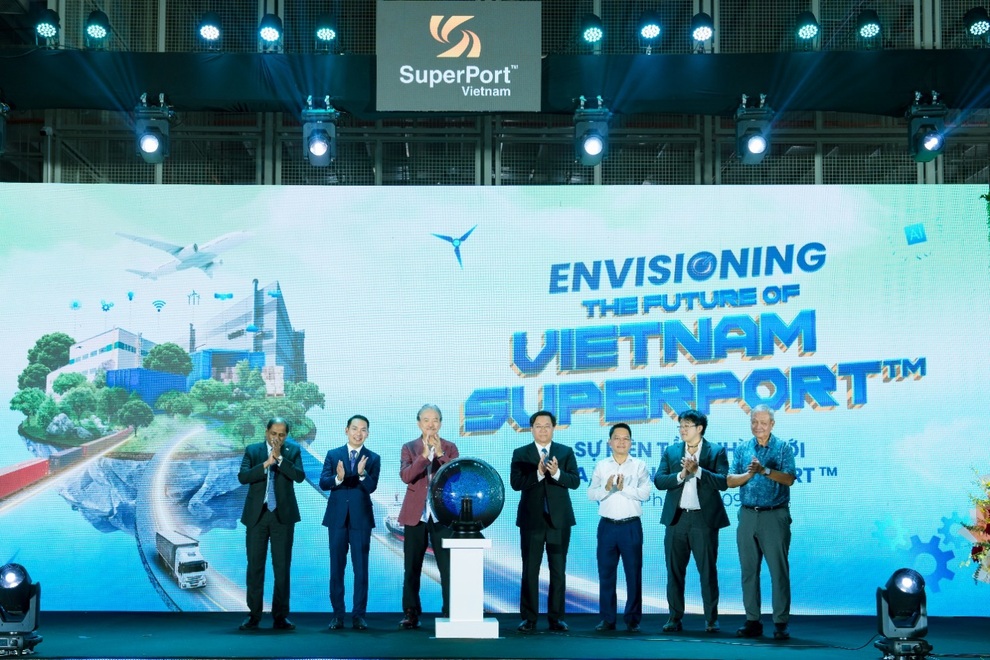
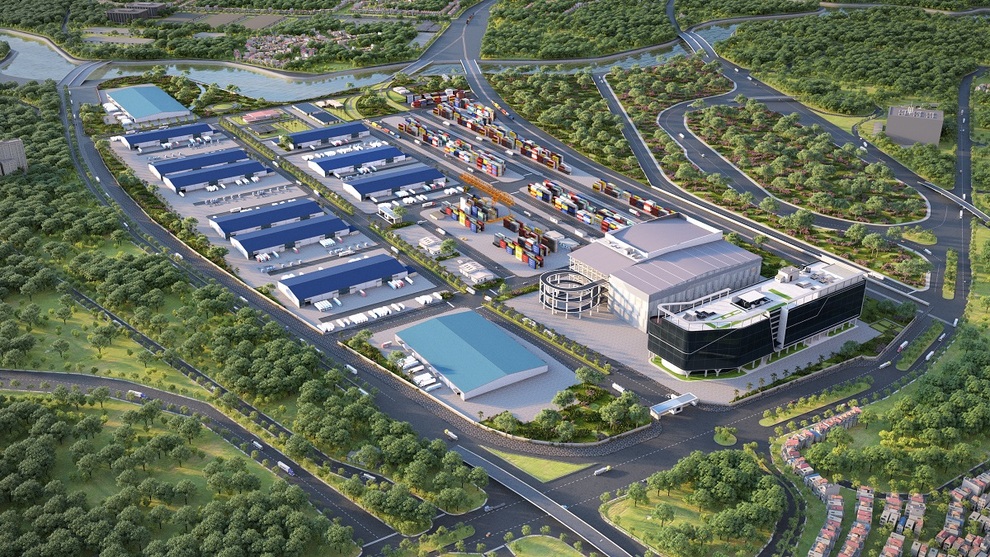
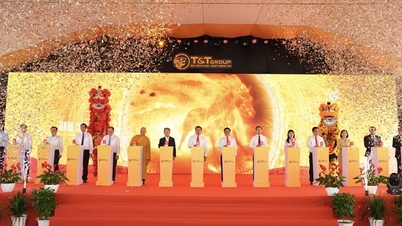
From logistics and highways to airports: On September 14th, the Vinh Phuc ICD (SuperPort™ Vietnam) – the first port in the smart logistics network in the ASEAN region – announced its new vision in Vietnam . This joint venture project between T&T Group (Vietnam) and YCH Group (Singapore), built in Vinh Phuc, aims to develop into a key hub connecting supply chains between China and Southeast Asia, with a target of zero net emissions by 2040. Mr. Tran Duy Dong, Chairman of the Vinh Phuc Provincial People's Committee, expects the project to improve the quality of logistics services, facilitate inland cargo clearance, and reduce costs and time for customs clearance and transportation.
SuperPort™ Vietnam announces a new vision with a commitment to achieving net-zero emissions by 2040.
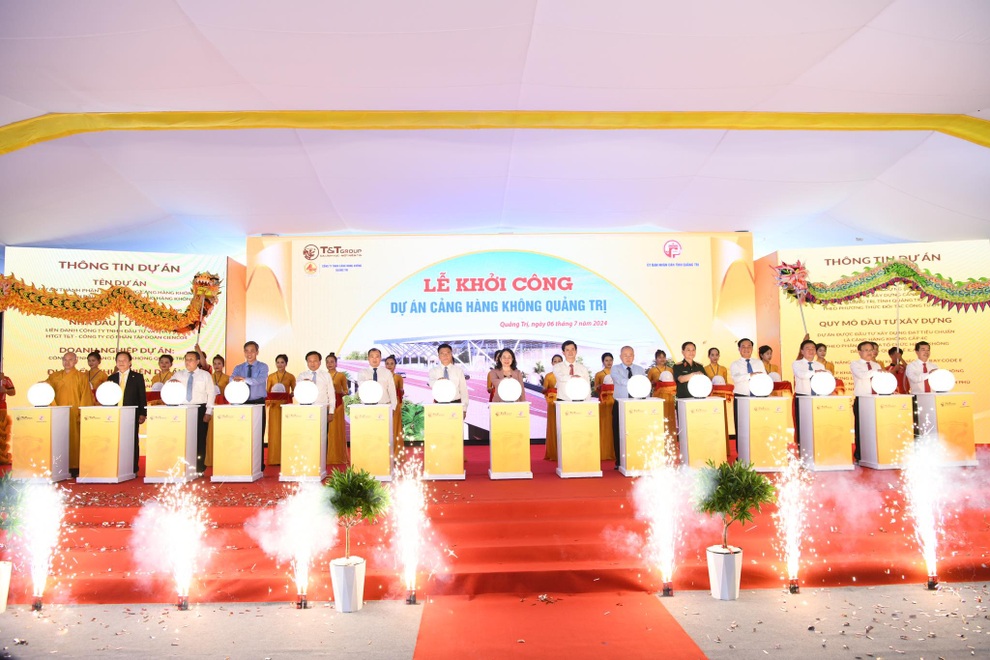
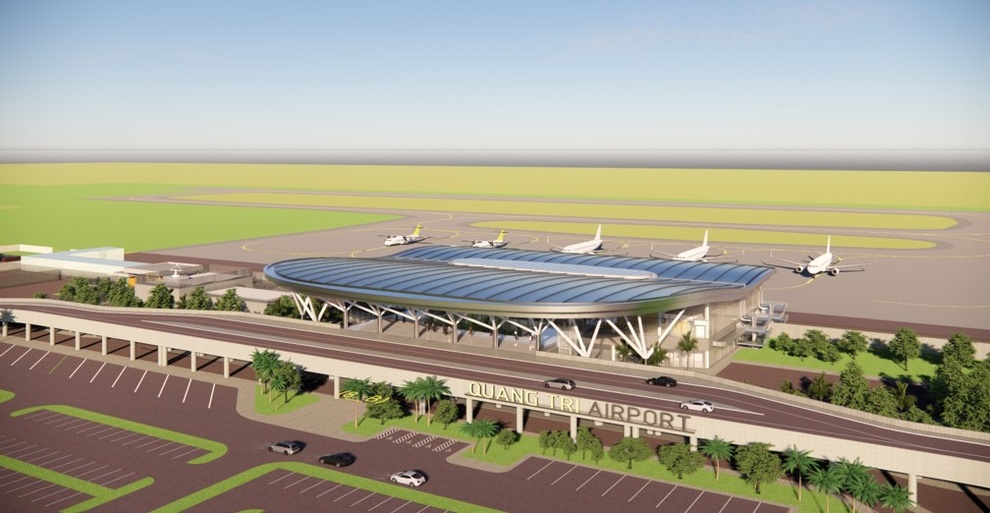
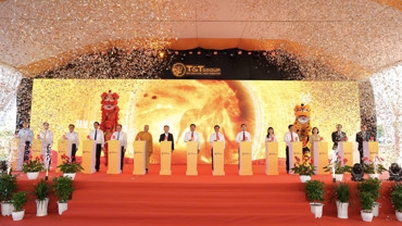
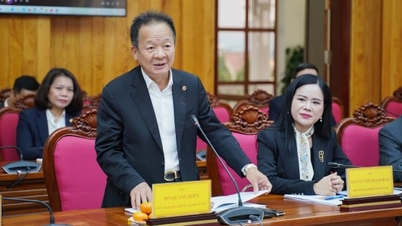
A few days earlier, in early September, T&T Group commenced construction of the Nam Phuc Tho Industrial Cluster - Phase 1. With a scale of 41.7 hectares and a total investment of 780 billion VND, this is currently the largest industrial cluster in Hanoi, aiming for sustainable development and pioneering the development of clean industrial clusters. Instead of investing in a single sector, T&T Group is expanding its ambitions towards diverse yet consistent infrastructure projects, demonstrating a strategic vision of building its own infrastructure ecosystem – something only a few private Vietnamese enterprises are achieving. In July, the joint venture between T&T, Cienco4, and Quang Tri province commenced construction of the Quang Tri Airport project, with a total investment of over 5,800 billion VND. This is the second privately invested airport after Van Don ( Quang Ninh ). Prior to Quang Tri, more than five years after Van Don Airport began operations, no other airport had successfully implemented a PPP (public-private partnership) investment model. In reality, the door for private investors to enter the airport market is very narrow, but the commencement of the Quang Tri Airport project demonstrates the strong determination of T&T Group. Mr. Do Quang Hien, Founder and Chairman of the Strategic Committee of T&T Group, stated that he had repeatedly pondered what contribution he could make to Quang Tri, a sacred land with numerous historical sites associated with past wars. Investing in the Quang Tri airport is not simply about promoting socio-economic development; it is also a project that continues and honors this heroic land, while attracting investors to the region, contributing to "opening up the skies" and helping Quang Tri soar to new heights. Construction of Quang Tri Airport began in early July 2024. Within just two months, T&T Group consecutively commenced two infrastructure projects with scales ranging from several hundred billion to several thousand billion VND. Identifying infrastructure as one of its core business areas, the group has focused its resources on investing in this sector for many years. Quickly entering the market during the privatization of numerous large transportation enterprises in 2015-2016, T&T Group is currently a major shareholder in Quang Ninh Port, a deep-water port with national-scale general cargo capacity and a crucial regional hub on the key economic corridor of Quang Ninh - Hai Phong - Hanoi . Regarding key expressway projects, T&T Group is currently the investor in the Bao Loc - Lien Khuong expressway project (Lam Dong province) and is also the only private investor interested in the Hanoi Ring Road 4 project to date. Opening the "narrow door" for private businesses: Despite such determination and ambition, investment in infrastructure remains a "narrow door" for private investors. For example, the Bao Loc - Lien Khuong expressway project, although launched in 2021, still faces many obstacles, according to representatives of the investor consortium, related to revenue sharing mechanisms, the proportion of state investment capital, legal procedures, land compensation policies, and infrastructure construction costs for resettlement areas. Representatives of T&T Group affirmed that the investor consortium has always shown determination since being assigned the project, but they must find the best way to implement it. SuperPort™ Vietnam is positioned as a strategic multimodal logistics hub, connecting the China-Southeast Asia freight network with global markets. According to Associate Professor Tran Chung, Chairman of the Vietnam Association of Road Transport Infrastructure Investors (VARSI), private investors are eager to minimize adverse risks during project implementation and operation. Essentially, attracting private investment through public-private partnerships (PPP) must harmonize the interests of all three parties: the state, private investors, and the people. Although the PPP law has been enacted and resolved some major procedural obstacles, based on practical experience, he believes there is still a lack of balanced benefits, with investors still bearing more of the disadvantages. "Private investors want to contribute alongside the state and want to play on equal footing as partners with the state. But sometimes, authorities are playing more of a managerial role than a partner role. For example, some current BOT projects are problematic and cannot collect tolls, even though discussions have been held for many years without resolution, while businesses with mounting debts still have to pay interest," said Associate Professor Dr. Tran Chung. Quang Tri Airport is the second airport to be invested in using the PPP (Public-Private Partnership) method. According to this expert, one of the major difficulties for private businesses is capital. Infrastructure projects require very large amounts of capital, and loan repayment periods are long. Therefore, it is necessary to establish an investment fund for transportation infrastructure development, thereby creating a flow of capital with preferential interest rates for investors. In reality, the difficulty in attracting private businesses to invest in large infrastructure projects worth several trillion dong is not only due to shortcomings in previous mechanisms such as the State's contribution not exceeding 50%, risk allocation ratios, etc., but mainly due to the difficulty in mobilizing capital. In Vietnam, this capital currently relies mainly on credit from commercial banks. One of the three major strategic breakthroughs set by the Party and State is infrastructure, aiming to transform Vietnam into a developed industrial nation by 2045. According to the World Bank (WB), Vietnam needs to supplement public investment through various policy reforms to attract private investment in infrastructure, especially in green projects that reduce emissions. Source: https://dantri.com.vn/kinh-doanh/tt-group-va-khat-vong-ket-noi-ha-tang-20240920120258602.htm




![[Photo] General Secretary and President To Lam meets with National Assembly delegates from ethnic minorities.](https://vphoto.vietnam.vn/thumb/1200x675/vietnam/resource/IMAGE/2026/04/20/1776696701056_a1-bnd-8331-3342-jpg.webp)
![[Image] National Assembly discusses the implementation of the socio-economic development plan.](https://vphoto.vietnam.vn/thumb/1200x675/vietnam/resource/IMAGE/2026/04/20/1776696707422_ndo_br_img-20260420-185419-jpg.webp)













































































Comment (0)